
Hello everybody,
This week we’re looking at when a coincidence is not a coincidence.
I don’t know why I did it. I’ve been to one of these before and, just like last time, I felt ridiculous.
For one, I find moving around these kinds of open-plan, stall-filled warehouses a kind of torture. Drop your bag off, get a free coffee, then walk around with an imbecilic grin that you hope is welcoming but reads as psychopathic.
And then, on the three occasions I did manage to talk to strangers, I found myself quickly trapped in a conversational cul-de-sac.
“So, what content do you make?” I asked.
“Mostly hair and make-up stuff.”
“Fashion things.”
“Yeah, I’m with the L’Oréal team doing beauty products.”
Good. Great. I respect and admire the work and consistency. But I have utterly nowhere to go with this networking opportunity. My wardrobe consists of five items: jumpers and brown shoes for winter; T-shirts and flip-flops for summer; and chinos all year round. The colors and textures might change a bit, but my fashion and beauty portfolio could fit on the back of a novelty playing card.
I gave my fellow creators a follow; they gave me a follow back, and I suspect we’ll all silently unfollow each other in a few weeks when we realize it was a polite mistake.
It was time to leave. Cut your losses, Jonny, go do something better. But just as I was about to slink off to meet my friend a few tube stops away, I bumped into someone I once knew from university called Bobby.
Statistically, given the size of the event and the size of my university, this isn’t desperately unlikely. But what was weird — preternaturally weird — was that I had a dream about Bobby last week. Bobby and I played on the same rugby team, and we occasionally had a few drinks together, but we were never best mates. So why did he pop up into my slumbering unconscious? Why did the universe at that exact moment throw Bobby and me together somewhere around North Greenwich?
Well, let’s explore the philosophy of synchronicity.
Go well,
Jonny
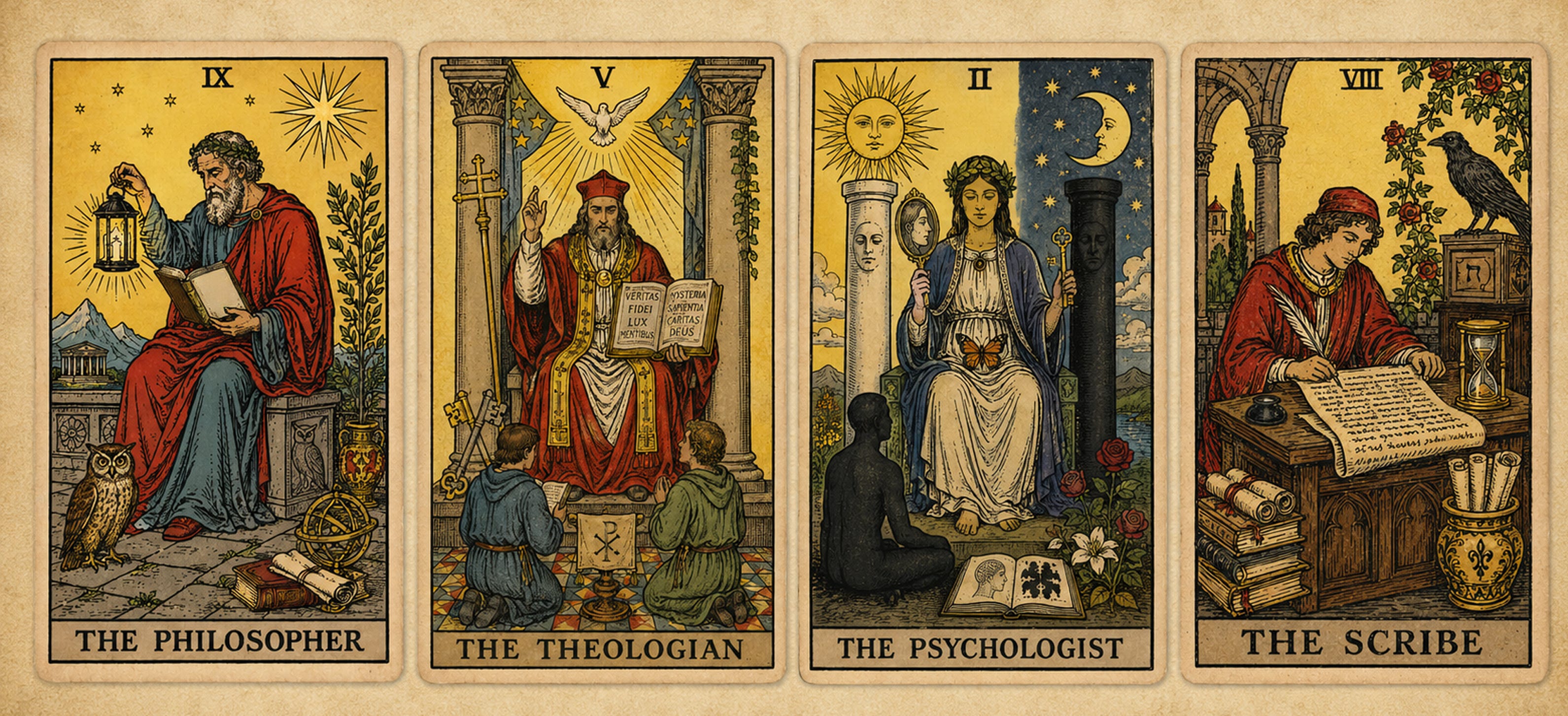
The Book of Changes is a three-thousand-year-old divination tool. It contains 64 hexagrams — symbols made up of six lines each. It’s thought that the hexagrams represent the dual aspects of the universe: some are broken (Yin), and others are whole (Yang). A prospective soothsayer will throw three coins, and after some complex rules (usually guided by an expert), you will get a series of hexagrams. For example, you might get The Abysmal (#29), representing the dangerous abyss; The Marrying Maiden (#54), representing a union that might not be equal; or Gnawing Bite (#27), representing teeth coming together to resolve a problem.
Armed with your hexagrams, you go away and reflect. What could the three hexagrams represent? What can they tell you about your life? What do a Marrying Maiden, Gnawing Bites, and The Abyss have in common? Within the wider theological framework of The Book of Changes, your hexagrams are a kind of cleromancy — a divinely inspired message. It’s guidance from the Dao.
But according to the psychiatrist Carl Jung, The Book of Changes is an example of “synchronicity.”
For Jung, synchronicity is when we see two causally unrelated things as meaningfully connected in some way. Suppose, for instance, that you had a recurring dream about an old school friend — a friend you’ve not seen for a long time. Then, by coincidence, you see that friend at a fringe and obscure creator festival.
Synchronicity is a bit more than “Oh, that’s weird.” It is something that forces you to reconsider either your own psyche or the world. It says, “There must be something to this — I’m going to reconnect with this friend.”
It’s a subject of some debate about how much spiritual or quasi-religious emphasis Jung put on this. His own interest in The Book of Changes implies that he was at least open to the idea of some kind of cosmic hand behind synchronicity. There are passages where Jung sounds more like a spiritualist than a psychologist. But for our purposes — in the rigorously mundane bounds of Mini Philosophy — synchronicity can also be understood as a psychotherapeutic tool. Even if we want to explain these improbable coincidences away as confirmation bias or the peculiar propensity all humans have to imagine and create patterns, there’s still something to it. There’s a power here, even if it’s not divine. There’s something I need to learn.
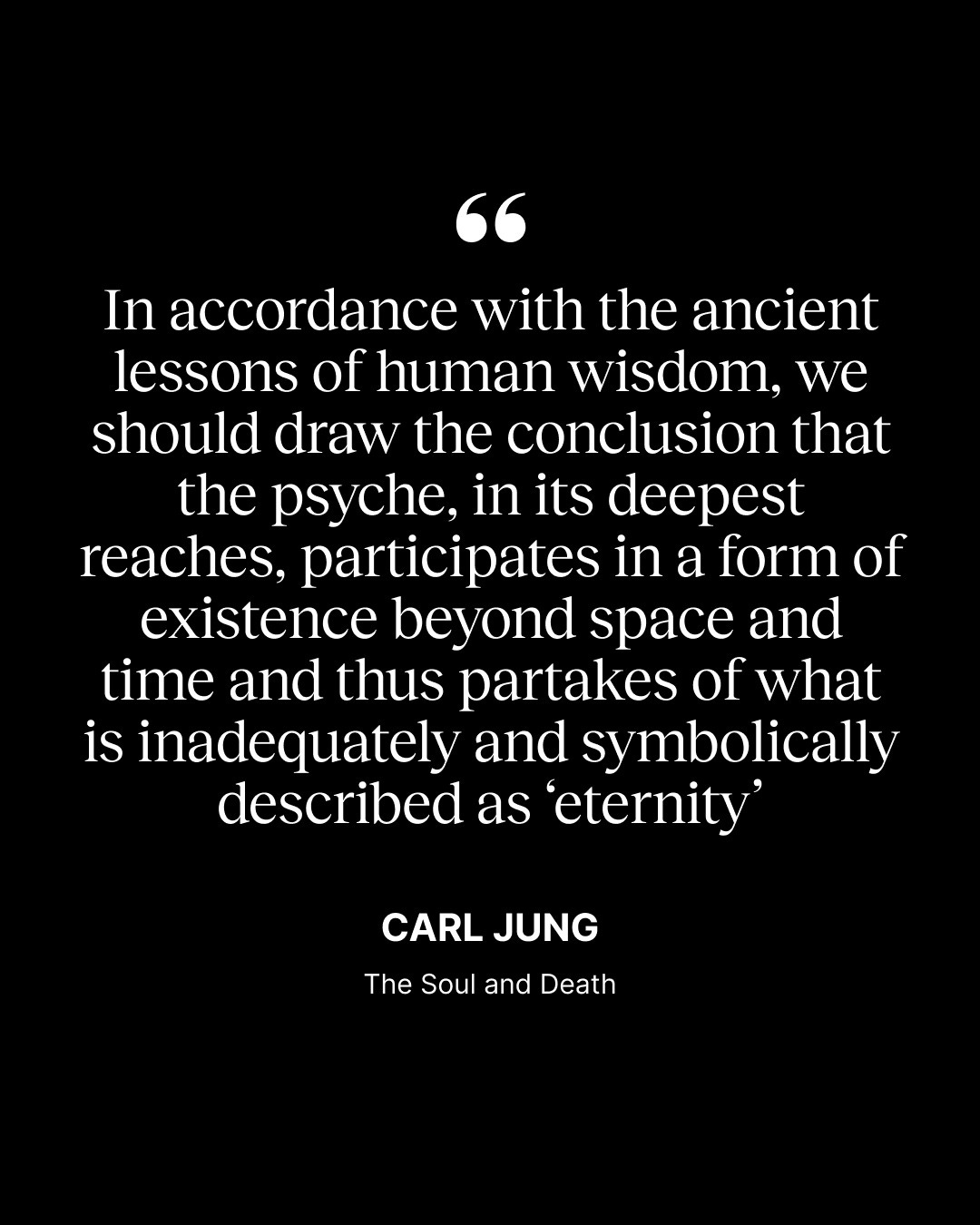
In analytic psychology, these coincidences are moments where the unconscious forces itself onto the conscious. It’s a desperate, pleading scream from subliminal forces wanting to be heard. Synchronicity feels spiritually true because it carries the weight of your vast unconscious. Seeing Bobby in that warehouse feels like a religious “It’s meant to be!” because it’s my unconscious finally being recognized. In some ways, synchronicity is a kind of revelation or transformative experience. It’s a voice from somewhere, whether you think it’s God, the Dao, or some repressed element of your psyche. And that voice needs answering, or there’ll be pain ’a coming.
Synchronicity does, undoubtedly, take a seat in the unfalsifiable theater of pseudoscience. It’s untestable in itself. But even if you see Tarot cards, divination, horoscopes, dreams, and The Book of Changes as embarrassing quackery, it’s still true to say that often great, life-changing revelations can be born of them. A cynic might snicker at getting a certain Tarot card, but when they’re lying in bed, staring at the ceiling, they’re still asking the question, “What would that mean in my life?”
The question, the redirection, is the magic.
IN A QUOTE

Jonny is the creator of the Mini Philosophy social network. He’s an internationally bestselling author of three books and the resident philosopher at Big Think. He's known all over the world for making philosophy accessible, relatable, and fun.
Comments
Nothing yet. Say the first thing.
Sign in to join the conversation.