
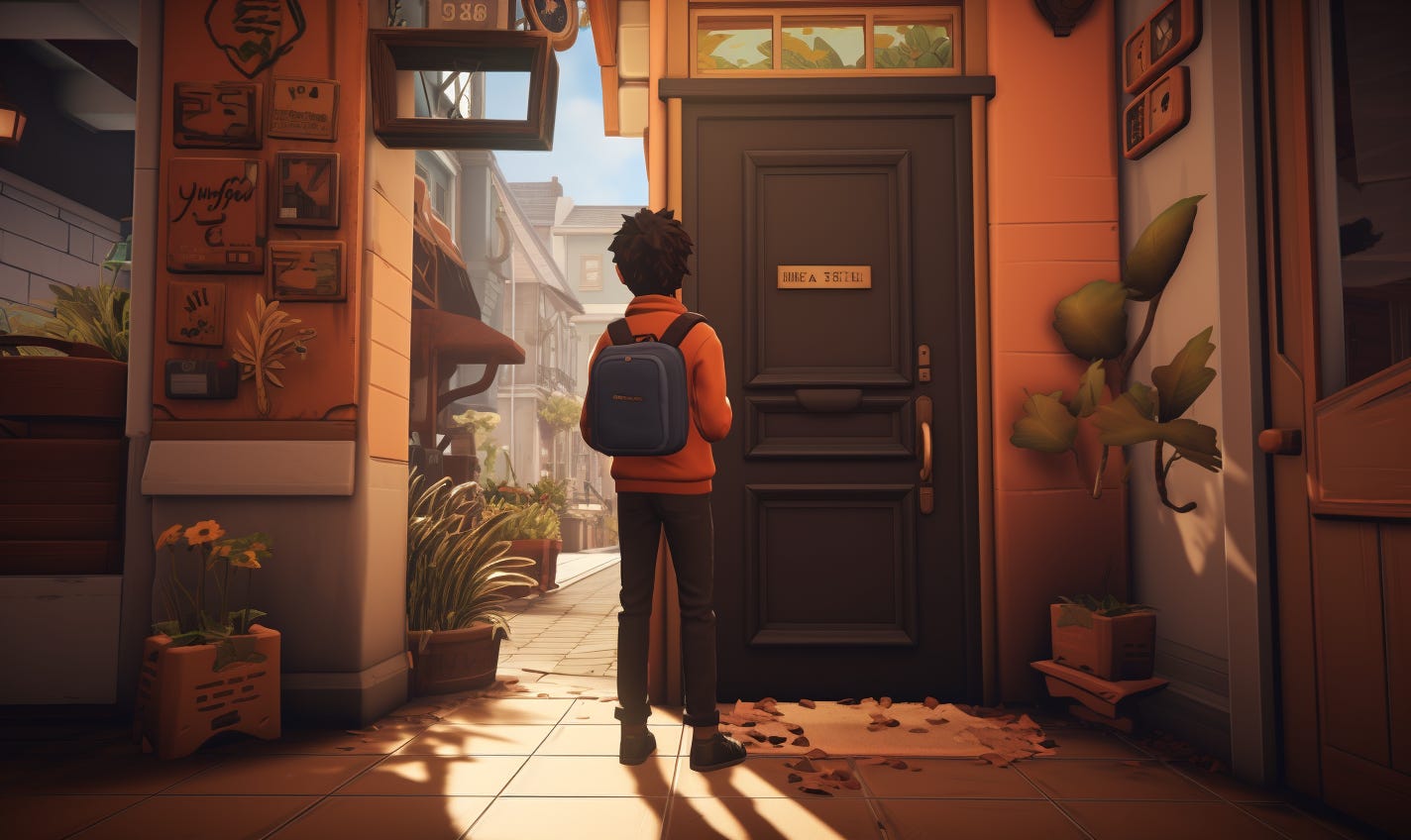
I like to say that I like adventure, or that adventure is my philosophy in life. But people would understand and mean different things with the word “adventure”, so that doesn’t really make it clear.
For some people who publicly state that they like “adventure” it clearly means something like going kayaking all weekend. Or hiking in the mountains. Or scuba diving. Something that involves a fair amount of equipment, a 4WD vehicle, a destination a few hours away, and lots of sun and sweat and bruises. I suppose all of those are perfectly good pastimes, invigorating, challenging, gets you in good shape, etc. I can enjoy some physical activities like that too occasionally. But they’re not what I’d mean by “adventure”.
I’d rather make my starting point in a old-fashioned 1980s text adventure game.
West of House
You are standing in an open field west of a white house, with a boarded front door.
There is a small mailbox here.
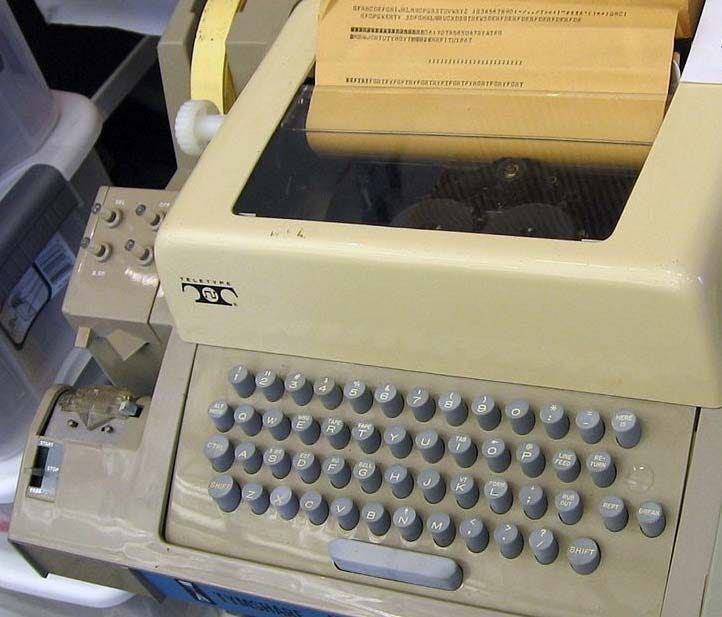
That’s the beginning of Zork. Or, even older, there was the Colossal Cave Adventure. I played it the first time on a Teletype terminal, like this one:
But the point is not that it is ancient software. The point is that you find yourself somewhere. There are things there. Paths to unknown places. Objects which might become useful later. Cryptic instructions. And you can freely take action. Certainly among the choices that are given to you, but sometimes you can invent new things to do, new ways of interacting with your surroundings.
That is for me an excellent metaphor for life, and for my attitude to life. You have to pay attention. If you do, there are always options, always other places to go. There are always things you can use, even if it might not be clear how at this point. The world is largely unknown, other than the parts you’ve explored until now. You’re likely to find hidden treasures. But there are also hidden dangers.
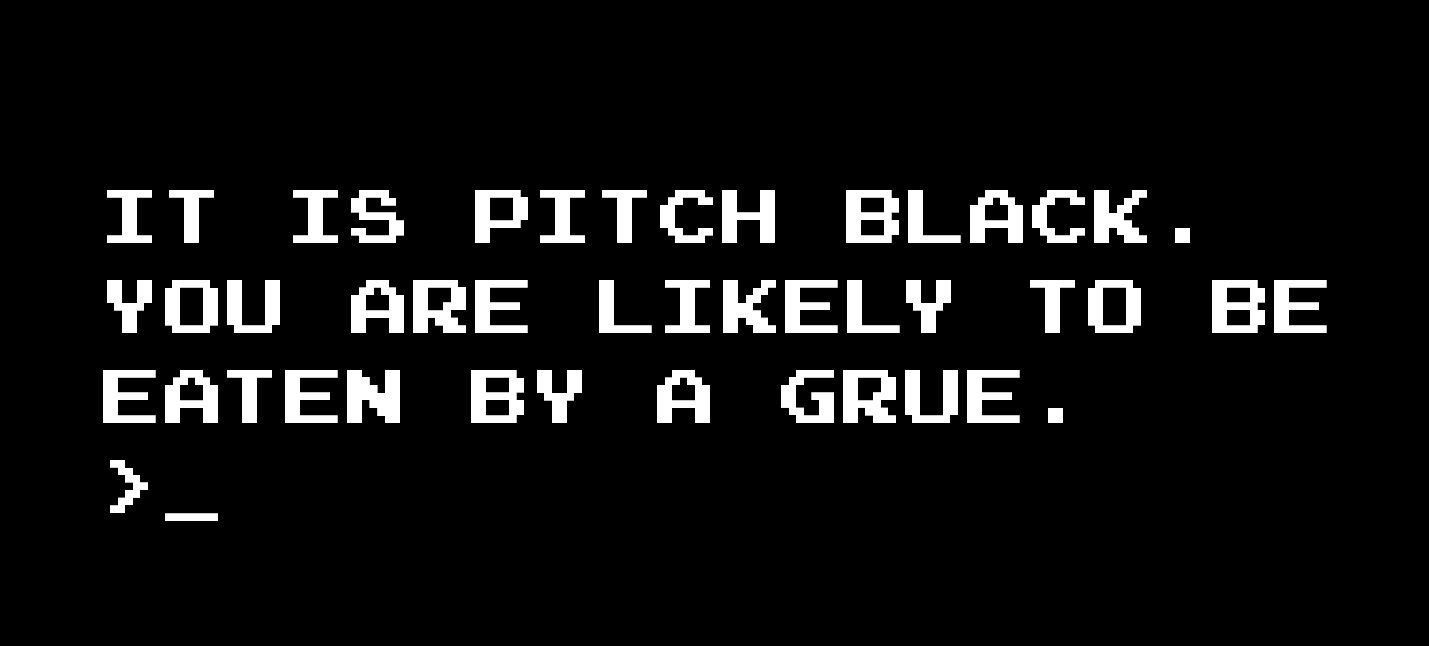
The exploration and the journey is exciting. You’re interacting with the unknown, trying to make the best of the parts that you know. There are risks and rewards. Ultimately it isn’t all that serious, even if you die.
There’s a particular pleasure in exploring something one doesn’t quite know what is, but where one is willing to be pulled along, taken in new directions, discovering things one didn’t expect, where one can hang out for a while and feel really present.
You might find a hidden waterfall up in the mountains and decide to camp next to it for the night. You might find an abandoned house. Ruins with a cryptic inscription. A path you’ve never walked before. The physical world can certainly supply adventure like that. That is, if one goes a little slow, and one is willing to take a detour, and spend time with something one didn’t plan in advance.
There’s the concept of being a “flâneur”. That’s a French word used about somebody, archetypically an elegant gentleman, who sort of strolls around without much aim. Sauntering around idly, but observing everything, and being willing to let oneself get interested in whatever shows up on one’s path. The verb is “flâner”. So, the action of wandering around in a detached but observant manner.
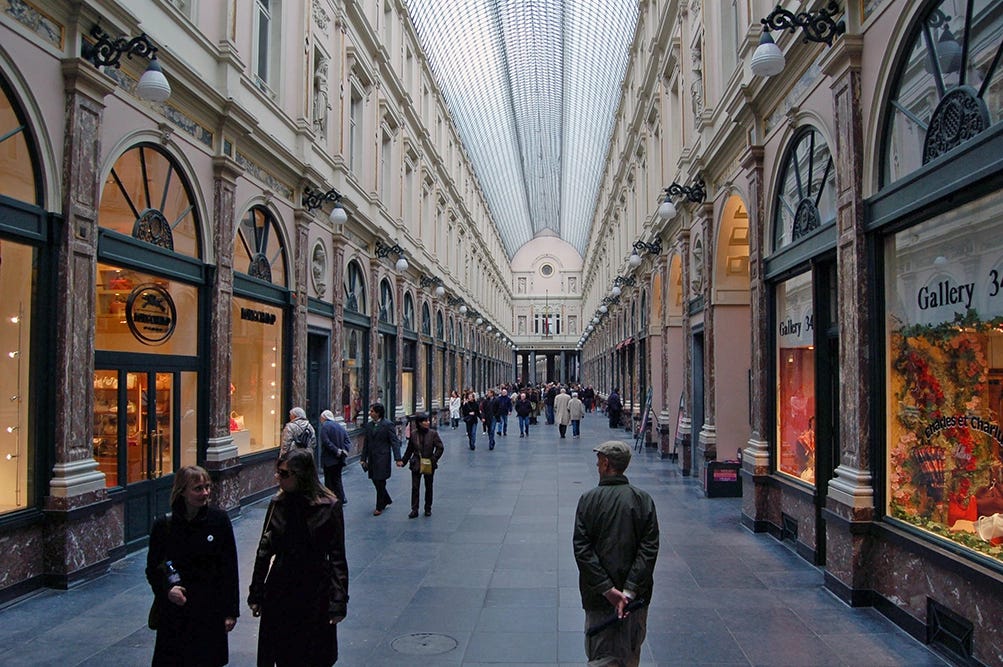
My idea of adventure contains some of that. You’re exploring in style without being too attached to anything, but you’re interested and you’re ready to get amazed.
In this video with Ramsey Dukes I first learned about the clever idea of using the “wrong” map for exploring an area, like a city. There was some old British soap opera that revolved around a fictional city. Bored fans came upon the idea of taking the map of that fictional city, and insisting on applying it to real cities, for which it obviously was the wrong map, but they would go through the motions of making it fit. So, you go into whatever city is close by, and you take out this map. “So, hm, the post office should be to the left, and pub should be straight ahead”. And you go to one of those places, as if the map is supposed to fit. And, unavoidably, you’ll have to navigate some obstacles and you’ll end up in some surprising place, and interesting things will happen if you insist that this is a pub. Even though in the physical reality it might be a clothing store, or somebody’s garage.
There’s an app called Dérive, based on a similar idea. You can get it for Android or iOS. Basically, it will give you directions for places to go, without really paying attention to where you are. It might tell you to take the first street on the right, and meet somebody in the third house on the left. And if you try to follow the directions in the actual city you’re in, you’re quite sure to have an adventure. Might mean getting arrested, but it might also mean meeting somebody you’d never had met otherwise, and learning about parts of the city you didn’t know existed.
I actually organized a group zoom experiment to do this together a few years ago. It became chaotic, but very interesting.
I’d like to claim that one can have an adventure anywhere at any time. It doesn’t require equipment or exotic locations. I think it just requires a willingness to interact with the present moment and the present environment and with the people who’re present, a willingness to explore both what is there and what is unknown. Noticing which options are here, which objects are here which we might use.
I’d say that’s even what a good conversation is. I think it is one aspect of what Dialogue is. Examining what is there. Using it to get further or to get wiser. It requires an open mind, being ready for anything, and a willingness to suspend judgment and learn something new. An appetite for wonder and an ability to find the extraordinary even in what on the surface seems very ordinary.
No posts
Comments
Nothing yet. Say the first thing.
Sign in to join the conversation.