
Mobutu Sese Seko, the despotic president who ruled for almost 30 years what’s now the Democratic Republic of the Congo (DRC), didn’t believe in road maintenance. He was too busy siphoning money to offshore accounts. Keeping vast stretches of Africa’s second-largest country (then Zaire) inaccessible also short-circuited rebel armies forming and moving against him.
With war that’s followed Mobutu’s downfall, much of Congo remains inaccessible by road. “It takes two months to drive across the country and you need a power saw, a shovel, and a 4 X 4 to do it,” longtime aid worker Steven Brewster says.
Infrastructure challenges, armed conflict, and a constrained health system all contributed to weeks of delays confirming the Ebola variant that’s now permeated eastern Congo’s Ituri Province.
As of May 21, the DRC and Uganda Ministries of Health report 575 suspected cases, 51 confirmed cases, and 148 suspected deaths. (UPDATE: The WHO on Friday announced raising its risk assessment in the Ebola outbreak to “very high,” with almost 750 suspected cases and 177 deaths.)
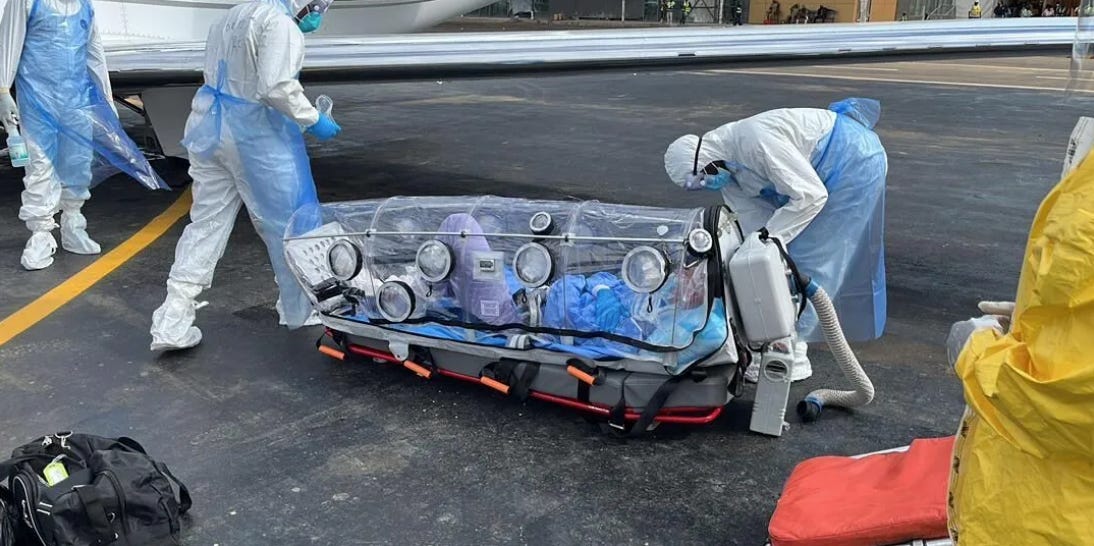
Among confirmed cases are two in Uganda, including 1 death, involving people who traveled from DRC. One confirmed case is American surgeon Peter Stafford, who was evacuated this week to Germany for care after he tested positive for Ebola on May 18, three days after the Africa CDC confirmed the new Ebola epidemic.
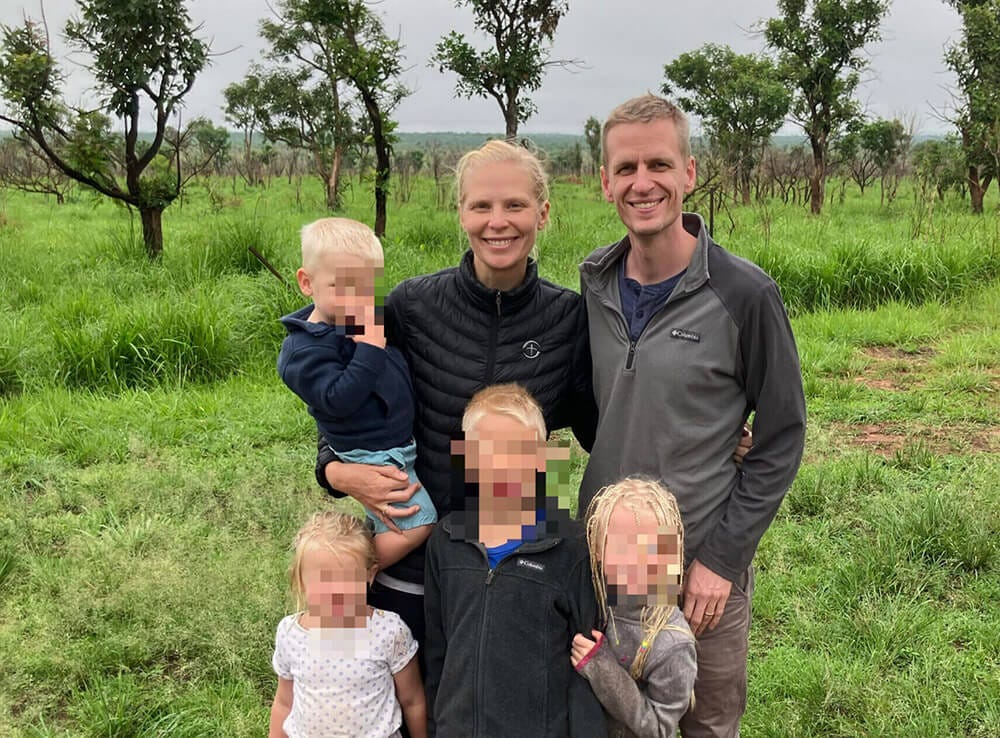
Stafford, 39, is one of three medical missionaries treating patients in the region with Philadelphia-based mission organization Serge. The other two physicians include his wife, Dr. Rebekah Stafford, and Dr. Patrick LaRochelle. They were evacuated this week also, along with the Staffords’ four children, and remain asymptomatic.
Stafford was “critically ill,” reported Serge, but is receiving treatment in Germany and yesterday spoke to Serge staff, saying:
“Before I was evacuated I was feeling really concerned I wasn’t going to make it. And now I’m cautiously optimistic.”
Doctors and aid workers I spoke to this week say the worst may be ahead for eastern Congo and the Nyankunde Hospital that Stafford and the others leave behind. The 150-bed hospital serves an immediate population of about 150,000 in an area of about 8 million people amidst a virus with a high mortality rate and horrific symptoms. The area also is currently occupied by M23 rebels backed by Rwanda. Stafford was the hospital’s only surgeon and his wife its only obstetrician.
As of today the hospital is reporting 25 suspected cases of Ebola, with no isolation rooms and dwindling supplies of masks and other protective equipment. There’s no specific treatment protocol or vaccine for this Ebola variant.
Like most hospitals in the eastern half of DRC, Nyankunde was founded by Protestant missionaries from Europe when Belgian Congo received independence in the 1960s. It’s today run by a French-led mission medical consortium that has included U.S.-based Samaritan’s Purse and Serge.
The hospital came under attack during the Second Congo War in 2002, an assault that killed 1,000 people, including patients and staff, and signaled a widening conflict that’s remained one of the worst in Africa (I covered it then here). The hospital lay abandoned for several years until the Centre Medical Evangelique stepped in to begin rebuilding. But with ongoing fighting, Nyankunde has not in the decades since returned to its full capacity.
A good explainer of the crisis by Serge East Africa director Dr. Scott Myhre here.
Ongoing updates along with prayer points from Serge here.
U.S. Centers for Disease Control (CDC) updates, along with travel advisories, here.
The effect of drastic cuts to U.S. funding in DRC and the dismantling of USAID have direct impact on mitigating the spread, reported here.
The Global Preparedness Monitoring Board (GPMB) said in a report on Monday that “as infectious disease outbreaks become more frequent they are also becoming more damaging” and warned that pandemic risk is outpacing preparedness.
Epidemics involve multi-layered collaboration among nations and medical institutions, with coordination by the World Health Organization. The United States exited the WHO last year just after President Donald Trump took office. Despite Americans affected by the outbreak and related travel restrictions, no U.S. officials have been present for WHO consultations now taking place, according to one virologist I spoke to who has attended several such calls this week. The consultations typically involve dozens of experts and government officials via remote along with medical personnel on the ground. They are including American clinicians and researchers in private sector and public university roles.
U.S. cruise ship passengers quarantined in Omaha from a hantavirus outbreak are awaiting CDC guidance on how long before they can return home. Today marked the 12th day in isolation for the 18 passengers from the Dutch M/V Hondius cruise ship, with 10 confirmed cases and two fatalities directly connected to an outbreak onboard.
Australia’s diphtheria outbreak is now one of the worst in its history after spreading from the Northern Territory to Western Australia, Queensland and South Australia.
In Bangladesh, six children died from measles in 24 hours on Wednesday, as the death toll in a months’-long outbreak reached 481 children who have died from measles and measles-like symptoms since March 15. UNICEF said this week it warned the country’s interim government five or six times in writing that its vaccine shortage would lead to an outbreak.
Saudi Arabia will go ahead with the annual Hajj pilgrimage despite war in the region that’s included direct strikes on its territory. The a once-a-year event that brings Muslims to Mecca is expected to draw 1.5 million pilgrims.
Arriving in Iran today, Pakistan’s army chief will continue mediation efforts between the United States and Iran aimed at securing a permanent truce. The major sticking points remain, including Tehran’s insistence on maintaining its nuclear program and control over the Strait of Hormuz.
Iran’s 3-month internet blackout is “the most severe, by extent and duration, that we’ve tracked in the history of modern internet connectivity,” said a digital watchdog. “Even for Iran, it is an extreme measure.”
Syria’s southern province of Sweida has become a security threat for neighboring Jordan—and a major hub for drug trafficking—since Israel stepped in to supply and support the Druze-majority region’s militias. Leadership in the consolidated militias, called the National Guard, has devolved to former Assad regime officials and organized crime figures:
With Israeli support and de facto protection, the National Guard and a political council loyal to al-Hajari have consolidated control of Sweida, and since then, drug trafficking from the region toward Jordan has surged by more than 325%, according to data collated by Syria Weekly. In numerical terms, Jordan intercepted 21 drug trafficking attempts from the area between January and July 2025, with 128 additional interceptions taking place between July 2025 and April 2026.
In Iraq, regional officials have identified two sites used by Israeli forces as makeshift bases in the ongoing Iran War that date to joint U.S.-Israel attacks last June. At least one of the outposts, complete with landing strip, was known to the United States since June 2025, suggesting Washington withheld the information from its allies in Baghdad.
In India’s Manipur State, three Baptist pastors were killed and five leaders seriously injured when they were ambushed and shot by armed militants. Ethnic and religious tensions have flared in the region, the site of violent rampages starting three years ago that target Christians disproportionately.
The United States will deploy 5,000 troops to Poland, in a move that surprised both the Pentagon and Poland, and comes a month after Trump announced the removal of 5,000 troops from Germany.
Latvia's military on Thursday reported at least one drone flying in the country's airspace, with NATO aircraft activated to combat the apparent threat. The event forced residents of the small Baltic country to shelter indoors, and came one month after a drone believed from Russia hit an oil storage facility in eastern Latvia. Political fallout from the episode led to the collapse of an already fragile coalition government.
I could watch the Falkirk Wheel in Scotland all day.
On the homefront … retired Army Lt. Gen. Mark Hertling has a reflection on the deep contradictions of Memorial Day.
… and Globetrot will be on a summer schedule through June as I complete some family travel and other projects. Expect intermittent posts, with your comments and ideas (and book suggestions!) always welcome.
No posts
Comments
Nothing yet. Say the first thing.
Sign in to join the conversation.