

You’re not weak. You’re not broken. You’re not choosing this.
Before we dive into the psychology...
I need you to know these three things.
Now...
Let’s talk about why your emotions can feel so much bigger than everyone else’s.
Can I let you in on a little secret?
Emotional dysregulation is one of those psychology terms that sounds far cleverer than it actually is.
Honestly, if someone had said it to me a few years ago, I’d probably have smiled politely, nodded as though I understood... then immediately Googled it under the table because I wouldn’t have had the faintest clue what they were talking about.
Most people don’t know the name for it.
What they do know is what it feels like.
Maybe you’ve cried because somebody cancelled plans.
Maybe you’ve spent three days replaying a conversation that the other person has probably forgotten ever happened.
Maybe somebody has told you to “calm down.”
(Helpful. Cheers. I’ll just switch my emotions off then, shall I?)
Or maybe you’ve looked around and wondered why everyone else seems able to brush things off while your brain has decided this one tiny moment deserves its own Netflix documentary.
“One small moment for everyone else can feel like the biggest moment in the world to you.”
If any of that sounds familiar, pull up a chair.
You’re definitely not the only one.
And despite what you’ve probably been told over the years...
You’re probably not “too sensitive.”
You may simply have a nervous system that’s working a little differently.
Once you understand what’s actually happening, so many of those moments that have confused, frustrated or embarrassed you suddenly start making a lot more sense.
Despite the complicated name, emotional dysregulation is actually a surprisingly simple idea.
It doesn’t mean you have “too many” emotions.
It doesn’t mean you’re dramatic.
And it certainly doesn’t mean you’re broken.
It simply means your brain sometimes struggles to regulate the intensity of an emotional response.
Imagine emotions like the volume control on a radio.
For some people, disappointment turns the dial up to a four before gradually settling back down again.
For someone experiencing emotional dysregulation, that very same disappointment might shoot straight to a nine.
The situation hasn’t necessarily changed.
The emotion has.
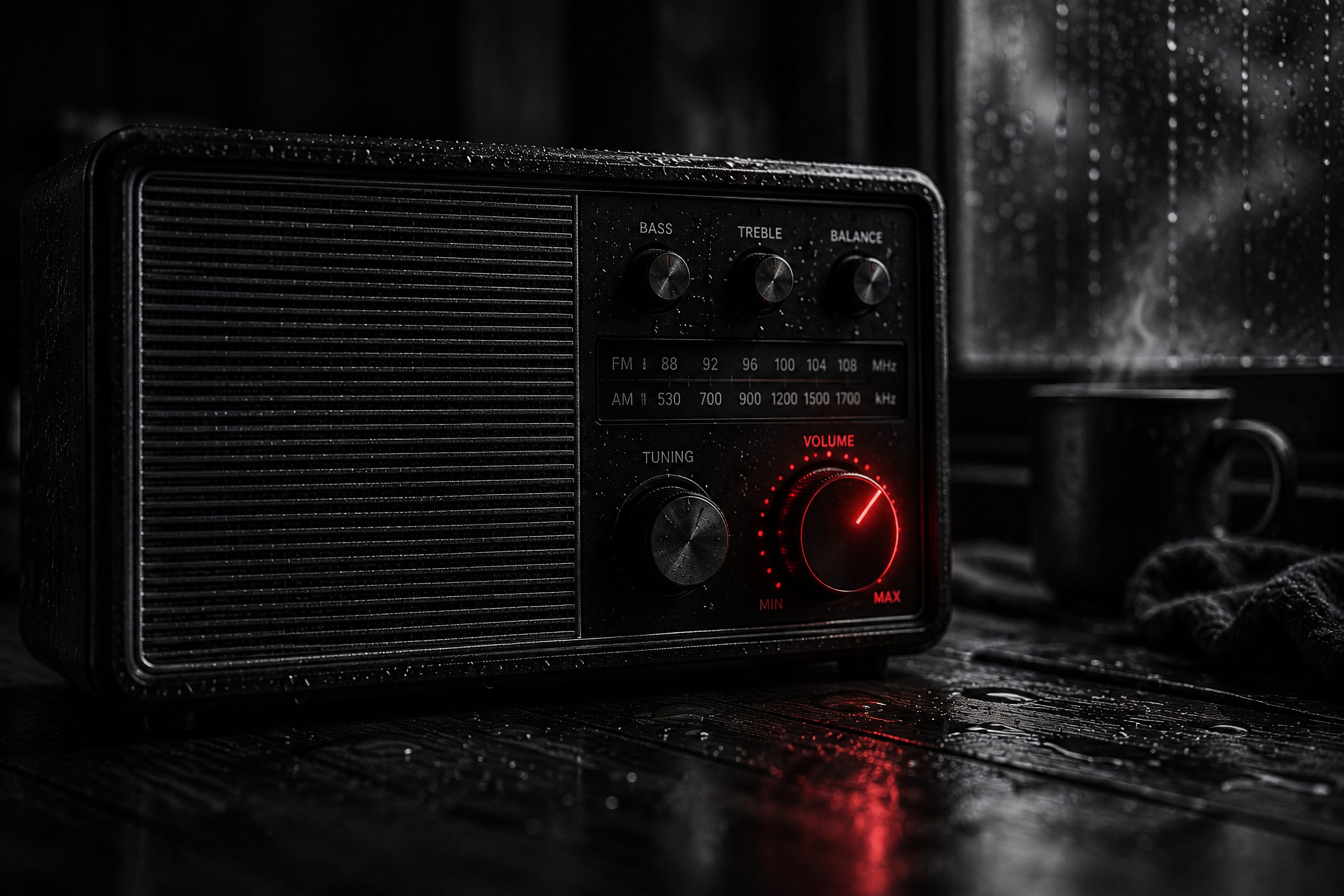
“The problem usually isn’t that you feel emotions. It’s that your brain struggles to turn the volume back down.”
One of the hardest things about emotional dysregulation is that it often leaves you questioning yourself.
You know the situation probably doesn’t deserve the reaction you’re having, yet your body didn’t get the memo.
The emotion is already there.
By the time your logical brain catches up, it’s usually trying to put the lid back on a saucepan that’s already boiling over.
That can be incredibly frustrating because people often assume emotional dysregulation means you’re constantly emotional.
It doesn’t.
Sometimes you can go days feeling perfectly fine.
Then something seemingly small happens, and it’s as though somebody has pressed the fast-forward button on your nervous system.
You might recognize some of these experiences:
A cancelled plan doesn’t just disappoint you. It feels deeply personal.
A small criticism stays with you for days, even though the other person has completely forgotten they said it.
You replay conversations over and over, wondering if you upset someone.
You cry more easily than the people around you, even when you’re trying not to.
You become overwhelmed so quickly that you need to leave the room or be on your own.
Anger arrives in seconds, then disappears just as quickly, often leaving guilt behind.
You feel embarrassed by how intensely you’ve reacted, even though you couldn’t stop it.
You apologize... a lot.
You tell yourself you’re “being ridiculous” while still feeling completely unable to change how you feel.
“The hardest part isn’t feeling emotions. It’s feeling judged for having them.”
For many people, that’s the part nobody sees.
They only notice the tears.
The frustration.
The withdrawal.
The shutdown.
What they don’t see is the exhausting amount of energy it takes to keep trying to regulate emotions that already feel like they’re turned up far louder than everyone else’s.
This is the question everyone asks.
Unfortunately, there isn’t one simple answer.
Emotional dysregulation isn’t a diagnosis in itself. It’s something that can happen alongside lots of different conditions and life experiences.
For some people, it’s linked to the way their brain has always processed emotions.
For others, it develops after long periods of stress, trauma or living in survival mode.
People often think ADHD is simply about attention.
It isn’t.
One of the most overlooked parts of ADHD is how strongly emotions can be experienced.
A minor frustration can suddenly feel enormous.
Rejection can feel devastating.
Waiting, interruptions or unexpected changes can trigger emotions that seem completely out of proportion to everyone else, even though they feel painfully real to the person experiencing them.
Many autistic people experience emotions very deeply.
Changes in routine, sensory overload, misunderstandings or feeling overwhelmed can all make emotional regulation much more difficult.
When your brain is already working incredibly hard to process the world around you, there simply isn’t always much left in the tank for managing intense emotions as well.
Trauma changes the way the brain responds to perceived threats.
When you’ve spent long periods feeling unsafe, your nervous system learns to react quickly in order to protect you.
The difficulty is that it sometimes continues reacting as though you’re in danger, even when you aren’t anymore.
When your brain spends most of its time on high alert, it doesn’t take much to tip it over the edge.
It’s a bit like carrying a glass that’s already full.
The smallest extra drop can cause it to overflow.
Many people associate depression with sadness.
In reality, it can also make emotions much harder to regulate.
Burnout has a similar effect.
When you’re mentally and physically exhausted, your emotional “buffer” becomes much smaller.
Things you would normally cope with suddenly feel impossible.
Emotional dysregulation is also one of the core features of Borderline Personality Disorder (BPD).
People living with BPD often experience emotions that are exceptionally intense and can change rapidly. These experiences are very real and can be deeply distressing, which is why compassionate assessment and support are so important.
Before we go any further, I want you to remember this: emotional dysregulation doesn't tell us what someone has. It tells us how their emotional system is responding.
... Can we stop blaming you for just a moment?
How long have you been apologizing for feelings you never chose to have?

By now, you might be wondering, “If my brain is reacting like this... how do I stop it?”
The first thing to know is that trying harder usually isn’t the answer. If you’ve spent years telling yourself to calm down, stop crying, stop overthinking or “just get on with it”, you’ve probably already discovered that it doesn’t work very well. That’s because emotional dysregulation isn’t a lack of willpower. It’s your nervous system doing exactly what it believes it needs to do.
The difficulty is that many people become trapped in a cycle without ever realizing it. Something happens. A comment. A disagreement. A last-minute change of plans. Your emotions surge before you’ve even had time to think. Then, almost as quickly, comes the guilt.
“Why did I react like that?”
“I’m so embarrassing.”
“I should know better by now.”
Those thoughts don’t calm your nervous system down. They pile more pressure onto it. You start pushing your feelings away, trying to hide them or promising yourself that next time you’ll cope better. But underneath it all, your brain is still trying to process what happened.
“You don’t break the cycle by fighting your emotions.
You break it by understanding them.”
By the time the next stressful situation comes along, you’re already emotionally exhausted. It doesn’t take much to tip the balance because you’ve been carrying yesterday’s emotions into today.
That’s how the cycle keeps itself going.
The good news is that cycles can be broken. Not by pretending your emotions don’t exist, and not by expecting yourself to be calm all the time, but by understanding what’s happening instead of fighting yourself every step of the way.
I wish I could tell you there was one simple trick that made emotional dysregulation disappear forever. If there were, I’d happily tell you about it.
The reality is that emotional regulation isn’t about becoming emotionless. It’s about giving your brain and body the best possible chance to recover when life becomes overwhelming.
One of the most helpful things you can do is begin noticing your triggers. Are there certain situations that leave you feeling particularly overwhelmed? Is it criticism? Conflict? Last-minute changes? Feeling rejected? Becoming overstimulated? Recognizing those patterns isn’t about avoiding life. It’s about understanding how your own mind works.
It also helps to replace judgement with curiosity. Instead of asking yourself, “What’s wrong with me?”, try asking, “What happened just before I started feeling like this?” That small change might not seem like much, but it shifts your focus away from blame and towards understanding. Over time, that can completely change the relationship you have with your emotions.
Looking after your body matters more than most people realize too. Poor sleep, stress, hunger, illness and sensory overload all make emotional regulation more difficult. If your nervous system is already running on empty, it has far less capacity to deal with life’s inevitable ups and downs. Sometimes the kindest thing you can do isn’t finding another coping strategy. It’s recognizing that you’re exhausted.
“Healing doesn’t begin when the emotions disappear.
It begins when the shame does.”
For some people, talking therapies provide a safe space to understand where these emotional patterns came from and learn new ways of responding to them. For others, medication may be appropriate, particularly when emotional dysregulation is linked to conditions such as ADHD, anxiety or depression. There isn’t one answer that fits everyone, and that’s okay.
The aim isn’t to stop having emotions.
The aim is to stop feeling as though you’re constantly fighting against them.

If you’ve recognized yourself anywhere in this article, I hope you’ll leave with one thing.
For years, you may have believed you were too emotional. Too sensitive. Too dramatic. Too much. Those are labels that many people carry around for far longer than they should, often because they never understood why their emotions felt so different in the first place.
The truth is that emotions aren’t character flaws. They’re messages. Sometimes those messages arrive quietly. Sometimes they arrive like a storm. Neither makes you a bad person.
Understanding emotional dysregulation won’t stop every difficult day. There will still be moments when you feel overwhelmed, frustrated or tearful. There will still be days when your emotions seem to arrive before your thoughts do. But understanding what’s happening changes something important. It replaces confusion with knowledge and shame with compassion.
“You were never ‘too much’.
You were carrying more than people could see.”
So the next time you catch yourself thinking, “Why am I like this?”, I hope you’ll remember that there is often a reason. Your brain and nervous system are responding in the only way they know how, and that doesn’t make you weak or broken.
It simply means you deserve the same patience and kindness that you so freely give to other people.
If you’ve made it this far, thank you.
I know there are thousands of articles you could have spent your time reading today, so the fact you chose to spend a little of that time here genuinely means a lot to me.
I started Storm Psychology because I wanted to make psychology feel a little less intimidating and a lot more human. Less jargon. Less judgement. More understanding.
If today’s article helped you understand yourself, or someone you love, then I’ve done exactly what I set out to do.
If you’d like to keep reading, subscribe for free and I’ll send every new article straight to your inbox.
Know someone who needed to read this? Sharing articles like this is one of the biggest ways you can help Storm Psychology reach the people who need it most.
If you’d like to go a little deeper, the kettle’s on.
I’ve put together exclusive articles, behind-the-scenes updates and extra content for paid subscribers. And as a little thank you for being here today, you can enjoy 20% off your first year.
If today’s article made you stop, think, or simply helped you feel a little less alone, you can always buy me a tea.
Every cuppa helps keep the kettle on while I disappear down another psychology rabbit hole... so I can come back and explain it in plain English.
Whatever brought you here today, I’m really glad you stopped by.
Until next time,
Kel ❤️
Storm Psychology
by MindFullOfIt
Comments
Nothing yet. Say the first thing.
Sign in to join the conversation.