
No, Luke. But it sure may feel that way at first.
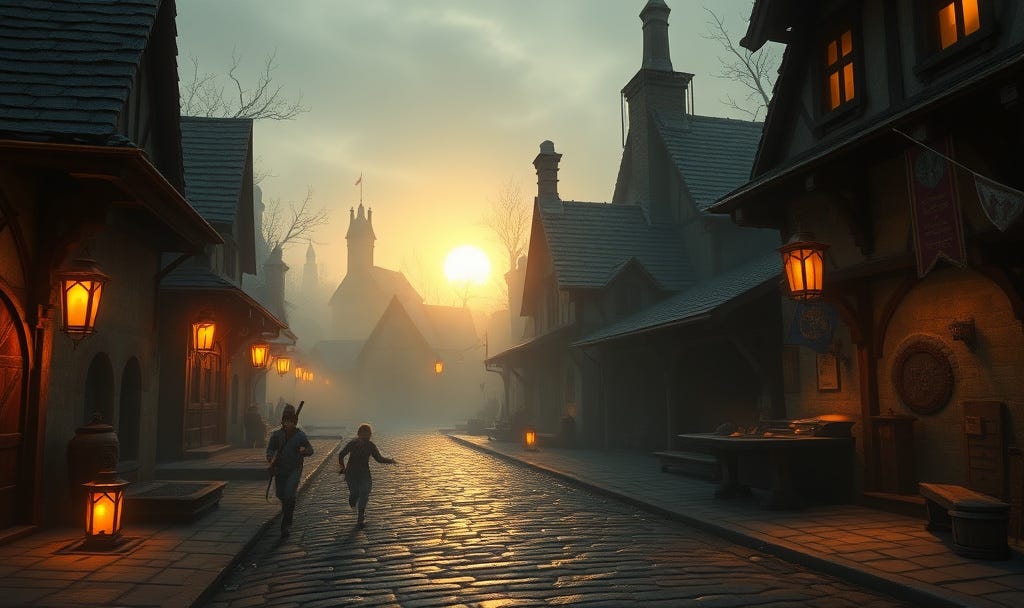
Stepping into Tales of the Abyss feels strangely calm for a game that eventually goes on to wrestle with REALLY heavy topics like identity, destiny, and loss. The early towns hum with quiet life. NPCs follow routines. The blacksmith hammers endlessly. Children run in circles. Guards patrol without urgency.
Nothing here begs for your attention. And that’s the point.
The world never performs for you. It just keeps on turning, whether you look or not.
A fountain catches sunlight differently as the in-game clock shifts. Banners flutter overhead. A lone character pauses before turning a corner. These aren’t dramatic details. They are patient ones.
Before the story ever deepens, the game is gently teaching you how to look.
And once you start looking, you realize this care extends far beyond the streets and buildings.
That same intention carries into combat.
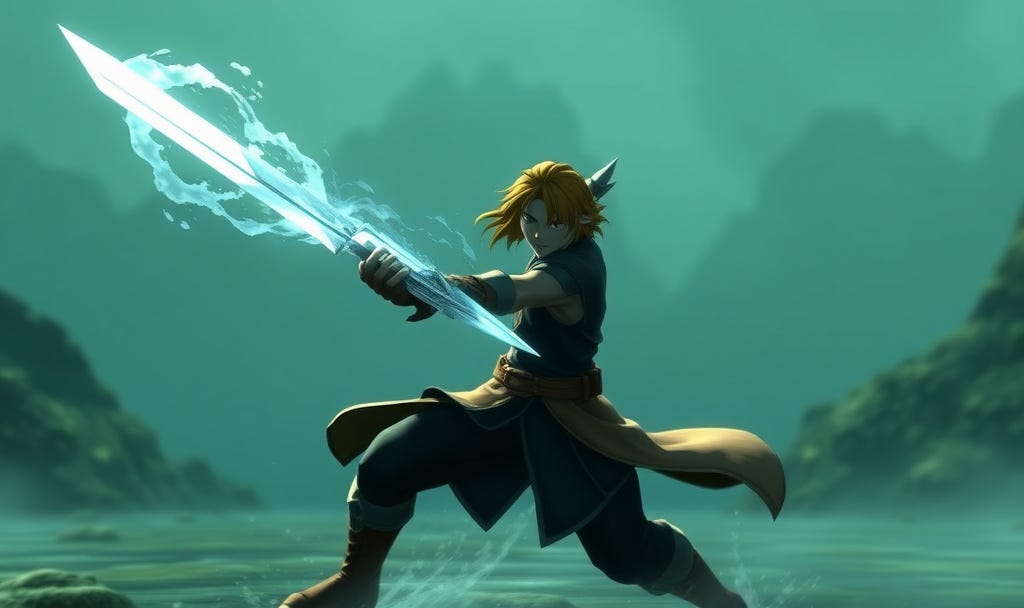
At first glance, Abyss looks like your familiar JRPG system. Spend time with it, though, and you start to see the choreography it inherited from its predecessors like Tales of Symphonia. Luke’s sword swings have weight. Elemental effects aren’t just visual flair. They establish both rhythm and impact. The camera shifts slightly during bigger attacks, guiding your eye without breaking the flow.
Even small touches matter. Character quips(both hero AND villain) mid-battle. Idle stances between moves. The timing between animations.
Optional encounters reward curiosity, not just experience points. Tear’s quiet remarks about Luke’s recklessness. The split second where Guy hesitates before striking. Small exchanges that deepen relationships without slowing the flow.
The game is quietly reinforcing a lesson: attention matters in motion just as much as it does in stillness.
And that becomes more meaningful once the story leans into its emotional core.
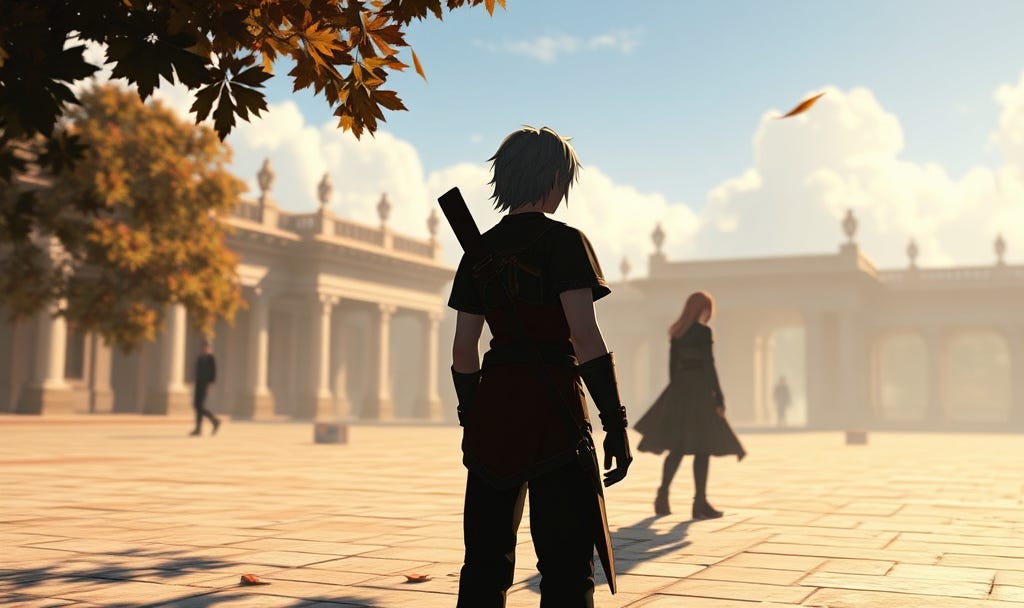
Luke and Asch are not just narrative devices. They are emotional mirrors.
Luke spends the game trying to understand who he is outside of what others expect. Asch carries the quiet weight of who he was supposed to be. Their tension is reflective, almost uncomfortable in its restraint.
The sadness in Asch’s story is rarely spelled out. You catch it between the lines. In the way the camera lingers on him, slightly apart from the rest, after a tense exchange. Even in the musical motifs that soften when he appears.
There’s a moment late in the game where Asch doesn’t speak. The camera holds on him. The music quiets. And you feel the weight of everything he’s carried without a single line of dialogue. If you know…you know 😮💨
You don’t learn his tale through exposition alone. You absorb it through atmosphere.
Because the game has already guided you to pay attention to small things, you catch it. A slight hesitation before a line. A look that lingers a second too long. A moment where no one speaks.
The emotional depth of Abyss doesn’t just come from plot twists. It comes from what happens in the space around them.
By now, it becomes clear the environments aren’t just backdrop. They’re doing the emotional work.
A village at dusk feels warm and safe. A mountain pass feels isolating and hollow. Dungeons carry tension before dialogue.
Lighting, music, and environmental animations combine in ways that feel almost invisible. Leaves shift with the wind. Lantern light spills onto stone streets. The OST holds notes just long enough to make a scene feel heavy or hopeful.
The game never tells you what to feel. It builds space where feelings surface on their own.
And if you’ve been taking your time, you start to notice how deliberately this world supports the emotional weight Luke and Asch carry.
This is where Abyss quietly becomes a lesson in mindful gaming.
Idle animations. Optional conversations. ALL the side quests. Even the environmental cues. Small acts of developer care are everywhere but only for players willing to linger
If you rush, you get the usual story beats. If you linger a bit longer you get so much more!
Luke and Asch’s relationship, in particular, rewards a patient gamer. Their emotional tension often lives between lines of dialogue, not inside them. The empathy, the sadness, the growth all sit in moments the game trusts you to interpret.
And that trust is part of the magic.
Revisiting TOA today feels different. Modern games often prioritize spectacle and speed. Abyss reminds you that patience, subtlety, and observation can be just as powerful.
This is PS2-era at its best. The designers layer idle animations which reveal personality. Animators time sword swings to feel weighty. Sound engineers holding notes just long enough to shift the mood around. There’s intent in moments many players may never register.
Abyss rewards reflection. Slowness. Presence.
And just when the emotional weight threatens to get too heavy, someone steps in to shift the tone.
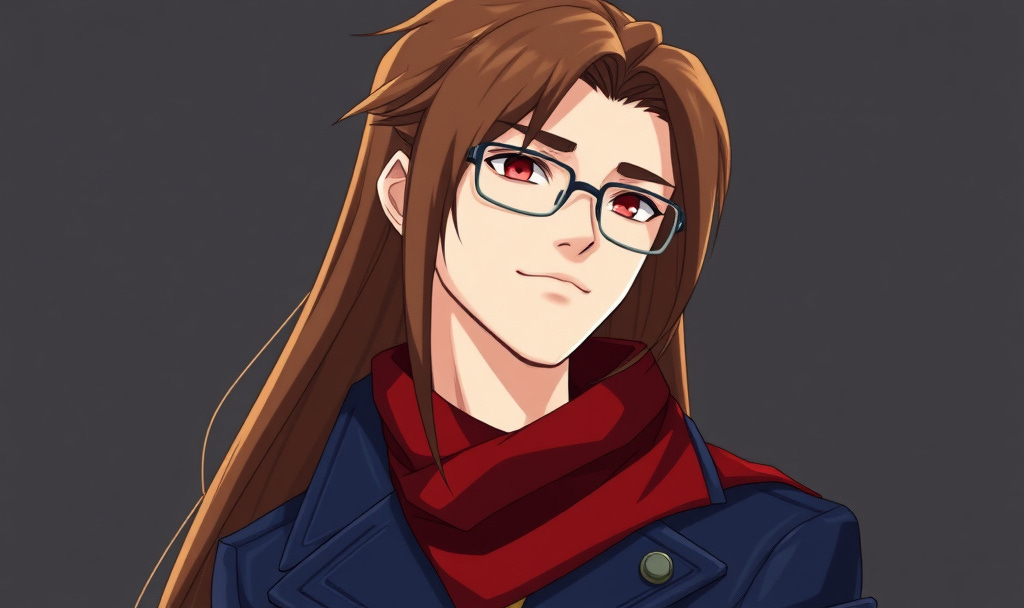
And then there’s Jade.
Jade Curtiss doesn’t just provide the sass. He provides emotional balance.
His humor is dry, perfectly timed, and often delivered with minimal animation or camera movement. A slight pause before a remark. A deadpan line during a dramatic moment. Those tiny gestures that suggest he knows more than he’s saying(..which he does).
You don’t laugh because the game tells you to. You laugh because you caught on. You get it.
Jade is proof that subtle character design matters. His presence softens Luke’s intensity and Asch’s burden without breaking immersion. He reminds you that people, even in heavy stories, still observe, comment, and carry personality quietly.
He doesn’t ask for or needs your attention. He rewards it.

This is why revisiting Tales of the Abyss matters.
Not for nostalgia. Not for plot. But for the reminder that games can be full of intention in places we rarely ever think to look.
Fountains catching light. Battle animations with weight(e.g., Mystic Artes). Pauses before a key lines of dialogue. A sassy remark delivered with pitch perfect timing.
These are the quiet hands behind the world.
Abyss invites you to move at its pace; to take in the beauty hidden in the details. And once you do, it becomes difficult to stop seeing them.
There is more here than plot beats and battle mechanics. More than nostalgia.
There is care.
And it was there the whole time.
Thanks for reading! 😄
Image Credits - Substack and Unsplash
…one day I will hire an artist for these essay images. Its getting harder to find the what I want 😂
No posts
Comments
Nothing yet. Say the first thing.
Sign in to join the conversation.