
Hi and welcome back to another twinkly episode of Mind and Iron. I’m Steven Zeitchik, veteran of The Washington Post and Los Angeles Times, senior editor of tech and politics at The Hollywood Reporter and lead guitarist of this newsy Billy Joel cover band.
Every Thursday we offer the finest (and not so finest)of what’s happening in AI and future-land. Please join our brigade.
A crazy week just unfolded as the Pope spoke out on AI….and spoke and spoke. The 42,000-word Encyclical warning of needed protection for the human is like nothing the Church — or Silicon Valley — has ever seen. We’ll look quickly at what he did and then open up a new series: what do the world’s religions think of AI, kicking off today with the second-biggest, Islam.
Also, on our off week the Department of Commerce just, oh, nbd, handed out $2 billion in quantum computing grants to the likes of IBM (!), also taking a stake in the firms (!!). We’ll huddle up on what this means and revisit what quantum computing intends to do, should any of you have blissfully forgot.
First, the future-world quote of the week:
—The Pope, offering the first but also kind of the mic-drop last word on AI
Let’s get to the messy business of building the future.
The Pope and a Silicon Valley founder walk into a bar; Islam and AI; Q-Day?
1. BY NOW YOU SURELY HAVE HEARD, READ OR AT LEAST READ ABOUT (VIA AI) THE POPE’S ENCYCLICAL ON AI.
A more profound and surprising document you will not find — 42,000 words (longer than most Substacks!) of intermittent careful curiosity followed by repeated bursts of strong warning.
The most ardent lines you’ve likely heard as well, such as the spirituality-themed one from above about AI not possessing a body (a clear reference to those who would make it a God, I think) and the Biblical-themed one about the Tower of Babel. (“With the heart of a shepherd and a father, I ask everyone to abandon the construction of yet another Tower of Babel and to join forces in building up the common good, so that humanity will never lose its beauty.”)
That latter quote is sneakily powerful. The Tower of Babel was of course constructed by people in postdiluvian Genesis who got together and thought they could reach the sky; while a seeming testament to the power of collaboration (the builders all spoke the same language), it’s actually sideways shade at mass conformity: “If everyone thinks and talks the same, humanity will lose its specialness and society will fall prey to a flattening hubris.”
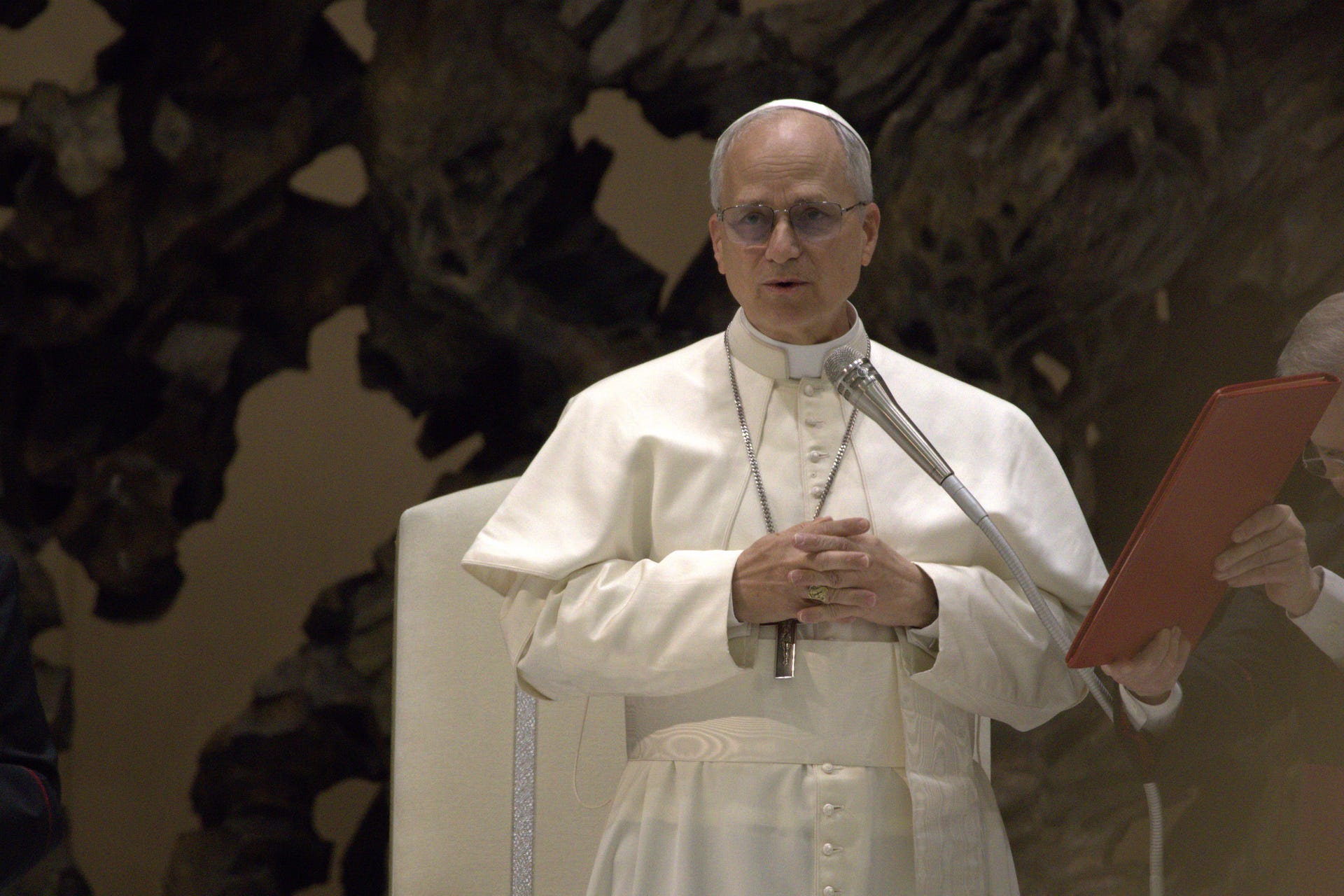
One hardly needs a divinity degree to see how AI can lead to exactly this. Once we rely on a machine weighted toward the average to think and communicate we’ll end up in that same flatland from where nothing good can emerge. (Plus the hubris part feels like a dig at the residents of Silicon Valley, who themselves believe they can reach the sky with superintelligence. In fact tell Old Testament readers from another age that this is what the 21st-century will bring and they’ll disbelievingly laugh and say “come on, no one is that on the nose”).
I asked a Vatican expert for a story in THR this week what he thought the Pope’s words could do in the real world — there are 1.4 billion Catholics, after all, and many of them are AI’s biggest customers — and the expert, a Fordham professor named David Gibson, said this:
“[E]verybody feels like a tsumani is hitting them but no one is really articulating why. And finally we have a world leader who’s articulating it in a powerfully coherent way. Who’s taking a lot about what’s turning over in our minds — about the threat of jobs lost, about creative destruction, about the destruction of the environment thanks to data centers.”
“People are hungry for action, for leadership, for a return to community and humanity,” he added. (Read the whole interview here.)
There’s a lot to what Gibson is saying. Until now we’ve had politicians (a disparate group, from Josh Hawley to Bernie Sanders) warning us to pump the brakes. We’ve had public figures in the creative fields (similarly disparate, from Guillermo del Toro to Scarlett Johansson) doing the same. Plus the academics and public figures, not least of whom is the man who invented AI himself (Geoffrey Hinton, as you know). But we haven’t had someone of Pope Leo’s stature or reach making the case. Now when Sam Altman drops blog posts in the middle of the night about how “AI will be the most powerful tool for expanding human capability and potential that anyone has ever seen….The world deserves huge amounts of AI and we must figure out how to make it happen,” he’ll be doing it against the backdrop of the Pope’s warnings.
Or now when all of us go download the latest tool, generate the latest video, or outsource a bit of research or decisionmaking we can use our brains for, we’ll remember Leo’s fatherly caution. Doesn’t mean we won’t do this stuff, but we may do it less, or different. Not to mention the tech executives themselves, who at least now in developing these products will have to contend with the optics, if not with a new moderating internal voice. tl; dr, I don’t think we can overstate the power of the Encyclical, from us everyday users down at the bottom of the food chain to the Silicon Valley alphas preparing the meal for us all.
Everything has felt a little chilly lately. The Pope just changed the weather.
2. ALL OF THIS TALK OF THE POPE AND AI, THOUGH, ALSO GOT US THINKING: If the leader of 1.4 billion Catholics could have this effect, what could leaders of a faith with an even bigger following — Islam — do to shape the thinking among their two billion adherents?
Or the clergy who guide the way for the world’s one billion Protestants? Or so many other religions, with their tens and hundreds of millions of followers — their novel ways of thinking, their time-tested dogma — that now must contend with this new, pseudo-spiritual force
This is all further amplified by a study I’ve always found remarkable. You’d think the people who believe in a Higher Power least would be most likely to believe in or use AI; they have a gap that this machine hivemind can step in to fill. While people of faith look to God more than a data set.
But it actually works the other way. A study a few years conducted by a Duke academic and a prominent Turkish professor found that those who contemplate the divine are more likely to accept what AI has to say. “Thinking about God promotes greater acceptance of Artificial intelligence-based recommendations,” they found. “Eight preregistered experiments reveal that when God is salient, people are more willing to consider AI-based recommendations than when God is not salient.” The skeptical forces that make people doubt religion also make them doubt the power of AI. And vice versa.
That means that the battle, if you will, over whether and how AI will be used will be fought heavily on the grounds of religion. At the global-pronouncement level, like this week’s Pope news, and in every house of worship and community. So it seems relevant to focus on the state of AI within different faiths at this moment.
Let’s take a quick look at Islam, following up with further religions in future episodes. (Requisite caveat that making any pronouncement about a faith is as silly as describing how a population feels about a food. Tastes, views and personalities vary; this is meant as general guidance.)
Islam and AI have begun to overlap in a number of areas, including the study of the Quran. Apps like Tarteel help translate and guide on Quran pronunciation, and they’ve become a key tool for people who want to increase their fluency in the text. Ditto chatbots generally for folks who find going to an imam too daunting or diving into the text too laborious. A chatbot, for better or worse, was meant for exactly this high-motivation, low-skill use case.
That has made some Muslim leaders optimistic about the tech. A Muslin AI ethics nonprofit leader named Waleed Kadous told Time this week, “If it's done correctly, it can really lead to people developing a better understanding of their faith.”
Of course there’s not much separating a lowered access barrier and a misinformation nadir. That’s what motivated Egypt’s governmental Islamic advisory and judiciary body back in January to ban the use of AI for any religious-guidance purpose. Tech execs might eyeroll such a move as centralized figures worried about diminishing their authority, but it hardly feels that simple. Knowledge of primary texts are declining across the population of many religions — this study about the plummeting rates of fluency in the New Testament is jaw-dropping — and leaders are justified in worrying that the use of chatbots will decrease it further. Because apart from the general dangers of disconnecting from primary sources, there are the specific dangers of AI hallucinating or being manipulated to give info about the Quran that simply isn’t accurate. Ease of access tends to come with less knowledge.
Of course when it comes to religion AI can post problems a lot more fundamental than just bad search queries. The idea of outsourcing thinking and decisions and even values is something many religions have a few ideas about, and Islam is no exception; Wadous warned in the Time article, as the magazine put it, “that major chatbots like ChatGPT or Claude reflect the values of their western builders, as much as they might strive for neutrality. ‘It’s very Western focused, it’s very individually focused, it doesn’t talk about community at all,’ Wadous said.” (The magazine also gave a rather startling example of a tradition-minded Gen Z-er who asked ChatGPT how to contend with the stares she was getting for a headscarf and the bot shockingly responded by encouraging her to take it of, something she was not looking to do, because it “doesn’t mean you’re a bad Muslim,” Reason No. 367 you shouldn’t use ChatGPT as an authority for anything.)
Maybe most important is that the idea of a superintelligent being would seem to conflict with bedrock notions of Islam and so many other religions about the supremacy of God. A verse in Quran 22:73 says that even if every person on earth gathered to create something “they will never create as much as a fly” compared to Allah. The Pope’s Tower of Babel warning, essentially.
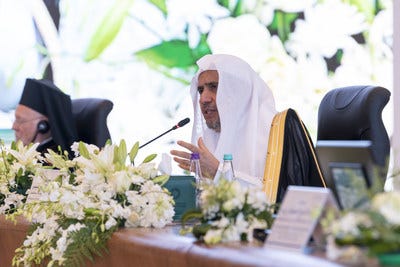
Meanwhile, the Secretary-General of the moderate NGO known as the Muslim World League, at a major conference in Fez last month, called for an ethical framework around AI. Dr. Mohammed Al-Issa urged standards, transparency and guardrails, and honestly his call didn’t sound all that different from the Pope’s — or Hawley and Sanders — even if Silicon Valley executives might have bristled uncomfortably at much of it.
Islam lacks the central leadership of Catholicism, so expect more variance in how the tech is received; it will change by branch/sect, by geography, by community. But even with all these differences, caution and tentativeness rule the day. When it comes to embracing a technology that relieves us of thinking, Islam gives what we all feel: some appealing convenience, and some big caution flags.
3. ARE YOU READY FOR Q-DAY? You’re not? You don’t know what it is? You have enough to worry about without adding an alphabetical new concern?
Well, I’m here to tell you that you should worry (theoretically). Q-Day is when quantum computing — the idea of applying quantum mechanical theory to computing — comes into its own and essentially breaks the internet, exposing passwords, shattering encryption and generally creating mayhem. A sober but still eye-opening video in New Scientist this week laid out what could happen.
Of course, that presupposes quantum computing happens in the first place.
The reason quantum computing is on everyone’s mind is because just last week Commerce Secretary Howard Lutnick announced some $2 billion in new grants to IBM and either other (mostly smaller) companies to pursue more quantum computing research. IBM will get about $1 billion of it, and put another $1 billion of its own to create a quantum-computing subsidiary called Anderon. (The money comes from the Biden-era CHIPS Act.)
All nine recipients will give minority stakes to the government in return, which means on top of everything else the U.S. government now is part-owner of a potentially mega-powerful piece of tech.
Since some of you may still wonder what quantum computing actually is, we’ll surface part of a post we published last year on the matter. Not too much has changed — Google, Microsoft, Amazon and IBM are all motoring along. Except the first three didn’t take/get the government grant, no doubt not wanting to give a stake to the government. But here’s what you need to know.
Right now traditional computing uses data packets, which expresses language via bits that are either on or off, ones and zeroes — it’s literally a binary system. But with the help of quantum mechanics and subatomic particles, quantum computing’s “qubits” can be in both states at the same time. Which makes things go faster…a lot faster.
So strange is the power of qubits is that it cannot be apprehended — literally. The physics-based simultaneity of it means it can’t really be seen the way another object would. As a NY Times piece once famously noted, “If any of us actually looked at the fundamental building block of a quantum computer, called a qubit, it would cease to be a qubit.” (I know.)
The best (understandable) analogy I’ve heard for quantum computing vs the traditional kind is the requirement to move linearly across city blocks as opposed to passing through buildings with quasi-superhuman powers. Not only would you get where you’re going faster, but your whole way of moving would change.
Or, in this case, your whole method of computing. If quantum computing were to be achieved, you could (theoretically) solve problems no classic computer could. You could (theoretically) crack cryptographic codes and (theoretically) achieve new levels of drug-discovery breakthroughs, because you (theoretically) wouldn’t be bound by the same rules of computing. I say theoretically, because nobody knows what quantum computing can do, as it’s yet to be fully invented let alone tested. This is very experimental stuff.
What we do have are some promising intermediate steps to that steroidal end goal. That’s what Microsoft announced in early 2025. What they did was claim something called “topological qubits” that create those qubits by keeping materials in a state of matter that is neither solid, liquid nor gas, thus enabling that simultaneity. Again, very theoretical, as even some of the scientists who’ve been briefed on the research are only cautiously optimistic. But still, the kind of vista that even several years ago was hard to imagine.
In addition to Microsoft we also have Amazon’s first-ever quantum-chip prototype, an then of course IBM and Google too. Google in late 2024 announced its own chip, Willow, that could supposedly undertake a computation in five minutes what would take a traditional computer — wait for it — a septillion years to conquer. A Hollywood awards show will never be the same.
So clearly there’s an arms race. What happens when we get to the end of it? What will all this promise of speed and power mean for how we live? That’s a thornier question, and one on which we need to wait. (Possibly a while — while the developments are coming much faster in recent years, mainstream usage could still be a decade or more away.) But the idea, at least, is that quantum computing can power everything from batteries to AI, enabling a supersizing of the world we’re about to head into in such a way it changes not just quantitatively but qualitatively as well.
The nature of that quality is hard to predict. Yet clearly we’re heading there. Just five years ago Google made news by achieving so-called quantum supremacy after scientists there built a computer that took only about three minutes to solve a problem that would have taken a classic machine 10,000 years. Compared to the septillions of today, it was practically a Commodore 64.
Every week we bring you the TSAS — the TOTALLY SCIENTIFIC APOCALYPSE SCORE (tm). It’s a barometer of the biggest future-world news of the week, from a sink-to-our-doom -5 or -6 to a life-is-great +5 or +6 the other way. 2025 ended on an up note, but the score for the year was dismal — a horrendous -42.5. Can we turn things around in 2026? So far, not too bad. In fact after this week, we’re back to breakeven.
THE POPE JOINTS THE AI HUMANIST FIGHT: +4.5
ISLAM IS EQUIVOCAL ABOUT AI: +2
THE GOVERNMENT IS GOING DEEPER ON QUANTUM COMPUTING: -1.5
No posts
Comments
Nothing yet. Say the first thing.
Sign in to join the conversation.