
Hello Everybody,
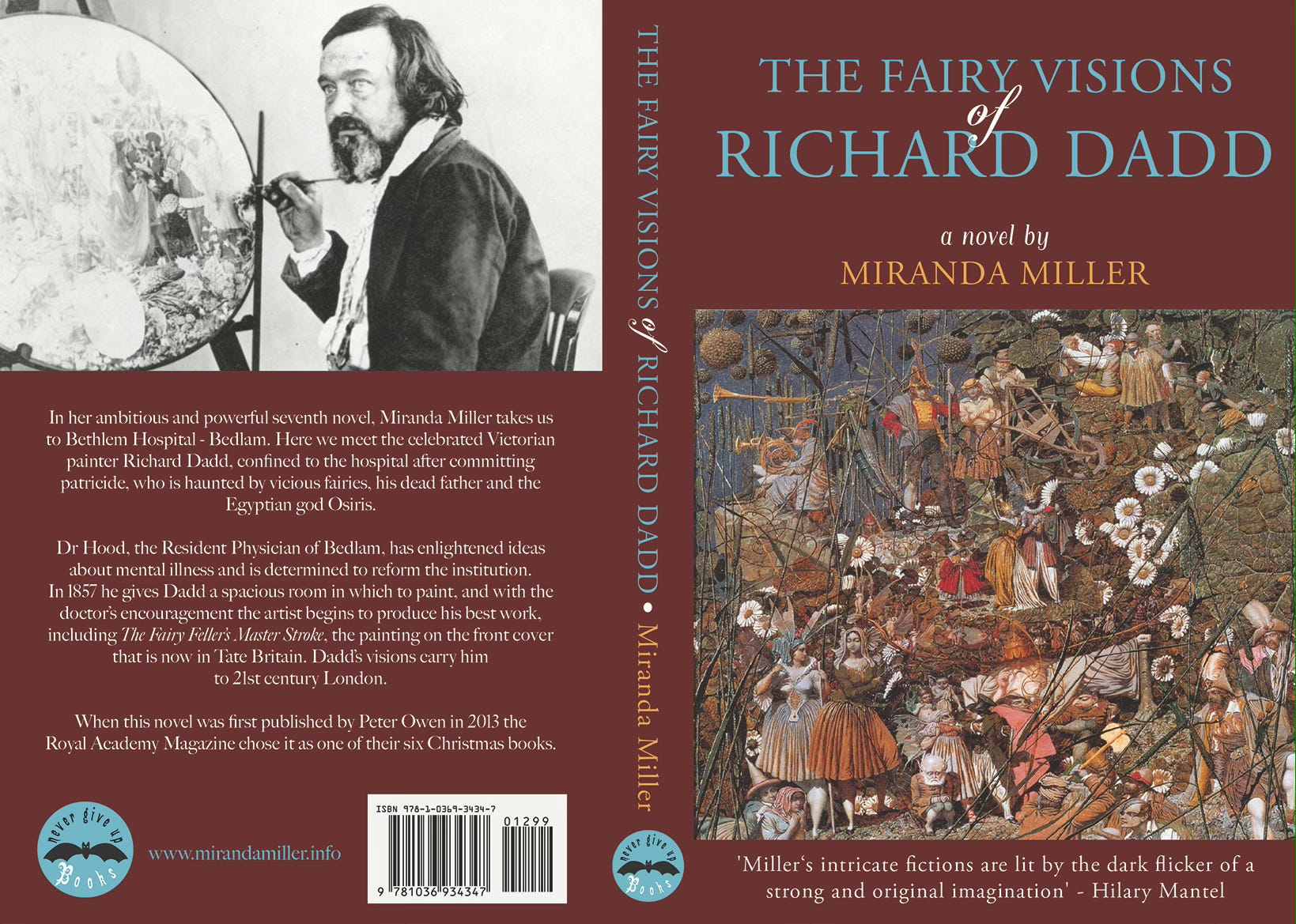
I was very pleased to receive this sample copy of The Fairy Visions of Richard Dadd, my seventh novel, first published by Peter Owen in 2013. I now own the rights and it’s out of print, so I’m re-issuing it, my first venture in self-publishing. In July The Royal Academy of Arts will host a major exhibition, Richard Dadd: Beyond Bedlam.
Richard Dadd’s murder of his father in 1843 caused a sensation. The 26-year-old had studied at the Royal Academy Schools and had many friends and admirers in the art world. Confined to Bedlam, or Bethlem (which was in what is now the Imperial War Museum) and later to Broadmoor for the rest of his life, Dadd was encouraged by the doctors to continue his work. In 1857, the year in which my novel is set, Dr William Charles Hood arranged for Dadd to be moved from the grim Criminal Lunatic block to a spacious room in the main building where the artist produced his best work, including The Fairy Feller’s Master-Stroke, the mysterious and beautiful painting on the cover. In my novel Dadd is haunted by the voices of his dead father, vicious fairies and the Egyptian god Osiris.
I was intensely moved by Dadd’s tragic story. Most historical novels ask the question: what do we think of them, these long dead people? I wondered what he would think of us, so in my novel Dadd visits our 21st century London.
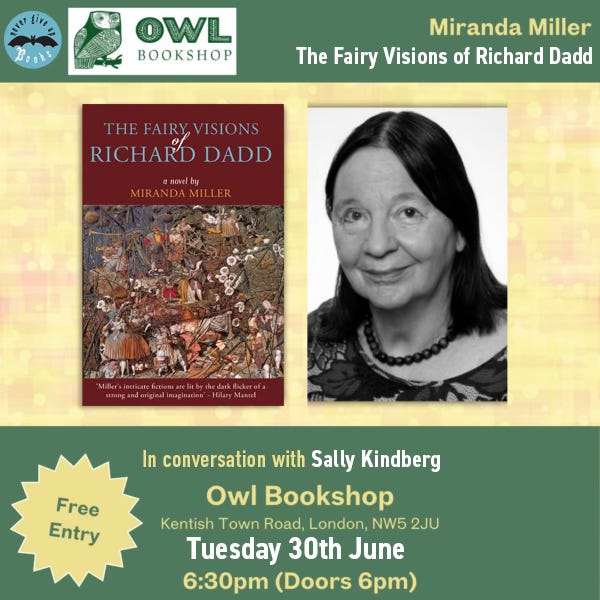
Here’s an invitation to the launch on June 30th:
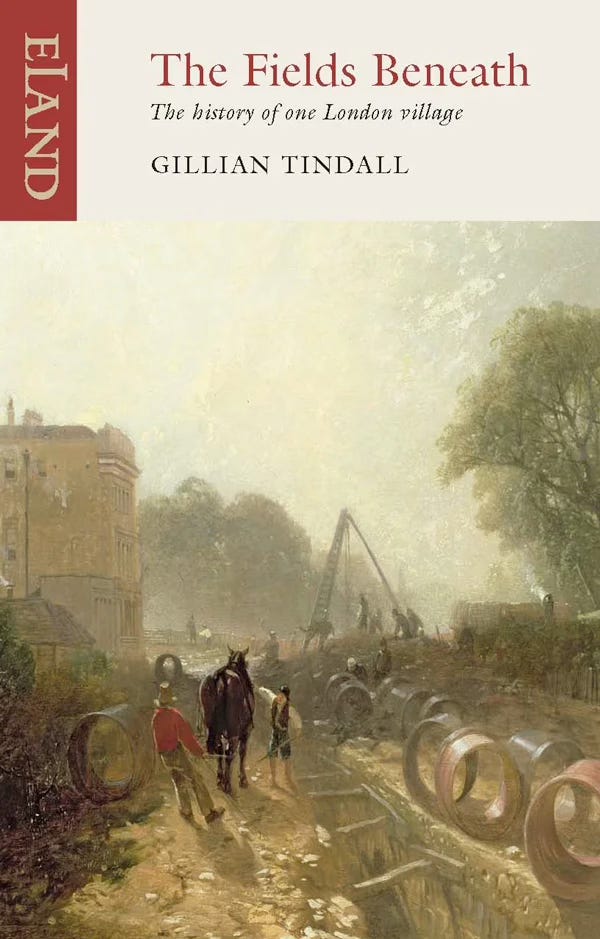
Gordon and I collect books about the history of London and I’ve just read a classic of this genre, Gillian Tindall’s The Fields Beneath. Writing with great warmth and humanity, she guides us through a thousand years of history. Kentish Town and St Pancras were once synonymous, a parish extending all the way from what is now the Tottenham Court Road to Highgate. Some older people feel now that the pace of technological change is just too bewildering to cope with but Tindall reminds us that people born in the age of the stage-coach were equally disorientated by the arrival of the railway, when 38,000 Londoners were displaced. Thackeray wrote: “Your railroad starts the new era, and we of a certain age belong to the new time and to the old one…They have raised those railway embankments up, and shut off the old world that was behind them.” I live near Gospel Oak and have often wondered where its name comes from. Tindall tells us that there really was a “venerable tree” that was probably destroyed by the Midland Railway Company. According to legend an impressive list of people preached beneath it, including St Augustine (!), Wycliffe and Wesley. Reading this book, I wondered how the damage already done by HS2 before a single train has appeared compares with the trail of destruction left by the first railways.
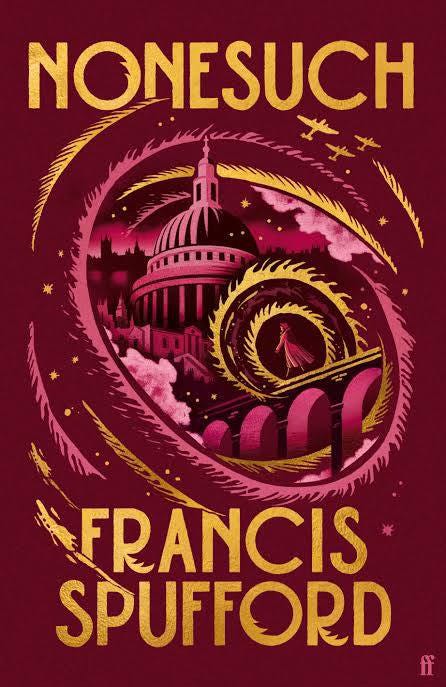
I also hugely enjoyed reading a very different London book, Nonesuch by Francis Spufford. With wit and originality, he weaves together a novel about life in London during the Second World War, a touching love story, the early history of TV and a wild magical adventure. I love having my disbelief suspended by this kind of story. I admire straightforward, well written realistic novels but something in me longs for the impossible, for mythology and fairy tales. Spufford’s novel ends with the message: To Be Continued, so I look forward to that.
www.mirandamiller.info
No posts
Comments
Nothing yet. Say the first thing.
Sign in to join the conversation.