
I’ve been thinking a lot about electricity lately.
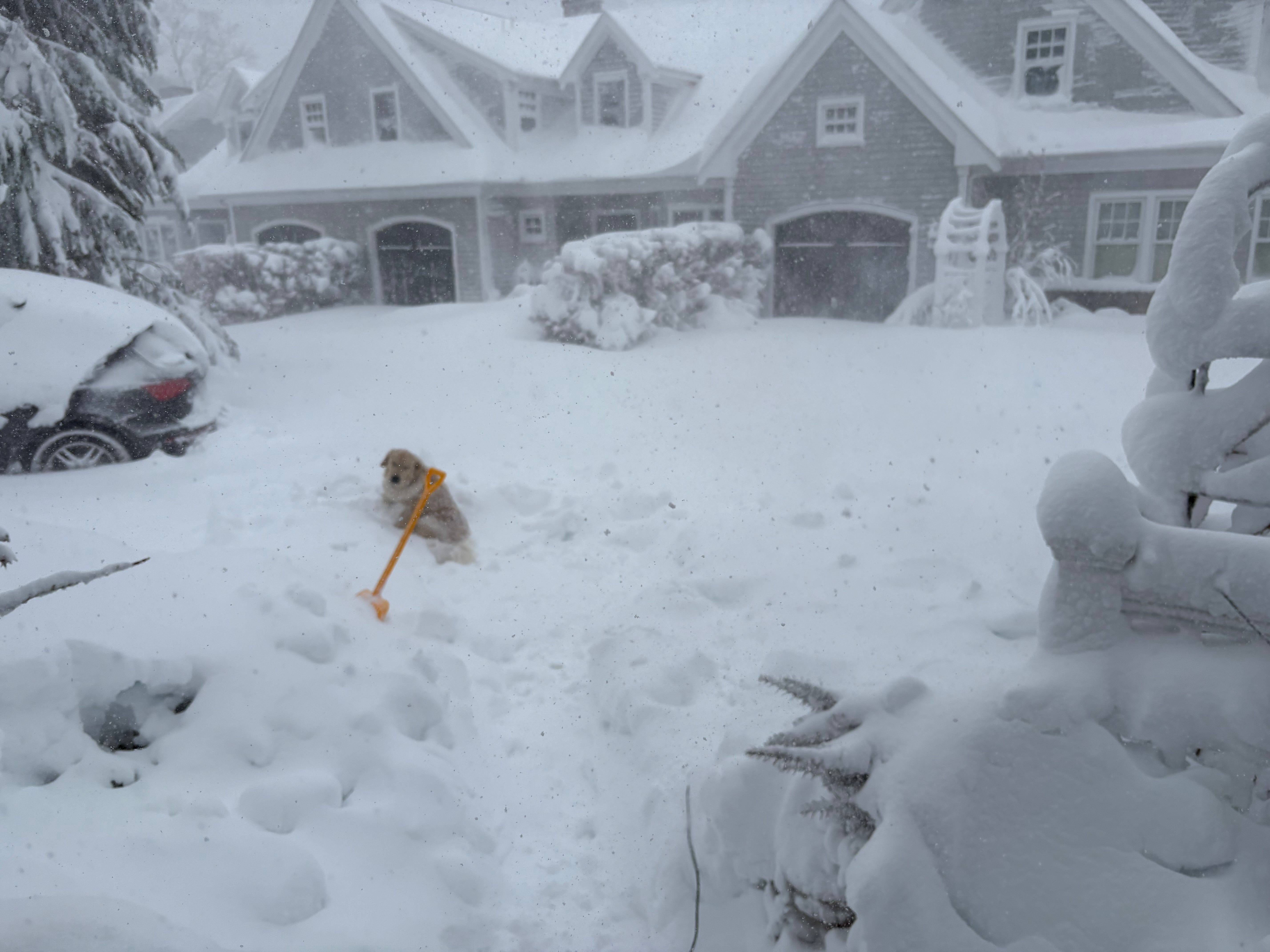
Soon after I returned from Antarctica, the eye of a nor’easter blizzard barrelled right over my house on Cape Cod, leaving us in the dark for nearly five days. It's a reminder of how much we rely on electricity and on how fragile the system is for delivering it in this country.
I'm still astonished that we continue to use wires on poles to deliver electricity. I know burying them is expensive, but this storm alone delivered about a $35 billion economic loss, along with the snow, cold, and wind.
We had much better weather in Antarctica over the past two months.
Fragile as our century-old electricity delivery system is, it is facing a surge in demand that it has not experienced in 80 years.
Some experts say the U.S. could need 50 percent more electricity in the next twenty years—growth we haven’t seen since the post-World War II boom. Tech companies are already hunting for gigawatts of power for the enormous server farms that run cloud computing and AI.
That’s the backdrop for my latest PBS NewsHour story. You can watch it here:
I traveled to Christine, Texas, about forty miles south of San Antonio, where the San Miguel Electric Cooperative runs a 40-year-old lignite coal plant. Lignite is the dirtiest, most carbon-intensive coal you can burn. The plant sits right in the middle of tens of thousands of acres that are strip-mined to keep the fires burning.
But the man who ran the utility until recently, Craig Courter, has been thinking about the future.
Over his legendary brisket (he is very good at marshaling fire to serve many purposes), he told me about a plan to replace the coal plant with a massive solar farm backed up with battery storage. It’s not ideological for him—it’s practical. Solar has become one of the cheapest ways to generate electricity, and it can be built quickly.
But here’s the tension. Courter was able to fund the transition with a low-interest loan from a program stood up by the Inflation Reduction Act passed during the Biden years. Surprisingly, the loan has not been clawed back by the fossil fuel-financed Trump regime.
A visionary transition like that is a reminder that electrons flow with no regard to Red or Blue affiliations.
The ravenous demand for electricity is pushing utilities to build whatever generation they can get online fastest. And despite the misinformation that you might hear from Trumpistes, solar fits the bill for speed to deployment and cost competitiveness.
Still, that does not seem to be diminishing demand to build new natural gas power generation. And it also is encouraging utilities to keep existing fossil fuel plants, including coal, online longer than originally planned. It's an all-of-the-above moment if you want to be realistic about meeting the increase demand. And this is why Trump's vendetta against wind power is nonsensical.
America is entering a new energy era—one that might be driven less by climate politics and more by the sheer need for power. If we continue to prioritize 19th century solutions to 21st-century problems, we will face irrevocable consequences to our planet.
Just last month, I flew in a helicopter through the ice canyons of the Thwaites glacier. There is little doubt it is collapsing and melting faster than scientists can quantify. That glacier alone represents 2 1/2 feet of sea level rise all over the world. When it’s gone, Buzzard’s Bay will be at my doorstep.
Artificial intelligence may help us solve many big and complex problems but right now it looks like it’s exacerbating at least one of them.
I worry that our seemingly insatiable desire to watch dog bro podcasters and cranky cat baristas is further sidetracking the urgent need to embrace renewable energy.
No posts
Comments
Nothing yet. Say the first thing.
Sign in to join the conversation.