
Artemis III — once billed as the mission that would put American boots back on the lunar surface — will now fly in 2027 as an orbital test mission. Instead of descending to the Moon’s South Pole, the crew will rendezvous in low Earth orbit with the Human Landing System and test integrated operations before committing astronauts to a landing attempt.
The landing shifts to Artemis IV. Possibly 2028, but I would not bet on it.
On the surface, this looks like delay. In reality, it’s something more important: a structural correction.
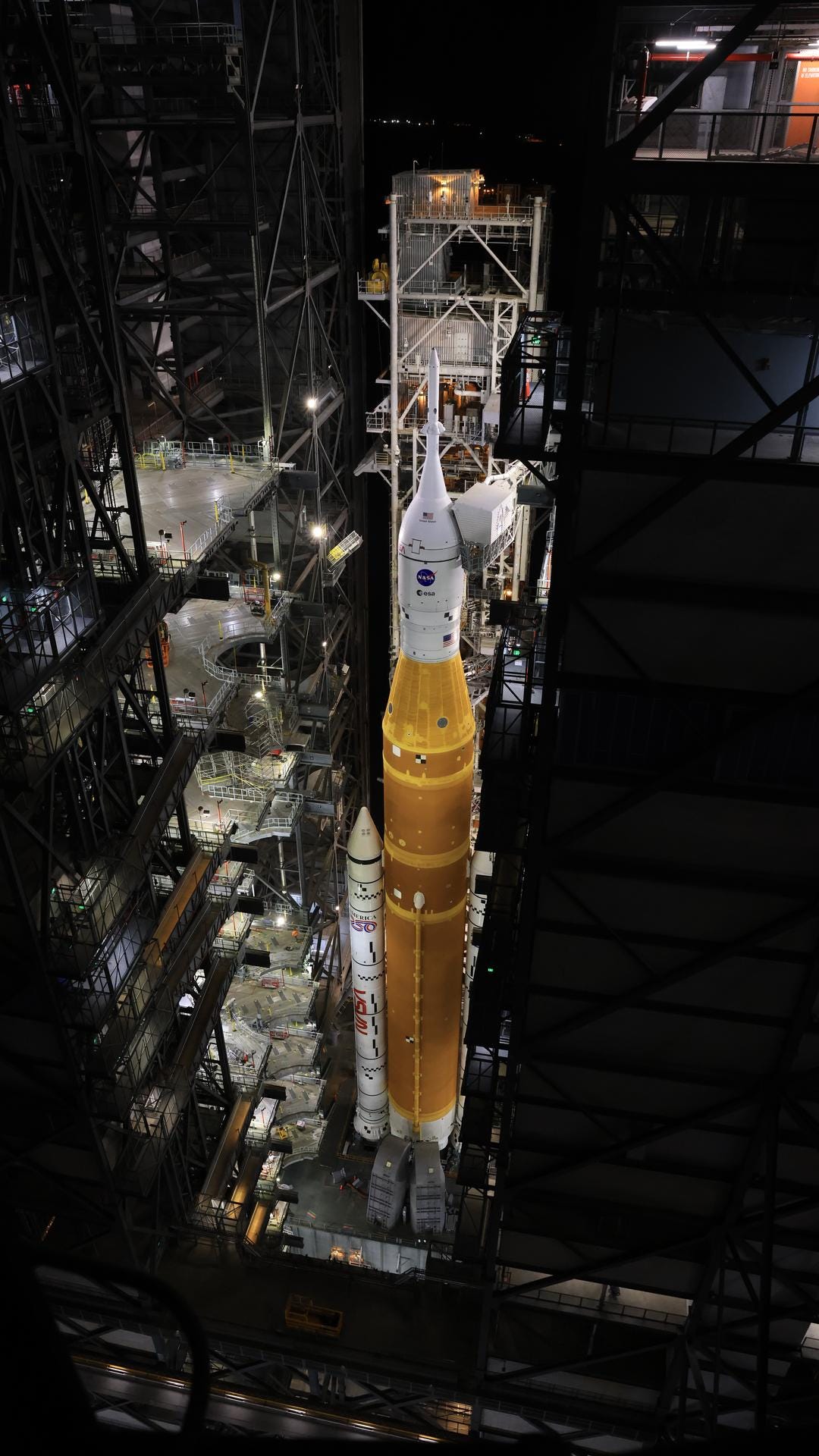
This reset comes as Artemis II sits back in the Vehicle Assembly Building following a helium flow issue in the SLS upper stage.
NASA reviewed the data and declared a “no-go.” That’s how the system is supposed to work.
But the helium problem isn’t the real story.
The real story is cadence.
NASA leadership acknowledged that launching a heavy-lift rocket every three years is “not a path to success”.
When you fly that infrequently, skills atrophy. Institutional memory fades. Recurring problems reappear. Muscle memory — the quiet confidence that comes from repetition — disappears.
And then there’s the newly released annual report from NASA’s Aerospace Safety Advisory Panel.
ASAP repeatedly warned that Artemis III, as originally designed, stacked an extraordinary number of firsts into a single mission:
First crewed flight beyond low Earth orbit in more than 50 years
First integrated use of Orion, SLS, and a human-rated Starship lander
First large-scale on-orbit cryogenic refueling
First use of next-generation lunar spacesuits
First landing at the Moon’s South Pole
Stacking that many technical unknowns into one launch isn’t bold. It’s brittle.
The new plan separates those risks. Test rendezvous and integration in orbit. Learn. Then land.
It’s a return to the Mercury–Gemini–Apollo model.
We didn’t go straight to Apollo 11. We flew, we failed, we learned, we flew again.
NASA now says it wants to standardize SLS, rebuild workforce capability, and compress launch cadence toward once a year — perhaps even ten months.
That’s not about speed. It’s about sustainability.
The Moon race narrative makes for good television. But cadence, integration discipline, and incremental testing are what make programs survive.
Artemis just traded spectacle for durability.
And that may be the smartest move NASA has made in years.
Comments
Nothing yet. Say the first thing.
Sign in to join the conversation.