
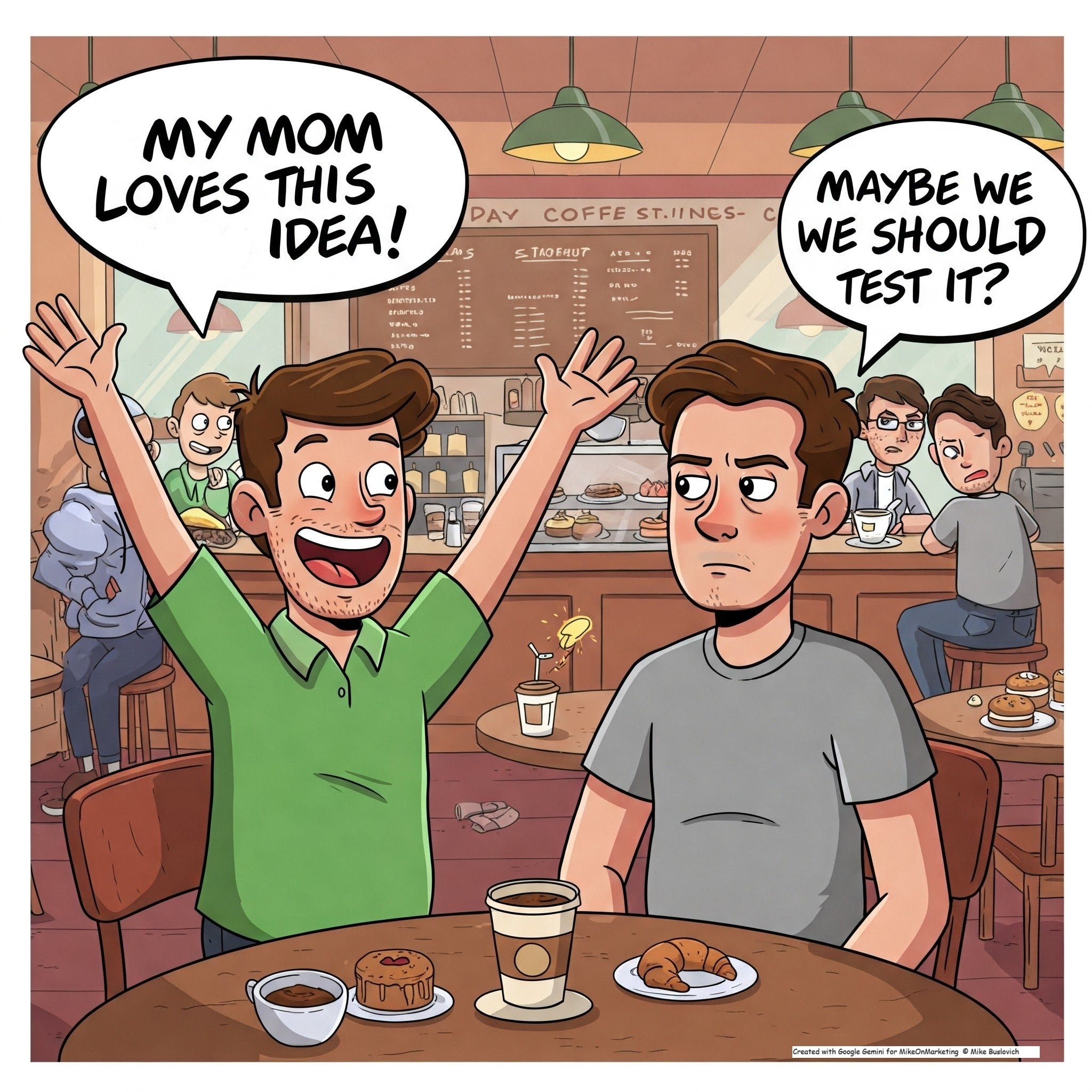
There are ideas that start businesses and there are ideas that create new products and then quite a few that just make things better. Starting to build on an idea without testing is not only naive but can result in catastrophic resource (money & time) waste. In this article I will discuss the two ways in which ideas emerge and why that makes a huge difference when it comes to realizing them. And of course how to test the ideas prior to making an MVP and what to do if you find that you need to pivot.
While many argue that ideas come from being creative, ideas for products, services and businesses emerge from one of two approaches. The approach that succeeds most often usually comes when someone sees a painful problem in their regular routine and comes up with a potential solution. The second approach is when someone thinks of something new which they believe to be useful and want to bring to market but don’t necessarily have expertise in the field. There is a stark difference between these two sources but it’s important to keep in mind that either can result in a successful offering and both can result in failure. This is why accurate testing is critical and is the focus of this article.
Let’s just take a deep breath and get grounded. I’m sure that your idea is awesome. There are tons of truly awesome and amazing ideas that should be implemented but they don’t quite make it. Equally there are lots of ridiculous and dumb ideas that are widely successful. Why is that?
The ideas that become successful products are the ones able to reach their target audience and their target audience has to have the need for the offering. These 2 things: a target audience that also has the need for the offering are a requirement for any type of longevity, let alone a possibility of success. This maybe obvious to some and vague to others. The purpose of this article is to explain how this works so you can vet ideas effectively.
These types of ideas do result in successful products - sometimes. But you can’t get away from testing them. Simply not testing an idea will result in waste of time and money. Ask me how I know — that’s why I’m writing this article.
So how do you test and idea that has no existing market segment? Same way you would an idea with a well defined audience. The process is the exact same. So lets get into it.
Start right at the beginning. What problem does your offering solve or what would it make better.
Focus on what pain points exist today that the offering would alleviate. If this is something totally new, explain how it would create benefits to the user that are not there today.
Now sum this up into no more than 2 sentences. One would be ideal. Think of what you would say if you just had a short elevator ride to introduce your idea to someone. This is literally the hardest part of the process and the more you work on it the better defined your description will be. Revision is key to success here. Just don’t give up and when you get it just right, you will know.
Last but very important side note on this, if your idea has multiple features or multiple offerings — test just one at a time. Pick the one that you deem most important for the idea to succeed and focus just on that one feature. Testing more than 1 feature at a time will confuse your audience and make it exponentially more difficult for you to deliver your winning points. You will have customers interested in one aspect but not the other and very rarely will you come across prospects who would be interested in both.
In order to not overcomplicate this, I’m going to setup a perspective that you should keep in mind right here. Your offering is not for everyone or anyone, it’s for specific groups of people. These groups have problems or interests that can utilize your offering. Not everyone can or should utilize your offering and you need to know who can and who is likely to.
If your vision of your idea is that it’s for everyone or you can’t describe your target audience in three sentences, you don’t know who your target audience is yet, you need to work on this more. Without a properly defined target audience your idea will flail at the start line and will not resonate with anyone that will be able to provide useful feedback.
To define your target audience start with a short description of a scenario where someone would need you product. Note details about the issue they are experiencing without your product. What are they doing to solve the issue. Now add a paragraph explaining how your product would make a difference. Now add a second paragraph explaining what they would do if they didn’t have your product but knew about it. This is very similar to the exercise you just did in the last part so it should be snappy.
And the last paragraph is your assumed personal description of your customers. How old are they, what level of seniority are they in their career, what types of companies do they work for, what decision criteria do they use to select products for purchase? How often would they need your product? Now let’s get in touch with them.
From your target audience it's now time to find real people. These are people who have use cases for your offering and could become initial customers. At this point you are testing your offering so it’s very important have hypothetical scenarios that your target audience would want and even better need to have become a reality. This is why ideas based on actual existing pain points often go further. Not to mention that you also know the people experiencing the pain points.
For this initial testing phase the start is a simple approach. You can utilize social media and forums to sample the crowd. I particularly like Reddit for this, the crowd there is really well engaged but please be careful as Reddit does not like self promotion. Use the description you created earlier to briefly explain the problem your product would solve and it’s features. Then ask a few questions, including would you use this product or why would this not work for you? After that explain the pricing model and ask if someone interested would pay a certain amount for it.
This is the easiest way to get preliminary data. Chances are you wont get either a yes or no but you will get suggestions and criticisms which are really useful. This is a realistic sample of how your idea would be received as a product.
This also could be a point where you may need to consider pivoting your idea into something that better matches your feedback. And aren’t you glad it didn’t cost you any money yet?
The next step is to analyze the data and see how strong of a response you receive. Is your idea accepted, or did a lot of responses suggest modifications and which ones. I like to use perceptual maps for this analysis but any method will do as long as it paints an accurate picture.
Now you have an idea of what others think about your product. You can choose to tweak your idea based on feedback or keep it the same. And now you can start pitching it to real world potential customers.
There are many ways to do this through networking. LinkedIn can be a good place to start finding companies and narrowing down the people that work in those companies that match your target audience. However, it should not be your only source. People in your circle that can make introductions to people that know people, etc. Again, this is why ideas based on real pain points go further. You already know some people who have the pinpoint your solving for.
Contacting through mutual introductions, a.k.a. warm outreach is much more effective than reaching out people who don’t know you at all (cold outreach). And it’s much easier for someone to introduce you if they have a clear understanding of what you are trying to do, hence the concise but to the point description.
Past your circle of contacts it makes sense to pick companies that you envision becoming your customers. Reach out to relevant people at the companies. Present your concise summary of the problem and solution and ask for their opinion. If they like it ask them if they would be willing to be an initial tester.
However you look for your target audience, the good news is that you can start with as little as 10 testers but at least 30 is a preferred amount. The bad news, it’s tough to even get to 10, but persistence is key here as it is in entrepreneurship in general.
When reaching out, use your concise summary to introduce the product and simply ask if they think it would benefit them. That’s all you need in the beginning (easier said then done). Invite those that say yes to a 15 min call. If enough calls result in agreements to be initial customers, you are ready to hit the ground.
If you follow this process you end up with two very critical things. Information that provides confidence that there are customers who are interested in your offering and potential initial customers who are waiting for launch.
This sets you up nicely for fund raising and go to market or whichever steps you chose to take to bring your product to life. The best part is that all in all it’s effort and not money that gets you to a confident place to launch something you know has potential customers waiting for it.
When considering making an idea and actual product do the following:
Create a 1 or 2 sentence description of the problem it solves.
Figure out who would use it.
Get detailed information about the target audience and how they would use you offering.
Survey potential audience using broad resources like social media.
Examine feedback and consider pivoting your idea if feedback indicates that changes would help the idea be better accepted.
Contact actual individuals that you think can be initial customers. Ask them for opinions and work with them to see if they are willing to be the initial customers.
Make a decision on MVP or anything else needed and hit the ground running with confidence.
If you found this article helpful or enjoyed it - consider sharing with your friends.
So yeah this happens more often than you think. And let me be clear about one thing, that’s a fact. You did not come up with a bad idea. You came up with a good idea for you. Unfortunately not enough people like it for the idea to become a product or a company and that’s Okay, it is - it really is.
But aren’t you glad you didn’t blow a bunch a cash building a product that did not do well. And….And most importantly aren’t you glad you still have recourses to move on to your next idea? Let’s face it you will have the next awesome idea before breakfast. But if you don’t test it, you’re an amateur, hopefully this article taught you that much if nothing else.
Comments
Nothing yet. Say the first thing.
Sign in to join the conversation.