
The conversation of money has always been my least favorite part of being a freelancer. I’ve always envied people with managers that can handle that part for them, so they can just focus on the work and not have to think about what exactly you are selling your time for. But, it’s a part of being self-employed and the more comfortable you are with the conversation, the easier it is for everyone.
A good friend and mentor of mine once told me a story about his grandfather, who owned a successful nursery and landscaping business in upstate New York. In the process of negotiating a deal to provide trees and plants for a new development project, he was asked if he could reduce his quoted price, to which he responded, “Yes, I could lower my price, but then I wouldn’t make as much money.”
I’ve always loved that story and think of it every time I find myself in the position to have to negotiate my rate. I’d love to say that I have adopted that hardline attitude and never lower my price, but I do negotiate with people all the time. I have developed a few rules about it though that I thought I would share.
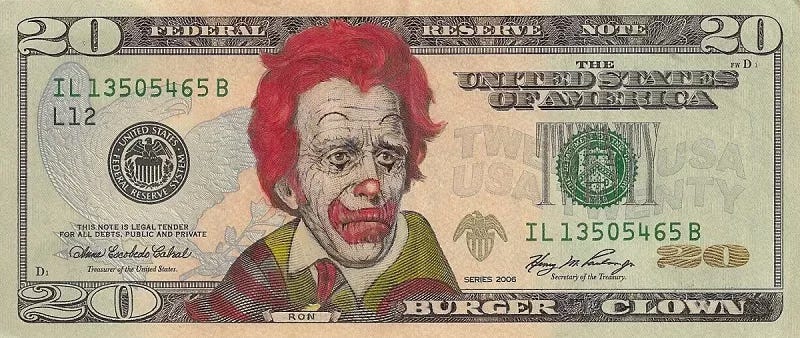
Tick the boxes.
Any job I consider has to fall into one of three categories. It has to either:
A) Pay me
B) Be Fun
C) Be An Opportunity For Growth
Ideally, I’d love for everything I do to be all three of those at once, and some actually are, but they have to be at least one of those things. Two is a bonus. If it’s none of those things, then it’s a no-brainer, I don’t do it. The older I get, the more valuable my time becomes, and if I’m not getting paid, having fun, or moving myself forward in some way, it simply isn’t worth exchanging the time I have left on the planet for.
So, when it comes to negotiating a price for my services, those are the parameters, and they can each affect how I price the project. If it’s super fun, I might do it for less. If it is a good move career wise or I can learn something valuable from it, I might do it for less. If it’s neither of those things, and just for the money, I’m not too inspired to adjust my rate.
The important thing for me here is that I view this negotiation process as 100% internal. No one else can lower my rate by telling me how fun a project is going to be and especially if they think it will be “good for my career”. In fact, if someone says that to me, the rate immediately doubles. Which leads me to Rule #2…
Only negotiate with yourself.
You are the one that dictates the value of your work. Not others. I set my rates based on my experience and track record, but I also have to keep in mind what the market will bare. I could think I’m the greatest mixer on earth and charge a million dollars a song, but no one would ever pay it, so I’d starve. What I try to remind myself of is that I am in control of what my skillset is worth. If someone thinks what I do is worth less than I do, that’s ok. There are loads of other people willing to do the job for less. But, you do usually get what you pay for. Which reminds me of another story…
A man calls a carpenter to come fix a loose, creaky floorboard in his hallway. The man arrives at the house and takes one look at the floor and removes a single nail from his tool belt. He gets down on the ground, feels around with his hand, and with one swing of his hammer drives the nail into one precise spot, securing the board and making everything perfectly flush and tight. The homeowner says, “Wow, that was quick! How much do I owe you?”
The carpenter replies, “That will be $100.”
The man says, “$100! But you were only here a minute and only used one nail, why so much?”
The carpenter says, “It’s only a penny for the nail, but $99.99 to know where to put it.”
Never work for free.
Except when you should. This is a scenario that just happened to me. I was recently hired to record and mix a live album for a band I am a genuine fan of. I was thrilled to be offered the chance to be a part of this project and it’s one of the rare jobs that ticks all three boxes for me. A fair price was negotiated for the full project, which included recording two nights back to back at the same venue, and all editing, mixing and sequencing of the album, which is to be a double vinyl pressing.
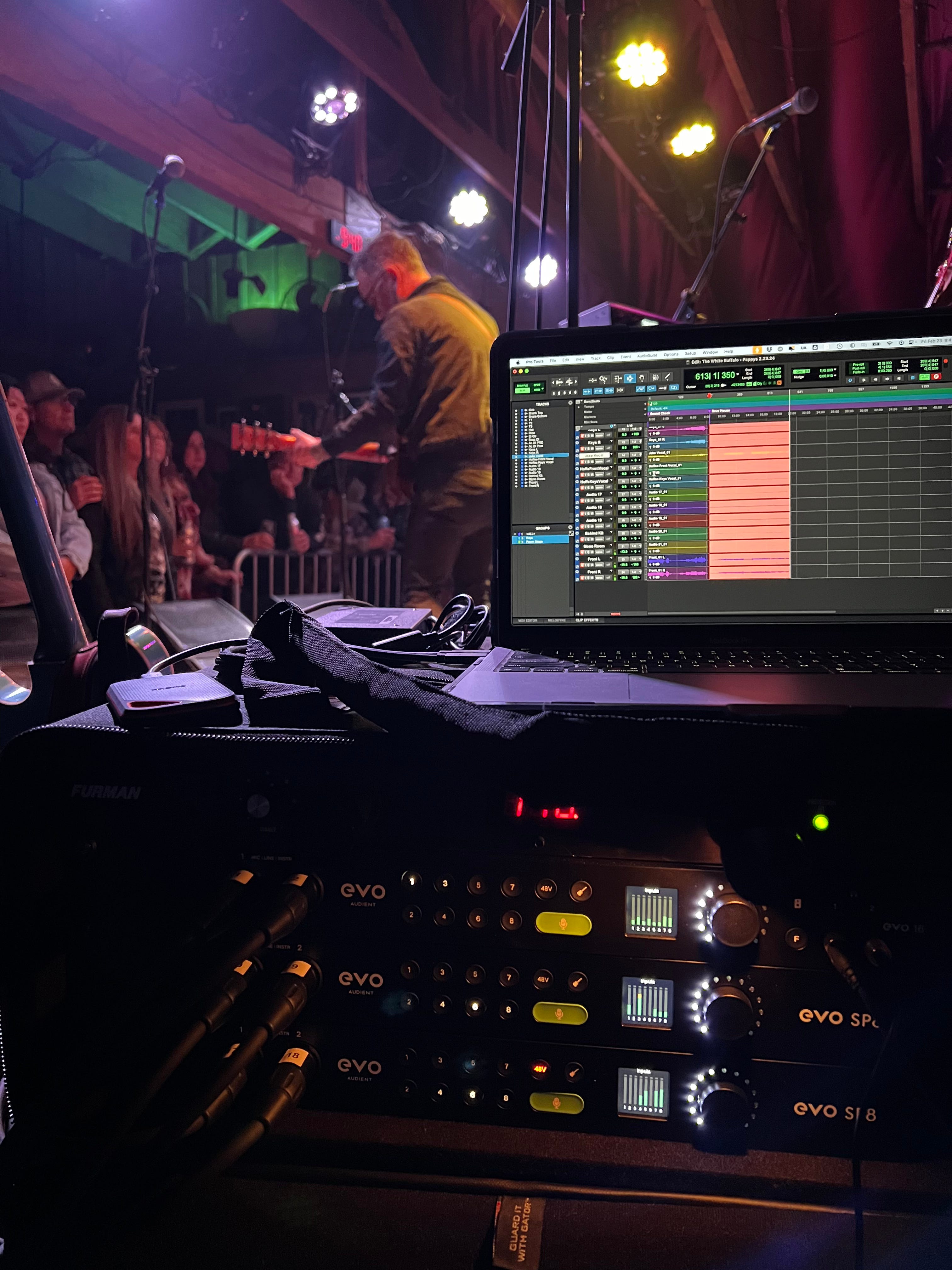
For this project, I put together a 24 channel mobile rig (centered around the Audient EVO System) and some various other things I thought I would need, including a multichannel splitter, some microphones for audience capture, some of my own DI’s to get a clean signal before pedals, etc. on a couple sources, and all necessary cables, clips, and accessories. It is an impressive kit and in theory, I had everything I needed to capture the shows. But, it was untested in the field. I trusted that it all worked, but you only get one shot at capturing a live performance in front of an audience, and I needed to be 100% sure it was going to deliver and there were no surprises. So, I did the unthinkable. I volunteered to travel to one of their other shows prior to the recording dates to run a full a full test of the entire rig. For free. This meant driving over 3 hours, paying for my own hotel, and spending 12 hours in a venue setting everything up, working things out with the in house audio staff, getting all levels set, recording the soundcheck, opening artist, and full show, then packing it all up and returning to the hotel for a few hours sleep before getting up early in the morning to return home. All out of my own pocket and for no additional money.
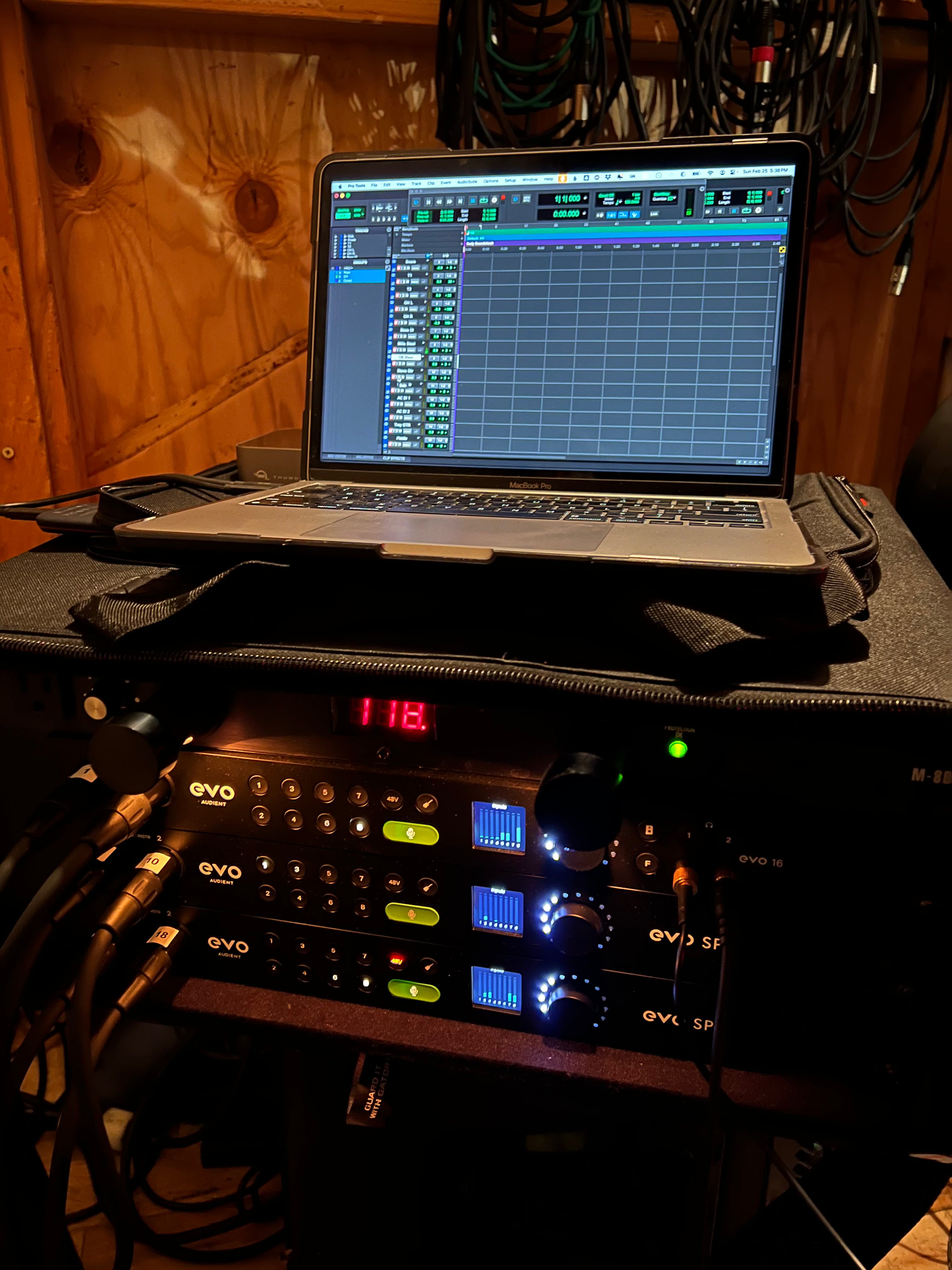
Why would I do this? Didn’t I say you should never work for free? It served two purposes. One, it allowed me to fully test the system, work out any kinks, find anything that was missing or would make the job more streamlined, all without any pressure. My time was my own. If some unexpected thing went wrong, it wasn’t a big deal, I could just make a note, figure out how to fix it, and move on. As it turned out, everything worked flawlessly and without a hitch, which put my mind completely at ease about the robustness of the system and the whole process in general. That was incredibly valuable.
The other thing it did, and arguably much more important, is it got the band used to the process. It gave us a chance to hang out together, to talk about how it was going to go, what it was like to play a show knowing the red light was on. It gave us a chance to get to know each other, share a meal, have a drink after the show, have some laughs and build a relationship and trust. That was absolutely invaluable and in the end, made the actual recording over the two nights for the album really comfortable and smooth for everyone. That in itself was worth the expense for me. The clients had total confidence in me and the recording process and could focus solely on the important part, which was delivering an amazing show. The “free” time I gave up paid dividends in the end and I would do it again in a heartbeat.
Now, had someone asked me to spend my own money to go record a show for free to “test things out” and “get to know each other”, I would have likely declined, but this was my choice because I believed it would help me do my job better, and that was worth it to me. I negotiated the free work with myself, no one else.
Break the rules.
Rules were meant to be broken, and the great thing about working for yourself is you can break them whenever you want. Here are some realities about working as a freelancer that throw the rulebook in the trash…
First, sometimes you need the dough. I’d love to be in the position where I can stay hard and fast to my principals and never accept less than I think I’m worth, but the reality is, sometimes things are slow and you need the money. Or, sometimes it’s Christmas and you need to extra cash for special gifts, or sometimes you just want to purchase some ridiculously expensive guitar and just need a little extra cash (not that I’ve done that or anything). The easiest way to make that extra money is to work cheap, and sometimes I do. But, it’s important to remember this; once you lower your rate with someone, it is very difficult to get the rate back up after that. They know you are willing to do it for a certain amount and in their mind, that’s what it’s worth now. That’s why, when I decide to do something for a client at a discount, I always make sure they know what the full rate is, and that they are getting a discounted rate this time. I make it a point to say, “My normal rate is X, but for this one project, I’m willing to do it for less. Next time, though, it will have to go back up to my full rate, cool?”
That establishes a value to your services that isn’t reflected in the current cost. They will feel better knowing that they got more than they are paying for and you will feel better knowing you’ve established your worth, even if you aren’t getting it. If your client doesn’t know how much you are worth, that’s on you, not them.
Second, sometimes it’s good to do good deeds. I reserve the right to throw all of my rules out the window to help someone out. Look, this is a brutal business and it is so hard for artists to get their music made and heard. Artists are struggling to make a penny with music and more often than not, they are losing money on making their album because it is important to them that it is good and represents their vision. If someone is struggling, and they seem like a good person, and the music is good and it’s a job I could do relatively painlessly, then I will absolutely help them with the rate if I can. I don’t do it for free, but I’ll work with people to do a good thing. That makes me feel good and that has a lot of value too.
You can be firm with your value, but flexible with your pricing. If someone says they can’t afford my rate, but they want to work with me, I’ll ask them what their budget is and try to find a way to make it work. Sometimes that means I’ll do less songs or, if it’s a full album project, I’ll maybe offer to do one of the songs for free. That way, I’m getting my full rate for the other songs and I’m choosing to do one as a “bonus”. Even though I could lower my rate for all the songs and get to the same number, the perception is that my value remains the same, and the value of the free song is that much higher to them.
There are a lot of reasons to do a job at a discount, but to me, it is extremely important to never do discount work. I aim to give 100% to every job I do, no matter what the rate. If you find yourself working on something and thinking that you aren’t getting paid enough for the time you are spending, that’s on you. You should have either negotiated a different rate, or not taken the job. Once I agree to a price and commit, you get 100% of my skills and ability.
There are occasions where a job turns into more than was discussed in the first place, and you find yourself working more than is fair for the negotiated rate. It is perfectly acceptable to ask for additional compensation if the client is causing additional work. But it’s important to be clear and precise with your request. A client relationship can be delicate and, especially if it’s a repeat client, sometimes it’s best to just eat the extra work and make a note to bring it up when negotiating the next job.
In my experience, clients appreciate a straight forward, unemotional approach to talking about the money. When someone asks how much for a specific service, have an answer and be unapologetic. Ask the appropriate questions to judge what the job will entail and know your value. I recently had to turn down a job that I legitimately wanted to do. The music was good and the people seemed cool, but they could only offer me half my rate. I could have done it, and in reality, it came at a time when I could have used the money, but in the end, it didn’t reflect what I believe I’m worth. It was better for me to politely decline the job and have that client understand my value, than to have done it and have them think my value is actually half of what I said. Sometimes, those kinds of clients end up coming back to me after being unhappy with the results of “cheaper” services, and when they do, they don’t ever question my rate. Sometimes, it’s the long game.
Thanks as always for reading.
-Mike
Mike Butler is a professional mix engineer, guitarist and producer currently based in Southern California. His list of credits range from The Rolling Stones, Phoebe Bridgers, The Pretenders, The Shins, Ray LaMontagne, Five For Fighting, Reba McIntire, Fleetwood Mac, The Doobie Brothers, Eminem and many more. He’s recently mixed music for the hit HBO animated series, “Batwheels”, has composed and produced music for commercial clients including Shure Microphones and Progressive Insurance, and was Sound Designer for the trailer for Netflix’s new “Vikings: Valhalla” mobile game
Comments
Nothing yet. Say the first thing.
Sign in to join the conversation.