
Modern Monetary Theory (MMT) has brought an alternate perspective to the standard one on government debt. As a teenager developing my personal political beliefs in the 1970’s (when inflation was a big concern) I saw government deficit as money creation leading to an increasing number of dollars in the economy relative to stuff to buy. More dollars per unit of stuff means a higher price, hence, inflation. Such a view can be considered as quasi-MMT. I had read a lot of history and was deeply influenced by the book The Naked Ape by Desmond Morris. As a result of that intellectual formative experience, I was a deficit hawk for many years and favor an evolutionary-historical take on human affairs, including the political economy. In this post I take such an approach towards understanding our coming fiscal crisis.
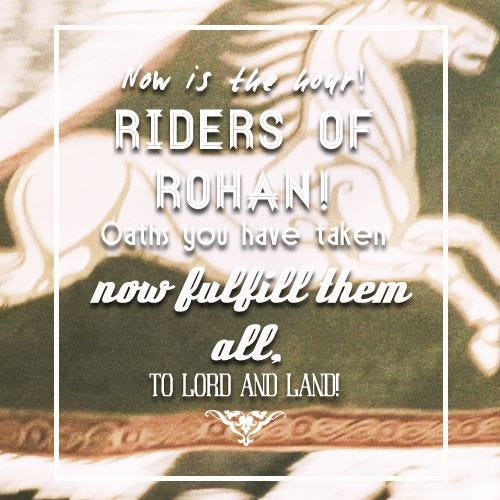
My story starts with the Norman Invasion which began modern English history. At this time monarchs were expected to “live on their own.” State policies such as wars were to be funded from the monarch’s personal income derived from their vast property holdings. A monarch would reward favored subordinates with grants of lands. They became vassals, who held their land in fief. As their liege lord, the monarch was entitled to military services provided by their vassals and their retainers (at the vassal’s expense). In the film The Two Towers we see Eomer remind the Riders of Rohan of the oaths they have sworn (feudal obligations) to Lord (military service to their lord) and Land (fief holder duties to their king).
As time went on, the amount of land the monarch owned declined and additional income was needed to fund state expenses leading to the replacement of feudal duties in terms of personal service with money payments (subsidies). Over the same time a money economy was developing as trade re-emerged from its Dark Age low and the urban population rose. The monarch levied regular duties on trade and other things. These taxes along with the return from their landholdings comprised the personal income of the monarch and was used to support his household same as a for a private citizen today.
The monarch spent their income on a mix of household consumption and personal gifts (often political patronage), as well as state functions, which were initially operated out of the Monarch’s household. State functions included war, treasury, record-keeping (chancery), judiciary and infrastructure projects. The Monarch would borrow money as necessary just as households do today. There was not yet what one might consider a “public sector,” the government was privately owned and operated. They borrowed money and could go bankrupt just as businesses and households do today. The monarch lived and socialized in the same massive room alongside his servants, guards, and visitors. Some of these servants (ministers) ran the state functions. These ministers began as personal servants and over time became increasingly professional. In Tudor times they became physically separated from the rest of the household and a true state government now existed, though it was still privately owned and operated.
A privately owned government continued until the Glorious Revolution. Between its 13th century origin and 1688, English elites in Parliament pushed for and gained more say in state finance and policy. The 1688 Glorious Revolution established Parliament as the dominant partner with the monarchy, and completed the separation of the state from the monarch’s household. State finances were completely separated from the Privy Purse (ordinary household expenses) and a central bank created to manage state finances. A true public sector was created. The new central bank issued bank notes (paper money), and managed state finance, which continued to employ credit—as if it were still a private household—because this had been the norm for centuries.
This was not the only way to proceed. Pre-medieval states had not used debt for state finance. They simply issued coins (money). When they ran short of specie (gold or silver used in coinage) they would either issue less money, leading to a money shortage and economic downturn, or reduce the precious metal content of the coins, allowing more money to be issued, which could lead to inflation. With a paper currency, it was possible for the new financial system to issue paper money1 and use it to pay down the debt, saving interest expenses. Instead, what they did was establish an English state bank to replace the financiers from whom the government had previously borrowed.
The bank functioned as a commercial bank as well as the state bank. It could take in deposits of money in coin and either establish interest-bearing accounts or issue bank notes (paper money) in exchange. The bank could create new bank notes and lend them out at interest. Taxes could be paid in Bank of England Notes, which made them function as money, just as US Federal Reserve Notes are seen as money today. This was a great benefit to the bank, enabling it to create money, lend it out and collect interest in it. In exchange for this benefit, the government could have insisted that debt lent to them by the central bank be interest-free (government debt held by the Federal Reserve is interest free since the interest paid is remitted back to the government). Had the bank been set up in this way, the post-Revolution government would indeed finance their operations by direct issue of money.
But the government continued to pay interest on loans from the bank giving the bank’s directors a form of patronage at the taxpayer’s expense, essentially a continuation of the patronage expenditures of the Crown when it was privately-held. Since the Bank of England (BOE) was run by Whigs, the Tories wanted in on the lucre. When they came to power in 1710, they set up the South Sea Company as a tool to convert state debt into company shares. It began with a portion of the debt, but at the beginning of 1720 it was granted authority to convert all of the debt. The goal was to extract profit from this scheme as the Whigs did with the Bank. It is not clear to me how this scheme could ever work. In any case, it was operated recklessly and the company collapsed later in the year, requiring a government bailout.
The South Sea example provides evidence that the process of having a privately owned central back creating money, loaning it to the government and collecting interest on it can be seen as a form of Whig patronage that the Tories wanted a piece of. Today, the US government is paying something like a trillion dollars in interest. That is a lot of patronage. How is it that we are in this situation?
In Britian, a centuries-long practice of the state borrowing from private moneylenders as if it were a private household existed because when the practice began the state was the monarch’s private household. When the privately-held British government became the publicly-owned government following the Glorious Revolution there was no change in how the government was financed partly because of cultural inertia (and also because of the negative examples provided by by the South Sea and the John Law fiascos).
Before the transition the government already owed money. This debt was taken on by the new central bank who raised capital (partly in coin) to pay for it. This was a loan made on a risky investment for which an interest return was justified. Future debt issued to the government in the form of banknotes rather than specie-containing coins would generate a return with no investment of real money (specie). Since interest rate on the initial loan to the government was justified, as was those of risky private lenders, the precedent was established for future loans to the government to pay interest.
In America the situation was similar. The Second Continental Congress incurred debt involved in prosecuting the American War of Independence. When the war ended, this debt was passed on to the Congress of the Confederation, the first governing body of the new United States. Following ratification of the new constitution the existing debt was converted into Federal Bonds in 1790, which formed much of the capital used to establish the first Bank of the United States. This bank also issued banknotes that could be used to pay taxes and so functioned as money. It lent this government-backed money to the government at interest and in this way received the same sort of patronage that favored medieval courtiers received.
The idea that the central bank was a scheme to enrich Federalist moneymen at the public’s expense was a live issue in the early republic. It played a role in the formation of Jefferson’s republicans in opposition to the Federalists and in the Whiskey Rebellion. Jackson’s “War” on the second Bank of the United States was an extension of this sentiment. The second bank was the replacement for the first bank which had been abolished in 1811 by Jefferson’s republicans. Jackson was the leader of the “OG” faction of Jefferson’s republicans which later became known as the Democratic party.
Jackson paid down the US debt and moved government deposits out of the Second Bank and into a number of regional banks prior to abolishing it in 1836. Instead of a single issuer of bank notes there were now multiple issuers, some of which were accepted by the government for payment of taxes making them stronger than another bank’s notes that were not. This system was believed to have led to rampant speculation fueled by excessive money creation leading to a land value bubble that peaked in 1836. In that year Jackson issued the Specie Circular, which called for payment of all debts to the federal government in specie rather than banknotes, which many historians believe played a role in the Panic of 1837.
An alternative to abolishing the Second Bank might have been to assert that as a government-chartered entity, who enjoyed the privilege of issuing bank notes acceptable as equivalent to actual money (specie) for payment of all debts to the US government, they should be willing to service US debt as a free service to the US government. Today the Federal Reserve functions effectively as the third US central bank. Unlike the earlier banks, it does not loan directly to the government; this is forbidden under the Federal Reserve Act. It remits interest on government bonds it holds back to the government. That is, were it to loan directly to the government as did historical central banks, it could acquire over time the outstanding liabilities of the Federal government, relieving the government from having to pay most of the interest it currently does (a small amount of debt would have to be retained for monetary policy management purposes). The patronage payments provided to bondholders would end.
The word for this is monetization. This occurs when instead of borrowing funds to cover deficits the government just creates money as the ancients did. If the government is running a primary deficit (tax revenue less than non-interest spending) the result will be highly inflationary. If monetization was preceded by revenue increases and reduced outlays so as to eliminate the primary deficit, the steady-state result would no longer be structurally inflationary. However, the process of gradually moving more than $30 trillion in bonds held by the public to the Fed is structurally inflationary so one would expect transient high inflation like what happened after WW II.
The fact that monetization was done would likely create expectations that the US will engage in more monetization the next time it chooses to run deficits2 so inflation would probably run at a higher basal rate going forward—unless a hard and fast limit were instituted. An example of such a limit would be a constitutional amendment mandating a fiscal balance over some period, such as average deficits as a percent of GDP over a running 3-year period not to exceed trend growth rate (average real GDP growth rate prior 10 years). Exceptions would be made for periods when the country was in a declared war or economic depression. With a Constitutional limit, inflation expectations may come to match that expected from the fiscal balance.
The alternative is a debt crisis, when lenders lose faith in the credit of the government; interest rates spike and the dollar collapses, leading to soaring inflation. Avoiding Latin America-style inflation would require either massive tax hikes and severe cuts in spending, generating an economic depression, or a default on the debt leading to the same.
In the 2000 election voters had a choice of three major candidates, the sitting VP, and two Republicans, John McCain and George Bush. Bush ran on a platform arguing that the surplus was “stolen money” and should be returned to the taxpayers through tax cuts. The other two pledged not to cut taxes and pay down the debt. Voters chose Bush twice, once in the primary and once in the general.
Thanks for reading America in Crisis! This post is public so feel free to share it.
No posts
Comments
Nothing yet. Say the first thing.
Sign in to join the conversation.