
Tisha B’Av is over, but its sadness lingers.
It’s in the video my city’s dangerous mayor put out, a blood libel reaching millions. It’s in the news that a man screaming “Allahu Akbar” stabbed two men on the Upper West Side, one of them visibly Jewish.
I know I’m not the only one who feels overwhelmed, as if we are wondering what new kinnot we might have to write in our lifetimes.
But maybe some sadness was here before any of this. Maybe it’s built into the calendar. After all, the Shabbat after Tisha B’Av always brings the Torah portion of Vaetchanan, which holds one of the saddest episodes in the Torah.
Yet I’ve come to believe that Moses’s greatest disappointment became one of Judaism’s greatest sources of hope. This year, we need that lesson more than ever.
Vaetchanan means to beg, to beseech. The portion opens with Moses telling the people about his desperate plea to God. He prayed, he begged, he clamored for one thing: to be allowed to enter the land of Israel.
One rabbinic retelling even imagines Moses asking to be transformed into a bird, just so he could fly over the land he would never get to enter.
God said no.
When I was younger, I hated this story. Moses gave his entire life to the Jewish people, and this was his reward?!
Later I learned interpretations that changed it from punishment into consequence: the episode when Moses hit the rock, the one the text says cost him entry, showed he wasn’t the right leader for the generation that would enter. He couldn’t stop seeing the Israelites as former slaves, and had he led them in, they would never have matured into their own.
But the teaching that has stayed with me most came from a lecture by Dr. Avivah Zornberg over a decade ago. I don’t remember much of the class except this: Moses was denied the land so that his yearning would remain with us. His sadness was meant to become an inheritance, a source of strength for the Jewish people.
What kind of strength comes from sadness?
The poet Rachel (1890–1931) wrote a line in a poem called Mineged which I think captures this: in every tzipiyah, every hope, lives the sadness of Nebo.
בכל צִפִיָּה יש עצב נבו
Nebo is the mountain where God told Moses to ascend and look at the land he would never cross into. Tzipiyah is the word our tradition uses for the hope of redemption.
For years I read the sadness of Nebo as longing for what we have not yet reached. There is immense Jewish power in that: we Jews refuse to be satisfied. We will always yearn for redemption.
But lately I’ve realized that Rachel’s own life shows the sadness of Nebo is more textured. An early pioneer who moved from Russia to Ottoman-controlled Palestine, she made her home at Kibbutz Degania on the shores of the Kinneret and loved that life, the labor of her hands, a small community building a brave new world out of nothing.
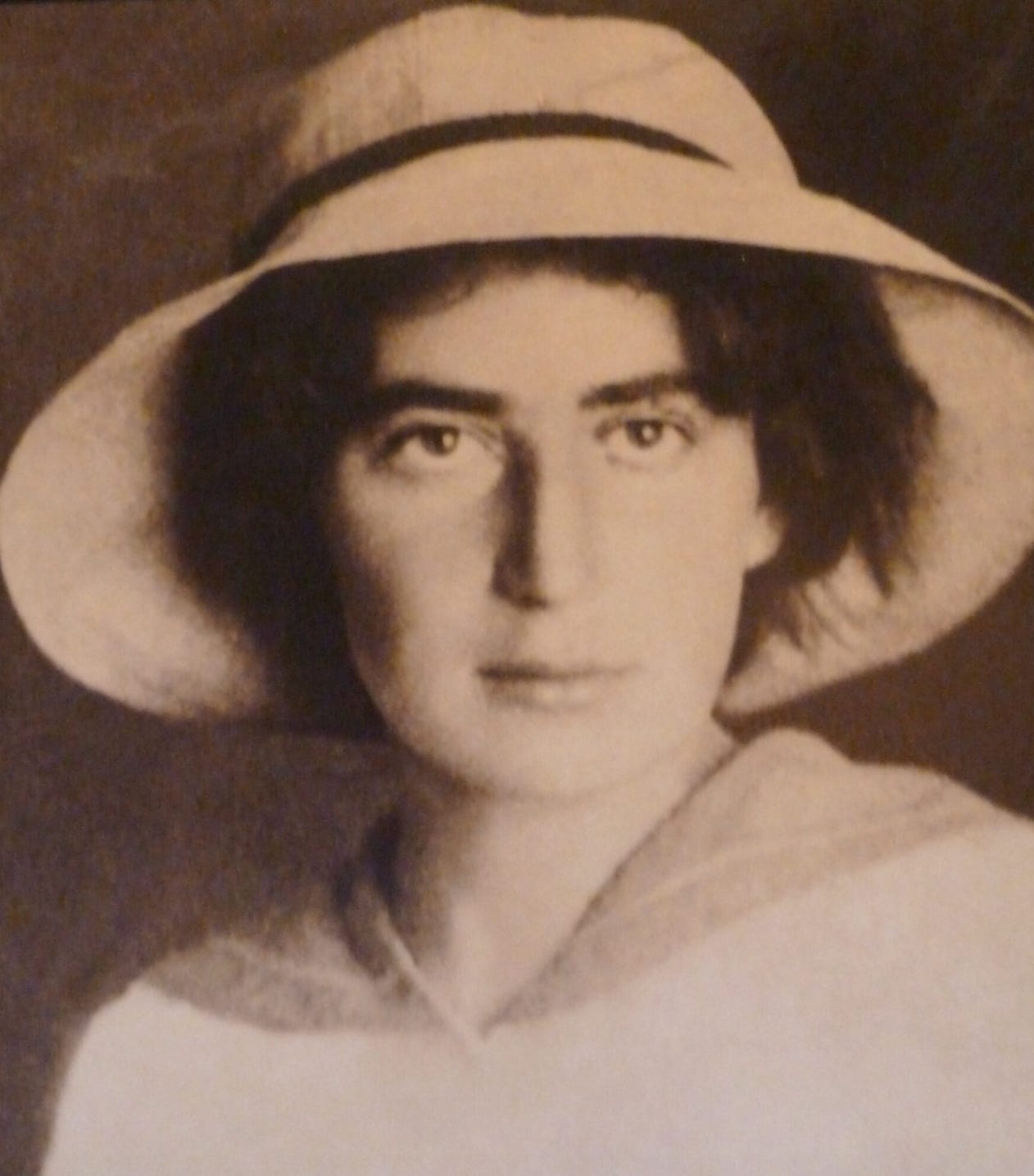
Then she contracted tuberculosis, and the kibbutz, fearing for its children, was forced to send her away. She spent her remaining years sick and mostly alone, writing poems of longing for the Kinneret she had lost. She died young. And yet her poems became songs that generations of Israelis carry by heart. Her longing outlived her loss.
Rachel’s Nebo was no unreached land. It was a home she had built and lost.
So too Moses. His Nebo was the sadness of backsliding. Moses saw the people liberated from Pharaoh. He tasted the promise. Then came forty years of lurching forward and backward in the wilderness, new enemies, rebellions, a generation dying off. And at the end, close enough to see the land, he was told no.
There is a particular pain in backsliding that cuts sharper than ordinary hardship, because it carries the full weight of disappointment. We had it. We could taste it. And now we are moving backward.
That is why Moses’s sadness feels so familiar this year. American Jews are living through acute backsliding. The sense that Jewish life here had finally reached a durable place of security and belonging has been pierced. We are not just mourning our new vulnerability. We are mourning progress gone backwards.
But this Shabbat is meant to comfort us. It is Shabbat Nachamu, for Isaiah’s cry that opens the haftarah: Nachamu, nachamu ami. Comfort, comfort My people. And indeed, even Moses’ desperate plea, even the sadness of Nebo brings comfort.
After all, the sadness of Nebo is the opposite of despair. Despair concludes the promise was an illusion, and stops yearning. The sadness of Nebo aches precisely because it keeps the promise in view. It refuses to treat backsliding as the end of the story.
The yearning is proof not only that we still believe in redemption but that we will fight for it despite disappointments.
Notice what God commands Moses at Nebo: ascend and look at the promised land. I no longer read it only in its sadness.
I see a mandate: Keep the land before your eyes, even when you cannot enter it. Teach your people to keep the promised land before their eyes, no matter how many disappointments.
And Moses shows us what to do with it. He did not collapse into grief at Nebo. He got to work, spending his final days delivering the speeches that became Deuteronomy, a testament for the generation that would enter without him.
That is our mandate too. Not to pretend the backsliding isn’t happening, and not to let the sadness overtake us. To keep yearning and keep building.
On my last trip to Israel, I toured ancient Jerusalem with my children on the fast of the Seventeenth of Tammuz. One stop was the Hurva Synagogue, the imposing building overlooking the square of the Jewish Quarter. Hurva means “ruin”: it was built and destroyed, then built and destroyed again, before being renewed in our generation.
There is a special blessing for entering a synagogue that was destroyed and rebuilt, and it felt extraordinary to say it. How fitting that we Jews came up with a blessing ready for rebuilt ruins.
Then we climbed to the balcony overlooking Jerusalem. Our guide pointed toward very faint shadows, mountains far on the horizon, in Jordan, where he had just visited.
“That’s Mount Nebo,” he said.
I was overtaken.
Moses stood there and looked into what would one day become Jerusalem, so far and so close at once.
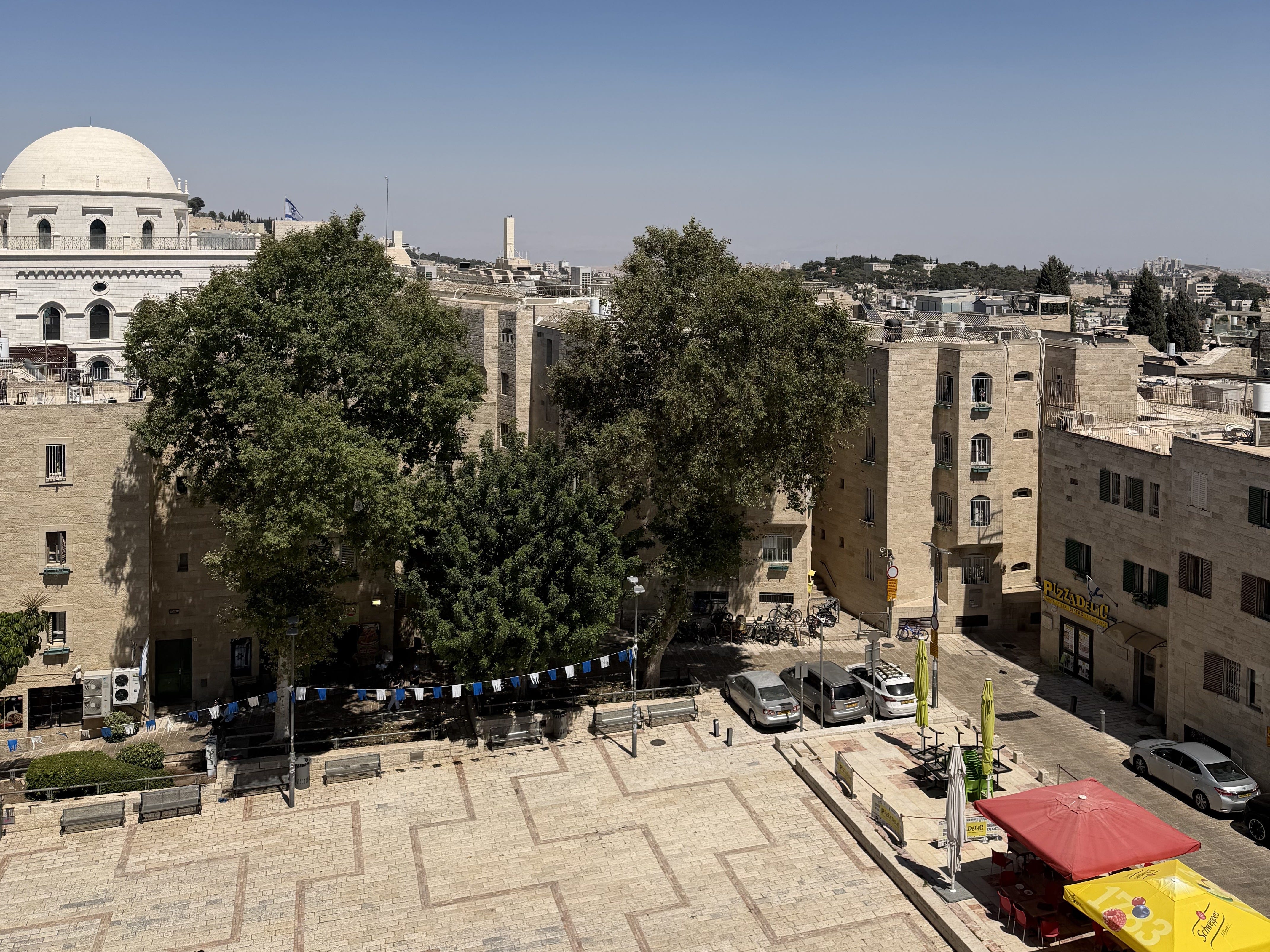
We usually imagine ourselves standing beside Moses, gazing at the promise from a distance. But on that balcony I understood that we also stand on the other side of his gaze. We are what Moses fought for. We are the answers to his desperate pleas of Vaetchanan.
The sadness of Nebo lives inside every Jewish hope, and it will always be with us. But the view from the Hurva reminds us: Moses never crossed the Jordan, yet because he kept teaching instead of despairing, we did. The hopes of Nebo get answered.
This Shabbat, may we take heart from Moses’s prayer and learn from him: to keep yearning and to keep building.
Nachamu, nachamu ami.
Shabbat Shalom,
Mijal
No posts
Comments
Nothing yet. Say the first thing.
Sign in to join the conversation.