
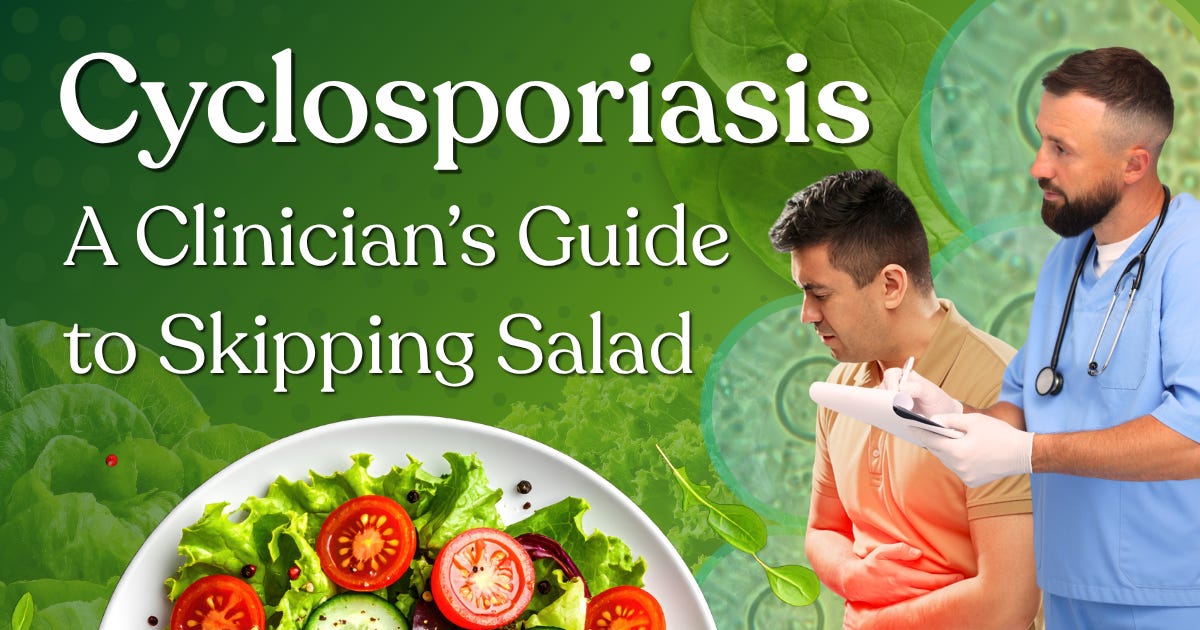
Clinicians around the country are hearing a new and quite unusual question from their patients: Should I skip my typical bag of mixed lettuce for salads this week, for my health?
A microscopic protozoa parasite called Cyclospora cayetanensis is causing outbreaks of severe diarrhea across the United States. As of August 4, 2026, there have been tens of thousands of cyclosporiasis cases in at least 15 states, including over 11,500 in Michigan alone, and the outbreak is now considered the largest in US history. While the dramatic rate of spread appears to be slowing and possibly plateauing, the total case count continues to grow with hundreds of newly recorded cases every day. Although deaths are uncommon, at least two individuals with underlying health conditions have died after contracting Cyclospora in Michigan.
In a typical year, it is not unusual to have minor outbreaks, usually occurring in the summer, and resulting in a total of a few thousand cases. It is also not unusual for health officials to struggle to find a source. In some cases, infections are linked to international travel. In others, suspect sources have included raw produce like lettuce, cilantro, and basil, and hard-to-clean food like raspberries and scallions. Even now, with this very large number of cases, the source has not been clearly defined. State and local health departments believe there are several large outbreaks happening at the same time. Initial investigation reports indicated shredded lettuce from Mexico as the suspect source for at least some of the ongoing outbreaks.
Some symptoms of cyclosporiasis differ from those of many other diarrheal illnesses. Here, we list the more common symptoms, with those that distinguish cyclosporiasis in bold:
Watery diarrhea (6 or more stools/day); may be urgent or explosive
Anorexia (not feeling hungry)
Fatigue (feeling very tired)
Unexpected weight loss (ave. ~8 pounds)
Abdominal cramping and bloating
Nausea
Diarrhea that stops and starts again for weeks or months
Dehydration – high risk for young children, the elderly and people with underlying health conditions
Text within this block will maintain its original spacing when published
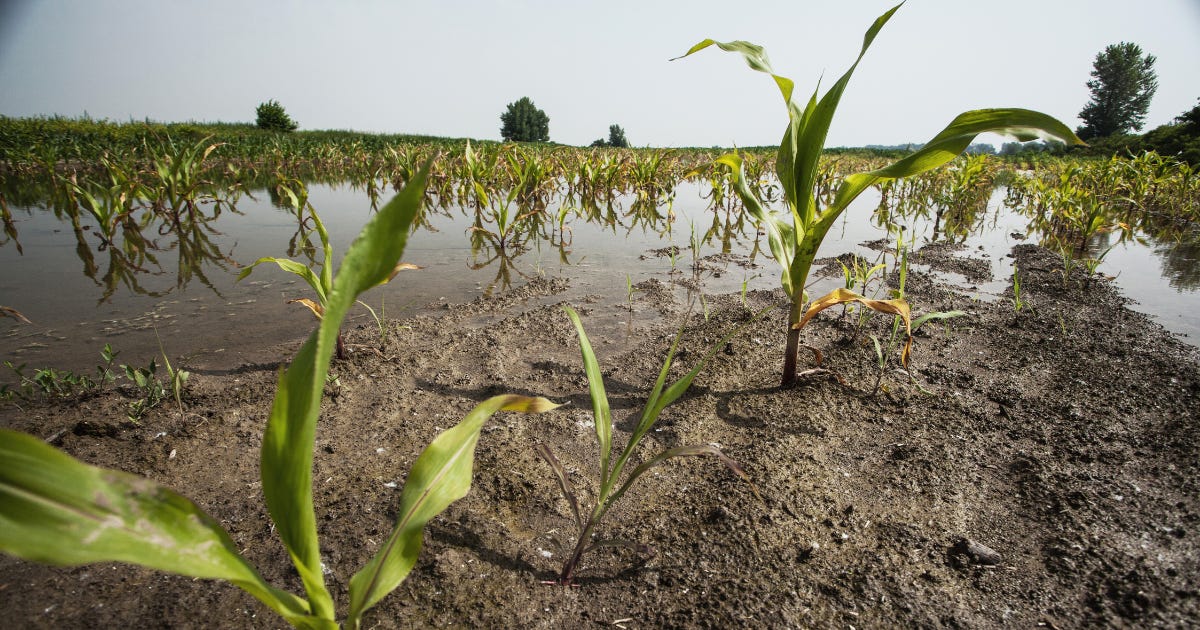
The US food system is heavily industrialized and often relies on food sources outside the country. Much of the fresh food we eat is grown by large corporations that sell to fast food and grocery chains and other food service companies on a large scale. When something goes wrong, like an agricultural irrigation system mixing with wastewater, it can affect substantial quantities of food that are grown, processed, or packed in that facility. It may go undetected for long periods. Warmer, wetter weather due to climate change may also be creating conditions that make it easier for Cyclospora to survive and contaminate fresh food. Unfortunately, Cyclospora is not easily found through standard water or machinery testing and is not regularly tested in stool specimens of humans that are sick. Because it takes up to two weeks for infected people to become ill, it is even harder to figure out what caused the illness.
Decreased funding for public health agencies and systems limits the ability to prevent, detect, and respond to outbreaks in a timely manner. Many of the food safety systems, and employees managing those systems, are no longer funded or minimally funded from the federal government, and as a result state and local food safety and surveillance system funding and operations may be affected. When public health systems are working well, it is in the background and invisible; we can’t see what didn’t happen because it was prevented. When it is not working well, we see more frequently what used to be prevented, like a previously unimaginably large cyclosporiasis outbreak. Public health experts have continuously raised concerns that our strained surveillance and investigation systems may make outbreaks more difficult to detect and respond to; the current outbreak, in which CDC is many weeks behind and consequently substantially underestimating the current extent of the outbreak, seems to show those concerns have merit.
Text within this block will maintain its original spacing when published

Outreach teams and other community-facing education staff should help migrant and immigrant communities recognize the signs and symptoms of cyclosporiasis, and encourage people with symptoms to visit their health care provider or urgent care.
Share MCN’s video on cyclosporiasis in Spanish to share the basics with your community in an accessible way.
Share MCN’s social media carousel in Spanish or English. While the text is aimed at clinicians, it can serve as a conversation starter for higher literacy patients.
CDC’s Información clínica de la ciclosporosis helps outreach teams get familiar with the clinical process in Spanish.
MCN’s archived webinar, What Clinicians Should Know About Cyclosporiasis, includes information for communities where fear and anxiety are reducing patients’ willingness to get to a clinic. In these communities, community education is even more critical, to ensure that community members can access the care they need.

Clinicians may order special lab tests that require the patient to collect up to three stool samples on three separate days to be able to find Cyclospora. It is hard to detect, so one sample may not be enough.
States with a very high number of cases like Michigan and Ohio, may no longer be able to test because they are out of testing supplies. Clinicians may do other tests to rule out any other stomach illnesses, or they may choose to treat because symptoms indicate Cyclospora - especially if the patient is in an area with many people known to be sick from cyclosporiasis.
CDC’s Clinical Guidance for Cyclosporiasis provides more in-depth information on how testing works.
MCN’s archived webinar, What Clinicians Should Know About Cyclosporiasis, includes information on how to partner with state or local health departments and stories from the frontlines of the outbreak in Michigan.

Treatment for the average person is with a common sulfa-based antibiotic, with the generic name Trimethoprim-sulfamethoxazole (TMP-SMX) double strength. Immunocompromised patients will take the same medicine, but more often and for a few more days. They may be given extended treatment for prophylaxis to prevent the infection from coming back. For people that cannot take sulfa-based medicines, Ciprofloxacin may be used instead. It may be less effective but is the only other option recommended. A key message for patients is to stay well hydrated, to drink water, electrolyte or sports drinks, or oral rehydration solutions throughout the day until you are well to prevent dehydration. Dehydration is one of the main reasons people who get this parasite end up hospitalized.
Use the teach-back method to ensure that patients understand the next steps, including the importance of hydration and how to take their antibiotics.
CDC’s Clinical Care of Cyclosporiasis has more specifics on treatment including for special populations.
If you have a patient that is moving and has ongoing health care needs, sign them up with our Health Network program to find a clinic in their new location, securely share health records, and help with other health-related needs to help them settle in their new community. Visit our website for more information: Health Network.
Text within this block will maintain its original spacing when published
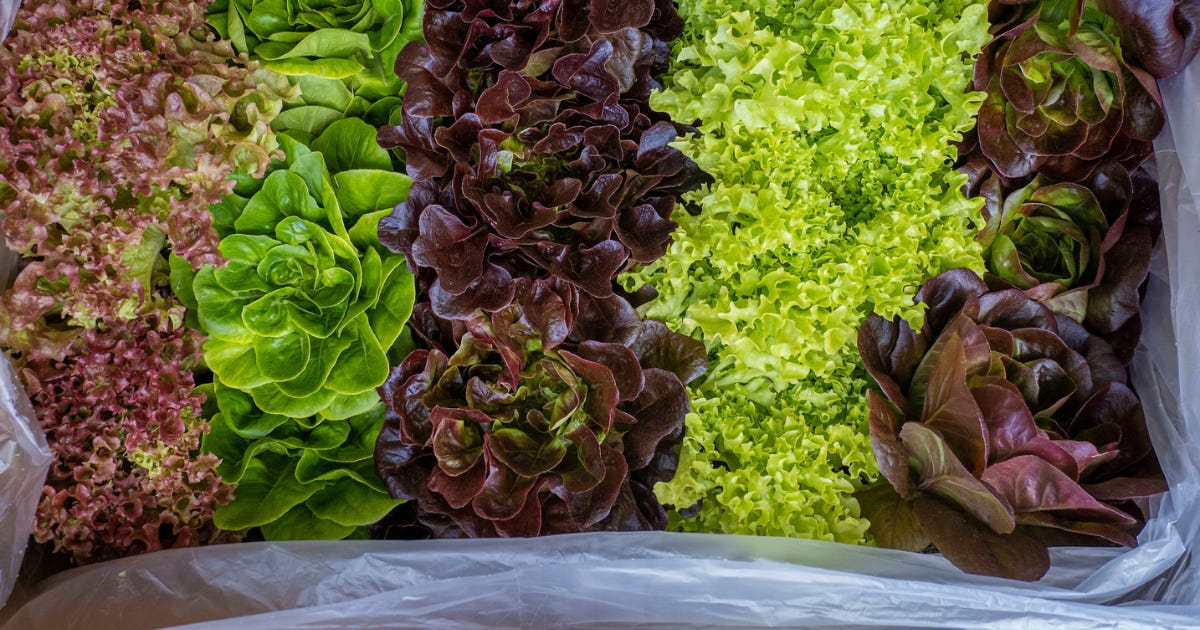
Cyclospora has an unusual life cycle. The parasite releases oocysts, a protective egg-like structure that is released in human excrement, that can then contaminate water systems or food through poor hygiene practices, and septic or sewer failures. It then must stay in the environment for a few days to a few weeks or months before being able to infect other humans that then eat contaminated food or drink contaminated water.
Cleaning raw fruits and vegetables that are contaminated with Cyclospora may not remove it from things like leafy greens, herbs, or soft fruit like raspberries. Consider avoiding these foods until the outbreaks are over or cook them if you bought them from a chain grocery store in an area with many cases of cyclosporiasis. Buying locally grown fruit and vegetables from small farms that are less likely to be part of the ongoing outbreaks is also a good strategy to avoid Cyclospora at this time. It is always advisable – even during times when we do not have a cyclosporiasis outbreak -- to wash any food you will eat well under warm running water and use a vegetable scrub brush for foods that won’t be damaged. Washing hands well after using the restroom, and before eating or preparing food is the best way to prevent all types of gastrointestinal illnesses.
No posts
Comments
Nothing yet. Say the first thing.
Sign in to join the conversation.