

Last week, two thousand plus folks spent a rainy April evening at Crisler Arena in Ann Arbor for ClawCon — a global meetup series “born OpenClaw community and its mission to put power in the hands of people and their sovereignty over personal AI” (Chicago, the lobsters are coming your way on 4/28). Attendees were learning building, connecting, and - from everything I hear - generally just having a pretty damn inspiring evening.
Yesterday I caught up with our partners over at Techtown Detroit. They were similarly hyped about their “AI and Automation: Build Nights” — consistently overflowing crowds, “we’re dragging chairs in from all over the building” — where people have been deep diving into two-hour intensive AI workshops and leaving fired up to keep building.
None of this will surprise anyone who’s been paying attention. These kinds of events have become the norm in our regional ecosystem, and they’re creating an infectious energy that’s hard to miss. The vibe in those rooms is unmistakable: with these tools, we can build anything. With these tools, we can change the world.
Okay, now hold that vibe in your mind.
Last month, a Quinnipiac poll found that 80% of Americans are either very concerned or somewhat concerned about AI. 70% think advances in AI will lead to job losses. 55% think AI will do more harm than good — up from 44% just one year ago. All over the country, city council meetings have been overrun with data center protests. And in the past two weeks, Sam Altman's house in San Francisco was attacked twice: first, a 20-year-old man traveled from Texas to throw a Molotov cocktail at Altman's front gate at 4am. Two days later, two more suspects were arrested after a drive-by on the same property. The attacker in the first incident was arrested outside of OpenAI's headquarters, where he'd been trying to smash his way in with a chair. He was carrying a manifesto about AI's "impending extinction" of humanity and a list of AI executives' home addresses.
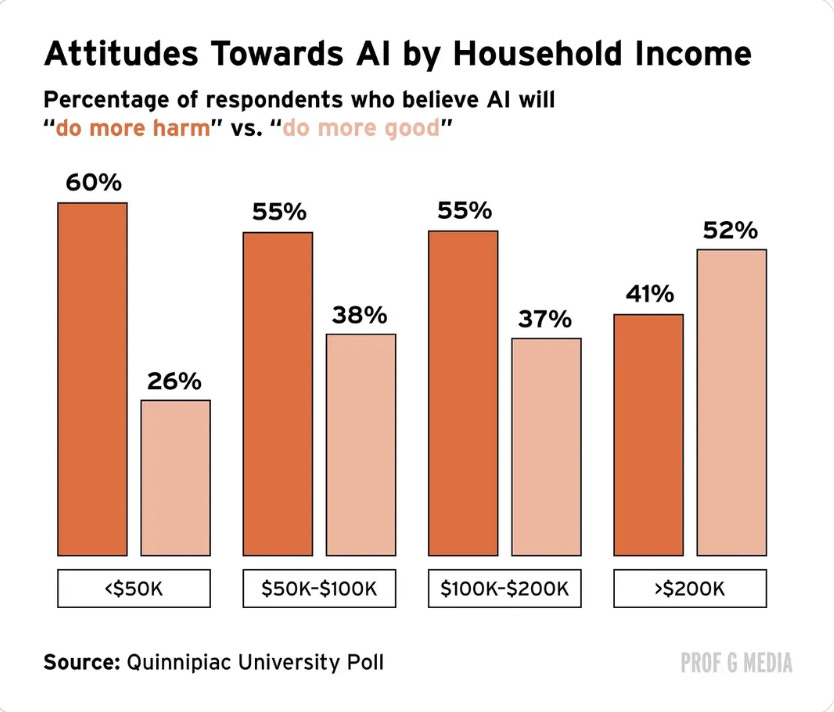
How’s that vibe from up above holding up?
Here’s the thing that I don’t think is said enough:
Both of these responses make sense.
The folks in Ann Arbor and Detroit aren’t naive. They’re not ignoring the risks. They’re people who have developed enough familiarity with the tools — enough hands-on reps — that they can see what’s possible. They’ve moved past the abstract fear into actual agency. They’re building.
And the 80% who are scared? They’re not wrong either. Hell, there’s probably plenty of overlap. AI is changing things fast. Entry-level jobs are being disrupted. The companies building this stuff are moving faster than the policy and regulatory infrastructure can keep up. When you’re watching the economy shift underneath your feet and nobody’s helping you figure out what to do about it, fear is a completely rational response.
The problem isn’t that people are scared. The problem is that fear, without a path forward, is just paralysis.
And that brings me to my actual thesis: if we want AI to be a genuinely good thing for more people — not just the people at the top of the AI food chain — we need more people thinking like entrepreneurs. And I mean a lot more.
I’m not saying everyone needs to found a company. I mean a mindset. The instinct to look at a problem and ask “what if I built a solution to that?” The willingness to try something before you’re sure it’ll work. The muscle of iteration — build something, see what happens, adjust.
It turns out that’s exactly the mindset you need to get the most out of AI. Not technical expertise. Not a computer science degree. The ability to identify a real problem, get creative, move fast, and learn from failure.
The other big AI news from the last few weeks: Matthew Gallagher, the guy who built Medvi — the telehealth company that hit $401 million in revenue in its first year with two employees, him and his brother — used ChatGPT, Claude, and Grok to build the whole thing. Website, code, customer service, ad content.
It’s a complicated story with real regulatory questions attached — but as a proof of concept for what one entrepreneurially-minded person can do with AI? It’s hard to argue with. And it’s another inflection point (one that Sam Altman predicted). The question is who gets to take advantage of that.
Right now, the honest answer is: mostly the people who were already wired to build things. The people already plugged into the innovation community. The people in those rooms in Ann Arbor and Detroit.
That’s not enough.
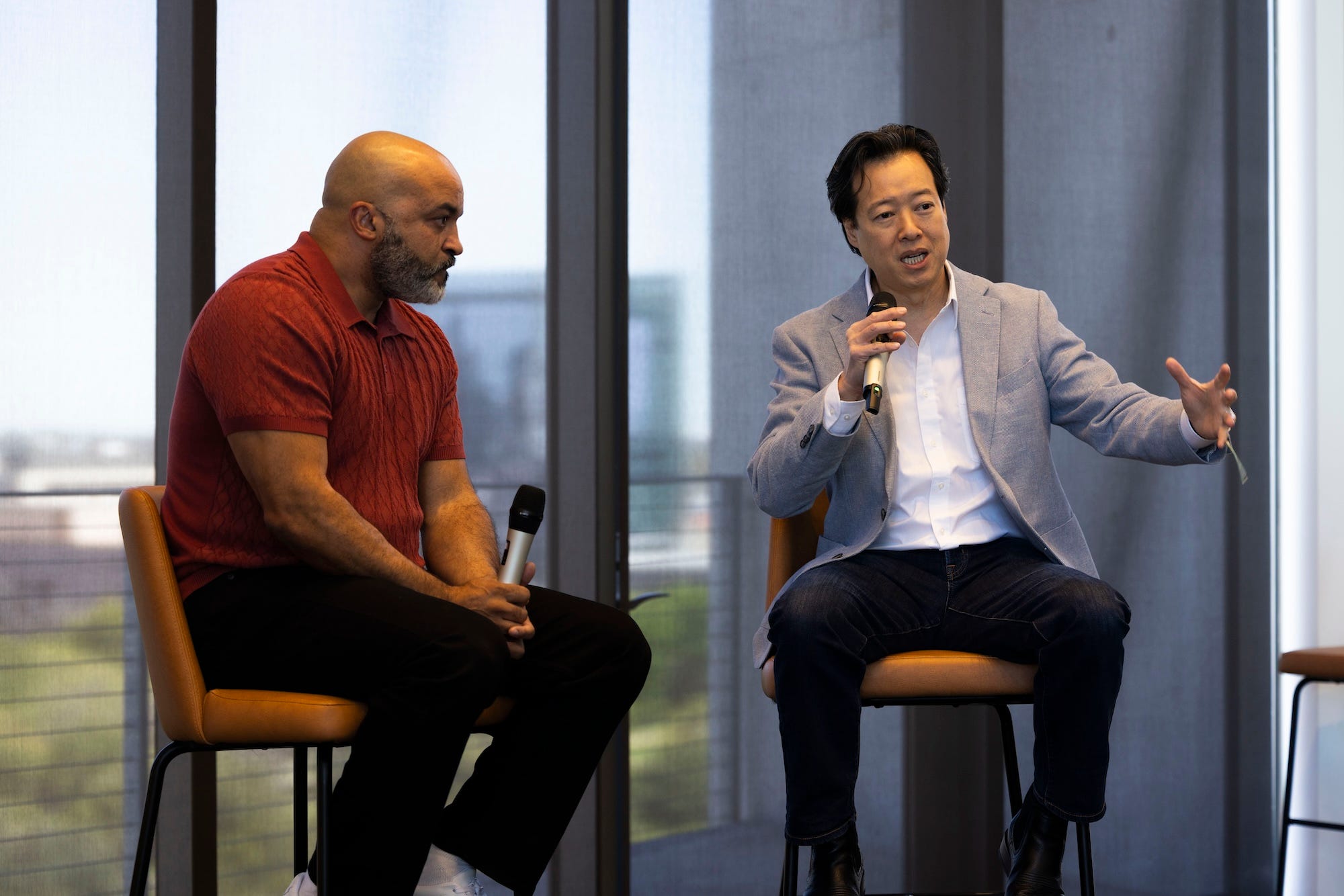
Our guy Victor Hwang (pictured above at Midwest House Austin) from Right to Start likes to say, “Each of us has a fundamental right to start our own thing, realize an idea, create something of value, forge a unique path, be master of our future.”
If we’re serious about making this transition good for more people, I truly believe that more people need to embrace those words.
But everyone who’s reading this knows that having an entrepreneurial mindset ain’t enough. There needs to be the infrastructure and support that we’re always yapping about in this space.
And here’s why that urgency is real right now, not theoretical: the structural disruption to employment that everyone’s scared about isn’t coming — it’s already here, and it’s going to accelerate. A lot of the entry-level jobs that used to serve as the training ground for building skills and careers are going away. The question of “what do people do instead?” is going to need an answer, and “learn to code” isn’t it. Neither is “become an entrepreneur” as a slogan without any scaffolding behind it.
Because here’s the other thing nobody says enough: building something with AI is kinda the easy part now. The Medvi dude didn’t just build a product — he found a underserved market, figured out distribution, and built customer acquisition at scale. That’s the hard part. That’s always been the hard part. AI makes it faster and cheaper to build. It doesn’t automatically show you who your customers are or how to reach them.
So when I talk about the infrastructure we need, I mean the full stack:
Community — because the reason those Build Nights at Techtown are packed isn’t just the curriculum. It’s the energy in the room. The sense that you’re not figuring this out alone. The person next to you who already solved the problem you’re stuck on. That doesn’t happen by accident.
Capital — not just venture capital for high-growth startups, but accessible, patient capital for the person in Toledo or South Bend or Des Moines who wants to build something and doesn’t have a network full of angels.
And real support — not just “here’s how to use ChatGPT,” but the practical skill-building that actually transfers. How to find a real problem worth solving. How to test a hypothesis cheaply. How to talk to customers. How to read the feedback and know what to do with it.
We’ve spent the last decade at Midwest House building community connection by connection, founder by founder. And that work is real and it matters. But the gap between the two Americas of AI isn’t going to close one by one.
It’s going to take infrastructure. And it’s going to take a lot of us deciding that helping more people cross from fear to agency — and then actually giving them the tools to do something with that agency — is the work.
Because the energy in those rooms in Ann Arbor and Detroit? That’s not a fluke. It’s also not the energy out there right now. A lot of us might be built for where the world is heading, but things get far more interesting if we can help a whole lot of others get there.
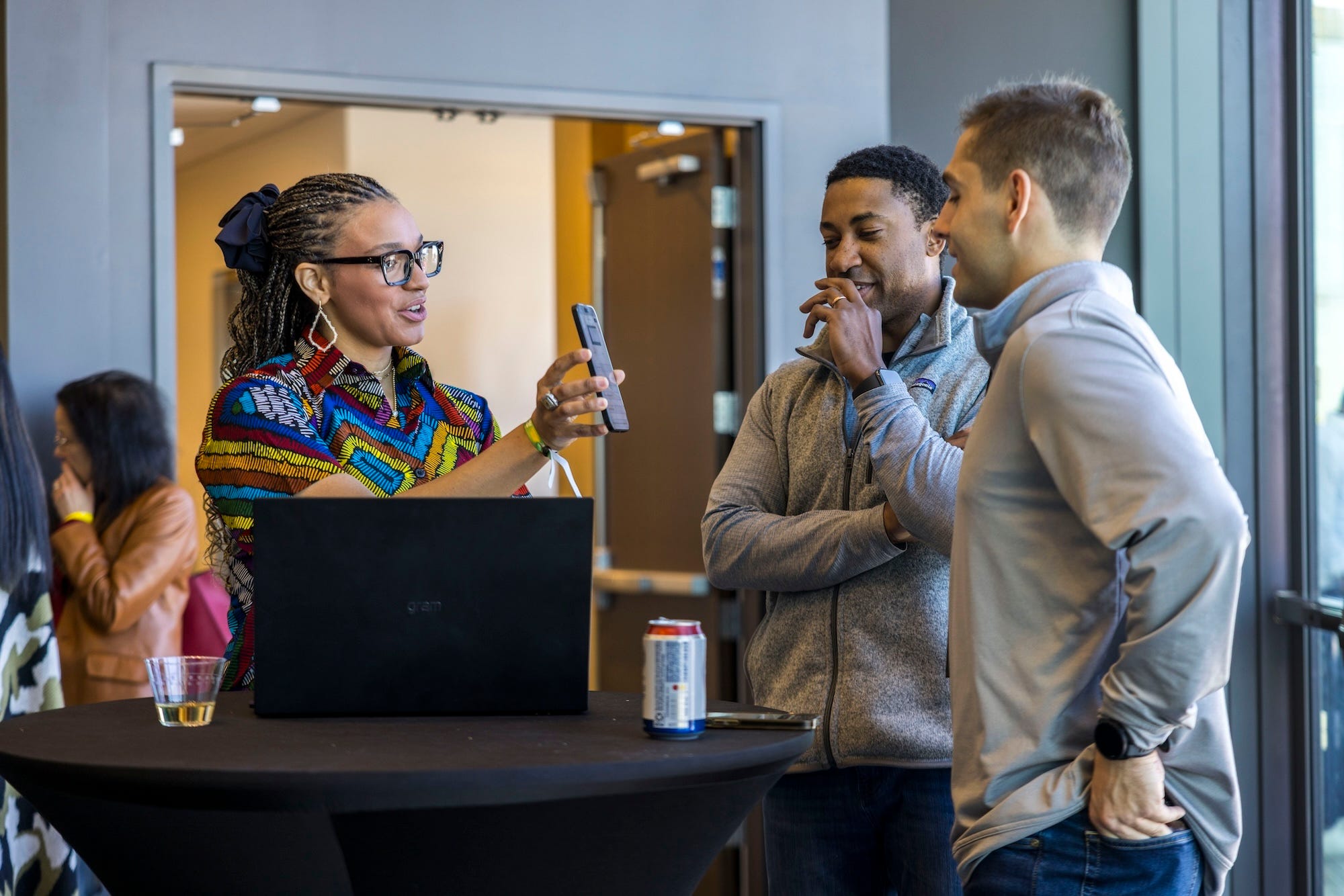
We did our first House Call last week for House Pass Members and it kind of worked.
Again the idea behind these calls is “Once a month, members get in a virtual room to our collective social capital to work. Each call will feature one founder putting real problems on the table — not a case study, not a hypothetical — the actual things they’re stuck on right now.And the room goes to work.” We’ll be doing another one in May.
The House Pass is how you get in the room — year round, not just once a year.
Membership includes the monthly House Calls and… a free Summit ticket, a Midwest House tee, access to our Slack community and Nunchi, early access to events, and a growing list of partner perks from Bamboo, Huck Finch, StartMidwest, Spin Travel, Regus, Flying w/ Founders, Carta, and more.
We’re still offering Founding Member pricing at $400/year or $45/month — locked in for life.
No posts
Comments
Nothing yet. Say the first thing.
Sign in to join the conversation.