
modern life now comes with a running commentary on whether we are doing it right. the inbox tells you if you’ve been useful, numbers report back on whether the work mattered, your watch is strangely pleased that you went for a walk and little hearts appear beneath proof that the evening was as lovely as it felt. almost everything seems capable of handing us a verdict now. and somewhere along the way, we start doing the same thing to ourselves too. none of these external signals are useless. sometimes they tell us something worth knowing, or let us see that something we made reached another person. the trouble starts when feedback stops being information and begins deciding what counts. after a while, something lovely can happen to you and still feel strangely unfinished until something outside you agrees.

this is part of what makes a loud life feel so alive. there is motion. you wake to messages that need answering, parcels by the door and small red circles already waiting on your phone. before your feet have touched the floor, the day has begun making claims on you. and there can be something comforting about being needed that quickly, especially in seasons when your own wants have become harder to hear. usefulness gives you an answer before you have to sit with the uncomfortable questions. there is somewhere to be, something to finish, somebody expecting you. by bedtime, you may have shown up for every part of the day and still realise you barely stayed with yourself at all.
a loud life makes a convincing case for itself. progress can be counted, approval can be seen, and sensible choices usually come with explanations you can repeat when somebody asks why. desire is much messier to follow. it can change your mind after the plan has already been made, keep drawing you back towards something that makes very little sense on paper and impresses absolutely nobody. that is part of what makes the louder path so appealing. it rarely leaves you wondering what comes next. one achievement points neatly towards another, then another, until the path begins to overrule the person walking it. each step can look so reasonable from the outside that you become very good at explaining choices you are no longer sure you even want to make.
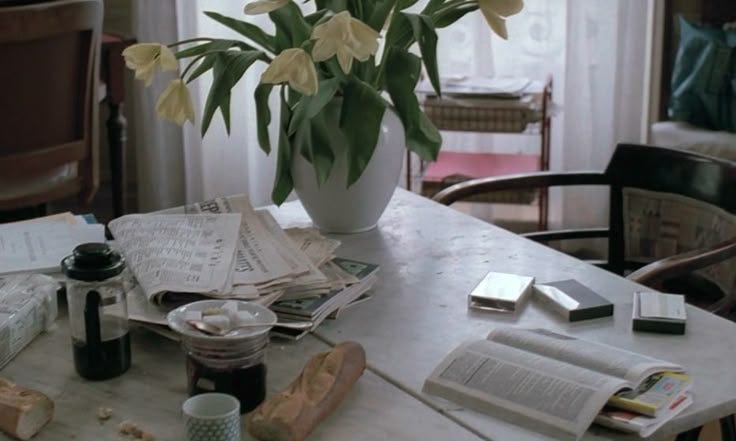
the oddest part is that nobody may have asked you to explain or defend any of it. you wake on saturday wanting to stay home, make eggs royale at noon and finish the book that’s been waiting on the sofa. then you picture someone asking on monday what you got up to at the weekend, and suddenly the day that felt lovely starts sounding a little thin when said out loud. before long, you’re looking at tickets for something you had no desire to attend ten minutes earlier.
nobody actually has to ask the monday-morning question, sometimes just imagining what somebody might think is enough. and that judgement somehow travels backwards into your saturday and starts rearranging it until without anyone saying a word, your own idea of a good weekend shrinks to make room for how it might sound to somebody else. this is how a life can become loud even when you’re alone, with every preference already translated into how it might look from somewhere else.

some of the loudest signals in a life arrive disguised as gratitude. being needed is one of them, and it’s rewarded so warmly that we don’t always notice how much of ourselves we’ve started handing over. you become the person people forward the difficult email to, the one who says leave it with me before checking whether there is anywhere left to put it. and often the work really does matter. people are genuinely grateful, sometimes they say: i don’t know what i’d do without you and mean it entirely as love.
it can be hard to notice yourself disappearing inside a compliment like that. being needed gives our life an immediate shape and also saves us from the unassigned hour in which nobody has provided a brief that contains the less convenient question of what you actually want. and your own answer might be embarrassingly small, or inconveniently large, or simply something you are not ready to explain yet. but unlike other people’s needs, it can wait. so it does. living a loud life means other people’s needs are always easier to hear than your own.
this is why the noise can be so difficult to recognise. most of it doesn’t sound like noise at all. it sounds like being sensible, being useful, making the most of things, having something good to say when somebody asks how your weekend was. after long enough, you can mistake all that outside information for your own voice. what answer will make the most sense? becomes such a familiar question that you barely notice when it arrives before what do i actually want?
the obvious escape from a loud life has acquired its own aesthetics now. peace comes with slow mornings, linen pants and the beautifully documented rejection of busyness. even opting out can become another thing to be seen doing well. real life, unfortunately, is much less cooperative. work runs over, children need caring for and bodies make appointments no planner can make poetic. not everyone has the option of making their days less full, and besides, an empty calendar is no guarantee of an inner life that feels any quieter.
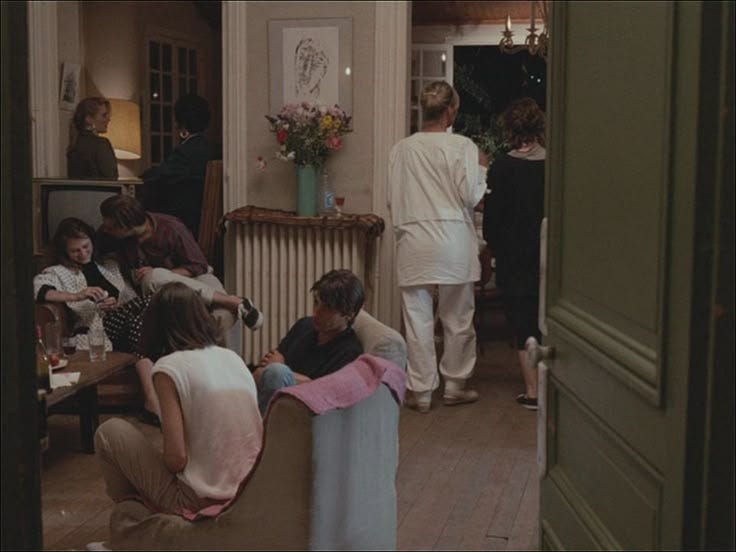
literal silence tells us very little. someone can speak boldly, disagree openly, be the life and soul of the party, lead a slightly chaotic work week and come home to a house full of people while still taking her direction from somewhere inside herself. meanwhile, somebody else can sit alone in the quietest room with an open diary and still make every decision according to an imagined response. a loud life describes where the authority comes from, not the pace or personality of the person living it. sometimes saying what you want is the loudest thing you do all day and yet somehow the quietest too, simply because for once, the answer began entirely from you.
we assume the cost of a loud life is exhaustion; too much scrolling, too much work, too many plans, too little time in which nobody wants anything from us. and of course, sometimes it is. but there is another cost that takes much longer to notice. after enough years of hearing what makes sense, understanding what performs well, what everybody else needs, what looks impressive, what can be easily explained and what receives applause, your own preferences start becoming the least authoritative voice in your life. you become wonderfully fluent in the reasons a choice is sensible or impressive and strangely rusty at noticing whether it’s actually yours.
the deeper cost of a loud life is a kind of self-abandonment so gradual it can look remarkably like being good at life.

and of course, life does not always give us the luxury of beginning with what do i actually want? some seasons leave very little room for preference at all. people get ill, money gets tight, somebody needs caring for, and whole stretches of life can be shaped by circumstances we would never have chosen. sometimes the sensible thing is also the loving thing, and sometimes duty matters more than preference for a while. a quieter life cannot mean arranging reality around every desire, because reality has never been that cooperative.
what changes is the direction we travel in. a loud life begins outside and works its way inward, gathering what everybody else needs, what makes sense, what can be justified and what will keep the room comfortable before eventually asking whether there is any room left for you inside the answer. a quieter life begins somewhere within and moves outward from there. it starts with where you are, what matters to you and what you know to be true, then takes all of that into the much messier negotiation with circumstance. other people still get a vote. reality gets several. sometimes your own preference will lose. but the life no longer begins by abandoning the person who has to live it.
and sometimes the cost of a loud life reveals itself most clearly when someone asks a very simple question: are you happy? and you begin, almost automatically, with the evidence. work is going well, people love you, there are things in the calendar you once hoped would be there. every sentence can be true. and then the facts run out, and only afterwards do you realise you described an entire life without saying how any of it feels to be the person living it.
p.s. if someone asked whether you were happy, what would you say after the facts ran out?
—hannah x

keep reading crumbs:
(◕‿◕)
and heyy i’m hannah
i started midnight crumbs as a tiny late-night project during a difficult chapter of my life last year. today, more than 30,000 people read along, with our little midnight club helping keep this space independent. inside the paid tier each month you can unlock:
crumb theory: a playful monthly syllabus for the messy middle
monthly journaling guides: thoughtful check-ins for your inner life
anti-scroll side quests: tiny missions to rejoin your own days
practical essays: for the parts of adulthood nobody explains
plus the full archive: every paid piece, waiting for you
𖥔
got an idea tucked in your notebook?
Quiet Growth Chronicles explores the practices, habits and practicalities of building a creative life of your own
Comments
Nothing yet. Say the first thing.
Sign in to join the conversation.