
Lebanon has become this week the center of attention in the negotiations between the United States and Israel, on the one hand, and Iran, on the other, after the Israeli army launched a series of bombardments across the entire Lebanese territory just a few hours after the announcement of a ceasefire agreement in Iran. According to the Ministry of Health in Beirut, over 300 people were killed (we do not know concretely, as usual, how many of these were actually members of Hezbollah) in the attacks, which lasted about ten minutes. The confusion was all the greater as the Prime Minister of Pakistan, Shehbaz Sharif, had announced the conclusion of an agreement between the US, Israel, and Iran on Wednesday morning through a post on the platform X in which he claimed that the understanding includes Lebanon. Obviously, it did not. The American Vice President JD Vance stated that it was a misunderstanding on Iran’s side and that the US never indicated during the negotiations that a possible armistice would include Lebanon.
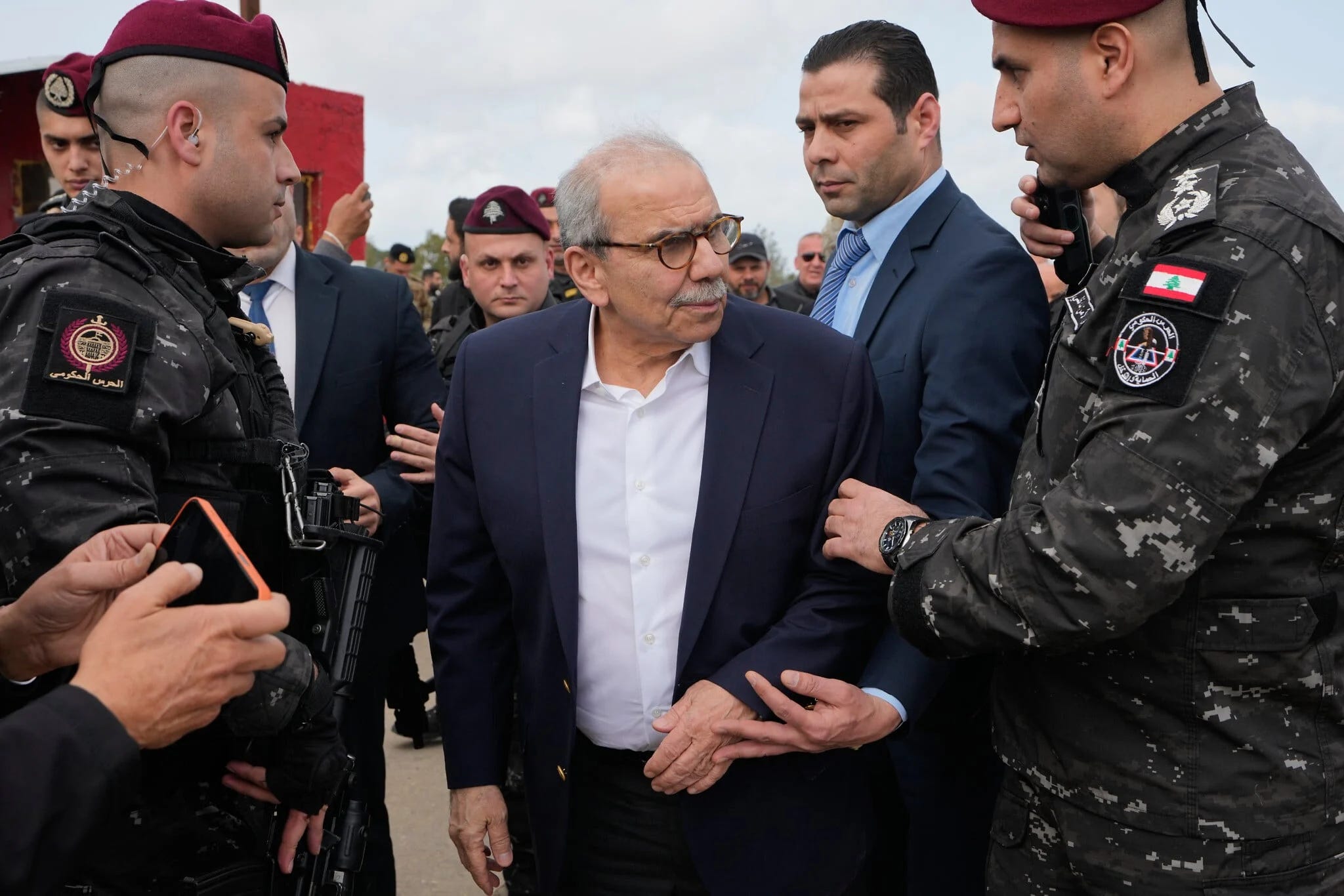
Shortly after the series of devastating Israeli attacks, the Lebanese Prime Minister Nawaf Salam held a press conference following an emergency government meeting in which he informed the population that, in accordance with the Taif Agreement, which ended the civil war in 1989, the Lebanese army and security forces were ordered to consolidate the full control of the state in Beirut and the restriction of weapons within legitimate institutions by strictly enforcing the legislation and taking measures against those who violate it. However, while both the prime minister and the Lebanese president condemned the Israeli attack, the population, which was still recovering after the massive destruction, began to observe a discrepancy. On the one hand, the leaders, headed by President Joseph Aoun, have shown openness for direct negotiations with Israel in recent weeks after the latter continued unhindered its daily air raids and launched a ground invasion in southern Lebanon. On the other hand, Israel continuously bombards the country, and the main measure taken by Salam is to ask the army to expand its presence in the capital and to confiscate the weapons in the possession of anyone other than the authorities. It did not take long before groups of protesters gathered in front of the government’s headquarters, chanting slogans such as “Nawaf Salam is a Zionist.”
However, over the following days, the statements of Salam and the presidency divided the entire country. On the one hand, the supporters of the plan to obtain a ceasefire agreement with Israel, a long-term peace with the southern neighbor, and the disarmament of Hezbollah, and on the other hand those who consider that the main problem for Lebanon is Israel, which is responsible for the continuous bombing of the country and causing large-scale destruction, despite the existence of an armistice concluded in November 2024, violated by Israel thousands of times. The leaders of the other political parties also took public positions.
Samir Geagea, the leader of the Christian party Lebanese Forces, the largest political formation in Lebanon, former commander of its militia in the 1980s, welcomed Nawaf Salam’s statement and encouraged the army to implement the governmental directive. The secretary general of the (self-proclaimed) secular party National Bloc, Michel Helou, stated in a post on X that “Hezbollah fights on behalf of Iran, Iran negotiates only for itself, and Lebanon is always the victim.” Gebran Bassil, leader of the Free Patriotic Movement, one of the most corrupt and detested Lebanese politicians, also announced his support for the idea of a “demilitarized Beirut” followed by a “demilitarized Lebanon” except for the “legitimate security forces.” On the Sunni side, Saad Hariri, former prime minister and leader of the Future Movement party, limited himself to condemning the Israeli attack and asking the international community to act immediately to stop Israel’s aggression. The leader of the Kataeb party, a political formation with a long history of sinister massacres, including the one at Sabra and Shatila in 1982, Samy Gemayel, called for the complete stopping of Iranian influence over Lebanon, saying that “no one negotiates on our behalf, even less Iran, which dragged us into this situation.” On the Shiite side, there was silence until Friday when Hezbollah leader Naim Qassem asked Lebanese officials to stop making free concessions, adding that the Israeli military campaign is a failure and that the resistance will continue “until the last breath.” All of the above, together with the Lebanese government, are right and wrong at the same time.
Nawaf Salam and, especially, Joseph Aoun have aggressively promoted in recent weeks the idea of direct negotiations with Israel, openness towards a peace agreement, and the determination to disarm Hezbollah once and for all. In the end, the president imposed his point of view and declared that Lebanon will conduct direct talks with the southern neighbor if there is willingness from the government of Benjamin Netanyahu. In the face of the practical impossibility of disarming Hezbollah, Joseph Aoun tried through this move to obtain two results: imposing the power and dominance of the state and sending a firm message both to Hezbollah and especially to the West.
Power is exercised through the control of one group over another group, but control manifests itself both through physical and cognitive actions. Physically, meaning the effective limitation of the freedom of action of the other side, and cognitively, through persuasion or manipulation. The discourse of the Lebanese government in the recent period regarding the imposition of a monopoly over weaponry, therefore the confiscation of it from the hands of Hezbollah, was not accompanied by either of the two elements. Physically, the Lebanese army achieved very limited progress and proved once again incapable of implementing a plan of such scale. Cognitively, if there was any attempt by the government to convince Hezbollah to give up its weapons, it completely failed. The leaders in Beirut did nothing more than stage a discursive spectacle meant to mimic power while controlling access to the communicative process by practically prohibiting the participation of Hezbollah, that is, the actor targeted by the discourse.
Thanks for reading Middle East Politics Newsletter! This post is public so feel free to share it.
Through this discursive act, the Lebanese government sought to send a message to those in Hezbollah and, especially, to the West. Within the organization, it is unlikely that this had any effect; its leaders, headed by Naim Qassem, knowing very well the situation of the army and understanding that, in the form in which it exists today and with the equipment it has at its disposal, it will never be able to force disarmament. The statements of Nawaf Salam and Joseph Aoun had, perhaps, more resonance in the West, indicating Beirut’s pro-West orientation, the willingness to open a direct communication channel with Israel, and the desire to solve once and for all the Hezbollah problem. Things, however, are somewhat more complicated.
Both the prime minister and the president as well as the other political party leaders who expressed their support for negotiations with Israel or the disarmament of Hezbollah start from an erroneous premise: namely that a peace agreement with Israel combined with or in parallel to disarmament will lead to the disappearance as if by magic of the organization and of all the problems that led to its existence or appeared as a result of its existence. The emergence, evolution, and continued existence of Hezbollah over the last decades seem to be reduced to an Iranian plan; the group is “the child of the Islamic revolution.” Certainly, the establishment of the organization had much to do with the establishment of the Islamic Republic in Iran, however its roots are much deeper and are not related either to the Islamic revolution of 1979, nor to the civil war in Lebanon, nor even to the Israeli invasion and occupation of southern Lebanon in 1982. Hezbollah is, partially, the product of these events, but ultimately it is a manifestation of the constant marginalization, discrimination, and lack of interest given to the Shiites in southern Lebanon over the decades since independence from the French mandate.
The political mobilization of the Shiites came against the background of this situation, thus giving rise to the Amal Movement in the 1960s, founded by Musa al-Sadr, which became the main Shiite political formation. Shiite militancy was fueled during the civil war by both the presence of the Palestine Liberation Organization in southern Lebanon (the Shiites initially identified with the situation of the Palestinians and drew parallels between it and their living conditions), which attracted the Israeli invasion, and by the occupation of the territory by Israel and the involvement of Western powers in the civil war. Did Iran play an important role in the creation of Hezbollah? Obviously, but the conditions for Hezbollah’s emergence were already there. Tehran did nothing more than exploit them. Decades later, southern Lebanon remains underdeveloped, Hezbollah is the main provider of services, and the Shiites are constantly discriminated against when they are forced to migrate north because of Israeli bombardments.
Share Middle East Politics Newsletter
Hezbollah’s leaders, in turn, are also right when they continue to promote the discourse of resistance. Over the years, the governments that succeeded one another in Israel did not show any kind of willingness for the pacification of southern Lebanon because the existence of an “existential” danger always served the domestic political agenda, but the strategy of buffer zones imposed and maintained through military force has proved and will continue to prove to be a failure. It did not work in the past, it does not work in the present, and it will not work in the future for the simple reason that it is based on the completely erroneous idea that military control will lead to the disappearance of the fundamental causes that led to the emergence of the problem. On the other hand, solving the Hezbollah problem is absolutely impossible without negotiations with Iran. The solution is not in Tel Aviv, but in Tehran. This does not mean that the Lebanese group is the puppet of the Islamic Republic. However, in contrast to Hamas, for example, Hezbollah has never detached itself from its Iranian origins (although it has developed, for example, its own independent sources of funding, methods of procuring weapons, etc.), as the Palestinian organization distanced itself from the Muslim Brotherhood. At the same time, Hezbollah is now at a turning point. The discourse of resistance against Israel has brought it both benefits and significant losses. The core of supporters continues to be animated by this rhetoric, but the Shiite population faces unimaginable losses, has been forcibly displaced (and may not be able to return soon once Israel destroyed the bridges linking southern Lebanon to the rest of the country), and these elements combined with Hezbollah’s inability to provide support may bring huge damage to the group in terms of popular support. I do not deny, however, the resilience of the Shiite population.
The attention and declaration of loyalty towards the West of the Lebanese leaders are understandable. At the same time, no resolution of the Hezbollah weapons issue can take place without negotiations between Beirut and Tehran. The discourse from Beirut created a lot of hostility among the population and deepened the already existing cleavages. Nawaf Salam stated a few weeks ago that Hezbollah’s military and security actions are illegal, and their continuation and support by Iran will affect, first and foremost, the Shiite population. At this moment, paradoxically, Hezbollah’s relevance could depend on the willingness towards certain concessions that would at least partially ease the pressure faced by the Shiites in Lebanon.
According to the Lebanese presidency, following a phone discussion between the Lebanese ambassador to Washington, Nada Hamadeh Maacoud, and the Israeli ambassador to Washington, Yechiel Leiter, with the participation of the US ambassador to Beirut, Michel Issa, the parties agreed to have the first meeting next Tuesday to discuss the announcement of a ceasefire agreement and the date for the start of negotiations between Lebanon and Israel, mediated by the US. However, shortly after its publication, Leiter stated that Israel accepted a meeting on Tuesday but did not consent to discuss a ceasefire “with the terrorist group Hezbollah, which continues to attack Israel and which constitutes the main obstacle to peace.” Only a few hours before these statements, Israel killed 13 members of the Lebanese security forces in an airstrike that targeted a government building in Nabatieh.
To the extent that they will take place, the negotiations start with Lebanon in a position of enormous weakness. Declaring willingness for direct negotiations while Israel was continuously bombing the south and the capital, Beirut, and maintaining this position even after the massive destruction on Wednesday, places Lebanon in a situation of inferiority. It is unclear what exactly will be negotiated. Israel has repeatedly stated that it will not discuss a ceasefire as long as Hezbollah continues to launch rockets and drones; however, the Lebanese government does not have the capacity to prevent the organization from continuing these attacks. Also, the Lebanese army, poorly equipped, cannot counter the Israeli ground invasion in southern Lebanon. It is understandable where the desire to separate these negotiations from the discussions regarding the war against Iran comes from, but the Hezbollah problem cannot be solved without the involvement of Tehran, no matter how pro-Western Salam and Aoun would like to present themselves. In this context, the position of the leaders in Beirut comes with a certain level of naivety, believing that direct discussions with Israel will automatically bring or increase the chances of a ceasefire agreement. Benjamin Netanyahu stated that he will not stop until the Hezbollah threat is eliminated (whatever that means, possibly the complete destruction of southern Lebanon, the “Gaza model”), and Hezbollah stated that the resistance will continue until the last breath. Tuesday’s discussions will be characterized by absurdity. Lebanese leaders will negotiate peace between Israel and Lebanon, while Israel will not negotiate a ceasefire with Hezbollah, as if the group represents an extraterritorial entity, a ghost that levitates above the state and that can be isolated by building a bubble meant to separate it from the rest of Lebanon.
Overall, of course, any negotiations are welcome. The organization of direct talks between Lebanon and Israel is a historic moment for the two countries theoretically at war for decades. However, any kind of positive result will depend on several elements: the willingness of the West to put serious pressure on Israel to stop military actions in southern Lebanon and to allow the population to return safely, the understanding that the disarmament of Hezbollah cannot be treated as completely independent from Iran, thus Tehran cannot be eliminated from the discussions on this matter, and convincing Iran and Hezbollah that the perpetuation of the current situation brings damage first and foremost to the Shiite population in southern Lebanon whose support is crucial for the organization’s existence.
No posts
Comments
Nothing yet. Say the first thing.
Sign in to join the conversation.