
One of the more memorable events of my 2007 trip to Japan was a visit to the Yushukan War Museum in Tokyo. At first, this seemed like an ordinary museum, showing the history of Japanese warfare from ancient armor to the tanks and planes of the 20th century.
But then we came to the exhibits about the start of World War II. This was a simple timeline with a few images and cards of text. I was quite surprised to see written that Japan was forced into the war as a defensive act and that it was US actions like the oil embargo that threatened Japan’s survival and forced the attack on Pearl Harbor as a strategic response to US aggression.
I was not particularly familiar with the geopolitics of the 30s and 40s, but this seemed very odd. I’d never heard anything like this growing up in the UK. I wanted to take some photos of the cards to check their claims later, but photography was forbidden.
The museum was just part of the typical tourist whirlwind as we packed a hundred things into our trip, but the puzzlement over those unusual claims remained.
Two months later, an oddly symmetrical trip cemented this in my memory. We visited the Hawaiian island of Oahu, home of Waikiki Beach and Pearl Harbor.
We went to the Pearl Harbor National Memorial. There, a small boat takes you to the Arizona Memorial, a simple room built over the sunken remains of the USS Arizona battleship. While we waited for our turn on the boat, we looked at the museum exhibits.
I quickly homed in on the section discussing regional events leading up to Pearl Harbor and found they were discussing the same things as I had seen at Yushukan. Of course, they were very different. Yushukan portrayed Japan’s actions in China as maintaining regional stability and defending Japan’s interests. The US Museum portrayed it as aggressive expansionism.
I was particularly struck by the US portrayal of the Marco Polo bridge incident. An American narrator in a short looping video described it with a sneering, disgusted tone as “the cowardly attack [by Japanese Troops] at the Marco Polo Bridge”. But I had a fresh memory of seeing a card at Yushukan describing the brave defense of the bridge by the Japanese fighting off cowardly Chinese aggressors.
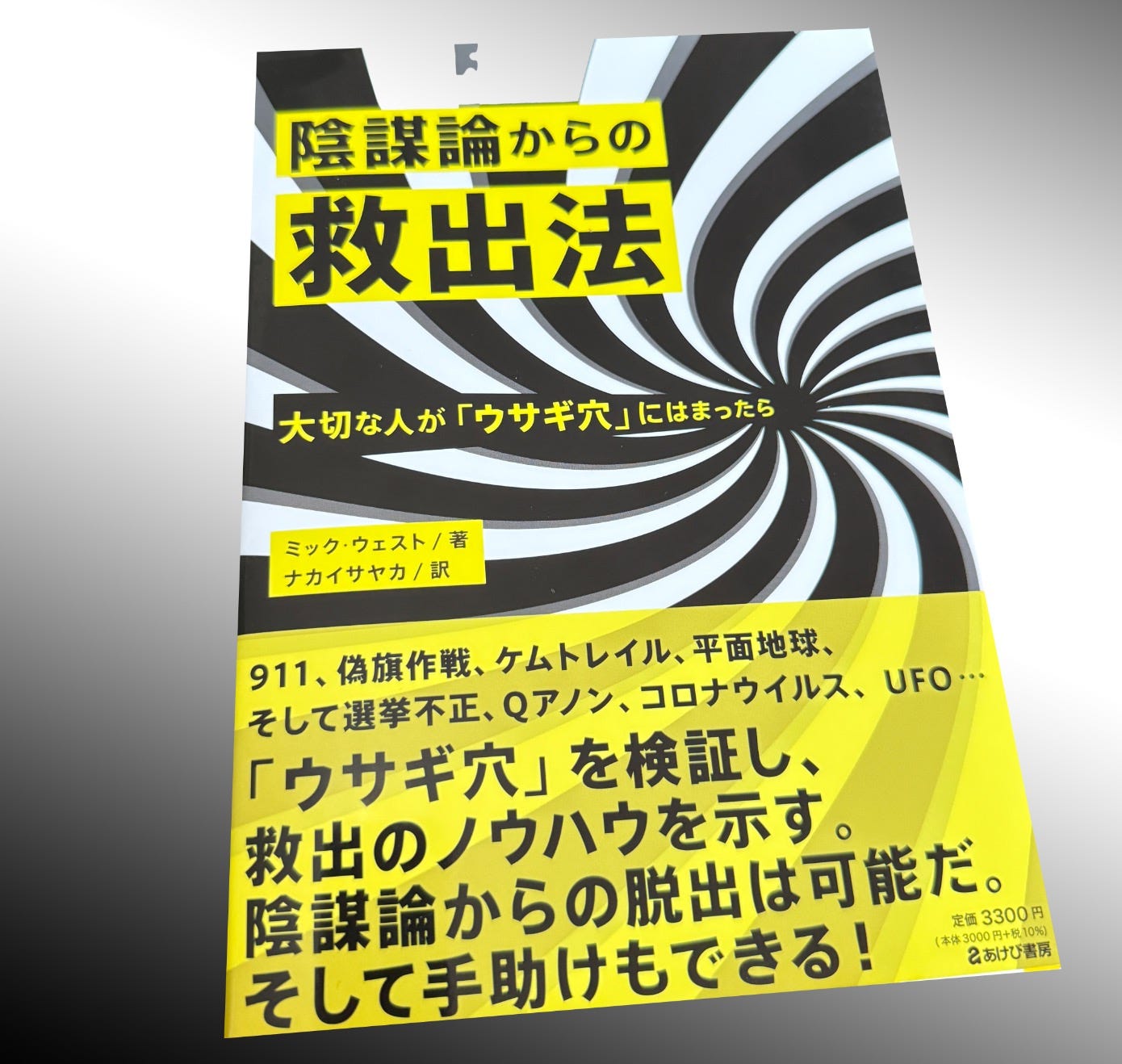
As a British man living in California, USA, I wrote this book from my perspective. The people interviewed are all Americans, and the conspiracies discussed, chemtrails, 9/11, election fraud, and even UFOs, are mainly of an American Flavor.
So, I was initially skeptical about how well it would translate to a Japanese audience. The US and Japan are very different countries. The United States is a relatively young nation, born out of rebellion and still wracked by the echoes of a civil war. Many Americans maintain the legacy of rebellion, with a rejection of authority and a fierce belief in individual freedom, creating a fertile breeding ground for suspicion of those in power and, hence, conspiracy theories.
In contrast, Japan's culture and history offer a starkly different backdrop. As an ancient nation with deep-rooted traditions, Japan highly values harmony, conformity, and respect for authority. The collective mindset prioritizes social cohesion over individualism, which inherently reduces the suspicion of government and authoritative bodies. The emphasis on group consensus and stability in Japanese society creates an environment that should be less conducive to the widespread acceptance of conspiracy theories.
Japan and the US are different countries. However, anthropology notes that the differences between groups are often less than the differences between individuals in those groups. Excepting language, a teenager from New York and a teenager from Kyoto differ less from each other than a conservative Iowa farm boy who differs immensely from a San Francisco drag queen.
A theme of this book is that there is no black and white when it comes to conspiracy beliefs. Instead, there is a broad spectrum, with each individual somewhere on that spectrum. The narratives portrayed at Yushukan and Pearl Harbor are not the polar opposite beliefs of the two nations. There are a range of beliefs in both countries about the history of World War II.
In Japan, the Yushukan Museum is controversial and probably now represents a minority position. However, the belief in Japanese actions as being either aggression or necessary defensive actions still spans a spectrum.
In the US, while there is generally respect for military veterans, there is also a wide range of opinions about both past and current wars. A lot of this dates back to Vietnam. While the modern US has never suffered an invasion of the homeland, a nation’s defeat is a sore wound that seeks justification, and hence, alternative theories arise.
While conspiracy theory thinking often reflects the culture of a nation, here we are concerned not with nations but with individuals. Many people in Japan believe in conspiracy theories. Some theories are home-grown, some are imported from other countries, and some, like UFOs, transcend borders.
One imported conspiracy theory, and the subject of the largest chapter in this book, is chemtrails. That’s the belief that some of the white clouds that form behind planes are not, as science tells us, condensation trails, but are instead some form of evil government spraying of chemicals to control the climate or perhaps the population.
The theory started in the US in the 1990s, but it’s a simple theory with universal appeal (not least of which is that you can see the trails in the sky), so it has spread around the world. The Japanese version is basically the same as the American one, using mostly US sources as evidence. The word “ケムトレイル” is a transcription of the US word “chemtrails”.
Sites like The Japan Fact Check Center give a Japanese perspective, with example Japanese tweets about chemtrails and a reference to a Hokkaido University paper on contrails (normal condensation trails that get mistaken for “chemtrails”). But they also rely heavily on Western sources, quoting the US EPA, the British Airline Pilots’ Association, and Professor David Keith, who is also quoted in this book.
This means that the factual explanations in the Chemtrail chapter are all equally relevant in Japan. The same claims are made, and the same explanations work in debunking those claims.
Another subject with significant overlap is UFOs. Now often referred to as “UAP” (Unidentified Anomalous Phenomena), UFOs are part of American culture. This stems from an incident in 1948 in Roswell, New Mexico, which is believed in UFO circles to be the crash of an alien spaceship. This was followed by a national fascination with flying saucers in the 1950s, during a time of heightened tension between the US and the USSR when everyone was on edge about possible attacks from the sky.
Popularity waxed and waned, growing again in the ‘70s and ‘80s with the release of Close Encounters of the Third Kind and shows like the X-files. More recently, a series of claims about secret US programs to study UFOs, along with a series of official videos, has again raised public interest in the topic.
Some of this is directly reflected in Japanese UFOlogy. Roswell is well known as a foundational case, appearing on shows like "Unbelievable" (世界の何だコレ!?ミステリー) and "TV Champion" (TVチャンピオン). Japanese ufologists like Kin'ichi Arai frequently referenced the event, which also appears thematically in pop culture, movies, anime, and manga.
Japan has its own cases and local color. The town of Kofu is attempting to become Japan’s Roswell, capitalizing on a 1975 sighting of “aliens” by two small children and other recent UFO events.
The more recent events in the US also have Japanese parallels. In July 2022, the US government commissioned a UFO investigations group in the Pentagon called AARO (The All Domain Anomaly Resolution Office). Along with this, a group of US politicians called the “UFO Caucus” took it upon themselves to popularize the investigation of UFOs and demand the government stop covering up the aliens.
In 2024, former Minister of Defense Yasukazu Hamada and others created a very similar group of politicians with the goal of urging the government to study UFOs and to form a group like AARO to cooperate with the US in UFO investigations.
UFOs are a real issue in that sometimes pilots see things in the air that they cannot identify. Where it becomes a conspiracy theory is when people start to think that the government is covering things up. As I discuss in the UFO chapter, the evidence for this is not very good. However, a large percentage of UFO adherents believe that UFOs are aliens because of some personal experiences they have had. This is equally true in Japan, so the advice I give in the UFO chapter will apply equally.
A belief in UFOs as alien spaceships might seem harmless, a slightly silly hobby. But since it requires a government cover-up, it engenders a distrust of the government, which can lead to other things, like distrust of election results or distrust of the “official” science of vaccines.
Some subjects that I cover here are more uniquely America. Perhaps the prime example being election fraud. Donald Trump is largely responsible for a huge rise in the number of people who think that the US elections are rigged (even the one that he won). This will certainly be an issue in 2024 and beyond.
Claims of election fraud are far less prevalent in Japan, where the electoral system is generally considered to be fair and robust. However, conspiracy theories are increasingly global, and a belief that the US elections are rigged can have significant implications in your friend’s understanding of the world order, which will also affect the way they view their own government.
American election fraud conspiracies are often complex things, and the explanations are more complex still. While the US details will likely be of less interest to a Japanese audience, it is still important to understand the broad strokes of such conspiracies and that the explanations exist. If election fraud conspiracies arise in Japan in the future, it’s likely that the theorists will copy some of the false claims made by Donald Trump simply because those claims worked.
An American theory that has already been repurposed for the Japanese audience is QAnon. QAnon is a far-right conspiracy theory in the U.S. that emerged in 2017. It alleges that a secret cabal of Satan-worshiping pedophiles controls global institutions, including governments and media. Followers believe former President Donald Trump is fighting this cabal. The theory, spread mainly through social media, gained significant traction during Trump's presidency. Despite being extensively debunked, QAnon has influenced some real-world actions, most significantly the US Capitol riot on January 6, 2021. It reflects a broader distrust of government and mainstream media, appealing to individuals with anti-establishment views.
QAnon resonates with certain fringe segments of the Japanese population, particularly those with anti-authority views. It started to gain traction in about 2018, and the Japanese version is sometimes referred to as “JAnon.”
While QAnon is based on a bizarre satanic theory, it became something of a catch-all for people suspicious of the government. QAnon believers will easily believe any conspiracy theory that portrays the government in a bad light. So all QAnon believers are also strongly anti-vaccine because vaccines are promoted by the government.
This is reflected in Japan. In April 2022, a QAnon group called YamatoQ broke into a Shibuya clinic that provided COVID-19 vaccines. They claimed that the vaccine was part of a government plot to control the population. They also claimed that COVID-19 did not even exist.
While there are far fewer QAnon followers in Japan, for the individual who happened to get sucked down the rabbit hole, the damage is no less severe. A March 19, 2023 article in The Asahi Shimbun, titled “Son of YamatoQ member feels he is losing his dad to conspiracies,” reads almost exactly the same as articles in the New York Times or other US papers.
The son tells of how his father got sucked into QAnon (and later YamatoQ) during the isolation of the first year of the pandemic. The father became convinced that COVID was fake, that the US elections were rigged, and that the world was run by an evil secret cabal. The relationship became increasingly strained. The son tried to point out the lack of evidence, but as has happened so many times in the US, his father got angry and told him to do his own research.
His father eventually joined the YamatoQ group in their protest at the clinic. He was arrested. Legal and financial troubles followed, impacting the whole family.
The article notes the importance of keeping in contact with a family member who is deep down the rabbit hole and also acknowledges that it’s difficult and that there is no silver bullet — no single approach that with work for everyone.
Japan, of course, also has home-grown conspiracy theories. Some are old, as reflected in the Yushukan museum display. For example, right-wing groups deny or downplay the scale of the Nanjing Massacre during World War II, suggesting that reports of the atrocities were exaggerated or fabricated by China and the West.
Some theories reflect similar Western theories or even real events. Various “Unit 731” theories claim that the true scale of the lethal human experiments carried out by the wartime unit was covered up, and that similar experiments continue covertly to modern times. This is similar to beliefs by some in the US that the historical fact of the Tuskegee Syphilis experiments is evidence that supports the chemtrails conspiracy theory.
Any large-scale event, particularly one that involves death or widespread health effects, is going to create conspiracy theories. This holds true in Japan. Earthquakes like the 2011 Tohoku quake are blamed on the American HAARP radio transmitter. Major storms get blamed on “chemtrails”.
Mass shootings or other attacks are thankfully far less common in Japan than in the US, but that lack of familiarity can make them seem even more extreme and more prone to suspicion. The Aum Shinrikyo subway attack created similar theories to the Boston Marathon attack, with some people suggesting it was staged or covered up or that the government must have been involved as the response was somehow too rapid.
The Fukushima Daiichi nuclear disaster of 2011 was the most serious nuclear accident since Chernobyl. The health fears that followed were a ripe breeding ground for conspiracy theories.
Besides the quake being caused by the US or China for some reason, the biggest theory is a cover-up of the true scale of the disaster. In the months after the accident, there were wild claims about how there would be mass death across the world from the leaking nuclear material.
This theory has no great parallel in the US, perhaps only concerns about the toxic nature of the 9/11 dust are similar, so it makes it one of the few conspiracy theories exported from Japan to the US.
There are differences between Japan and the US (or the UK). There are differences in the conspiracy theories that take root in either country. Where the same theory exists in both countries, like with QAnon, there are local variations.
But there are also vast similarities. The same concerns drive us all. We fear for our health. We suspect some politicians and corporations are bad, and that they are exploiting us. We don’t know why the world is the way it is, and this uncertainty drives us to seek explanations where perhaps there are no explanations.
We are nations of individuals. To effectively help your friend who is down the rabbit hole, you can’t treat them as national statistics. You can’t look at averages and trends and say, “This is what made this person the way they are.”
In later chapters I talk a lot about how people and conspiracies fall on a spectrum, and that the way to help someone is to have genuine conversations with them. To do that you need to know where they are on the conspiracy spectrum. What do they believe, not what YamatoQ believes or what is in Yushukan Museum.
Just as importantly, you have to know what they do not believe. Where do they draw the line? Don’t assume anything of them; instead, ask them. Talk to them. A genuine conversation is based on a shared understanding. You have to understand them, and they have to understand you.
While the examples in the book have a US slant, I hope you can recognize the similarities, especially in the escapees featured throughout. Your friend had their own unique journey that led them to where they are. Part of that journey was shaped by local factors, some perhaps by foreign influence, some simply comes from their life experience.
Trying to help a friend who does not want your help can be an exhausting and frustrating task that seems like you are going nowhere. But a common thread here is that people do get out. Sometimes it takes far longer than you would want, but they can do it. They often do it with the aid of a friend who helped them keep one foot in reality. Regardless of nationality, everyone can escape the rabbit hole, and you can help.
No posts
Comments
Nothing yet. Say the first thing.
Sign in to join the conversation.