
It is now 170 days since the start of US and Israeli combat operations against Iran in February this year. And despite the many air strikes and destruction of Iranian command and control and military systems, a resolution appears further away than ever. The status of the Strait of Hormuz remains unresolved (although Iran appears to have resolved its status in an agreement with Oman), Iran still has a nuclear program, and it hates America, Israel and the rest of us more than ever. Talks apparently continue in the background, but they are going nowhere fast.
Meanwhile, Russia is continuing to exploit the shortfall in missile interceptors due to the war in the Middle East by lobbing large numbers of cruise and ballistic missiles against Ukraine. But Russia’s success here (if that is how it can be described) is the only real bright point for Putin and his brutal war against Ukraine and its people.
The Ukrainians are fending off Russian ground offensives while successfully conducting their own in the south. Ukraine continues to send more drones into Russia each night than Russia is sending the other way, Russian warships continue to be caught and struck in port by Ukrainian drones, fuel rationing continues in Russia and Russian warehouses, energy infrastructure and rocket manufacturers continue to explode in the wake of Ukrainian evening visitations. Ukraine has the strategic momentum but still requires our support, especially for air defence.
In the Pacific, the nation-wide Han Kuang exercise continues in Taiwan. Designed as an open deterrent against Chinese aggression towards Taiwan, the exercise is more than just a military activity. It is a whole of government and society exercise that rehearses national resilience and demonstrates national will. At the same time, China continues its aggression towards multiple nations in the region.
Welcome to this week’s edition of The Big Five.
Ukraine’s southern offensive. This week the Ukrainians revealed that during the period January to August 2026, their forces in southern Ukraine had been able to liberate 745 square kilometres of Russian occupied territory, which included 26 Ukrainian settlements. The Ukrainian gains occurred in the Russian Southern and Dnipro groupings of forces and apparently necessitated the reallocation of operational reserves from another planned operation further to the north. The most recent chart prepared by Russia Matters, which shows Russian gains and losses since May 2022, is below. It is unclear whether this includes the territory that Ukraine has liberated in its southern offensive operations this year.
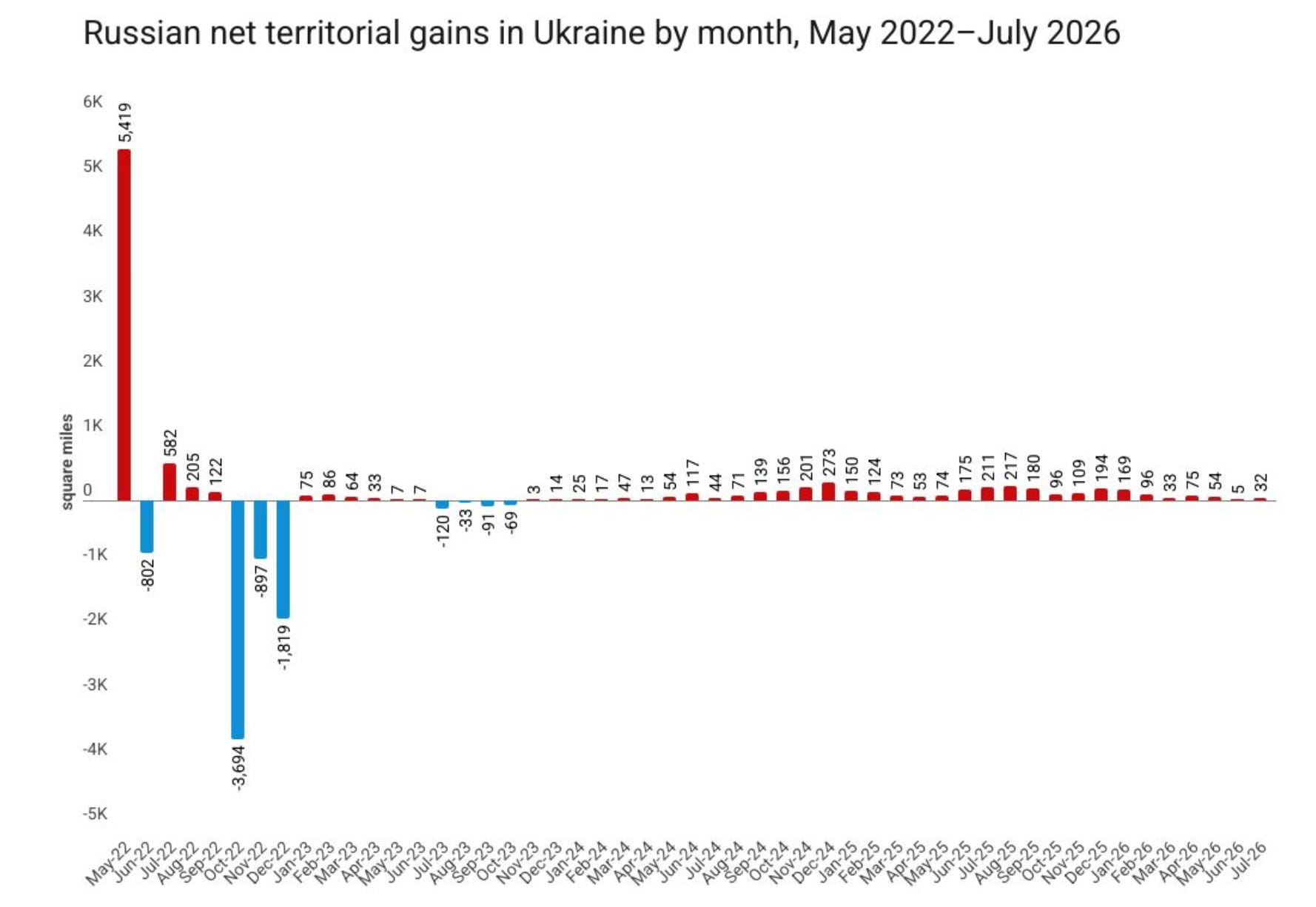
Related to this has been increased Russian casualties in July. The Ukrainian Ministry of Defence estimated that the Russians had suffered almost 43,000 casualties that month, one of the highest monthly totals of the war and the highest since January. This does not yet meet the requirement of 50,000 Russian casualties set by the Ukrainian president at the beginning of this year but is a major increase on the average of 30,000 Russian casualties per month over the last year. The southern offensive appears to have had a dual focus of liberating territory and causing as much destruction to Russian ground forces as possible.
This was certainly assisted by the multi-month-long mid-range strike campaign that has been undertaken by the Ukrainian Unmanned Systems Forces. This operational interdiction campaign has destroyed Russian tactical and operational logistics, which has limited support to both frontline and reserve Russian ground force units.
The real question about this southern offensive is whether it was designed from the start as a test of new Ukrainian ground offensive techniques or whether it began as a series of local attacks exploiting Russian weaknesses and then evolved into the broader campaign that President Zelenskyy described this week. It is fair to assess that it might well be a combination of both.
This is relevant because the Ukrainians have demonstrated throughout this war the desire and the willingness to trial evolved forms of combined arms tactics that exploit aerial and ground drone technology to dominate the tactical reconnaissance battle, to exploit the impact of Ukrainian artillery when it breaks up concentrations of Russian troops, to create the space for ground maneuver using mounted and dismounted combat troops, and to provide an array of support functions such as EW, resupply, point defence, casualty evacuation, mine emplacement and clearance and psychological operations against the Russians.
At the same time, the Ukrainians have embraced the old art of deception more and more as the war has progressed. This was a crucial enabler before the 2022 Kherson and Kharkiv offensives and before the 2024 Kursk operation and is likely to have played an important role during the southern offensive operations conducted over the past seven months or so.
What the Ukrainians are demonstrating here is a willingness to try new ideas on a battlefield which has become more visible (but not transparent) against a larger, adaptive adversary. At the surface level, the purpose is to be able to defend their territory and liberate lands occupied by the Russians. But more fundamentally, Ukraine needs to develop more effective military tools to hurt Russia even more on the ground. While it is stepping up the number of casualties it causes among the Russians each month, it needs to continue to increase Russia’s monthly casualties to 50,000 each month and perhaps even higher than this to fend off the insertion of more troops if Russia mobilises next month.
More importantly, despite the impact of the long-range strikes inside Russia over the past year against energy, defence factories, air defence systems and dual use logistics hubs like the Wildberries warehouses, Putin has not yet demonstrated any willingness to compromise on his maximalist objectives for his war against Ukraine.
Therefore, the Ukrainians need to increase the strategic pain felt by Putin, and they might potentially do this by mounting more offensive campaigns – undertaken by one of more Corps – to take back significant amounts of Ukrainian territory over the next year. This might form part of a one-two punch (in combination with mid and long-range strikes) against Putin. Not only might it change Putin’s strategic calculus, it would probably shift further the willingness of the Trump regime to support (but still not embrace) the Ukrainians as “the side that is winning the war”.
Regardless of Ukraine’s future intentions, and I have no doubt that they have some surprises up their sleeves for the Russians in the coming months, there remains much that Western military organisations might learn from what has occurred in southern Ukraine in recent months. Some of the insights, that might assist in developing new force structures, tactics and campaign concepts, include:
New offensive drone tactics at the tactical and operational levels.
Revised methods for integrated uncrewed aerial vehicles into shaping, assault and exploitation phases of offensive operations.
Methods for integrating uncrewed ground vehicles into assault, exploitation and support elements of offensive operations.
Tactical and operational deception in an era of enhanced battlespace visibility.
In a recent report, published by the Lowy Institute, I argued that Western military institutions have been slow to learn from Ukraine, and have demonstrated a systemic learning deficit. The Ukrainians continue to give us insights into modern war, and the trajectory of human conflict. We need to do better at learning from them, while also supporting them at the same time. The Ukrainian offensive operations in the past seven months are a wonderful example for us to learn from, but will we?
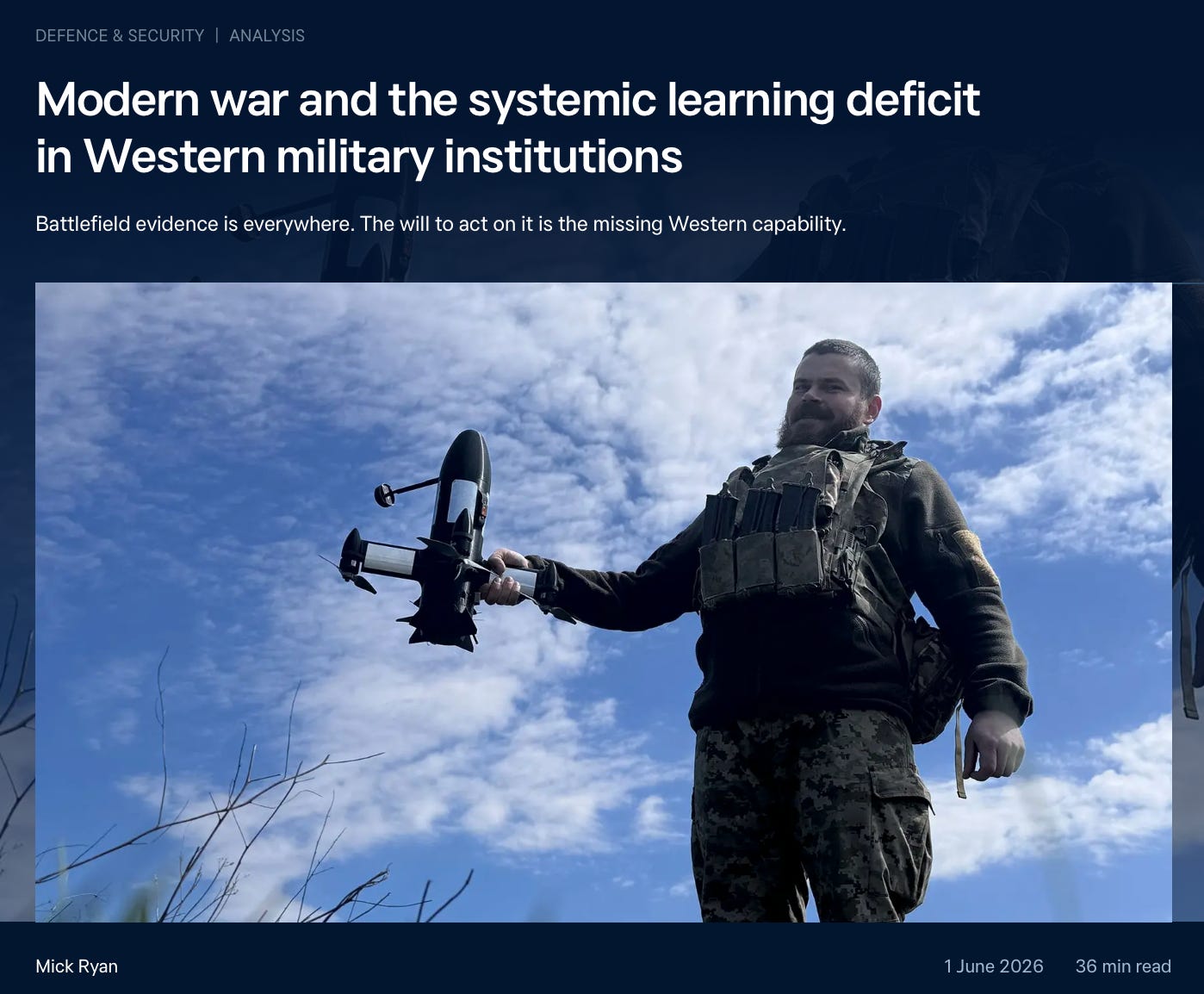
My recent report on the systemic learning deficit in Western military organisations, and what we can do about it, can be read here.
Russian command changes. The Ukrainian success in the south may have had something to do with recently announced command changes in the Russian ground forces. The following Russian organisations have had new commanders appointed, according to a decree on the Russian president’s website:
Russian Unmanned Systems Forces: Colonel General Denis Lyamin.
Combined Rear Services (Military Logistics): Colonel General Valery Solodchuk.
Centre Group of Forces: Colonel General Andrei Ivanayev
Vostok Group of Forces: Major General Pyotr Bolgarev
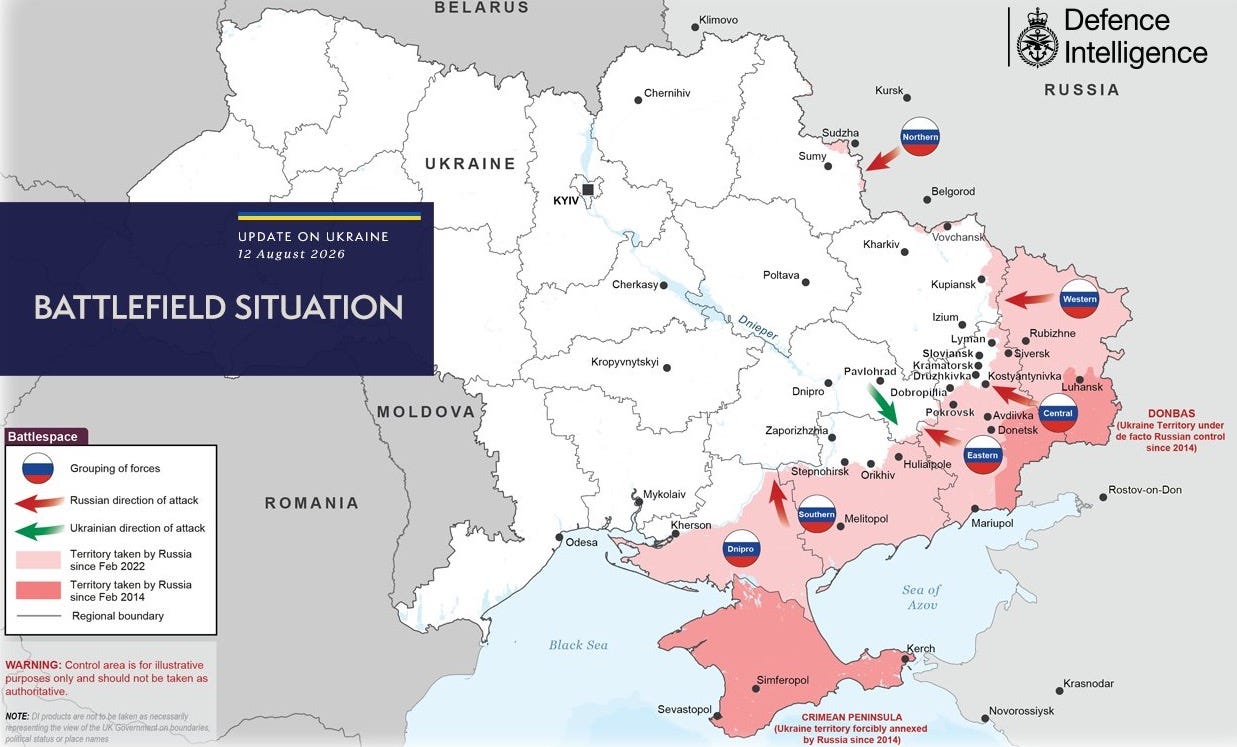
And of course, Russia and Ukraine analysts are watching for signs that Putin has actually pulled the trigger on another Russian mobilization. This week it was reported that Putin may be seeking to mobilise up to 500,000 Russians to fight in Ukraine because existing recruiting campaigns are failing to provide sufficient recruits to backfill Russian casualties in Ukraine. It would take some time, probably 2-3 months, before these new troops might make their way to Ukraine but it could foreshadow another major Russian offensive push in the east, or the north, of Ukraine over Winter. Coupled with the shortfalls in ballistic missile interceptors, it could well be a very grim winter for Ukraine.
At the same time, given how the Ukrainians have stepped up their focus on generating more Russian casualties, and appear well on their way to killing and wounding 50,000 Russians per month, this surge of Russian troops will only have an impact for a short period of time. And, if this influx of troops does not result in a shift in the strategic momentum of the war in Russia’s favour, what is next for Putin? That is the subject of the next section of my update.
What if Putin’s Mobilisation Fails? Putin is rapidly running out of options for achieving even his minimalist goals for Ukraine, which would be the capture of all of the Donbas. But even that appears increasingly unlikely for the Russian ground forces. Putin will hope that the injection of a few hundred thousand extra troops might get him over the line, but even that is a doubtful proposition given the increases in effectiveness we have seen the Ukrainians demonstrate in 2026.
Thus, if Putin’s additional troops don’t help him capture the Donbas in the coming year, what other options does he have?
First, he could immediately declare a ceasefire and hope that the Trump administration gives him credit for being a first mover in making peace and supporting his territorial claims in negotiations with Ukraine. It is possible, but it does not achieve any of Putin’s long-held claims on Ukraine and it is unlikely he will ever give up on these. It would also create problems for Putin at home – he will have all but nothing to show for (by that time) over 1.5 million casualties. Good luck creating a narrative of victory around that in Russia or elsewhere.
Second, he could double down, do more mobilization and step up the use of chemical weapons or even indicate his willingness to employ nuclear weapons. However, his nuclear sabre rattling in the past has not shifted Ukrainian determination to hold on to their territory. And NATO has now moved beyond being deterred by these kinds of threats by Putin. However, if serious intelligence came to light that Putin had given orders for potential nuclear strikes in Ukraine, this could change the stance of America and NATO. But it might also see China intervene to prevent the use of Russian nuclear weapons as it has apparently done in the past. Putin would not want that. So, this too is an unlikely pathway for Putin if his mobilization fails to secure the military objectives he wants to achieve.
Finally, Putin could choose a strategy of “hold in Ukraine, strike elsewhere” to deliver something that approximates a victory – and to test further the NATO alliance. While I am not calling this probable, it may be the most likely option for Putin in the event of a mobilization failure. It is likely he could secure a military victory in a short, sharp campaign against a Baltic nation while causing a crisis in NATO. With that he could potentially justify to the Russian people his disastrous strategy of the past five years. Importantly, would nations such as Spain or America come to the aid of “a small nation in eastern Europe and risk nuclear war” is a key question. Putin may see much to gain from such a split within NATO.
Mobilisation has not even commenced yet, so this is just speculation. But it is worth pondering just how the mobilisation effort might contribute to Russia’s war effort - and how might the situation be exploited if this mobilisation fails to change Russia’s fortunes.
Long range strike this week. Ukraine’s long range strike system has continued its focus in the past few weeks on energy hubs across southern occupied Ukraine. 29 such target were struck in the past week, bringing the accumulated number of energy target struck since 1 July 2026 to 240 (according to the Unmanned Systems Forces). Ukraine has also continued to hit the dual-use Russian Wildberries logistics hubs, with the Koledino Wildberries distribution centre near Moscow being hit in the past 24 hours.
Also hit during the past week was the Russian Novorossiysk naval base, where several Russian naval vessels were hit and damaged. It is likely that two Russian frigates, the two Project 11356R Admiral Grigorovich-class frigates, the Admiral Essen and the Admiral Makarov, were hit during the strike. This is important because both are capable of launching cruise missiles against Ukrainian targets. In addition to the Russian Navy frigates, Ukraine also claimed to have struck a Buyan-M type corvette, which has the capability to launch up Kalibr and Oniks cruise missiles, as well as a Project 22160 large patrol ship.
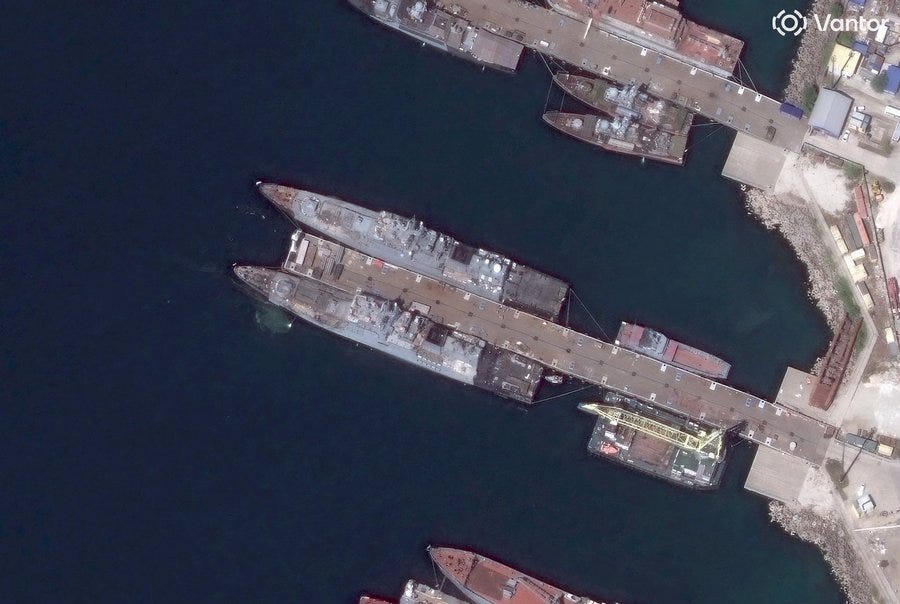
Russian shadow fleet vessels and air defence have been targeted this week, as has fuel and energy infrastructure. Among the targets hit have been the Nizhnekamsk Oil Refinery in Tatarstan, and the Syzran Oil Refinery.
Finally, this week Ukraine also hit the Progress Rocket and Space Centre in Samara with FP-5 “Flamingo” cruise missiles. This is Russia’s only serial production facility for Soyuz-2 launch vehicles. This has become an important target because the Soyuz-2 is part of the launch system for the new Russian “Rassvet” satellite internet network, their version of Starlink.
For your viewing pleasure, please see below a video released by Firepoint of their FP-5 Flamingo missiles being launched.
How Ukraine Acquired Chinese Drone Tech. In a curious case of appropriating Chinese technology, multiple outlets this week reported on how Ukraine was able to acquire its own variant of the Chinese ZTK-150 strike drone. In 2023, Ukrainian personnel travelled to China to procure these long-range systems. But when they arrived in China to purchase the technology, management at the Chinese factory refused the deal.
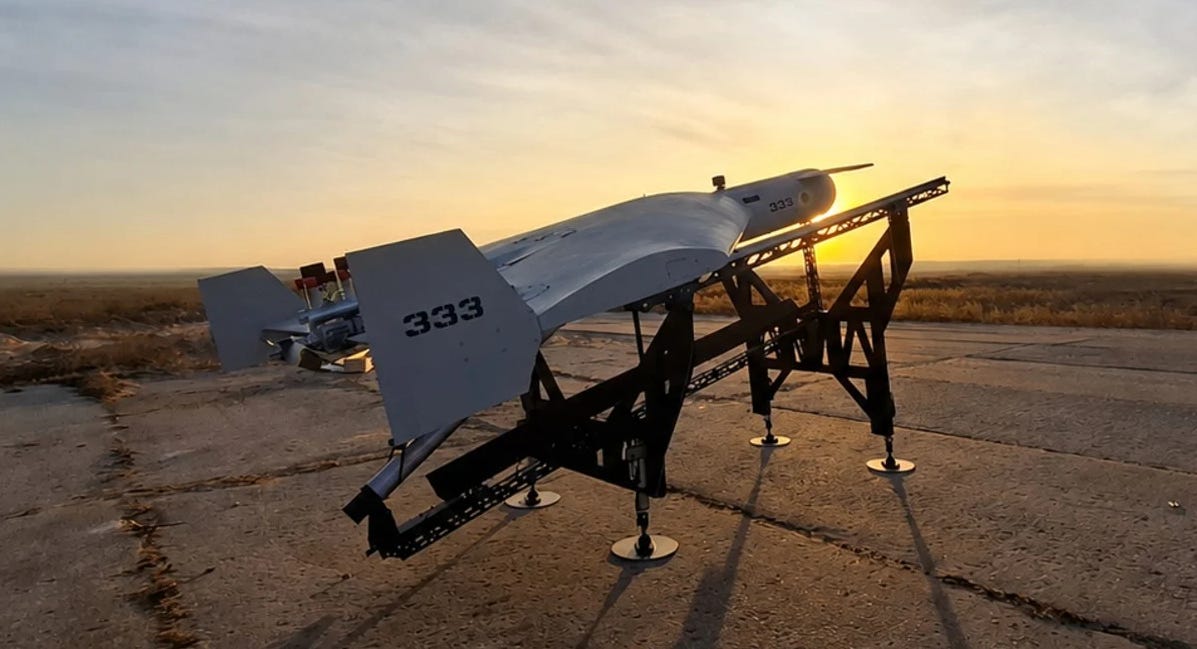
However, the Ukrainians were then offered another solution: the drones could be assembled at a location outside the reach of China’s export restrictions, while Ukrainian personnel would receive training on how to operate them. But this training extended well beyond piloting the drones. While there for training, the Ukrainians were able to record production of the drones as well as plans. As the United24 report notes:
We went there to train pilots to fly the Chinese drones. And while training, we photographed everything there was, from the production process to the layout of the shelves and cabinets,” the team told Oboronka. The Ukrainians returned home with eight Chinese-built aircraft, trained pilots, and a detailed picture of how the drones were manufactured.
Given the massive assistance that China is providing to Russia’s war effort, this is a fascinating and probably rare instance of China helping Ukraine. The key question is whether this assistance was provided by the Chinese manufacturer with or without the knowledge and approval of the central government.
The Ukrainians now have several different variants of this Chinese drone, which is designated as the MICH 2000 in Ukrainian service. It has been employed for very long range strikes out to 2000 kilometres, including strikes in the Moscow region and on a Russian bomber at the Russian Air Force’s Engels airfield. Shorter range variants for middle strike with larger warheads have been developed.
Trump Claims Strait of Hormuz; China Rubs Hands with Glee. Another example of the impact the war in Iran is having on the Pacific theatre came to light in the past 48 hours. After initially not caring very much about the Strait of Hormuz when he commenced his war against Iran, President Trump has flipped and decided it is actually very important. In fact, it is so important that he wants to make it U.S. territory. In the past day, he was quoted as follows:
After we finish defeating Iran, which is being very badly defeated — pretty soon I’ll be declaring the Hormuz Strait a territory of the United States.
Whether he is serious about this or not (and the White House did claim he was joking afterwards), just stating this goes against 80 years of freedom of navigation activity that the US Navy has conducted around the world. And, it goes without saying, it only encourages the Chinese in their expansionist strategy to take over sovereign territory of other nations in the Pacific such as Taiwan, the Philippines and elsewhere. All up, a pretty stupid and non-strategic joke. If Trump spent more time engaged in real strategic thinking and debate, rather than posting AI images of himself with George Washington on horseback, or moaning about daylight saving, the Iran campaign might look very different right now. And his allies in the Pacific would not be questioning whether America will come to their aid against Chinese agression.
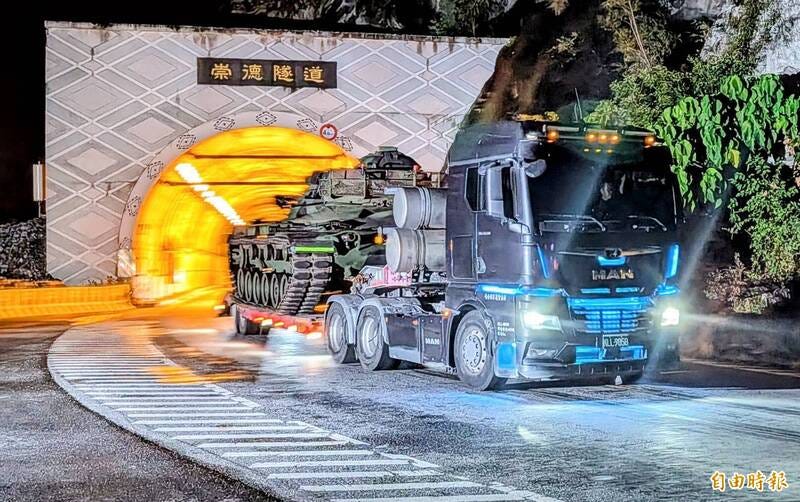
Taiwan Rehearses for Chinese Blockade or Invasion. The Taiwanese military this week continued its large-scale Han Kuang exercises. Activities in the past week have included:
Rehearsal of air defence and maritime targeting using various missile systems.
A counter-air assault/airland training exercise at the Taoyuan International Airport to defend the airfield from potential Chinese air assault and air land operations at the beginning of any invasion. These build on the lessons from Ukraine’s denial of Hostomel as a Russian forward base in the early days of its full-scale invasion in 2022.
Air defence drills as multiple locations.
Rehearsing theatre fires kill chains.
Counter mobility activities with army engineers.
Civilian evacuation drills in several locations including one executed by the 5th Theatre of operations that employed mobile broadcasting vehicles to disseminate evacuation instructions and guide civilians away from threatened areas.
CBRN response drills at critical infrastructure locations.
Cross-regional redeployment and reinforcement rehearsals for ground forces.
Wartime logistics and medical activities including movement of ammunition and refuelling.
Transition from peacetime to wartime judicial conditions.
This is an extraordinarily ambitious exercise that extends well beyond the strictly military-centric exercises conducted by most Western military organisations. Exercises like this that engage everything from the political decision-makers to civil agencies to citizens themselves are very complex to plan and execute, not to mention expensive. But this is an indication of Taiwanese willingness to defend themselves that should be noted in capitals from Tokyo to Beijing to Washington DC. And, if Western nations are clever and humble enough to have observers present, there are many insights such exercises might provide them about their own national mobilization planning.
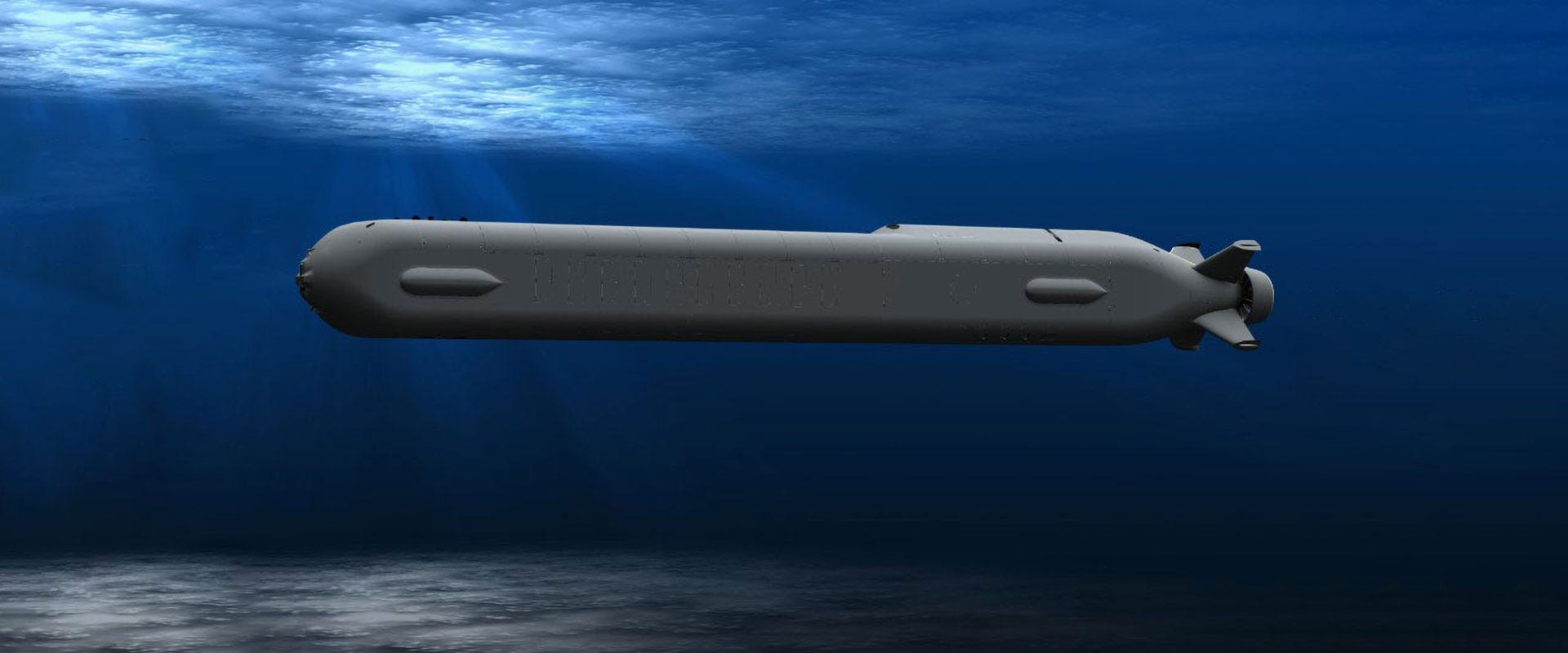
Allied Uncrewed Sub Operations Accelerate. The U.S. Navy this week announced its first long-range mission with an Orca Extra Large Uncrewed Undersea Vehicle (XLUUV). The eastern Pacific transit finished in July according to a statement by Rear Admiral Chris Cavanaugh, Commander, U.S. Submarine Force, Pacific Fleet. The XLUUV patrolled for over 1,000 nautical miles. This is just the beginning of what will probably be a rapidly expanding capability in the US Navy and the fleets of its allies. A similar example is the Royal Australian Navy’s Ghost Shark large uncrewed underwater vessel which has already completed multiple sea trials and different mission sets and is expected to begin operational deployments in this calendar year.
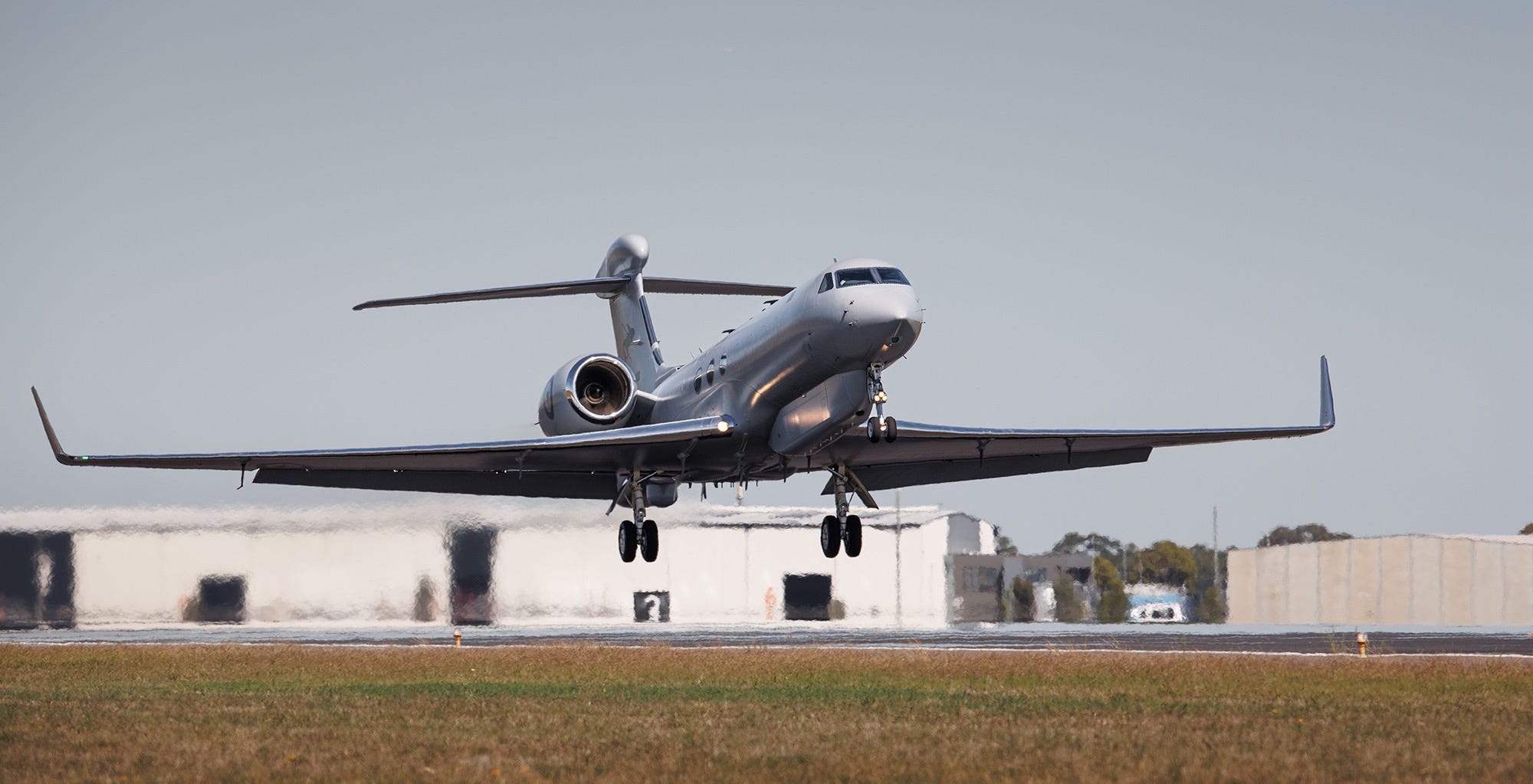
Peregrine Deployment. This week, The War Zone reported that the Royal Australian Air Force’s (RAAF) new and very capable MC-55A Peregrine airborne intelligence, surveillance, reconnaissance, and electronic warfare (AISREW) aircraft has conducted its first overseas deployment. The aircraft has apparently been operating out of Clark Air Base in the Philippines and has flown into the South China Sea on several occasions. Data compiled by Australian Defence Magazine reveals seven missions flown out of Clark between July 30 and August 7. These highly capable aircraft are crucial in mapping the PLA electromagnetic laydown in the first island chain and would be essential parts in any defensive campaign during a potential conflict against China.
**********
It’s time to explore this week’s recommended readings.
This week’s recommendations include a great article about how drone warfare is not changing the fundamental challenges of command in military operations. There are also articles about energy and the Strait of Hormuz, Chinese cognitive warfare against Taiwan, and Russia’s bleak post-war future.
As always, if you only have the time available to read one of my recommendations, the first is my pick of the week.
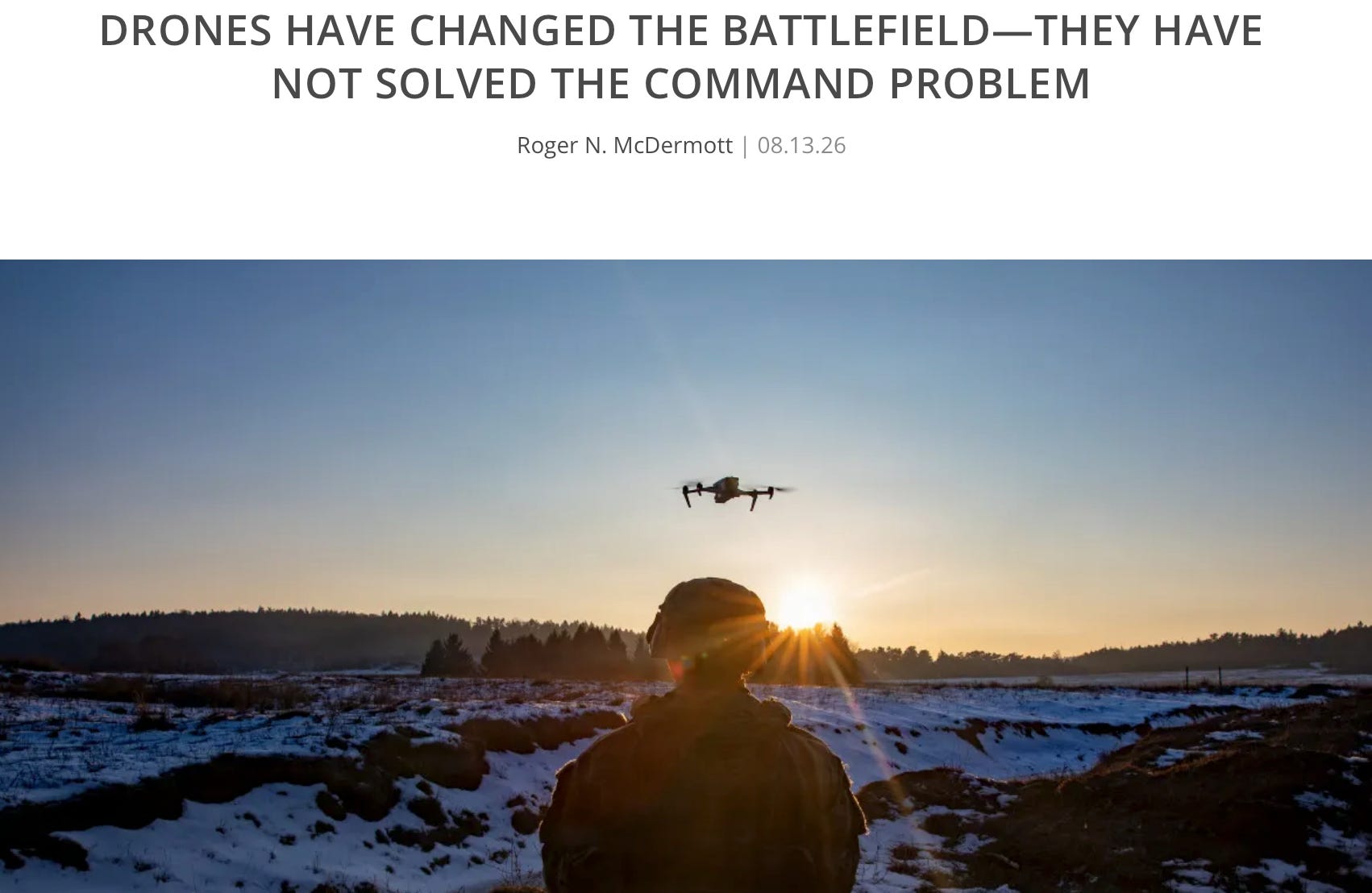
In this article, the author proposes that while drones have changed what commanders can see on the modern battlefield, this has not changed the fundamental responsibility of command: translating higher commanders’ intent into effective action by military units operating under fear, exhaustion, uncertainty, interrupted communications, and enemy action. Ultimately the issue here is that greater visibility is not the same as greater wisdom. It is why good selection, training and education for military commanders remain an enduring need for military institutions. You can read the full article at this link.

China has long undertaken cognitive warfare against its adversaries, near and far. In this article published by FPRI, the author examines the contemporary Chinese Communist Party playbook for the conduct of cognitive warfare against Taiwan. As the author notes, there are lessons here not just for Taiwan. He describes how “in the coming years, China’s cognitive warfare campaigns in Taiwan will serve as a case study either for how AI technology undermines democracy or for how governments can safeguard themselves from attack.” The full article is available at this link.
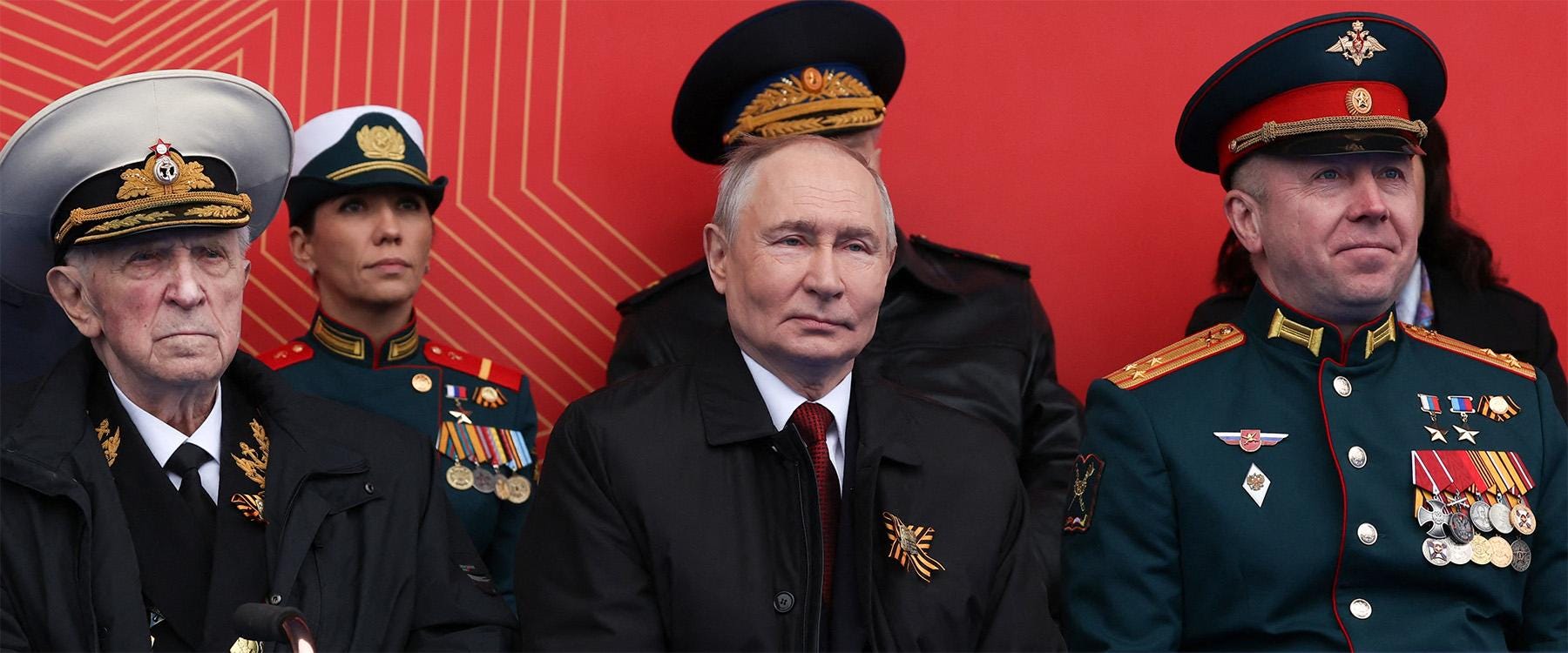
The author in this piece, published by Proceedings, explores the future of Russia after the war in Ukraine. As the author notes, “when the war in Ukraine eventually concludes through negotiation or exhaustion, Russia will face a reckoning no victory on the battlefield can ever resolve. The Kremlin may succeed in suppressing dissent, expanding the authority of the FSB, and projecting the appearance of national unity. But the conflict’s deeper consequences will remain embedded within Russian society for decades.” An excellent piece of speculative thinking. You can read the article here.
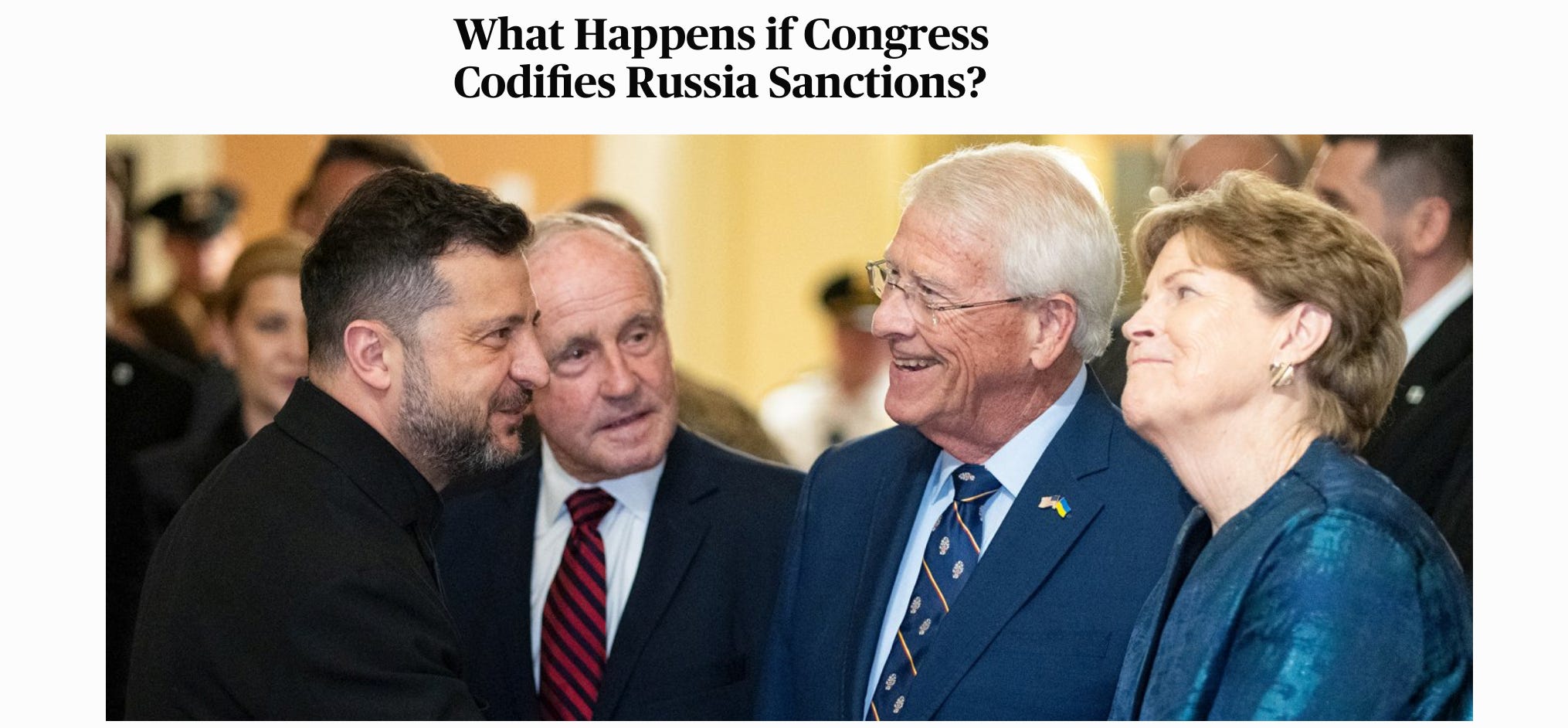
The recently re-named Lindsey O. Graham Sanctioning Russia and Iran Act of 2026 provides the U.S. government with another opportunity to increase pressure on the Russian president to come to the negotiating table over the war in Ukraine. As the authors of this piece, published by CSIS, notes “greater pressure on Russia’s wartime economy and its sources of foreign income stands to be uniquely impactful at this point in time… The act restores Congress to a policy area it has largely ceded since 2017, and it does so at a moment when Russia can least afford new pressure on its export earnings.” The article is available here.
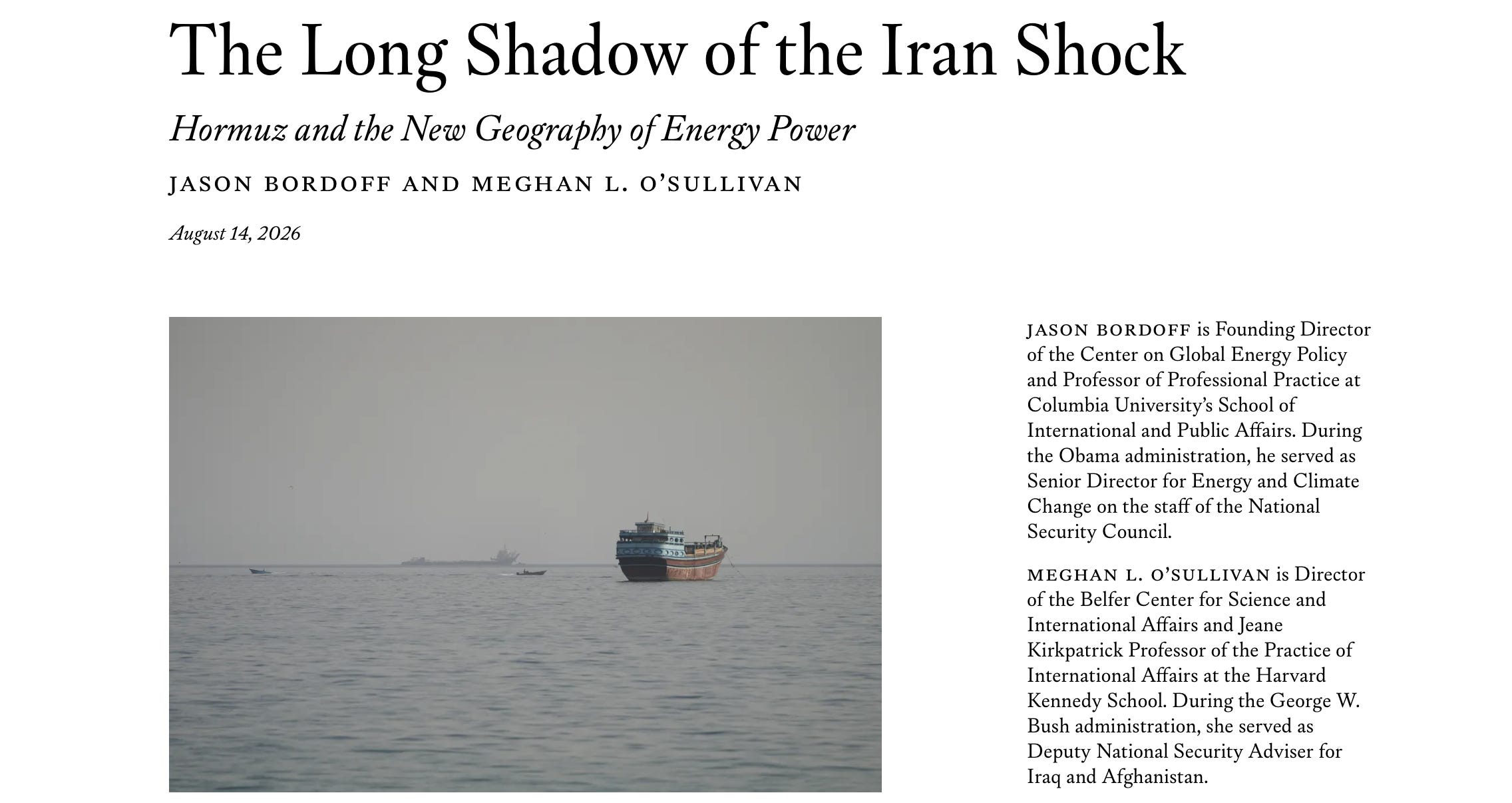
In this piece published by Foreign Affairs, the authors propose that the real lesson from the ongoing Strait of Hormuz crisis is that nations around the world must guard against overconfidence in their responses so far. With oil inventories depleted over the past five months, any sustained continuation of the crisis will be increasingly difficult to deal with. As such, they explore how countries might build their energy resilience and capacity to face the inevitable future energy shocks. The article is available at this link.
Comments
Nothing yet. Say the first thing.
Sign in to join the conversation.