
Hey, happy Friday!
Over the course of the newsletter I’ve written articles about four of my favorite artists: Joni Mitchell, Prince, Peter Gabriel, and Billy Joel. I’ve distilled them all down here into a few key takeaways that apply to artists of all disciplines.
Before I get there, I just wanted to say a quick thank you to everyone who has stuck with me for the past six weeks of this revamp. The silver lining of my current cold streak is that it’s reminded me of who I was before I broke in, a guy possessed of an independent spirit, a guy who was going to find a way or make one.
It’s forced me to think about who I want to be here late in Act Two of my career (assuming I’m lucky enough to have an Act Three). I want to make stuff that I own. Stuff that comes from my unique and authentic POV. Stuff that isn’t smudged by too many fingerprints.
The first part of “character is destiny” is “action is character.” If you want change, you have to take action. Writing these articles and making YouTube videos are the first steps in finding my way to the person and the artist I want to be.
Speaking of, I want to give a return shout out to Marc Guggenheim and his fantastic Substack, LegalDispatch. He generously gives readers an insight into his process, a view of what’s happening in the business from the trenches, and honest thoughts about the state of the world.
He’s working on an independently produced and financed pilot right now, which is exactly the kind of thing I was talking about above. You can read more about it here!
I hope you have a great holiday weekend. Now, let’s go crazy!
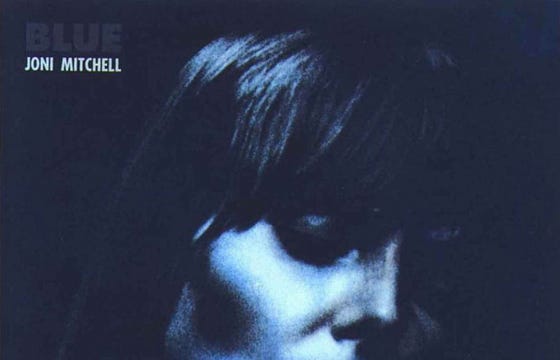
I read a great article by Ann Powers (linked below) on the 50th anniversary of Blue’s release that put the album in a whole new context for me. For five decades it’s been praised for its raw, confessional quality. Joni herself talks about feeling like “a cellophane wrapper for cigarettes” while she was recording it, totally transparent.
Later, she bristled at being thought of as a “musical memoirist.” She wasn’t just documenting her life and spilling her guts on vinyl. She was making artistic choices. What to keep in, what to leave out, thinking about how to take what was in her head and communicate it. There’s an astonishing level of craftsmanship on display.
The article digs into some of the inspirations behind the album, including Miles Davis’s Kind of Blue, another masterpiece, and finds a number of threads connecting them. They were both made by artists going through times of turmoil who found the discipline to engage with their pain while also applying the tools of their trade:
“Mitchell herself has said that she bled these songs onto the pages, and that’s what everyone has chosen to remember. The master herself has come to think of Blue primarily as a wound. That’s just how we, on the gender binary, talk about creativity. Women bleed. Men forge through. But in fact, art of this caliber is always made through both the cut and the suture.”
Turning your personal experience into art can be an act of healing. By finding a way to process your thoughts and emotions and make them relatable to other people, by sharing them with the world, you can (hopefully) bind those wounds. Best case scenario, you stitch up some other people along the way.
There were two other threads that I found fascinating between the creation of Kind of Blue and Blue. They were both made by artists seeking to simplify and distill emotion, while simultaneously making space for experimentation. Miles didn’t rehearse his band for Kind of Blue. He gave them a few simple instructions and created space for them to improvise and find melodies of their own.
Joni Mitchell wrote many of the songs for Blue on a dulcimer, an instrument that she was introduced to by Joellen Lapidus. It was as much percussion instrument as it was a string instrument. She also decamped to Europe for a few months to take a break from touring. The new tool in hand, the change of scenery, the new cast of characters, all of that opened up undiscovered channels of her creativity.
I don’t know that anyone can set out to make a masterpiece and I don’t know that I’ll ever get there. But I wrote down these four takeaways from Joni that will hopefully get me (and maybe you) a little closer to greatness.
Bring your raw self but apply your craft with discipline.
Simplify emotionally. Boil things down to their essence.
Make space for experimentation.
Don’t be afraid of the cuts. There is healing in the suture.
Her Kind Of Blue: Joni Mitchell’s Masterpiece At 50 : NPR — www.npr.org How do we understand Blue in the 21st century? Can we think of Mitchell’s 1971 album, long considered the apex of confessional songwriting, as a paradigm not of raw emotion, but of care and craft?
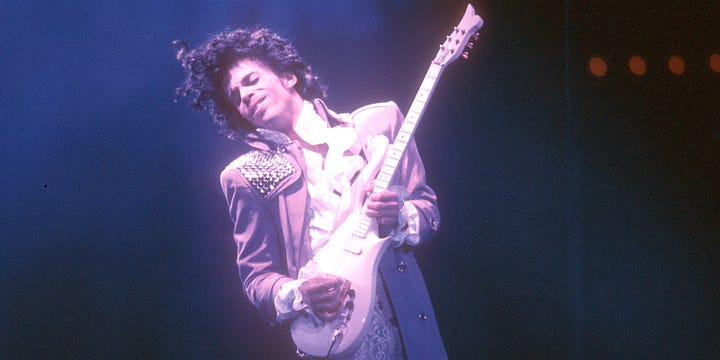
Like a lot of people my age, PURPLE RAIN was the thing that made me a Prince fan for life. It was a calculated move on Prince’s part. Black audiences knew him well but he still hadn’t conquered white audiences the way that Michael Jackson had.
So he pushed his sound in a new direction, putting the guitar front and center and giving it a much harder rock edge, the kind of sound that would rumble a stadium. You can hear it in “Let’s Go Crazy,” and the Neal Schon-like solo in the title track.
You can definitely hear it in the opening riff of “When Doves Cry,” which has one of my favorite opening lines, “Dig, if u will, the picture of U and I engaged in a kiss.”
I have heard that song thousands of times over the course of my life but I never knew the backstory and the creative leap that gave it such an impact until I read Duane Tudahl’s book, Prince and the Purple Rain Era Studio Sessions: 1983 and 1984.
PURPLE RAIN director Albert Magnoli realized he needed a new song to cover a montage in the film. Prince went to Sunset Sound here in LA that night and started recording. The way his engineer at the time, Peggy McCreary (aka “Peggy Mac”) tells it, it got really big, with multiple layered synths, guitar, bass, drum track, and layered vocals. It was so much stimuli that eventually she kind of checked out. It was just way overproduced.
As the session went on, an interesting thing happened. He started to pull stuff out, simplifying and honing in on the distinctive sound that we all know by heart. Hours later he still wasn’t satisfied, feeling that the arrangement was too conventional. He played it for the singer Jill Jones, saying, “If I had it my way, this is what it would sound like,” and he pulled out the entire bass track.
Jill said, “Why don’t you have it your way?”
There’s a great article about this on Diffuser where they talk about this moment as, “Addition by subtraction.” It’s not like having the bass line would have made it a bad song. It would still be a great song. But would it have had the same impact? Would it make you feel like you were listening to music that landed from another planet?
Here’s a quote from his other long time engineer, Susan Rogers:
“It’s interesting listening to this record again, and being reminded of how real genius knows when to show it off and when to just be simple. ... You don’t have to show off everything. Keep it all really simple and have one magic ingredient, maybe two. It was smart record-making. I don’t know how he knew how to do that, but he knew what he was doing.”
When he finally took that leap and pulled out the bass line he told Susan, “Nobody would have the balls to do this. You just wait — they’ll be freaking.”
It wasn’t just pulling out the bass line that gave “When Doves Cry” its punch. That opening lyric, “Dig, if you will, the picture of you and I engaged in a kiss. The sweat of your body covers me. Can you, my darling, can you picture this,” is him pleading with his lover to remember the good times while they’re in the middle of a fight.
The chorus is deeply personal. “Maybe I’m just like my father, too bold. Maybe you’re just like my mother. She’s never satisfied. Why do we scream at each other? This is what it sounds like when doves cry.”
The stripped down, innovative arrangement, the raw emotional honesty of the lyrics, all of it came together and became more than the sum of its parts.
“When Doves Cry” was Prince’s first #1 hit on the Billboard charts.
It was a big part of the breakthrough moment when PURPLE RAIN became a purple monsoon and swept the mainstream. He conquered everybody.
It reminds me of Joni Mitchell. Blue was a breakthrough moment for her, and it came from experimentation and innovation, plus emotional honesty. Prince loved Joni, too. “A Case of You” was a go-to cover for the live shows.
Here are three takeaways I got “When Doves Cry:”
“Addition by subtraction.” Think about how you can do more with less. Experiment with pulling out pieces of your own creative “arrangement.” Does it gain power? Become more than the sum of its parts? Does it make the reader/listener/viewer lean forward?
If you find yourself saying, “If I had it my way,” that’s your intuition talking. Have it your way, especially if you’re doing something on spec and don’t have anybody else to answer to. Serve your instincts, not conventionality.
Per Susan Rogers, keep it simple. “Have one magic ingredient, maybe two.”
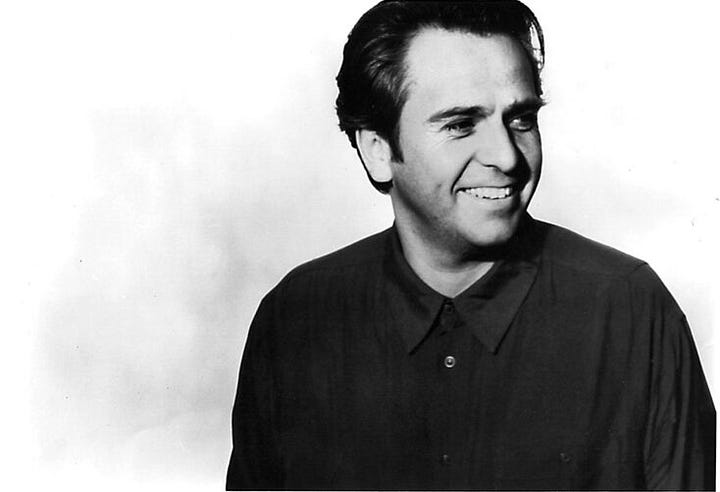
It wasn’t until my early 20’s when I went back to his first four self-titled albums that I really appreciated what a commercial breakthrough So was for Peter Gabriel. As far as I knew, he was always a mainstream star.
Like Blue and Purple Rain, So followed a common pattern for artistic breakthroughs:
“exploration followed by exploitation”
Peter’s first four albums were wildly experimental, playing with atmospheres and textures. He used a Fairlight to sample raindrops and other sounds that he could then program to play on a keyboard.
On his fourth self-titled album (Geffen forced him to call it Security) he gave his collaborators a creative restriction: no cymbals. That period of creative exploration produced a bunch of great music, including my go-to choice for self-care, “Solsbury Hill,” but it didn’t resonate with a wider audience.
After Security he wrote the score for the movie BIRDY, which is where he met producer Daniel Lanois. He decided he’d had enough of being serious and somber for a bit. He wanted to “instill more fun” into the next record.
He brought Daniel Lanois and guitarist David Rhodes to Real World studios in Bath, England, and the three of them put down the spine of the songs. They went about it in a very workmanlike way, even going so far as to wear yellow construction hats around the studio as a joke.
That conscious decision to instill more fun in the record triggered the “exploitation” part of the pattern. They were able to blend his experimental art rock sound with his other major influences like soul and world music.
Then there were the lyrics. In the year or two prior, Peter and his wife started going to couples therapy. That process allowed him to tap into a more direct emotional honesty. In his words, he was pouring it out, “Like a blues singer.” All of those elements came together to make real magic.
So went on to sell 7 million copies. In addition to the aforementioned “Sledgehammer” and “Big Time,” the track list includes, “In Your Eyes,” “Red Rain,” “Don’t Give Up,” and “Mercy Street.” Stone cold classics all, IMO.
From his website:
“There is always wisdom from hindsight. And because So was my most successful record, I think that a lot of people, particularly in America, think it was designed to be that. From the other end of it, you never really know which records are going to do well. You know that some things are going to be so obscure and difficult for a mainstream audience that they’re no-hopers, but generally, with what I do, it’s hard to predict which albums are going to do well.”
It’s true that you can’t predict what’s going to be a hit. You can’t chase trends. There’s no secret formula for tapping into the zeitgeist.
But you can dive deep into periods of exploration, discover new ways of working, try out new tools, and take in new inspiration.
Then you can alternate with periods of exploitation, drawing from your passions, your obsessions, stealing a bit here and there from your influences and artistic heroes.
You can make a conscious decision to go where the fun is.
In one of the YouTube interviews I watched, he talks about the “great giants of the creative process” being “boredom and fatigue. They hover over everything. As soon as you get tired or bored the thing is dead.”
For the 25th anniversary of So he released a box set with a disc called DNA that takes the songs through various incarnations from rough demos to the fully produced, polished versions that we know and love.
It’s called “the creative process” for a reason. Things take time. They evolve. We evolve. We become better, smarter writers/artists/humans and we bring a little more experience back to the page or canvas, even if it’s just a day or two later..
In an interview I saw online, he gives the audience a tip for getting in a more creative headspace for writing lyrics. He suggests using “peripheral visual stimulation,” like being on a moving train or a car, with the world going by in your peripheral. His theory is that, over the course of our evolution, when we were chasing or being chased, we had to develop the mechanism for “accelerating and pumping adrenaline to our brain” when we had movement in our peripheral.
I don’t know about that theory but I do know that a big part of my creative evolution happened while riding the subway in my 20’s in New York, eyes focused on my Moleskine while the tunnels and fluorescent lights sped by in a blur.
Takeaways from Peter:
Experiment
Explore
Inject the fun
Draw from the deep emotional wells
Avoid boredom and fatigue
Trust the process
Take a train ride.
And all Peter’s people said, “Amen.”
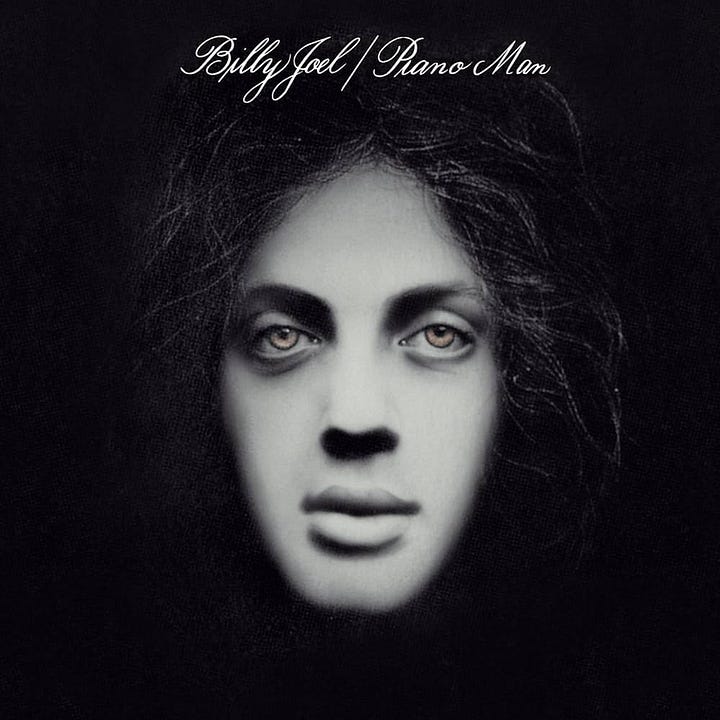
While I was on Long Island in 2022, Julie and I made a pilgrimage to Billy Joel’s hometown of Oyster Bay and Cold Spring Harbor, the town he was living in when he wrote his first record.
The whole time, I was reading articles about him and watching YouTube videos of the Q&A’s he started to do as he got older. He talks a lot about the stories behind the songs and his creative process. There were some cool tips, tricks, and insights that I thought I would compile and share.
In one interview he talks about the inspiration for “Summer, Highland Falls,” how he moved back from Los Angeles to a little town up the Hudson where he was left alone with his thoughts, and how many creative people go through periods of manic depression:
“We go up, we go down. We have these incredible, euphoric highs, and we have these depressed lows. If we can utilize them as artists it’s good. If we can’t utilize them it’s bad.”
It reminded me of a quote by the writer Donald Barthelme that says, “Art is a true account of the activity of the mind.”
Billy realized that he had things to work on and writing the song helped him confront that. I talked about this in an early newsletter, about being honest with myself about my own faults and actually using those for my characters, particularly the antagonists.
In this next clip he’s asked about the challenge of trying to be commercial but also innovative, which is something I wrestle with every. single. day:
“Do what you love to do but be good. Don’t worry about being innovative or new sounding, just be damn good. Be really, really good.”
On the difficulty of getting older:
“I still think the best stuff is in the years to come as a composer… artists can be artists until a very old age. A lot of musicians, they live to be a ripe old age because they were productive and they were doing something.”
How can an artist attract interest in their music?
“A true artist doesn’t stop, he doesn’t give up because he’s not accepted. He just does it because he’s driven to do it… he’s never going to be happy unless he’s doing that, and that’s what’s going to keep you going through the hard times.”
Cold Spring Harbor was Billy’s first record and he hated it. The producer he’d signed with mastered the album at too high a speed so everything was a bit too fast and his voice sounded, in his words, “like a chipmunk.” He immediately fired the guy but he still had a few years left on his contract.
Rather than make another record he decided to wait them out for a few years. He was living in Los Angeles and took a job playing piano at a bar downtown called The Executive Room. That bar and its patrons became the inspiration for “Piano Man.”
I think about what that must have felt like, to have all your hopes and dreams pinned to your first record and feeling like it was a complete failure. Talk about hard times. But he put his head down and kept playing and came out on the other side with a song that I guarantee you, as you’re reading these words, is being played right now in a piano bar somewhere, with the whole room, singing along.
Asked about the inspiration for “Miami, 2017,” he says it starts with him living in Los Angeles and hearing on the news that New York City was about to go bankrupt. The city asked the federal government for a loan to help bail them out and the government told them to, according to a headline in the Daily News, “Drop dead.”
So he starts playing the “what if” game that writers play:
“I’m picturing the apocalypse occurring in New York, the skyline tumbling down.”
Then he imagines himself in the future, living in Miami in 2017, telling the story to his grandchildren. “I seen the lights go out on Broadway…”
I’ve seen other interviews where he talks about his writing process, and with the exception of “We Didn’t Start the Fire” the music comes before the lyrics. When he goes to write the lyrics he starts by trying to figure out what it is that the music is trying to say. What is it suggesting?
I’ve started describing my own process as, “Inspiration, interrogation, and iteration.” Step one: I come up with an idea. Step two: I ask a lot of questions. Who are these people? What do they want? What is this really about? Step three: I revise accordingly and keep trying to make it better, richer, deeper.
Billy’s last album of original pop/rock music, River of Dreams, came out when I was a junior in college. The final song on that album is called “Famous Last Words,” and it’s the last song with lyrics that he ever recorded*.
I’ve always loved the conscious myth making aspect of that, of deciding that he’d said everything he had to say and closing it out with, “And that’s the story of my life.”
Know when to walk away and do it with grace.
*Note: This all changed with the release of “Turn the Lights Back On,” in 2024. As much as I admired him for walking away, I was so glad to hear a new Billy Joel song.
Why did he do it? Why did he decide to come back after all these years? Maybe it has to do with his earlier answer:
“A true artist doesn’t stop, he doesn’t give up because he’s not accepted. He just does it because he’s driven to do it… he’s never going to be happy unless he’s doing that, and that’s what’s going to keep you going through the hard times.”
If you know someone who would enjoy this newsletter, please share it with them!
If you want to go a step further to support it, consider becoming a paid subscriber.
Weekly articles are free but a paid subscription will immediately unlock an article about How I Sold My First Two TV Shows. (And What I’m Doing Differently Today)
No posts
Comments
Nothing yet. Say the first thing.
Sign in to join the conversation.