
Click play if you prefer to listen. If not, read on…
0:00
-12:17
Hello, and welcome to Character Is Destiny!
Stories are one of humanity’s oldest technologies. We invented them to better understand ourselves and the world around us, rehearse difficult experiences, pass along knowledge and wisdom, and imagine our future.
I spent the past thirty years as a writer studying this technology and building up my dramatist’s toolkit. Along the way, I started using those same tools to shape the narrative of my life. I’m sharing them with you here because I think anybody can use these tools to live a better story.
It’s not about “main character energy” or seeing yourself as the hero of your story.
It’s about seeing yourself as the author in charge of it.
This week, I’m talking about: INTENTION AND OBSTACLE
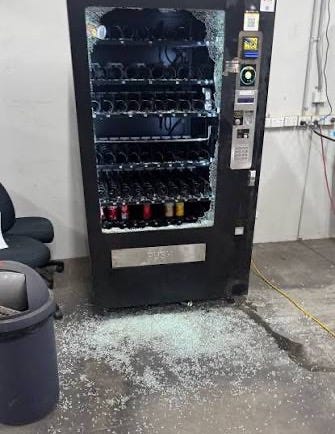
As a writer, I’m constantly thinking about intention and obstacle.
Intention: A character wants something.
Obstacle: Something is standing in their way.
How they overcome that obstacle, the action they take, reveals character.
I try to give my characters hard problems to solve because it makes the story more interesting. That means I spend a lot of time banging my head against my desk, trying to figure out a solution. The problems of the character are the problems of the writer.
If my character runs out of gas in the middle of Death Valley on a 110 degree day with no water and not a car in sight, I, the writer, have to solve that problem or they die.
When I get stuck, which is often, I write it all out as plainly as possible.
Intention: What do they want?
Obstacle: What is standing in their way?
Action: What action can they take to overcome that obstacle?
I write down as many different actions as I can think of that are true to character, starting with the obvious. I make my way to the unexpected actions, the surprising actions, and stuff that would never happen. At some point, the path forward reveals itself. I can see the action that best suits the character and the tone of the story.
The same tool can be applied to life. Here’s an example:
A couple of weeks ago I had to take my car to the tire shop to repair a leak.
While I was waiting, I went to the vending area to grab a snack. I saw my favorite protein bar in one of the machines, tapped my card on the reader to pay, and punched in the numbers. The plastic spiral thingy rotated to release the bar, it dropped toward the trough, and got stuck in a perfect horizontal position between the glass and a lower shelf.
I’ve bought a lot of snacks from a lot of vending machines over my 52 years. I’ve never seen this before.
I did my go-to move, which is to the shake the ever-loving shit out of the machine until my snack finally drops down, which has the double benefit of being effective and fun. I rocked it back and forth a few times. Nothing. The thing wouldn’t budge.
I’m a pretty big guy, I can get a lot of momentum going. So, I put my shoulder into it and tried a second time. BANG BANG BANG BANG! Again, nothing.
I did catch the attention of the guy working the front desk. I apologized and told him my bar got stuck. He came over to take a look, and when he saw it, he chuckled. “I’ve never seen this before.”
Intention: Mickey wants a snack.
Obstacle: His protein bar is stuck in an impossible wedged position.
Actions: 1) Shake the machine. 2) Buy another snack from a higher shelf to try and knock it down, like it’s a game. 3) Rig up a tool to reach up through the trough. 4) Find someone who works there and ask for the refund.
Like I said, I even write down the stuff that would never happen, like:
5) Smash the glass.
That wasn’t a realistic option for me in that scenario, but it might be for some other character. That’s a pretty fun beat, actually. A character who is having the worst day just snaps when their powdered donuts get stuck. They grab a chair and hurl it through the glass, then calmly take the powdered donuts and walk away.
At some point, the ideal action, the thing that works in the best interest of the character, or moves them on to the next action, reveals itself. The scene ends when they achieve their goal, or move on. The more interesting the action the more satisfying the scene.
You can always tell when a writer runs out of ideas or time. How often have you seen a character get trapped in a room with no way out and the bad guys closing in? The bad guy busts into the room — only to find it empty. Cut to the air vent cover sliding back into place, or the protagonist army crawling through the vents. I’ve pulled this one, too.
I’ve used this same exercise many times throughout my adult life, especially in my twenties. Whenever I was totally broke with nothing on the horizon, I would write out exactly how much I needed, then make a list of all the things I could do to make money. I could start an acting workshop for kids, or put on a one-man show, call my cousin who worked at a car dealership to see if I could pick up cars they bought at auction, help my uncle with lawn jobs, see if my sisters needed teachers for their after school programs, sign up at cash-on-the-day temp agencies. On, and on.
Our lives, our days, are a series of progressions through intention and obstacle followed by actions. From the smallest obstacles, like my protein bar getting stuck, to the biggest problems we face, like the loss of a job, or a health scare.
A couple of weeks ago, I told you about The year I Got My Shit Together.. My orthopedist told me I had two choices, I could lose weight or lose mobility.
Intention: Lose weight so I can be ready to help my neighbors next time there’s an emergency.
Obstacle: I couldn’t exercise because my body was messed up.
Action: 1) Start physical therapy so I could fix my body enough to exercise. 2) Change my diet. 3) Buy a scale to track my weight. Etc.
Two weeks ago, I told you about a make or break moment in my career, when I got fired on Christmas Eve..
Intention: Make a living as a writer.
Obstacle: I was going to have to find a day job which would make it harder to pursue.
Action: 1) Sell the motorcycle to buy time to write. 2) Invest some of the money into contest entries. 3) Invest in classes and workshops.
Imagine putting this to use with other life problems:
Intention: Get a better job.
Obstacle: I’m not qualified for anything else.
List of actions: 1) Go back to college. 2) If full-time isn’t an option, sign up for an online course that I can do at night to earn a new degree or certification. 3) Volunteer for an organization that will give me equivalent experience. 4) Move to a city where there are more opportunities. 5) Start a side business based on a passion that I can eventually turn into a full-time job.
Intention: Learn to play piano
Obstacle: I don’t have a piano or money for lessons
Action: 1) Find public places that have pianos that the public can play, like a library or a church. 2) Search Facebook Marketplace, OfferUp, or community swap groups and trade something for a used keyboard. 3) Watch free tutorials on Youtube.
Intention: Make more friends in real life
Obstacle: I’m extremely introverted and find it difficult to introduce myself to new people
Action: 1) Make a list of clubs or groups centered around activities I’m interested in. 2) Start a group based on my favorite hobby with the intention of drawing like-minded people. 3) Volunteer to walk dogs for the local shelter, because dog people all talk to each other. 4) Become a regular at a local coffee shop or comic book shop. After a week or two, introduce myself to another regular. 5) Take a class where there’s an interactive component, like cooking, or learning a new language.
If you’re stuck on a problem, grab a notebook or a piece of paper and write it all out.
Intention: Here’s what I want.
Obstacle: Here’s what’s standing in my way.
Action: List all the actions you can think of to get past that obstacle. Write at least ten. The first few will be obvious, but pretty soon you may surprise yourself with the unexpected.
Don’t skip the bad ideas! There’s an interesting thing that happens all the time in the writer’s room. Someone starts to pitch an idea by saying, “Here’s the bad version…” Occasionally, the bad idea turns out to be pretty good. But saying it’s a bad idea takes the pressure off and helps shake loose a better one.
Intention > Obstacle > Action.
Once you settle on action, you may need to break that down into a smaller version of the same model, like zooming in on a fractal, until you get to the very first action you can take to move forward. This has worked many times for me, both as a writer and human being navigating through life.
Hopefully, it will work for you too. Let me know if you try it!
Oh, and about that protein bar…
Eventually, I had to give up and call the vending machine company to get a refund. I sent them a picture of the problem. Their reply: “I’ve never seen that happen.”
They sent a repairman.
WORK UPDATE
I received a grant from Popshift this week to help support my work on a new feature script called LEGACY. I’ll tell you a little about how I got the idea.
At the beginning of this year, my dad and sister brought out a box of my old journals, from when I had just started journaling in 1993 up to 2011, when I moved out to California. I hadn’t read any of them in almost fifteen years.
I had an idea to scan all of the journals up until I was around 30 years old, hundreds and hundreds of pages, and create an LLM (large language model) from those scans, to essentially create an AI model of me at that age. Then, I wanted to find an audio sample of my voice from those days so that I could talk to 30 year old me.
Around the same time, I read a book about Agatha Christie’s notebooks.
It got me thinking about a scenario where an estate of a beloved author was approached by an AI company to do exactly the thing I want to do as an art project for myself, but with the intention of having the LLM write new books in the author’s voice. They want to get as close as they can to the source, to see her creative process play out among the thousands of pages of notebooks, and all the projects she abandoned along the way.
I’m fascinated (and disturbed) by what this may mean for artists in the very near future. I have conflicting feelings about it, which seems like a good place to write from. The script will be an argument about legacy, art, and human authorship. But because I want it to be a commercial movie… it will also be wrapped up in a whodunit that could be ripped from the author’s pages.
I’ll post more here as I go through the process.
Finally seeing some movement on my other projects, including a studio pitch coming up next week based on my HALF-LIGHT pilot, and my producers on a graphic novel adaptation and I just sent my pitch off to our star to get his feedback. After that, it’s hopefully a full court press.
And twelve years after EXTANT premiered on CBS, it still occasionally pops up in articles like this one! It’s really cool to see the show and everybody’s work be recognized. I always felt like we were a little ahead of the curve, same with REVERIE. So much of the stuff we were talking about is already here.
If you know someone who would enjoy this newsletter, please share it with them!
If you want to go a step further to support it, consider becoming a paid subscriber.
Weekly articles are free but a paid subscription will immediately unlock an article about How I Sold My First Two TV Shows. (And What I’m Doing Differently Today)
No posts
Comments
Nothing yet. Say the first thing.
Sign in to join the conversation.