
Disclosure: I am not an attorney, nor do I play one on the radio, nor the internet. None of what I write should be construed as legal advice so use it at your own risk. The Michi has warned you.. heed that warning!
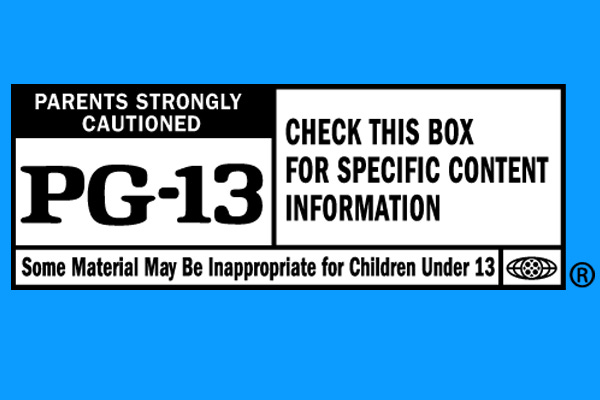
Tech giant Meta has received a hand slap by the same folks who graced us with the “NC-17” movie rating. According to Variety, Meta and the Motion Picture Association (MPA) have reached a resolution over Meta’s references to “PG-13” in respect to “Teen Account” functionality on Instagram.
Meta announced in late 2025 that it would be revamping their Instagram Teen Account functionality to a standard that is “guided” by the MPA’s “PG-13” motion picture ratings.
This action by the MPA could make much smaller operators think twice about referencing movie ratings when setting the bar for content of conversations over various communications channels that do not reach anywhere near the caliber of Zuck.
For decades now, over various forms of public/listener participation media (computer bulletin boards, interactive telephone systems, IRC/chat, voice chats, two-way radio communications, etc.), administrators of such systems (which I have had some history of) may tell the users to limit the conversations to a certain level and may use an MPA rating for comparison (”keep the conversation to PG”, etc.)
I know that Meta is big tech, but I hope this does not mean that the MPA is going to start shooting out C&Ds to very small operators over this who may incidentally include in a written policy for a smaller forum to keep conversations at a certain movie rating level.
Our motion picture rating system in America is a voluntary one, one that was brought in under Congressional pressure back in the 1960s. The rating codes (G, PG, PG-13, R, NC-17, X) and their basic meanings have been engrained in American culture for nearly 60 years now. Telling people to “keep the conversation to PG” is no different than someone saying that they need a “Kleenex” when they are referring to a facial tissue. Though in the case of Kleenex®, you may be stepping on toes.1
If anything, this type of common usage by individuals and organizations of all types is not an attempt to capitalize on the MPA, but instead is a reflection of American culture of using common words such as Xeroxing for making copies even though the actual machine itself is made by Canon. It also demonstrates the public acceptance and knowledge of what entails each rating code, thus equating to public awareness, which is something that the MPA has strived for as part of their public awareness campaigns over the decades. Plus, the term “PG-13” for movie ratings is also used in Australia and Singapore.
Let’s hope this does not lead to more threats of litigation to smaller operators along the lines of the previous legal status of singing “Happy Birthday to You”.
In the “Happy Birthday” case, a lawsuit was filed by an independent filmmaker against Warner Chappell Music, Inc. arguing that “Happy Birthday to You” was in the public domain. In that specific case, the actual year the song was copyrighted, or whether there was an implied copyright was at question. In 1988, Warner Chappell purchased the rights of The Summy Company, which included a 1935 copyright on the song and they have been collecting royalties on it. It turned out that the original publication of the song in print, along with similar song “Good Morning To All” dates back to the 1920s. In 2015, the judge in the case ruled that Warner Chappell’s 1935 claim was solely for a specific piano arrangement of the song and did not extend to the lyrics or melody.
Do the MPA movie ratings reach the level of a “genericized” trademark? In order to be considered genericized, the mark would be one that was once a legally protected trademark but since has lost its legal status due to becoming generic terms as well as marks that have been abandoned or have lost their trademark protection in certain jurisdictions.
One could argue that telling people to “keep the conversation PG” can be an infringement on the MPA’s trademark and it would be within the MPA’s right to seek enforcement of their mark. However, I think the Meta case goes more deeper than having people following guidance based on their perception of what is “PG” or “PG-13”. In the Meta case, they had actually developed specific written policies and system rules that were specifically “guided” by the MPA’s “PG-13” ratings criteria as opposed to just telling users to “keep it PG-13”.
Obviously, if you use someone else’s mark for a purpose that is not statutorily exempt (such as fair use), you do run the risk of legal action if the mark’s owner wishes to invest the time and resources to pursue the case.
However, there is an argument that could genericize the movie rating codes themselves and not necessarily the specific criteria for each rating. If this was not the case, we would have seen the MPA go after a ton of smaller operators who perhaps told their users to keep the tone of the conversation limited to a “G”, “PG” or “PG13” type of conversation or avoiding “R”, “NC-17” or “X” rated conversation. That kind of an expectation in a forum outside of motion pictures can be seen as something similar to any pre-2015 uses of “Happy Birthday To You”.
This is not legal advice, but if you want to steer away from any potential future wrath from the MPA on this issue, consider adding the letters “TV-” before the reference to “PG”. The US TV Parental Guidelines rating system is a voluntary system developed by the National Association of Broadcasters, the cable industry’s association NCTA and the MPA and is recognized by the FCC (such as in support of the infamous “V-chip”).
Also, avoid using the rating system of the Entertainment Software Rating Board (ESRB). This rating system does not have the same federal recognition that the TV ratings do and the ESRB has every right to defend their trademarks. If anything, during the time when the NAB/NCTA/MPA were working on developing the TV rating codes, they wanted to use “TV-M” for mature programming. In order to avoid a trademark dispute with ESRB (with their “M for Mature” rating code), they changed it to “TV-MA”.
Unlike the MPA and ESRB ratings, the TV ratings do not carry an “®” registration mark and it can be argued that because of the federal recognition of these terms in regulation, the TV rating codes, unlike their motion picture and gaming counterparts, can be seen more likely to be in the public domain.2 So, instead of keeping the conversation “PG”, let’s keep the conversation “TV-PG” in order to avoid getting “Meta’d” by the MPA.
See 47 CFR §15.120(e) (requirement that TV receivers include the “V-chip”), see also Implementation of Section 551 of the Telecommunications Act of 1996 Video Programming Ratings, Report and Order, 13 FCC Rcd. 8232 (1998) (federal recognition of the rating codes developed jointly by NAB, NCTA and MPA).
No posts
Comments
Nothing yet. Say the first thing.
Sign in to join the conversation.