
I basically never need to leave my house because it has everything I need.
I can whip up a latte with my own espresso maker, exercise on my own treadmill and write in my own office. I have mountains of books even though public libraries exist, and I have access to practically all the movies and music ever produced. I have kitchen gadgets only a restaurant would have had a generation ago and that is ridiculous.
You can take things much further. Home cotton candy machines exist! So do countertop soft serve ice cream machines.
But cotton candy is supposed to be a rare treat you get at a festival, not something you whip up on a random Tuesday. Ice cream is best when you visit an old fashioned ice cream parlor.
Our grandparents or perhaps great-grandparents did not have televisions until they were adults. They did go to the movies, where they might actually see their neighbors and have a shared cultural experience.
The theater in my town closed not long ago. Everyone watches movies at home, often alone, on their giant-screen TV. Don’t worry, they also have a popcorn maker.
The Everything House isn’t really about having too much stuff, although we do. It’s about bringing into the home things that used to happen somewhere else.
This is why we need enormous homes now even though our families have shrunk. We need the space to contain the mountain of belongings that do all the things we used to leave the house to do.
We discarded a lot of our public amenities and moved them into our homes. We started paying for our own private version of everything.
At one time, we didn’t need to have a big backyard and our own swingset because we could go to a public park. We didn’t need to have our own car because we could use public transportation. We didn’t need a giant TV because we could go to the movies. We didn’t need a backyard pool because we could go to the public one.
A lot of things were owned in common, by our communities, or were offered by some small business. I can see the appeal of having soft serve ice cream available to me 24/7, but I can see a lot more appeal in taking my grandchildren to an old fashioned ice cream parlor once in a while and making it an experience.
Now, there’s nothing wrong with owning an espresso machine. I have one and my Dutch coffee-addict husband uses it constantly. The problem is what happens when the espresso machine becomes a substitute for having a pleasant place to go for coffee.
You can make the same argument for whatever your luxury of choice might be. My point is that our houses shouldn’t have to be a combination home-coffee shop-gym-office-movie theater etc. My husband has a home recording studio in our attic, so I’m not arguing that nobody should have specialized things at home. We’re just choosy about what we own. The question is what we lose when the private version replaces the shared one.
As our private spaces have grown more elaborate, the public spaces around them have shrunk, disappeared or declined.
Think of the medieval period. Peasant life must have been a grind, but a poor person could still experience extraordinary beauty. And they didn’t have to own it.
Because my husband is Dutch, I’ve been able to visit Europe several times, a trip that would otherwise be a stretch for me. The historic architecture wows me.
Although I’m not Catholic, I once attended a mass at Cologne Cathedral. I didn’t understand a word of it, of course, but the grandeur overwhelmed me. And this beauty wasn’t locked away and reserved for the elite. You didn’t have to own a magnificent building to experience one.
We know how to provide everyone with shared beauty and wonderful amenities without making everyone privately own them.
The consumer economy can sell you a solution to every deficiency in the public realm. Instead of paying collectively for things everyone can use, we increasingly pay individually for things each household has to provide for itself.
Lacking gorgeous and functional public spaces and services, we decorate and optimize our homes and belongings instead, at our private expense for our private enjoyment. Alone.
But even people with beautiful homes full of everything anybody could want are always looking for something to do outside them.
First we spent money to turn our homes into private worlds that met every need, and then we started spending money to find ways to escape them.
People with a home office will rent a WeWork-type space or just go to a coffee shop. They don’t go to a public space because it’s quieter. They go there because they miss the little bits of human interaction that happen when you’re around other people.
Do you know what happens when you have espresso at a coffee shop, see a movie at a theater, have a treat at an ice cream parlor, shop at an open market or take your kids to a public playground?
You meet people. You have actual social interaction. We think we don’t want that, but it seems we do. Loose ties and casual conversations can stay small, or they can lead to friendships or even finding a partner.
Hard to do that through a screen.
We have made our homes extremely comfortable, yet even people who love being at home still look for reasons to leave them. They seek coffee shops, restaurants, coworking spaces and other places where other people are.
We pay for the private realm and then we pay to escape it. So we pay twice for things that used to be shared.

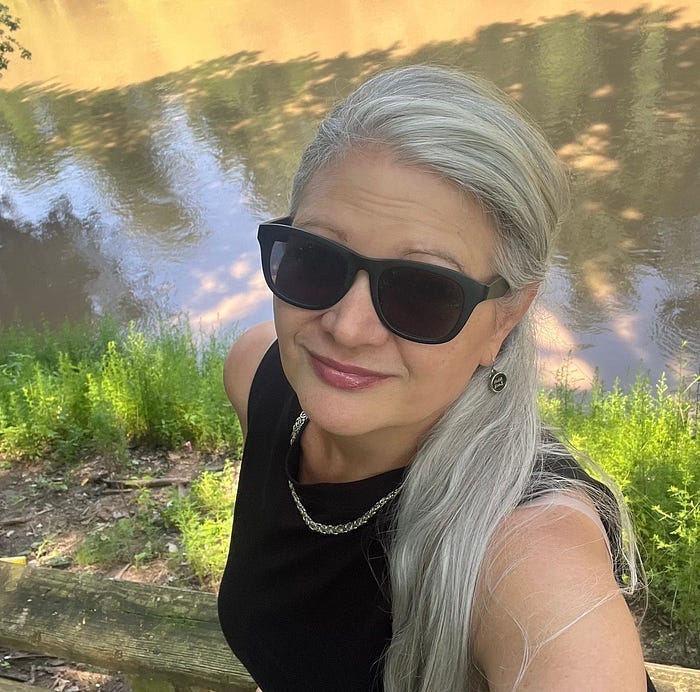
I’m Michelle Teheux, and I write about money, economic inequality and the systems that shape ordinary people’s lives.
If you like my work, subscribe to me here and on Medium. My most recent novel is The Trailer Park Rules.
Tips joyfully accepted via Ko-fi: https://ko-fi.com/michelleteheux
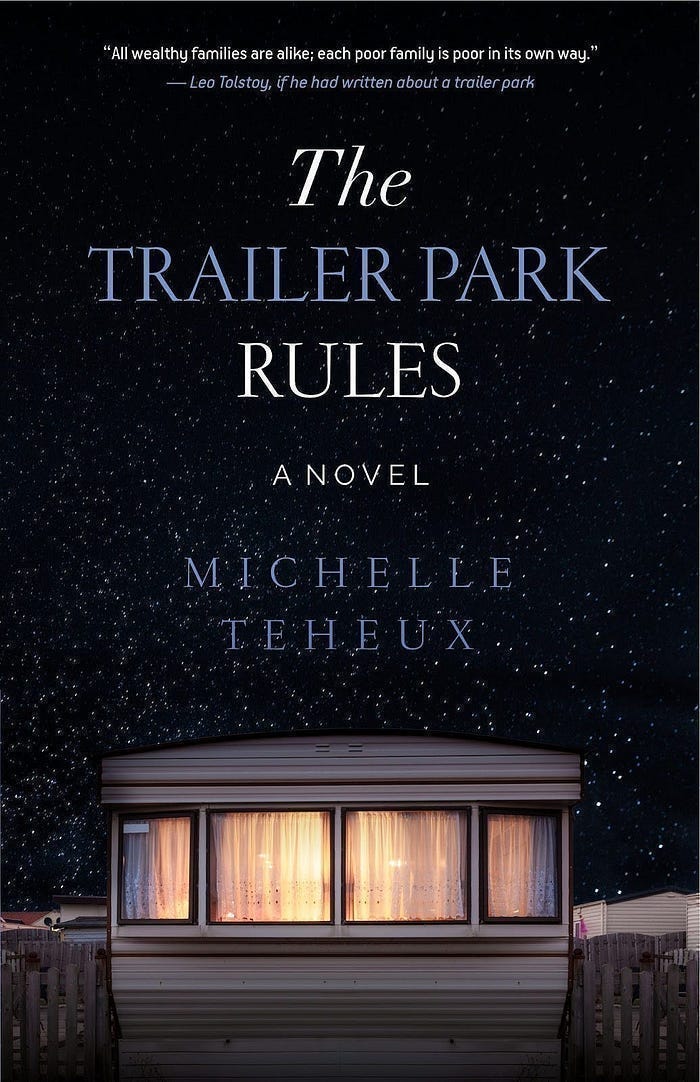
All wealthy families are alike; each poor family is poor in its own way.
— Leo Tolstoy, if he had written about a trailer park
For residents of the Loire Mobile Home Park, surviving means understanding which rules to follow and which to break. Each has landed in the trailer park for wildly different reasons.
Jonesy is a failed journalist with one dream left. Angel is the kind of irresponsible single mother society just shakes its head about, and her daughter Maya is the kid everybody overlooks. Jimmy and Janiece Jackson wanted to be the first in their families to achieve the American dream, but all the positive attitude in the world can’t solve their predicament. Darren is a disabled man trying to enjoy his life despite a dark past. Kaitlin is a former stripper with a sugar daddy, while Shirley is an older lady who has come down in the world and lives in denial. Nancy runs the park like a tyrant but finds out when a larger corporation takes over that she’s not different from the residents.
When the new owners jack up the lot rent, the lives of everyone in the park shift dramatically and in some cases tragically.
Welcome to the Loire Mobile Home Park! Please observe all rules.
Comments
Nothing yet. Say the first thing.
Sign in to join the conversation.