
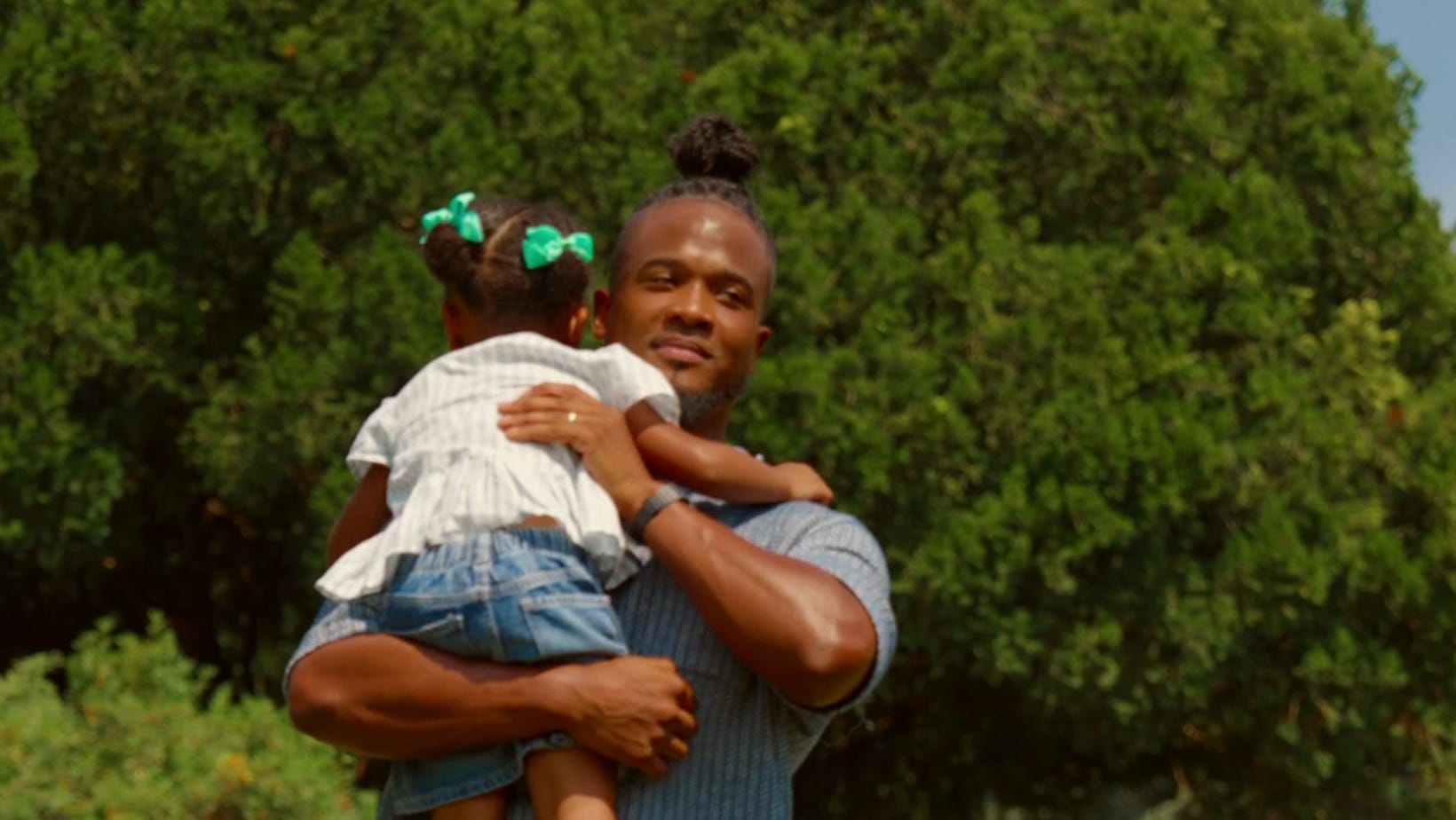
About five hours before Ada was born, my wife and I slow danced in the delivery room. Our bodies swayed back and forth, but time came to a standstill.
We were about to become parents—the most clarifying experience of our lives. We had of course spent the nine months leading up to Ada’s due date getting “ready.” The stroller had been purchased, the crib had been assembled, and the carseat was installed.
And still, as time inched forward and Duanecia’s contractions intensified, I felt acutely aware of how little I knew about how to be a Dad—how to be one of two people in the world responsible for the safety, wellbeing, and health of a human being.
A human being that we co-created.
But none of those thoughts mattered when the attending doctor called out, “where’s Dad? it’s time for you to catch your baby.”
As I let go of my wife’s hand and stepped forward, I felt a chill moving through my body. At first, I couldn’t understand where it came from—and then it hit me: for the very first time in my life, somebody called out for a “Dad,” and that Dad was me.
If I had to divide my life into two distinct parts, it would be B.C.A. and A.C.A.—”Before Catching Ada” and “After Catching Ada.”
There was no way to prepare for the way it felt to hold my daughter for the first time. There are no words that can properly contextualize the emotions that coursed through my body as I held her, marveling at the new life that we had co-created.
After I nervously cut the umbilical cord that had connected mother and daughter through three trimesters, I exhaled. As she laid in my arms—all five pounds of her—I felt remarkably clear: It was time to be the father that my daughter needed. The father that she deserved.
Anything she needed.
Anything to protect her.
Anything to be enough.
Anything to prove that I was enough.
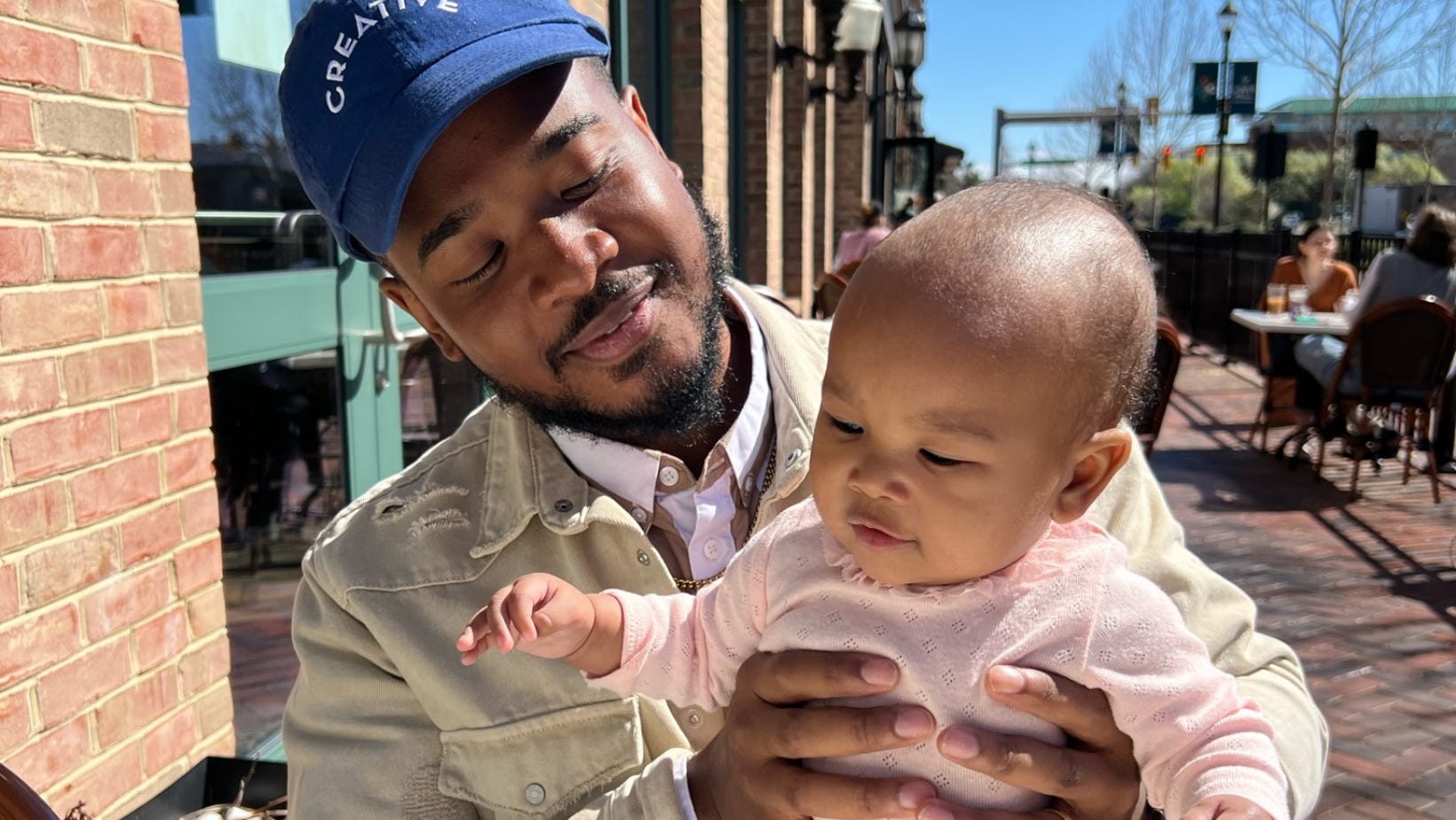
When I first read this quote, I took it literally: parents should take care of themselves so they can stick around for their kids.
Simple enough.
I understood the concept from the vantage point of a son. I had witnessed my parents’ sacrifices, but had no concept of how those sacrifices felt.
I knew that my father worked hard to provide for me and my brother, but I didn’t know how it felt to get up at 5:30 A.M., commute 90 minutes, work for eight hours, commute 90 minutes back home, and still have the capacity to listen to us talk about our days.
I knew that my mother ensured we never wondered what to eat for dinner, but I didn’t understand what went into making home-cooked meals, six days a week, while managing a household.
Like many adults, I’ve taken my parents off of the pedestals that I placed them on during my childhood, which makes their perseverance even more impressive to me. Because now, my wife and I are the ones getting up every day to solve the impossible puzzle known as “parenthood.”
Today, I understand the quote from the vantage point of a father. It’s my turn to be the mortal man who must fit 48 hours of responsibilities into every 24-hour window—now, I understand what the quote is really asking: will you continue to live your life, or just endure it?
My first year as a father exposed me to the difference between surviving for my kid and living for them. The latter is more difficult than you think.
Before I learned that fathers also experience postpartum depression, I knew that something was wrong. I struggled to remember the last time I had gone to bed believing that the next day would feel manageable.
The never-ending feelings of overwhelm and isolation clashed with some of my deepest psychological needs: to feel like I was “enough,” to feel deep-rooted community support, to feel like my existence could extend beyond my shortcomings.
Ada’s newborn years coincided with some of the most physically taxing years of my life—chronic pain that no amount of physical therapy, acupuncture, or pain medication could resolve. My body was breaking down while I was supposed to be showing up as a father, a husband, a provider. Many days, I felt like my mind was disintegrating along with it.
The math didn’t work. There weren’t enough hours, enough energy, enough of me to meet all the demands pressing down on my chest.
Duanecia had already given what I never could.
Nine months of her body reshaping itself. The nausea, the exhaustion, the labor that broke her open so Ada could enter the world. And then—when I thought the hardest part was behind us—the feeding. Every two hours, through the night, for months. Her body still not her own.
I watched her do this and felt the gap widen.
There were things Ada needed that only her mother could provide. Warmth I couldn’t replicate. Comfort I couldn’t offer. A bond forged in blood and milk and sleepless hours that I could witness but never enter.
I wanted to match her sacrifice. I wanted to prove that I was carrying my share of the weight. But the math never worked. She had given Ada her body. What had I given?
So I did the only thing I knew how to do: I worked. I provided. I performed usefulness wherever I could find it — as if enough productivity might close the distance between what she had sacrificed and what I had to offer.
It didn’t.
The gap remained. And somewhere inside that gap, I started to disappear.
Not literally. But spiritually. Emotionally.
I learned how to stumble around in the darkness because that felt more realistic than believing that sunshine would return.
One night stays with me. Ada was maybe six months old. Witching hour — that window when infants become inconsolable for reasons they can’t name and you can’t fix. We had been struggling through this time of night for months. She was nowhere near her first word. We had no shared language to meet each other with.
I held her. I rubbed her back. I did all the things a father is supposed to do.
But I was watching myself from across the room.
My arms were around her, but I wasn’t there.
She needed comfort. I gave her the motions of comfort while feeling nothing at all.
That’s the thing about disappearing. You can still show up. You can go through the routines — diaper changes, bedtime stories, stroller walks through the park. From the outside, it looks like presence.
But you’re just a body performing fatherhood while your spirit waits somewhere else, hoping eventually it will feel safe enough to return.
I spent a significant part of 2022, 2023, and 2024 in this state, wandering through the darkness. Sometimes I could claw my way back—rebuild the habits that brought me peace, force myself outside, talk to people I loved. But not always. Sometimes I felt like God wanted me to stay there—because why else would hope feel so many light years away?
The friendships I had weren’t deep enough to hold the weight of what I was carrying. I had people I could talk to about surface-level things, but no one I felt I could truly be vulnerable with about the darkness I was navigating. No one who would understand what it felt like to be drowning while everyone around you assumed you were swimming just fine.
I was so busy struggling to prove that I was “enough” that I was forgetting to just... be.
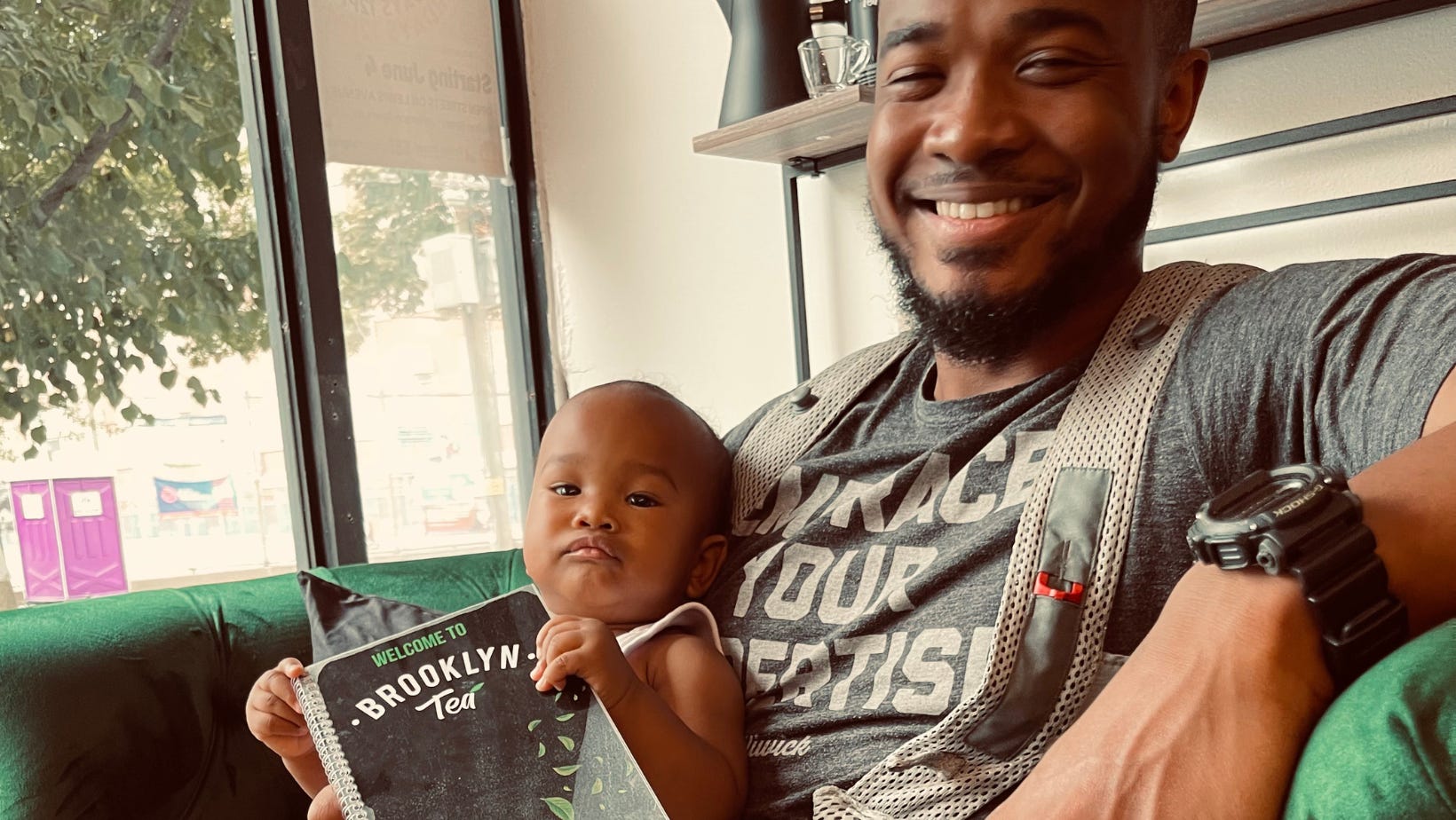
The infant era is foggy. Clarity is almost impossible to find as exhaustion and confusion swirl around you.
Your baby’s body and mind develop so rapidly that their preferences change every week, sometimes every day. The practice that soothed them last week sends them into a blind rage tomorrow. And they don’t have the words to tell you what’s going on.
So you keep guessing. Until everything changes again.
But eventually, clarity does return — even when capacity does not. You start to understand the incomprehensible. You find your rhythm even when the beat feels unpredictable.
For me, the fog began to clear toward the end of 2024. Ada was becoming more toddler than baby. Her independence didn’t make things easier, exactly — but it met me where I was.
I took my first step out of survival mode.
And walked face-first into a brick wall.
I had expected to feel closer to myself once I emerged. To recognize my own reflection. To feel something like relief.
Instead, I saw distance. Years of it. The kind you don’t notice accumulating until you try to walk back.
It wasn’t just that I had changed. I had lost things.
The small joys that once lit me up — shelved.
My curiosities—archived.
My passions — buried under routine and obligation and the daily work of keeping everyone alive.
The sting wasn’t just sadness. It was grief laced with a sharp awareness: time had passed while I wasn’t paying attention.
I knew something had to change. I could feel it in my bones—that unmistakable hum of a life lived on autopilot for too long.
So I turned to writing.
Except this time, I almost didn’t.
I stared at the empty page and thought: What’s the point? I’d tried this before. The fresh starts. The goal-setting. The promises that this time would be different.
Here I was again. Same darkness. Wondering if I even had it in me to try.
The first draft was angry. Pages of rage about everything I felt I’d lost—the friendships that had faded, the marriage that had lost its spark, the career momentum that never materialized, the version of myself I thought I’d be by now. I wrote until my hands hurt. Then I closed my notebook and didn’t open it again for two days.
When I came back, I tried a different approach. Instead of writing about what enraged me, I wrote about what mattered most.
Family — I felt like an insufficient father and husband. I wanted to define my role more clearly so that showing up didn’t feel like guesswork.
Physical health — Chronic pain was exhausting me. I wanted to heal the underlying conditions that made me feel like a shell of my former self.
Social health — I wasn’t alone, but I felt lonely. I wanted to become a better friend, and to deepen my relationships with the people who matter most.
I kept going. Mental health. Emotional wellbeing. Spiritual life. Finances. Seven areas in total. Not because I had some grand plan, but because I needed to see it all laid out—to understand where I was actually standing instead of where I thought I should be.
What I found surprised me.
In some areas, I wasn’t as far gone as I thought. In others, I’d been lying to myself about how bad things had gotten. The physical pain I’d been dismissing as “just part of getting older” had become debilitating. The friendships where I didn’t feel prioritized—I’d been turning those into self-fulfilling prophecies. The spiritual emptiness I blamed on circumstances—I’d stopped doing anything that fed my soul.
I kept writing. Some days it felt like progress. Other days it felt like I was just documenting my own failure in more detail.
But slowly, something shifted.
Not a breakthrough. More like a crack in the wall I’d built around myself. And through that crack, one truth kept pushing its way in:
I don’t want to be so hellbent on creating a better life for myself and my family that I forget to experience the beauty of the life we’re already living.
I read that line back to myself and felt something I hadn’t felt in months. Not hope, exactly. But the faint possibility that things could be different.
Not fixed. Not perfect.
Just... different.
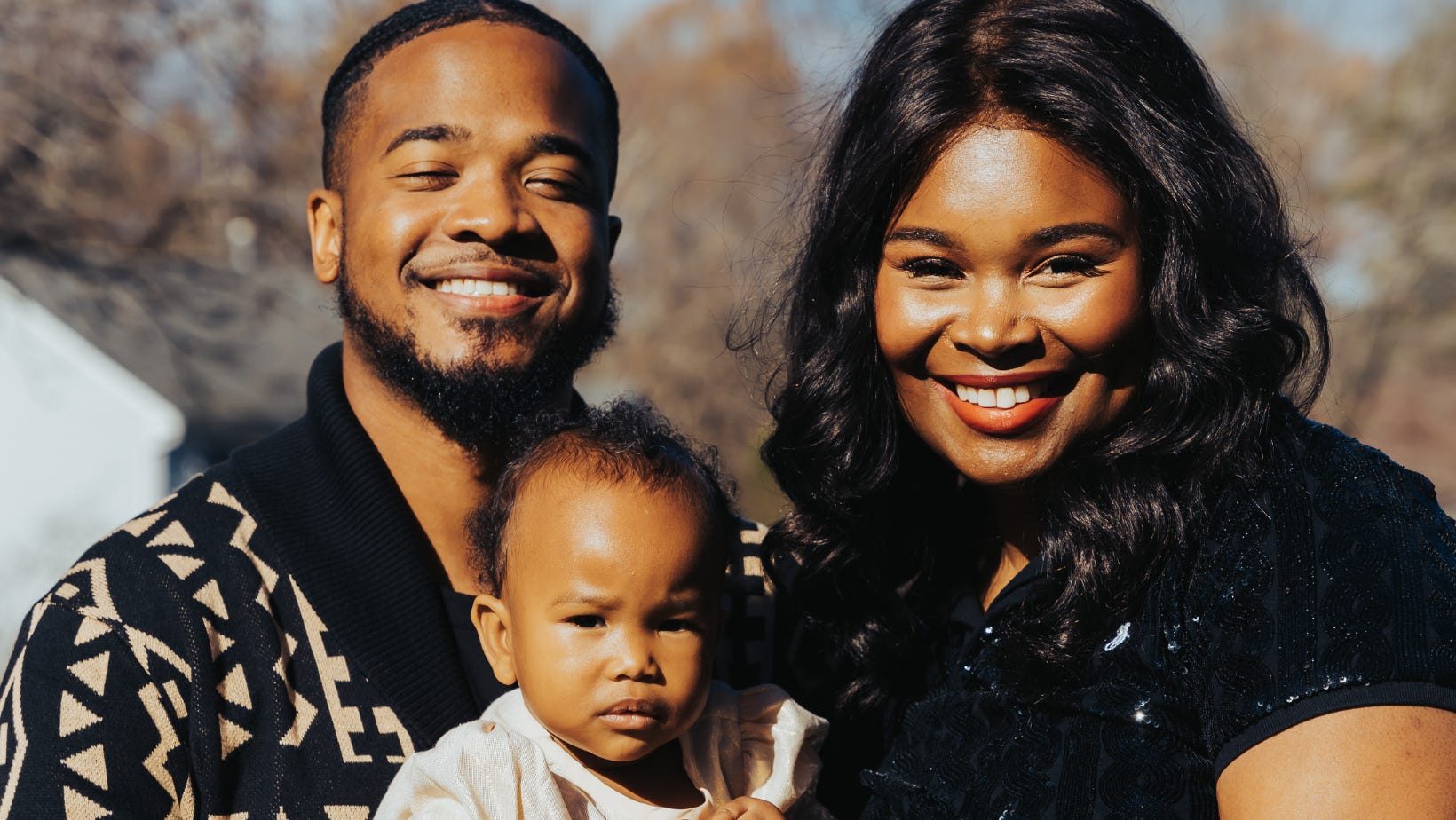
We live in a culture that teaches fathers to prove their love through depletion. Work harder. Provide more. Sacrifice everything. The goal isn’t to be present—it’s to be impressive. To have something to show for all that suffering.
But what if the most radical thing a father can do is refuse to disappear?
Not in the dramatic, public way. In the quiet way—the way I’d been disappearing for years. Choosing exhaustion over presence. Choosing productivity over play. Telling myself that grinding through one more task was for my daughter, when really it was just the only way I knew how to feel like I was enough.
Revolutionary might sound like a strong word for something as simple as playing pretend. But revolution doesn’t always look like upheaval. Sometimes it looks like interruption—a deliberate break from the patterns you inherited.
A few weeks into this process, Ada asked me to play “restaurant” with her. She’d set up her toy kitchen, complete with plastic food and real water, which I knew I’d be wiping off our hardwood floors in less than 15 minutes.
I was tired. I had work to do. Many earlier versions of myself would have said “not right now.”
But I said yes.
She made me chocolate milk and ice cream with a little bit of brown sugar. She told me that it cost two dollars.
I pretended to be a very picky customer who sent back every dish for increasingly ridiculous reasons. The plastic broccoli was “too green.” The toy pizza needed “more cheese.” Ada thought this was hilarious, running back and forth between her kitchen and my seat at the table, bringing me revised orders with exaggerated seriousness.
At one point, she brought me a plastic cupcake and said, “This one’s free because you’re my favorite customer.”
Nothing about that moment was productive. I didn’t earn anything. I didn’t prove anything. I just... was there. Fully. For maybe the first time in months.
And I realized: this is the inheritance I want to leave her. Not a father who worked himself into the ground to give her a better life—but a father who showed her what it looks like to actually live one.
My father came home every night and sat at the dinner table with us, still in his dress shirt.
That was non-negotiable. No matter what his day had held, he was there. Present. Asking about school, about practice, about whatever small dramas felt enormous to us at the time.
I didn’t think of him as exhausted back then. I didn’t think about what his days required of him—the commute, the hours, the weight of providing for a family. I just knew he was there. That was the fact of him.
Now, as a father myself, I wonder what I couldn’t see.
I wonder if he sat in the car for a few minutes before coming inside, gathering himself. I wonder if the dress shirt stayed on because taking it off meant admitting the day had worn him down. I wonder what he carried that he never let us feel.
Or maybe he wasn’t depleted. Maybe presence came easier to him than it does to me. Maybe I’ve been projecting my own exhaustion backward, assuming he felt what I feel.
I don’t know.
What I do know is that somewhere along the way, I learned that love is proven through depletion. That being a good father means giving until there’s nothing left. I’m not sure my father taught me that. But I learned it anyway—from the culture, from the expectations, from the voice in my head that whispers you’re not doing enough every time I sit down.
Last month, Ada asked me why I looked sad.
I was sitting at my desk, staring at my laptop. I don’t know what expression I was wearing, but she saw something. Children see everything.
I could have said “I’m fine.”
That’s the easy answer. The one that keeps everything moving, asks nothing of anyone, lets you fall apart in private.
Instead, I told her the truth.
“Daddy’s feeling tired and a little overwhelmed today.”
She didn’t flinch. She didn’t worry. She climbed into my lap — this daughter of mine, who has been a masterful negotiator since the day she formed her first sentence — and said:
“Maybe you need a break. Maybe we should play.”
She was right. She tends to be.
So I closed my laptop. We went outside and drew with sidewalk chalk on the driveway. She made a rainbow. I made a stick figure she said looked “weird but good.”
Fifteen minutes. That’s all it was. Fifteen minutes of chalk dust on my hands and her voice narrating her artwork and the afternoon sun warming the back of my neck.
It was the most present I’d felt in weeks.
I’m not used to taking breaks when I feel overwhelmed. I’m used to pushing through, white-knuckling my way toward some finish line that keeps moving.
I don’t know if my father ever took breaks when he felt overwhelmed. I don’t know if he needed to. I don’t know what he allowed himself behind closed doors.
But I know what I can show Ada.
That rest is not the opposite of love. That presence matters more than performance. That adults are allowed to feel tired, to name it out loud, to stop working and draw weird stick figures on the driveway.
That you don’t have to earn the right to play.
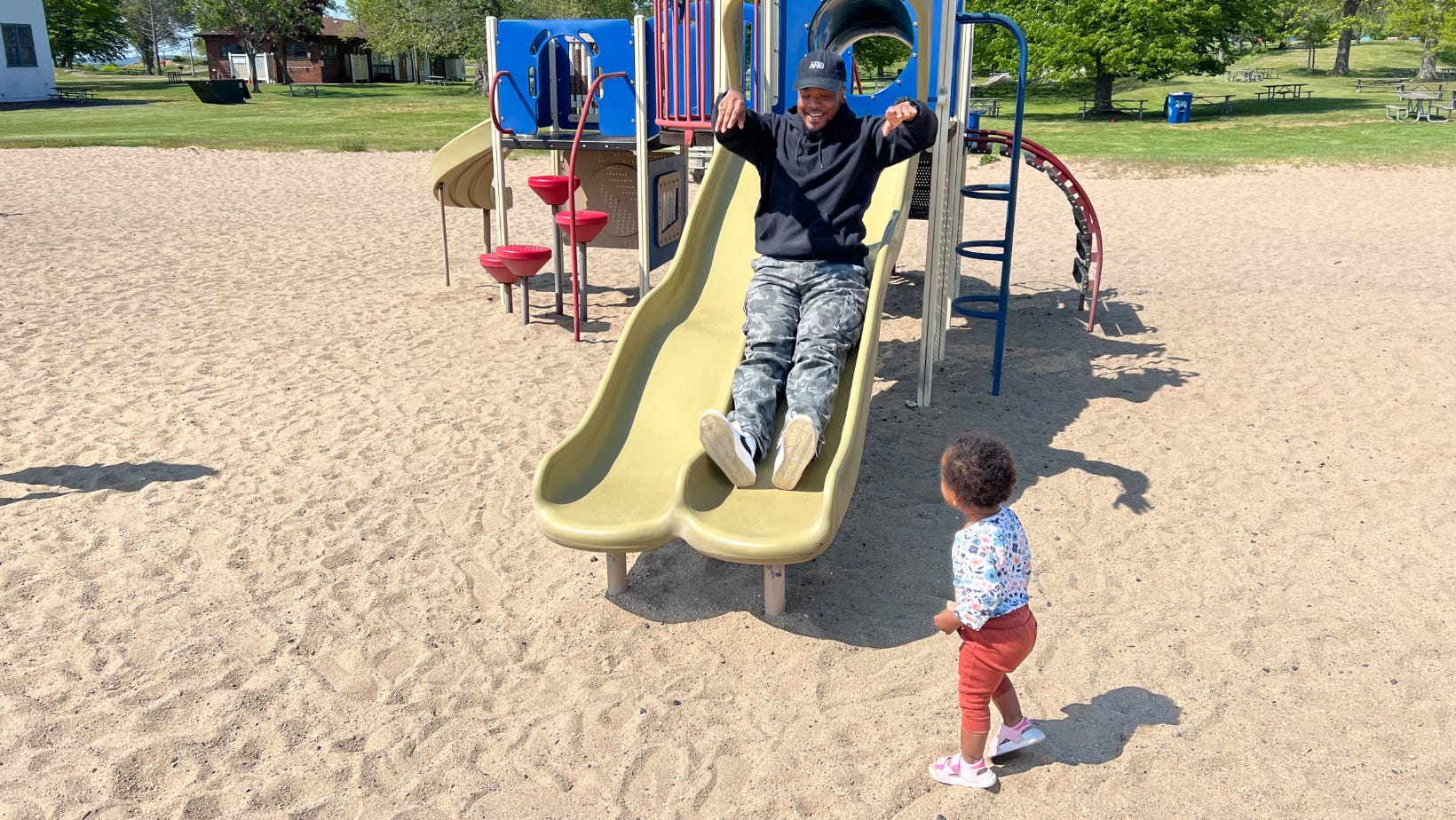
True. But don’t stop there—follow that logic all the way through.
What kind of parent can take care of their kid—not just physically, but mentally and emotionally?
A parent who hasn’t given up on themselves, their needs, or their dreams. A parent who might not always love their kids from a space of overflow, but can at least remember what a blessing it is to have a kid to love in the first place. A parent who still accepts themself when they fall short.
Parenting is hard. Full stop. It’s exhausting, overwhelming, and filled with moments where you question every decision you make. It’s a level of difficulty that’s hard to put into words until you’ve lived it.
But being a kid is hard, too. Parents sometimes forget that.
Children are navigating a world they don’t fully understand yet, dealing with big emotions in small bodies, trying to figure out who they are while everyone around them seems to have expectations about who they should be.
My daughter needs parents who can hold space for her experiences instead of passing the weight of their overwhelm onto her. She doesn’t need parents who have worked themselves into the ground for so long that they’ve forgotten how to play.
Martyrs don’t play. And my daughter needs a father who can play.
She deserves parents who can show her what a well-lived life feels like. Parents who are alive—in body, in spirit, and in soul.
I am deeply thankful for your support. If my words have helped you in some way, please consider sharing them with others. If you have the means to do so, you could also support my work directly by buying me a coffee.
Comments
Nothing yet. Say the first thing.
Sign in to join the conversation.