
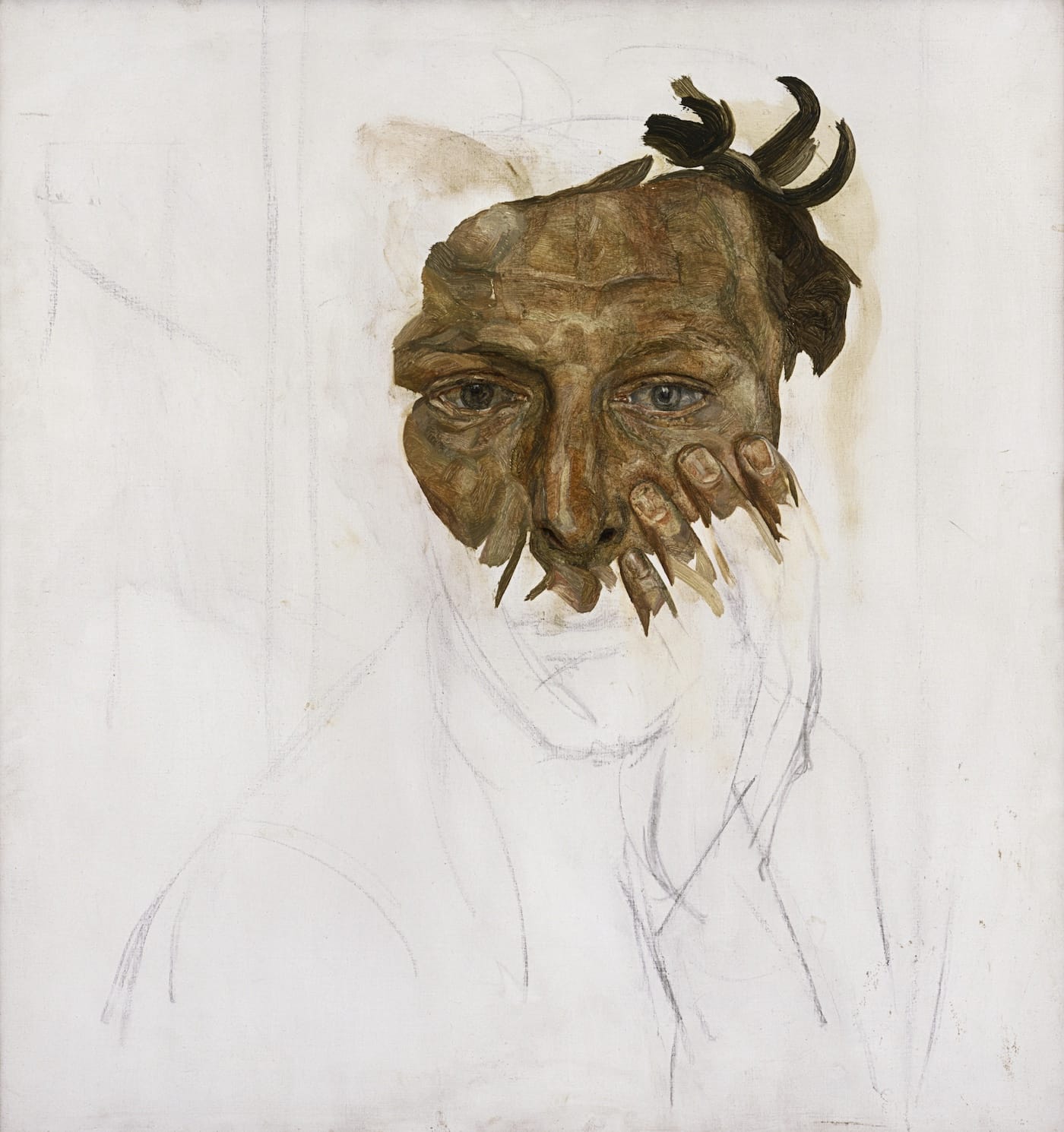
When Sergei Rachmaninoff arrived at the premiere of his First Symphony in March 1897, he braced himself for disaster.
The musicians were woefully under-rehearsed, their sheet music riddled with errors, and the orchestra’s conductor, Alexander Glazunov, had made drastic cuts to the score without the composer’s approval. Glazunov thought so little of Rachmaninoff’s work that many believed he conducted the concert while drunk.
Rachmaninoff hid away on a staircase outside the auditorium, fists pressed against ears in an attempt to block out the sounds of his butchered symphony filling Saint Petersburg’s Hall of Nobility. The evening’s trauma bled over into the next day when reviews of the performance hit newsstands. César Cui, one of the city’s most scathing critics, wrote:
“If there were a conservatory in Hell, and if one of its talented students were to compose a program symphony based on the story of the Ten Plagues of Egypt, and if he were to compose a symphony like Mr. Rachmaninoff’s, then he would have fulfilled his task brilliantly and would delight the inhabitants of Hell.”
Despondent and defeated, Rachmaninoff traveled back home to Moscow “a different man,” as he later confessed to a friend:
“My confidence in myself had received a sudden blow. Agonizing hours spent in doubt and hard thinking had brought me to the conclusion that I ought to give up composing.”
In terms of income, the 24-year-old Rachmaninoff could have retired his pen and focused on his burgeoning career as a conductor and piano soloist. Composition, however, was the craft that had long made his soul sing — giving that up was unthinkable.
But in the weeks and months that followed, every time Sergei returned to his desk, he encountered only stony silence in his mind. For the next three years, he was unable to compose a single score.

Before that fateful night in Saint Petersburg, Sergei had written prolifically — from chamber and orchestral works to art songs, music for solo piano, and his first opera — but now the very sight of blank manuscript paper left him panicked.
As the years progressed, Sergei’s heavy drinking, deepening depression, and chronic insomnia made the task of expressing himself musically feel increasingly impossible. He repeatedly delayed the delivery of a new concerto for solo piano and orchestra he had promised to the London Philharmonic Society, writing only that “My musical matters go very badly.”
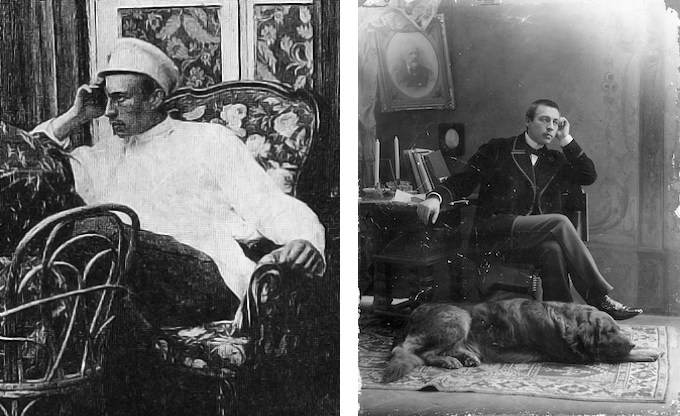
In January 1900, on the recommendation of his family, Sergei began meeting with Dr. Nikolai Dahl, a neurologist and amateur musician who specialized in hypnosis and positive suggestion therapy. Every day for three months, the pair met for extended hypnotherapy sessions. With the composer seated in a plush leather armchair, residing in the liminal, trance-like realm where the conscious and subconscious minds converge, Dr. Dahl repeated a simple mantra: “You will write a concerto … You will work with great facility … It will be excellent.”
The sessions had a profound effect on Sergei, who shared in a letter:
“Although it may sound incredible, this cure really helped me. By the beginning of the summer I again began to compose. The material grew in bulk, and new musical ideas began to stir within me — more than enough for my concerto.”

By the spring of 1901, Sergei had completed his long-neglected Second Piano Concerto. But the work wasn’t simply a return to form — it marked an artistic rebirth, one his compatriot Igor Stravinsky likened to witnessing a painter transition from watercolors to oils.
While he remained committed to musical Romanticism, with its deep well of expression and rich sonorities, Sergei’s new concerto was the first of his compositions to showcase the rapturous sense of sustained melody and suspended harmony that have become synonymous with his music. These hallmarks stand at the forefront of the Second Piano Concerto’s meditative slow movement, the first section of the work Sergei composed following his sessions with Dr. Dahl.
Emerging from the shadows of the opening string chorale — which evokes the chants of the Russian Orthodox Church that had transfixed Sergei as a child — waves of broken chords cascade and shimmer across the keyboard. From this pool of tranquility, the movement’s melody gently unfolds: first in the flute, then blossoming in the clarinet, who lovingly trades the tune back and forth with the solo piano.
Such a procession of voices may not seem radical, until we consider that in most concertos of the Romantic period, the soloist dominates the scene with feats of wild virtuosity. But Sergei was only too happy to share the spotlight with his orchestral counterparts, the piano serving as just one gold-wrapped thread in his vast musical tapestry.
This intricate and seamless interweaving of voices is the key to Sergei’s boundless melodies — and here, he sustains his serenade for nearly four minutes before embarking on a contrasting episode of simmering drama. When the introspective calm that opened the movement returns, the melody — now sweetly sung by muted violins — already feels intimately familiar, like the echoes of a childhood lullaby we long to hear again.

After the concerto’s premiere in November 1901, where Sergei also served as soloist, the rapturous reception was everything he hoped for — the exact opposite of what he experienced with his First Symphony. One critic wrote of the performance:
“It’s been long since the walls of the Hall of Nobility reverberated with such enthusiastic, storming applause as on that evening … This work contains much poetry, beauty, warmth, rich orchestration, healthy and buoyant creative power. Rachmaninoff’s talent is evident throughout.”
Today, this work is the most popular and most performed piano concerto of the 20th century. In fact, the piece drives people to the concert hall like few others. In my day job as a classical music copywriter, I’ve heard marketing directors from orchestras across the country confirm that programming Rachmaninoff’s concerto practically guarantees a sold-out crowd.
How could that be? Yes, his music carries all the aspects of Romanticism audiences adore — emotionally expressive and rhapsodic, always with an undercurrent of melancholy and longing. But so do the concertos of Pyotr Ilyich Tchaikovsky, Johannes Brahms, and Clara Schumann. I believe there’s more to it.
If you agree, as I do, with Wallace Stevens’s belief that “Music is feeling, then, not sound,” and John Berger’s position that “we find ourselves inside a message” while listening to a song, then the popularity of Rachmaninoff’s concerto lies in the deep familiarity of the emotions the work conveys. For when the lines and dots and cryptic symbols of a musical score transform into sound that moves through us, time collapses and a composer from the past speaks to us, directly and with urgency, in the present.
At the end of his life, Rachmaninoff shared the meaning behind his work, saying:
“What I try to do when writing down my music is to make it say simply and directly that which is in my heart when I am composing. If there is love there, or bitterness, or sadness, or religion, these moods become part of my music, and it becomes either beautiful or bitter or sad or religious.”
In composing this concerto, Rachmaninoff forged a path back to his heart — the refuge and wellspring of expression that fueled his work. And by experiencing this journey from a crippling crisis of confidence to artistic rebirth, we can follow that same path toward healing ourselves. As dissonances resolve into weightless harmonies, we reflect on the moments of struggle and ecstasy, suffering and joy that give our lives meaning. Each melody, suffused with exhilarating beauty, reminds us of the love, the connection, the creative possibilities made manifest when we meet each day with radical hope and belief in our abilities. Through the spiritual alchemy of music, one composer’s personal trials unlock universal truths.
Who wouldn’t want to gather together in a concert hall to explore these benevolent lessons, with Rachmaninoff as our guide?

Text within this block will maintain its original spacing when published
Yefim Bronfman, piano
The Philharmonia Orchestra
Esa-Pekka Salonen, conductor
(Listen to the complete work.)
I’d love to hear about your experience navigating the tranquil waters of Rachmaninoff’s concerto. Let me know — either by replying to this email or leaving a comment.
And if you enjoyed your time here today, why not share this post with someone who would benefit from experiencing this music? 💙
Each edition of this newsletter reflects 20+ hours of research, writing, editing, and production. Shades of Blue is a 100% reader-supported endeavor — no ads, no algorithms, just one human inviting you to explore a deeper relationship with music.
If my work brings calm, connection, and healing to your life, please consider upgrading to a paid subscription …
Or making a donation to keep Shades of Blue running …
Comments
Nothing yet. Say the first thing.
Sign in to join the conversation.