
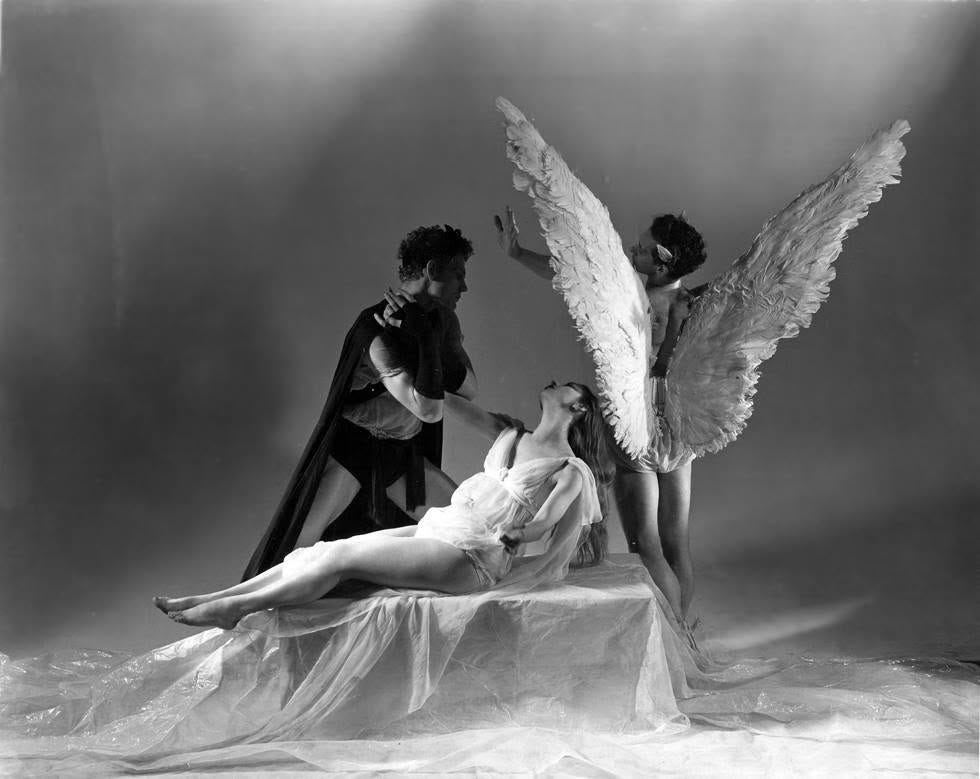
Sometimes when a work enters your life, the music’s message resonates within you like cathedral bells. That was my experience discovering Claudio Monteverdi’s opera L’Orfeo in the spring of 2020.
In late May, as New York City entered its third month of lockdown, it seemed sorrow was inescapable. The pandemic uprooting lives around the world had made the city ground zero, the mighty elms of Central Park casting shadows onto makeshift morgues. Death had darkened my door just weeks before as my beloved English bulldog, Dexter, took his final breath. And in Minneapolis, my husband’s hometown and the city we were to call home in just a few weeks, George Floyd had been slowly suffocated by a police officer in broad daylight, as horrified neighbors pleaded for mercy.
Amid such waves of loss, my husband, one of many opera singers whose careers collapsed when theaters shuttered their doors, received a glimmer of good news. His summer gig at Wolf Trap Opera in northern Virginia would still take place, albeit under novel circumstances. Rather than mounting the planned suite of fully staged productions, singers would be recast in pairs to perform intimate opera scenes — socially distanced, with only piano accompaniment — for a series of live-streamed performances.
My husband was assigned the role of Orpheus in Monteverdi’s L’Orfeo, a work I didn’t know, other than it being the oldest Western opera still performed today. The scene to be performed occurs at the dark heart of the opera, after Orpheus, grief-stricken over the sudden death of his wife, Eurydice, descends into the Underworld to convince the ruling god Pluto to give him back his bride.
First, Orpheus must convince the boatman Charon to ferry him across the river Styx, since only the dead are allowed to enter Hades. In his attempt to secure Charon’s aid, Orpheus — whose songs held the power to soothe birds and beasts alike and turn the trees and rocks to dancing — sings of his profound despair.
Before listening to the music, I read through the scene’s text, drawn from Ovid’s Metamorphoses and Virgil’s Georgics by the poet Alessandro Striggio. One line immediately pierced my heart, Orpheus’s final words as he sailed to Hades:
Text within this block will maintain its original spacing when published
As my eyes shed streams of bitter tears,
Give me back my love, O gods of Tartarus!
Orpheus’s desperate plea echoed across the centuries. As I considered those who were crying similar demands into the ether that spring, Striggio’s words were a potent reminder that such a scale of loss was nothing new in humanity’s ever-unfolding saga.
Then an intense curiosity arose: How did Monteverdi, at the dawn of Western opera, manifest such a scene in sound? How could he express the searing pain of the mythic hero who himself had invented music?

When L’Orfeo premiered at the ducal palace of Mantua in early 1607, Monteverdi’s score reflected a seismic change happening in music. The florid polyphony that had dominated Italy during the late Renaissance was going out of fashion, its dizzying complexity slowly replaced by textures of expressive melody and simple harmonic accompaniment. Composers from Florence to Mantua to Venice found this streamlined style, which came to define the Baroque period, ideal for a new genre of musical theater: the opera.
While other composers relied almost exclusively on the technique of recitative (a type of singing meant to imitate the rhythms of speech) in their work, Monteverdi added grand choruses, vibrant dance numbers, and atmospheric interludes that guided the audience from scene to scene. But his greatest contribution to the nascent genre was the inclusion of the solo aria — a marriage of melody and poetry, and the vehicle through which Orpheus attempts to gain Charon’s help.
The doleful sound of strings and low brass set the scene for Orpheus’s extended lament, his voice quivering while fleeting figures from a pair of violins shoot through the texture like sparks from a crackling fire:
Text within this block will maintain its original spacing when published
Mighty spirit and formidable god,
without whom no bodiless soul can hope
to gain passage to the other side …
Such is the extent of his sorrow that Orpheus questions whether he, now lost in the labyrinth of grief, has died as well:
Text within this block will maintain its original spacing when published
I am not alive, no, for since
my beloved bride is deprived of life,
my heart is no longer with me,
and without a heart, how can I be alive?
The violins that swirled through the air are now replaced by a pair of cornetti, whose shadowy voices evoke the solemnity of a funeral procession. Then, accompanied by the lyre through which he enchants man and beast, tree and rock, Orpheus stands firm in his determination to be reunited with his beloved, as singing reaches new heights of virtuosity:
Text within this block will maintain its original spacing when published
I am Orpheus, following Eurydice’s steps
through these gloomy regions,
where no mortal man has ever trod.
…
You alone, noble god, can help me,
but you need not fear, for as a weapon
I have only the sweet strings of a golden lyre,
which even the most hardened spirit cannot resist.
Orpheus’s song charms Charon, but the ferryman isn’t moved to help. Recognizing that his tears won’t advance his mission, Orpheus summons in the strings an incantation that quickly lulls the ferryman to sleep. With Charon’s oar now in the mighty musician’s hands, Orpheus sets sail for Hades with the stark plea that had inspired my journey with this music, his voice rising with each repetition as despair gives way to resolve:
Text within this block will maintain its original spacing when published
As my eyes shed streams of bitter tears,
Give me back my love, O gods of Tartarus!

In September 1607, seven months after L’Orfeo’s premiere, the Orpheus myth took on a new resonance for Monteverdi, when his wife of eight years, Claudia de Cattaneis, died of illness. The composer spent much of the next year at his family home in Cremona to process his grief and care for the couple’s two young children. Devastated by his loss, he never married again, and later entered the priesthood.
Orpheus, however, was consigned to a crueler fate.
He had secured Pluto’s permission to leave with Eurydice, but failed to meet the god’s sole condition: Do not lay eyes on her until you have both left the Underworld. After crossing the border between the lands of the living and the dead, Orpheus looked back upon his wife too soon. With one foot still in the Underworld, she again fell into the abyss.
Wracked with guilt over losing Eurydice a second time, Orpheus could only sing songs of mourning for his beloved. According to Ovid’s version of the myth, these chronic displays of grief drove the Maenads — a harem of ravenous women who served as the nurses of Dionysus — to murder the musician, tearing his body limb from limb. Orpheus’s sorrow had become a death sentence.
Humankind still shows little tolerance for expressions of grief and loss in our modern world. Most employers offer only a week for bereavement leave. Solemn occasions of remembrance like the Memorial Day holiday in the U.S. stand today merely as the unofficial start of summer festivities. And six years after the devastation wrought by Covid, our societal divisions still prove too insurmountable to come together and process our communal loss.
But ignoring grief leaves it free to fester into anger and violence. We must be able to sing our personal songs of sorrow, to ourselves and each other, as reminders that we are not alone in mourning the fleeting nature of life and love. We must allow our grief to run its course, even when we know our most urgent plea — that the gods return those we love to us — can never be fulfilled.
Despite the blood-soaked end Orpheus endured at the hands of the Maenads, I take solace in the grace he was shown by another group of women: the benevolent Muses. The nine goddesses of art and music, poetry and knowledge, placed his golden lyre among the stars and buried the fragments of his body on Mount Olympus, where nightingales serenaded his grave. And after they returned his soul to the Underworld, Orpheus was at last reunited with Eurydice, this time for eternity, among the Elysian fields.
Text within this block will maintain its original spacing when published
Furio Zanasi, Orpheus
Antonio Abete, Charon
Le Concert des Nations
Jordi Savall, conductor
(Follow along with the Italian text and English translation.)
I can’t think of a better introduction to Monteverdi’s opera than this 2002 performance at the Liceu in Barcelona. The singing is spectacular, and the stage design was crafted to reflect the ducal palace of Mantua, where the opera premiered. I also love the front-and-center placement of Monteverdi’s super-sized orchestra — filled with violins and viols, cornetti and sackbutts, and a battery of theorbos, harps, and lutes. The pageantry is astounding to behold.
Note: The video above will take you right to the start of Orpheus’s aria, but unfortunately I can’t designate a place to stop the video. The scene ends about 15 minutes in [1:18:02], when Orpheus begins his ferry journey across the river Styx.
I’d love to hear about your experience listening to Orpheus’s song of sorrow. Let me know — either by replying to this email or leaving a comment.
And if you enjoyed your time here today, why not share this post with someone who would benefit from experiencing this music? 💙
Each edition of this newsletter reflects 20+ hours of research, writing, editing, and production. Shades of Blue is a 100% reader-supported endeavor — no ads, no algorithms, just one human inviting you to explore a deeper relationship with music.
If my work brings calm, connection, and healing to your life, please consider upgrading to a paid subscription …
Or sharing this post with someone you love …
Or making a donation to keep Shades of Blue running …
Comments
Nothing yet. Say the first thing.
Sign in to join the conversation.