
Join me this Friday at 8 a.m. PT / 11 a.m. ET / 6 p.m. Kyiv for a live Substack conversation with Catarina Buchatskiy of the Snake Island Institute on Ukrainian drone development, military innovation, and lessons from the war. Click here for more.
Our new era of great power competition between autocrats and democrats in the 21st century will be fierce, challenging, and enduring. As I wrote in my last book, Autocrats vs Democrats: China, Russia, America and the new Global Disorder, I believe that the free world has more resources, superior institutions, and better ideas than the autocratic world. The last chapter of the book is titled “Don’t Bet Against America Just Yet.” At the same time, I explained that many of the challenges we face today, especially from China but also Russia, are different and more complex than they were during the last era of great power competition, the Cold War.
One difference I highlighted in my book was that China’s highly sophisticated strategy of multilateralism is far more successful than anything the Soviets tried or achieved. I also underscored that American unilateralism and domestic polarization are features of our current era—not present during the Cold War—that constrain the U.S. in competing effectively with China and Russia. Both of these new dynamics were on display last week.
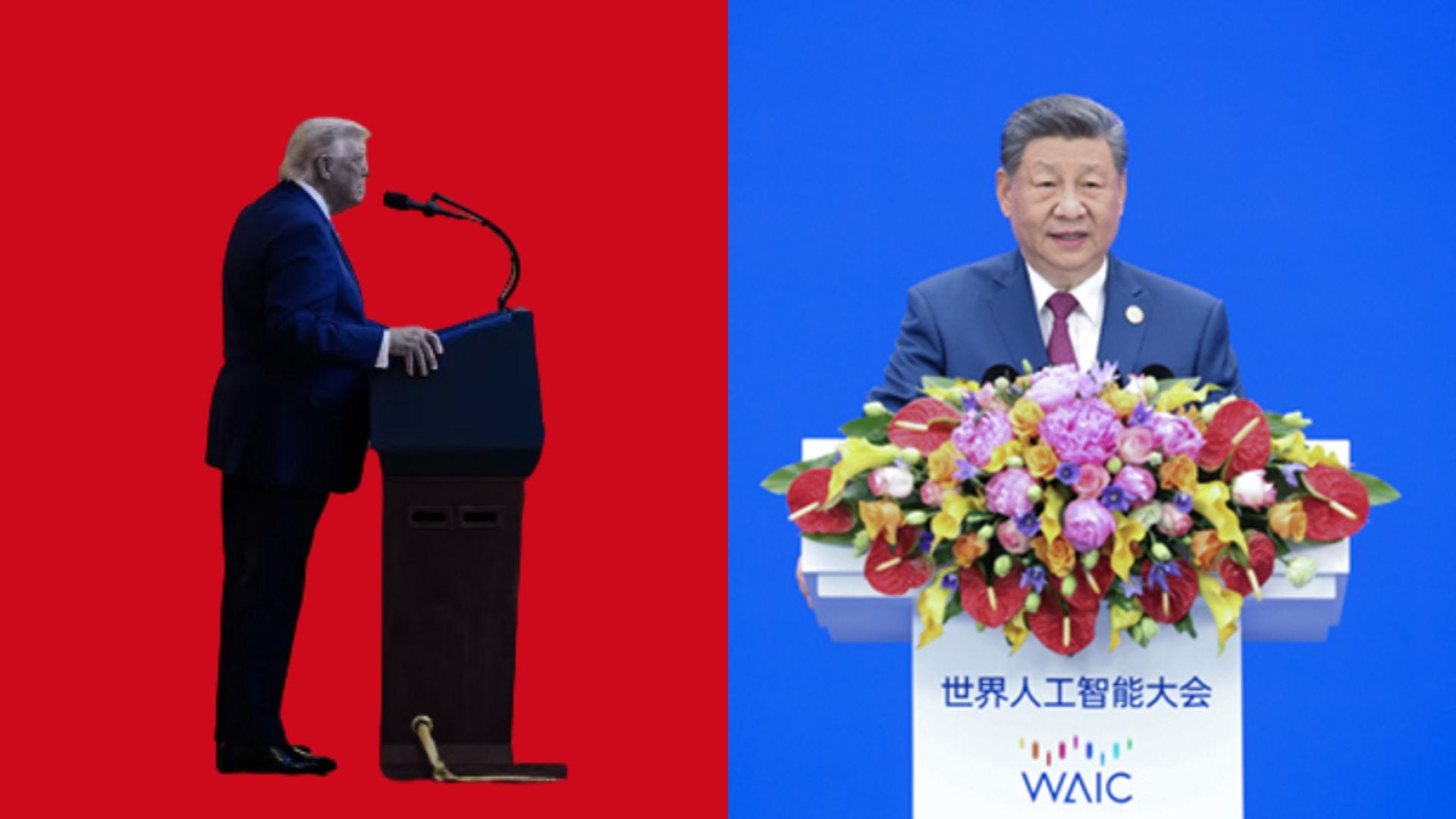
Chairman Xi was expanding Chinese multilateralism while President Trump was exacerbating American polarization. If American leaders do not change these trajectories, we will lose this new era of great power competition to the Communist Party of China.
Multilateralism with Xi Jinping Characteristics
China’s incredible rise over the last four decades owes much to its decision to work within and build upon the opportunities provided by the existing international economic and political order. Consequently, regarding the multilateral institutions created by the United States after the end of World War II—the United Nations, the World Bank, and the General Agreement on Tariffs and Trade (GATT), which later became the World Trade Organization—Xi and his comrades want to participate in them, not destroy them. Xi does not seek destruction of the old order; it’s been too good for Chinese interests. Instead, like all rising powers, Chinese leaders today seek to bend these old institutions to serve their interests better.
In parallel, however, Chinese leaders have created new multilateral organizations anchored by Beijing and independent from the old system anchored by Washington. The list of these new international confabs is long. It includes the Shanghai Cooperation Organization (SCO), the Regional Comprehensive Economic Partnership (RCEP), the Belt and Road Initiative (BRI), the Asian Infrastructure Investment Bank (AIIB), the New Development Bank (NDB), the Cross-Border Interbank Payment System (CIPS) and BRICS—the group of Brazil, Russia, India, China, and South Africa that expanded in 2023 to include Argentina, Egypt, Ethiopia, Iran, Saudi Arabia, and the United Arab Emirates.
Additionally, Beijing has created several region-based clubs that exclude the United States, such as the 17+1 (now 14+1, after the departure of three Baltic countries) in Europe, the Forum for China-Africa Cooperation (FOCAC), the China-Arab States Cooperation Forum (CACF), the China and the Community of Latin American States (China-CELAC), the Conference on Interaction and Confidence Building Measures in Asia (CICA), and the China-Central Asia Summit. Xi also has launched the Global Development Initiative (GDI), the Global Security Initiative (GSI), the Global Civilization Initiative (GCI), and the Global Governance Initiative (CGI). Starting new international organizations, as well as fostering win-win outcomes for those countries that join, is a conscious, deliberate strategy for advancing Chinese interests and influence around the globe.
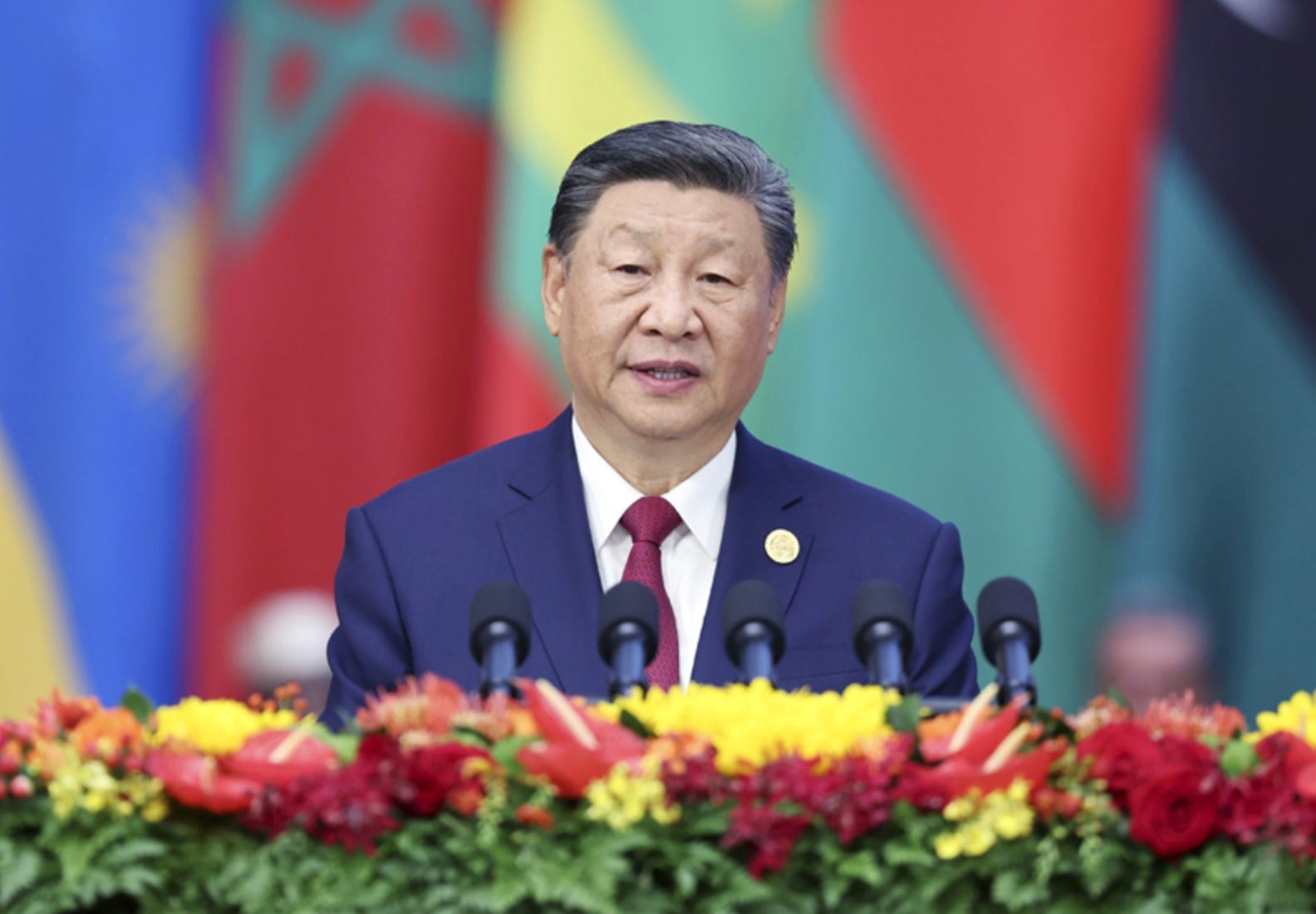
Last week, on 16 July, Xi launched one more international club: the World Artificial Intelligence Cooperation Organization (WAICO). Xi wants China to define the international rules of the road for AI, independent of the United States. Like many of the other multilateral organizations mentioned above, Xi targeted his pitch to join WAICO to the developing world, arguing that the Chinese model of development using AI offers greater opportunities for poorer countries than American approaches. At WAICO’s founding meeting last week, 29 countries signed the founding agreement, with more expected to follow. That same day, not coincidentally, the Chinese AI company Moonshot released Kimi K3, its new open-weight model (meaning developers can download, customize, and build on it). So far, it has performed as well as America’s leading frontier models but at a fraction of the cost.
Tragically, Trump has pursued the exact opposite strategy—exit old international organizations and agreements and not create anything new. In his first and second terms, Trump has quit the Transatlantic Pacific Partnership (TPP), the Joint Comprehensive Plan of Action (JCPOA)—sometimes referred to as the Iran nuclear deal—the Paris Climate Accords, the World Health Organization (WHO), the UN Human Rights Council (UNHRC), the UN Educational, Scientific and Cultural Organization (UNESCO) as well as six dozen other multilateral organizations, half of them affiliated with the United Nations. Trump is a militant unilateralist. He and his team believe that organizations such as the United Nations tie us down. He launched his war against Iran without even bothering to try to secure a UN Security Council resolution. In fact, he did not even consult, let alone seek a vote of support, from NATO (and then complained when NATO countries did not support his war with greater vigor). In imposing bilateral tariffs on almost everyone (except Russia), Trump also has radically assaulted the multilateral rules and norms governing trade.
To its credit, the Trump administration has initiated Pax Silica, the State Department’s flagship effort on AI and supply chain security. Twenty-two countries, as well as the European Union, have signed the document, which aims to counter Chinese dominance and ensure supply-chain security in this sector (Taiwan participates as a non-signatory). But that’s it. As China builds more multilateral networks, clubs, and organizations, Trump is withdrawing from or ignoring existing ones and not building new ones at the pace Chinese leaders are.
Global public opinion polls underscore the damage these policies are doing to America’s reputation. According to the Alliance of Democracies’ 2026 Democracy Perception Index, the United States is now among the five most negatively perceived countries in the world, alongside Israel, Iran, Afghanistan, and North Korea. Respondents in 63 of 83 countries polled said that they viewed China more positively than the United States. Those findings align with a Pew Research Center survey published last week. For the first time since Pew began tracking these attitudes, its survey found that the People’s Republic of China was viewed more favorably than the United States in most of the 36 countries surveyed. Even traditional American allies—including Canada, Germany, France, and the United Kingdom—held a more favorable view of China than of the U.S. Just six countries—Israel, India, Japan, the Philippines, Poland, and South Korea—viewed the United States more positively than China.
Doubling Down on Polarization at Home
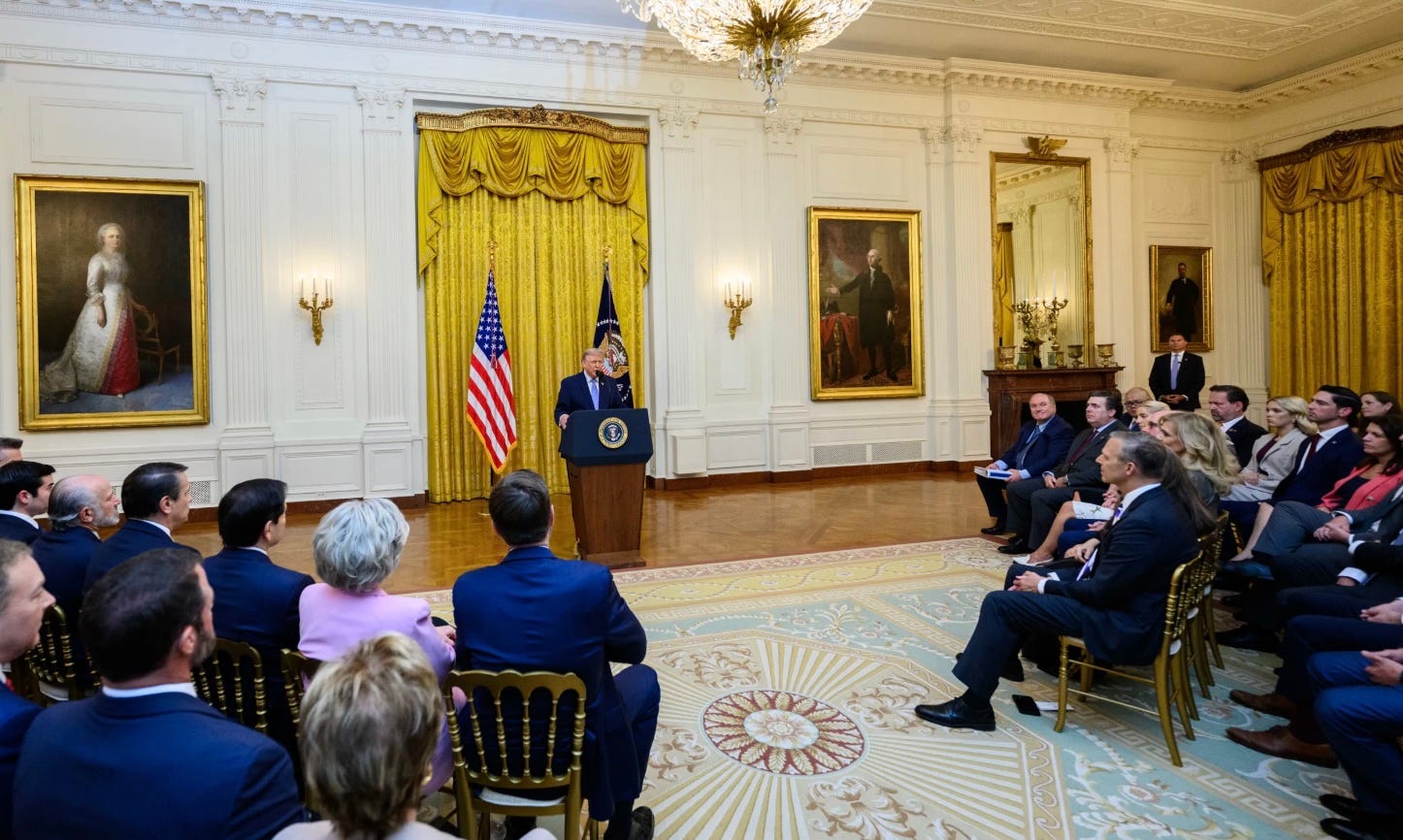
While Xi last week was launching another international organization allegedly to foster unity among countries, Trump that same week delivered a major speech aimed at increasing disunity among Americans. In addition to radical unilateralism abroad, deepening polarization within the United States is a new feature of our current era of great power competition. Trump is its driving force. He has refused to accept obvious political facts, including, most damagingly, his rejection of the 2020 presidential election results that culminated in one of the most tragic and polarizing events in America’s history: January 6, 2021. Six years later, Trump still refuses to accept the result of his 2020 loss. Last week he gave yet another speech—delivered from the White House in prime time—in which he again claimed that election victory was stolen from him. This time, he blamed the Chinese. And in that same speech, Trump made clear that he has plans to undermine free and fair elections in November 2026. Nothing would deepen polarization in American society more than another attempt to overturn the actual results in these midterm elections.
Public opinion polls show the damage of Trump’s polarizing policies. According to a March 2026 poll by Pew Research Center, 53% of U.S. respondents believed other Americans had bad morals or ethics. In other words, more than half of Americans questioned the moral character of their fellow citizens. This was the highest figure recorded across 25 countries—the corresponding figure for Canadians was just 7%! If such attitudes become entrenched, they risk eroding the sense of shared civic identity that underpins a vibrant democracy.
The good news is that these two dangerous trends of unilateralism and polarization are not irreversible. If future American leaders signaled a greater commitment to existing multilateral institutions and created new organizations to unite democracies further, then leaders and societies in the free world would applaud. Few people want to live in a world dominated by a hegemonic autocracy like China. Likewise, if future American leaders began to signal greater commitment to cooperation with American society, and even, dare I say, centrism, then our society could heal quickly. In 2025, according to Gallup, a “record-high 45% of U.S. adults identified as political independents” while “equal shares of U.S. adults—27% each—identified as either Democrats or Republicans.” A more united America, in turn, would be better able to meet the challenges posed by the autocratic great powers that threaten our security, prosperity, and values.
If, however, Trump and future leaders continue to go it alone abroad and fuel division at home, we will lose the 21st century to China. The split screen last week of Xi seeking to unite the world and Trump seeking to divide Americans was a bad one for those seeking greater unity at home and more focus on competing more effectively with China abroad. We can’t afford to have many more weeks like that one again.
No posts
Comments
Nothing yet. Say the first thing.
Sign in to join the conversation.