
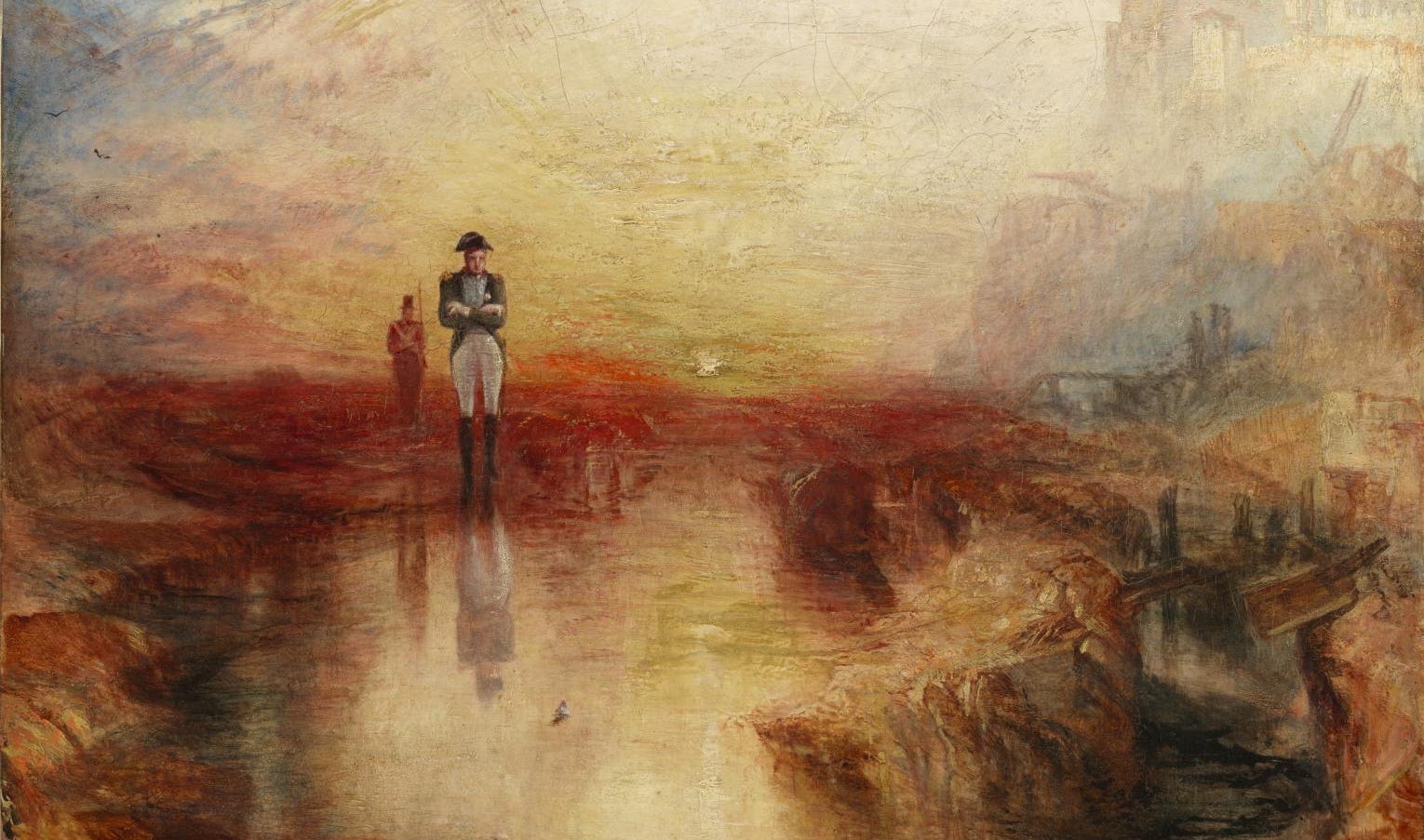
I’ve just finished Book One of War and Peace. I was expecting a story about generals and battlefields, but what I’ve found so far is a novel about social psychology. The novel begins not with bloodshed but with conversation: the glittering salons of St Petersburg, full of rehearsed smiles and cautious small talk. Tolstoy’s aristocrats live in a world of performance anxiety that feels recognizable today. Reading these scenes, I found myself thinking of Erving Goffman, the sociologist who argued that all social life is theater and that we survive only by performing well enough not to humiliate ourselves.
Goffman was a mid-twentieth-century sociologist best known for his 1956 book The Presentation of Self in Everyday Life, one of the most influential works in modern social theory. The book argues that ordinary interaction works like a performance. Every person presents a carefully crafted version of themselves in social encounters, shaping what others see and how they respond. Goffman called this process “impression management,” and he used theatrical language to describe it. Social life takes place on a “front stage,” where people perform for an audience, while the “back stage” is the private space where they can drop the act. These performances aren’t malicious or false; they’re the mechanism that holds society together. Most of social life is a constant, quiet negotiation to help one another save face.
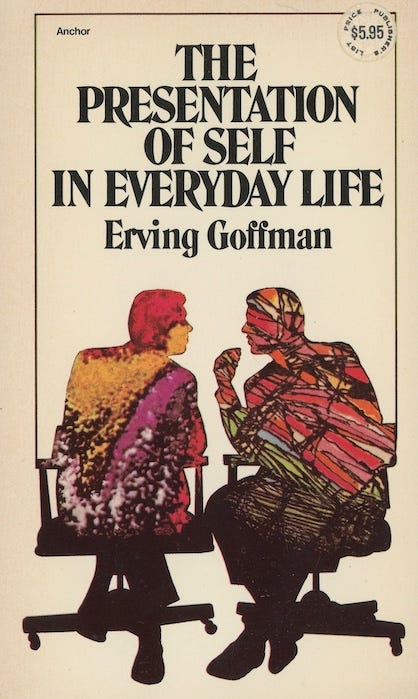
Anna Pavlovna’s salon in Book One of War and Peace is a perfect stage for seeing Goffmann’s theory in action. The Petersburg aristocrats who gather there in the first chapter behave like actors who’ve played the same parts for too long. Anna Pavlovna, the hostess, directs the evening with the authority of a stage manager; Prince Vasíli Kurágin flatters and dissembles with professional ease. Even the guests’ opinions about Napoleon serve as props, carefully arranged to signal loyalty to the tsar. The whole event runs on mutual pretense. And when Pierre Bezúkhov arrives and says what he really thinks — that Napoleon is a genius — it’s not simply a political blunder, but a collapse of the social order. Pierre’s mistake is to forget that he’s in a play.
For Goffman, this is how embarrassment works: it’s a performance error. The embarrassed person reveals something that shouldn’t be seen, namely, the unfiltered self behind the part. Pierre doesn’t know how to manage his front stage. His honesty makes everyone else uncomfortable because it exposes their dishonesty. Tolstoy makes this dynamic visible without analysis.
What War and Peace shows, before Goffman gives it language, is how fragile the moral ecology of social life really is. Civilization depends on small performances of respect, and yet those performances can easily become empty rituals. Tolstoy’s Petersburg is a world that runs entirely on them. What counts as grace or tact is often just fear of humiliation. To Goffman, that’s not a moral failure; it’s a condition of social order. But Tolstoy doesn’t share the sociologist’s detachment. When Pierre “forgets his lines,” Tolstoy treats it as both comic and redemptive. His blunder is a glimpse of what truth might look like if we stopped pretending to be reasonable people.
Later, Tolstoy turns his attention to Moscow and to the Rostóv family. Their home is a kind of moral antithesis to Anna Pavlovna’s salon. The Rostóvs laugh too loudly, interrupt one another, and say what they think. They are incapable of maintaining a front. In Goffman’s terms, their “back stage” is always showing. Tolstoy admires them precisely for that. He prefers clumsy sincerity to elegant deceit. There’s an interesting tension here. For Goffman, the Rostóvs would represent a temporary suspension of the usual rules — a small, trusting circle in which people agree not to take offense. But Tolstoy treats them as something more radical: a vision of moral authenticity, a society that doesn’t need to act.
Of course, this vision cannot last. The Rostóvs’ warmth is genuine, but it thrives only within the safety of their household. Their generosity endures because they never calculate what it costs them, which is also what makes it fragile. Pierre’s honesty, too, carries its own kind of ruin. It is morally admirable but socially disastrous. Even Tolstoy seems to sense that a world without performance would quickly collapse. He loves sincerity, yet he understands that civilization survives only because we have learned how to pretend.
Both Tolstoy and Goffman take the self to be relational rather than solitary. We do not possess a fixed identity; we acquire one through our interactions with others. In this sense, both treat personhood as a social achievement. But their views part sharply. For Goffman, there is nothing behind the role. The self is the sum of its performances, a shifting pattern of managed impressions. Tolstoy refuses this conclusion. He believes that performance conceals, and sometimes reveals, something real — a moral core, a soul that can still be glimpsed through the cracks in the mask.
This is why Tolstoy’s depictions of failure are so moving. For him, failure is what moral truth looks like in a social context. When Pierre stumbles or Natasha bursts into tears, the performance breaks down, and for a moment something genuine shines through. Goffman would describe this as a breach in the “interaction order,” a temporary exposure of what must normally remain hidden. Tolstoy calls it grace. His version of redemption is always social: it arrives when someone stops performing long enough to see and be seen as they really are.
Reading War and Peace with Goffman in mind reveals how sharply Tolstoy grasps the social mechanics of human life. His interest is not only psychological but sociological. He exposes the invisible rules that make conversation possible, the small adjustments of tone and gesture that protect people from humiliation. His real subjects in Book One are not war and peace but decorum and shame. The drawing rooms of St Petersburg operate through careful rituals of impression management, and the smallest social misstep can feel catastrophic. Tolstoy anticipates Goffman’s insight that meaning depends less on inner motive than on how people collectively maintain appearances.
Yet the difference between them could not be greater. Goffman writes as a detached observer, describing performance as an unavoidable condition of social life. Tolstoy writes as a moralist who cannot decide whether to pity or redeem his performers. He longs for a moment of unmasked being, though he knows that longing itself is a kind of performance. For him, authenticity remains a moral ideal, however fragile; for Goffman, it is an illusion produced by the very acts that sustain it. Tolstoy’s salons are alive with pretense, but he never gives up the hope that behind the masks something true might still be seen.
No posts
Comments
Nothing yet. Say the first thing.
Sign in to join the conversation.