

I would like to highlight a piece I recently coauthored with one of my mentees, Nicole Sears NP, in Psychiatric Times. It is a qualitative description of a compelling clinical observation that has emerged from our experience treating more than 100 patients with xanomeline/trospium (XT; Cobenfy) in an acute inpatient setting.
Readers of this newsletter have seen this story develop over time. When I first wrote about our experience with Cobenfy, I described it as a “lightbulb” phenomenon. Meaning, in a subset of patients, often with prominent negative symptoms, the response seemed qualitatively different from what I was accustomed to seeing with conventional antipsychotics. Patients who had appeared profoundly withdrawn and disengaged became more socially connected, spontaneous and thoughtful. In some cases, the change occurred over just a few days.
I subsequently tried to quantify some of this in a paper that was later published in Nature Mental Health. The upshot is that negative symptoms were the strongest predictor to an XT response. It’s important to note that a response here isn’t necessarily limited to an improvement in negative symptoms, but it’s an aggregate clinical impression of the patient’s status, which would include things like positive symptoms burden and overall function.
That work was interesting to me in the context of precision psychiatry, because many patients showed no clear response within the window of evaluation. I have argued previously that one of the most useful ways to subdivide psychiatric illness may be through treatment response itself. If patients who look similar respond differently to medications, those differences may tell us something about the underlying structure of their illness (of note, this is not always true, as there could be simpler explanations related to how the particular drug is metabolized in different people, so this is a caveat). Nonetheless, the arrival of Cobenfy makes the potential for precision psychiatry especially interesting because it provides a unique pharmacological ‘knob’ and potentially help with stratification or subtyping.
But the quantitative paper could only capture part of what was observed. In a subset of responders, there is a striking change that several clinicians have independently described as a Cobenfy “clearing” or “awakening.” I think what everyone means by that is that, some patients become more socially engaged and spontaneous, but there can also be an apparent change in how clearly they think and reason. Although not exactly the same, the closest thing that comes to mind is Awakenings by Oliver Sacks, which was made into a feature film by Robert De Niro and Robin Williams.

I recommend watching this movie. It’s good. I also recommend reading the piece, which I pasted below for convenience.
Author(s)Nicole C. Sears, NP, Michael M. Halassa, MD, PhD
FDA approval in late 2024 established xanomeline/trospium as the first nondopaminergic schizophrenia treatment, leveraging M1/M4-preferring muscarinic agonism to address symptom domains refractory to D2 blockade.
Quantitative inpatient experience identified negative symptoms and stimulant-use history as response predictors, whereas intellectual disability signaled lower likelihood of benefit, supporting phenotype-stratified prescribing.
Real‑world inpatient use of xanomeline/trospium shows rapid awakening from negative symptoms in schizophrenia, with response predictors and striking case insights.

Anthony Mujica Viera/AdobeStock
Over the past year, we have treated over 100 patients with xanomeline/trospium (Cobenfy; formerly known as KarXT, referred to as XT in this article) in our acute inpatient setting, a large community hospital predominantly serving individuals with chronic and treatment-resistant conditions. Here is what we found.
The US Food and Drug Administration approval of XT in late 2024 introduced the first nondopaminergic treatment for schizophrenia. As an M1/M4-preferring muscarinic receptor agonist, this medication offers a mechanistically distinct approach to managing psychotic disorders. In theory, a different mechanism could be particularly useful for patients who show inadequate responses to traditional dopamine receptor 2 (D2)–targeting antipsychotics.
The findings from 2 phase 3 EMERGENT trials of XT demonstrated significant reductions in overall symptoms of schizophrenia as well as major domains, including positive and negative symptoms,1,2 but these results, although promising, represent group data that limit understanding of the degree to which XT has differential efficacy. As we await more definitive evidence-based data, we report here on our clinical experience prescribing XT in an acute psychiatric inpatient setting to share our observations.
Quantitative analysis of the clinical experience in our acute inpatient setting identified specific predictors of response.3 Patients with prominent negative symptoms showed the most robust improvements, as did those with histories of stimulant use. Conversely, patients with intellectual disability demonstrated markedly reduced responsiveness. Although the last observation should be interpreted with care given the low number of patients in this category, these findings generally align with emerging evidence that psychotic disorders represent biologically heterogeneous conditions requiring targeted, phenotype-specific interventions.4
The quantitative analysis involved identifying patients who responded to XT vs those who did not, based on routine clinical assessment. When we initially started administering XT, we were guided by 3 criteria: (1) residual psychotic symptoms despite adequate treatment with traditional antipsychotics, (2) prominent negative symptoms unlikely to respond to traditional antipsychotics, and (3) intolerance to traditional antipsychotics (in the form of extrapyramidal symptoms, excessive sedation, etc). Among such patients, approximately 40% were responsive.3 Importantly, enriching a subsequent cohort on the basis of identified features resulted in near doubling of response rate, highlighting the potential utility of such a precision stratification approach.3
Here, we build on this foundation and report on our qualitative experience using an illustrative case report. Secondary analysis of the three 5-week EMERGENT trials reported that, in a subset of patients, XT demonstrated a significant impact on cognitive symptoms, particularly when looking at patients with cognitive performance at pretreatment baseline more than 1 SD below the mean.5,6 We have directly observed this in our patients and discussed similar anecdotal reports with several colleagues: a clinical phenomenon referred to as XT clearing or awakening. This pattern is characterized by unusually rapid emergence from profound negative symptoms in patients who were withdrawn, had flat affect, and had cognitively dulling who suddenly demonstrated social engagement, future-oriented thinking, and restored spontaneity shortly after the institution of XT. We estimate this to be more than 50% of patients who had positive responses to XT treatment in our selected cohort. The speed and quality of these responses suggest XT may be revealing preserved cognitive and social capacities that had been masked by illness (and/or by D2 receptor blockade) rather than gradually restoring lost function.
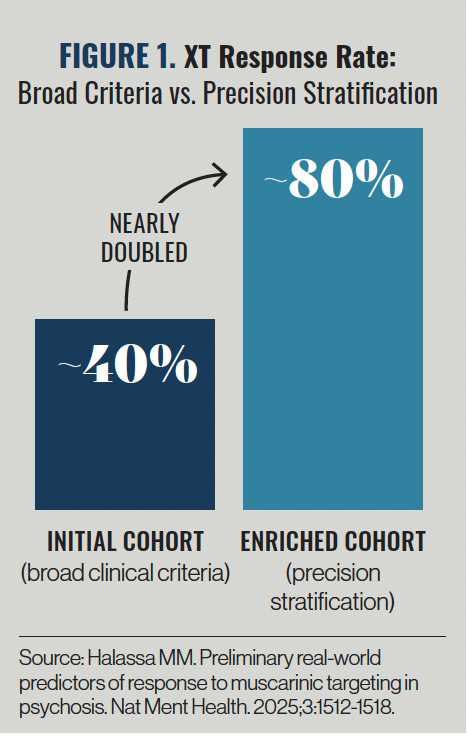
FIGURE 1. XT Response Rate: Broad Criteria vs Precision Stratification
Periods of clinical improvement were observed in the 1990s with the introduction of second-generation agents.7,8 Weiden and colleagues described improved functional outcomes and the emergence of psychological adjustment reactions as patients stabilized on newer medications. These reports emphasized the need for clinicians to anticipate emotional and behavioral changes accompanying recovery. However, they did not characterize a consistent pattern of rapid, within-days restoration of social engagement and goal-directed thinking in patients who were severely withdrawn. Our observations differ in the speed and qualitative nature of the response, occurring shortly after initiation of XT and often in individuals who had had failure with multiple dopamine-targeting treatments. Perhaps the closest qualitative pattern to our observation is what was depicted by Oliver Sacks’ work with levodopa.9
“Mark,” a 34-year-old man with a clinical diagnosis of chronic schizophrenia and prominent negative symptoms, was admitted to our inpatient unit following multiple failed trials of second-generation antipsychotics. During this hospitalization, he was initiated on clozapine due to persistent functional withdrawal and limited response to prior treatments. At baseline, he was socially isolated and minimally engaged, requiring prompting for basic activities of daily living and spending most of his time alone in his room or watching television.
Over the subsequent 2 weeks of hospitalization, the clinical picture deteriorated markedly. Despite trials of multiple antipsychotic combinations, Mark became increasingly withdrawn. He would not leave his room and refused to shower or engage with staff. When nursing staff attempted engagement, his responses became monosyllabic, at most 3 to 4 words. By this point, he had received olanzapine to address acute decompensation upon admission and clozapine for more effective symptom management, but without benefit.
Three weeks into his admission, we decided to simplify his regimen and switch over to a long-acting injectable formulation given concerns about nonadherence. We therefore cross-titrated olanzapine to risperidone 2 mg twice daily and decreased clozapine to 150 mg daily. This process took a week, after which we were convinced that Mark’s negative symptoms and overall functional status had not been touched by any of these medication changes.
Therefore, at that point and while he continued risperidone 2 mg twice daily and clozapine 150 mg daily, we added XT at the starting dose of 50 mg/20 mg twice daily, instructing nursing staff to make sure it was given outside of meals. We are fully aware that XT is recommended as monotherapy and that its combination with clozapine and risperidone is considered off-label. However, given the gravity of the situation, the trade-off appeared favorable and was thoroughly discussed with the patient to ensure informed consent.
Mark’s medication adherence remained inconsistent over the next day but stabilized by the second day. By the third morning, nursing staff immediately noted a dramatic transformation. He was spontaneously out of his room, appropriately dressed and groomed. Most strikingly, he agreed to meet with his treatment team, something he had refused for weeks. He appeared fundamentally different: He made direct eye contact, smiled, and engaged in conversation. The staff repeatedly asked us, “What did you do?” The contrast was stark; a patient who had been on the verge of requiring physical restraint, unable to pull himself from bed, was now pleasant, cooperative, and able to advocate for his needs.
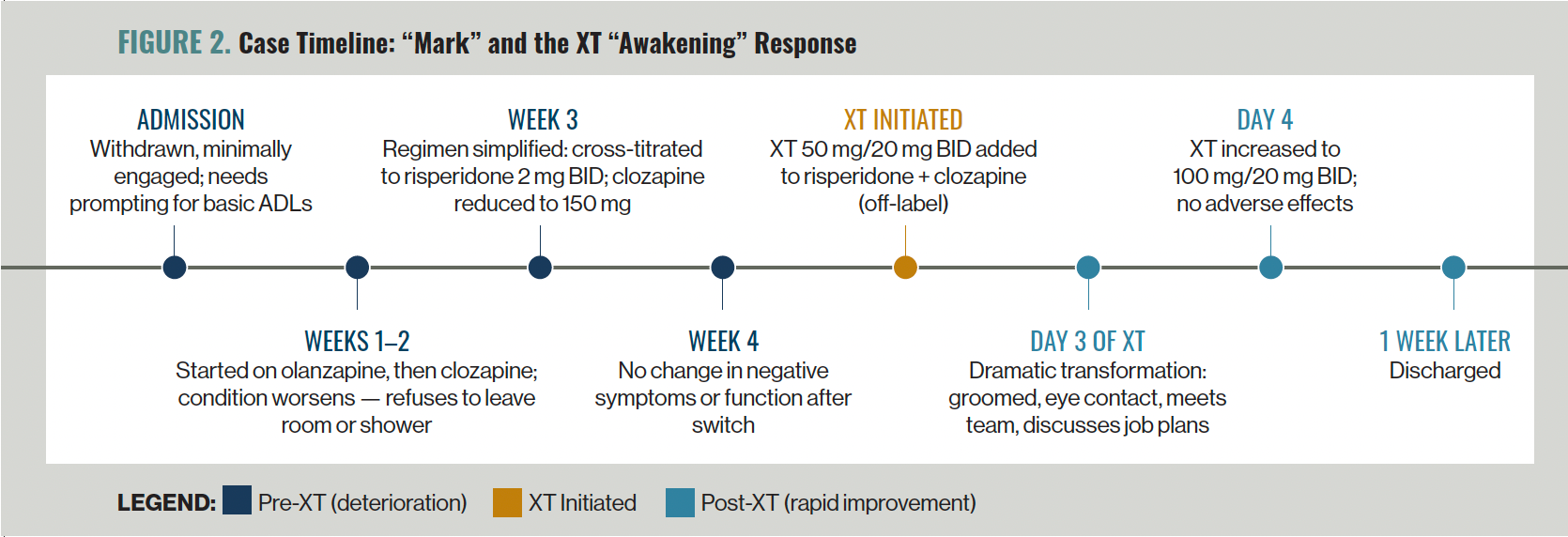
FIGURE 2. Case Timeline: “Mark” and the XT “Awakening” Response
The quality of the conversation was remarkable. His thought process was clear and linear. He spontaneously explained that he had difficulty attending groups because he was claustrophobic and disliked feeling closed in with many people, an insight that demonstrated both self-awareness and capacity for abstract reasoning. When asked about his stated goal to “get a hobby, maybe a job,” he elaborated: He was considering working at a grocery store, bagging groceries or gathering carts, because he thought he would do well in that environment without feeling overwhelmed. This represented future-oriented thinking in the form of practical, grounded planning, which was completely absent just days earlier.
The response was sustained. He was continued on XT, increased to 100 mg/20 mg twice daily, with no reported adverse effects. He was discharged 1 week later. This case exemplifies the awakening phenotype: rapid emergence from profound negative symptoms, revealing preserved cognitive and social capacities that had been masked by illness. There is also the temporal relationship, deterioration despite adequate antipsychotic trials, then rapid response within 72 hours of consistent XT administration, which we had seen in many of the other cases. This pattern strongly suggested a specific effect on negative and possibly cognitive symptoms rather than simple resolution of positive symptoms.
This case illustrates XT’s capacity to produce rapid, clinically meaningful improvements in patients with prominent negative symptoms, a domain historically resistant to pharmacologic intervention. The awakening phenotype we observed shares key features: rapid onset (typically 48-96 hours), transformation in social engagement and spontaneity, and emergence of future-oriented cognition.
These observations must be interpreted within limitations. Our cases represent select patients in an acute inpatient setting where negative symptoms were sufficiently prominent to warrant an XT trial. The concurrent use of other medications, although reflecting real-world practice, complicates attribution of specific effects. Nonetheless, the consistency of the awakening pattern across multiple patients, the rapid temporal relationship to XT initiation, and the alignment with our larger quantitative analysis strengthen confidence in these observations.
In our experience, XT represents a meaningful advance for patients with negative symptom–predominant psychotic disorders. The awakening phenotype—rapid restoration of social engagement, spontaneity, and goal-directed thinking—suggests this medication can reveal preserved capacities in patients who appeared treatment resistant to D2 receptor antagonist approaches. Despite all the limitations of case reports and clinician observation, we feel it is very important to share this experience, which at this time offers a qualitative experience that was beyond the scope of the phase 3 clinical trials.
Ms Sears is a psychiatric-mental health nurse practitioner in the Psychosis Disorders Unit at Fuller Hospital in Attleboro, Massachusetts.
Dr Halassa is a professor at the Fralin Biomedical Research Institute at Virginia Tech, with appointments in psychiatry and behavioral medicine at the Virginia Tech Carilion (VTC) School of Medicine and in biomedical engineering at the College of Engineering. He is the inaugural faculty member of the Virginia Tech Patient Research Center at VTC, where he conducts patient-based research alongside his laboratory program. He is also a board-certified psychiatrist and maintains an active clinical practice treating patients with severe psychotic disorders.
References
1. Kaul I, Sawchak S, Correll CU, et al. Efficacy and safety of the muscarinic receptor agonist KarXT (xanomeline-trospium) in schizophrenia (EMERGENT-2) in the USA: results from a randomised, double-blind, placebo-controlled, flexible-dose phase 3 trial. Lancet. 2024;403(10422):160-170.
2. Kaul I, Sawchak S, Walling DP, et al. Efficacy and safety of xanomeline-trospium chloride in schizophrenia: a randomized clinical trial. JAMA Psychiatry. 2024;81(8):749-756.
3. Halassa MM. Preliminary real-world predictors of response to muscarinic targeting in psychosis. Nat Ment Health. 2025;3:1512-1518.
4. Halassa MM, Frank MJ, Garety P, et al. Developing algorithmic psychiatry via multi-level spanning computational models. Cell Rep Med. 2025;6(5):102094.
5. Sauder C, Allen LA, Baker E, et al. Effectiveness of KarXT (xanomeline-trospium) for cognitive impairment in schizophrenia: post hoc analyses from a randomised, double-blind, placebo-controlled phase 2 study. Transl Psychiatry. 2022;12(1):491.
6. Horan WP, Sauder C, Harvey PD, et al. The impact of xanomeline and trospium chloride on cognitive impairment in acute schizophrenia: replication in pooled data from two phase 3 trials. Am J Psychiatry. 2025;182(3):297-306.
7. Weiden PJ, Aquila R, Standard J. Atypical antipsychotic drugs and long-term outcome in schizophrenia. J Clin Psychiatry. 1996;57(suppl 11):53-60.
8. Weiden P, Scheifler P, Diamond R. My patient is better: now what? part I: managing psychological reactions. J Psychiatr Pract. 1998;4:175-181.
9. Sacks O. Awakenings. Gerald Duckworth & Co Ltd; 1973.
This observation has also become more interesting in light of what is happening with the broader muscarinic drug class. As I discussed recently in The Dawn of the Muscarinics, MapLight’s M1/M4 program has now produced an intriguing cognitive signal that resembles what had previously been observed with KarXT. In both programs, cognitive improvement appears at least partly separable from improvement in psychotic symptoms.
Whether those controlled cognitive findings have anything to do with the clinical “clearing” we are seeing remains to be determined. But it’s something the field should be pursuing. If a recognizable clinical and cognitive phenotype preferentially responds to muscarinic treatment, then treatment response itself can begin to reveal clinically meaningful subtypes within schizophrenia.
This is where the opportunity may be particularly interesting. We now have a new pharmacological knob to turn, and potentially several more muscarinic compounds coming behind it. Rather than asking only whether these drugs work on average, we can ask which patients respond and what exactly changes when they do, and whether those patterns generalize across compounds targeting the same system.
If they do, the “awakening” may turn out to be more than an unusual clinical observation. It may be an early glimpse of how new drug mechanisms can help us carve schizophrenia at its biological joints. That would move precision psychiatry for psychotic disorders from describing heterogeneity to engineering new treatment pathways.
If you liked this piece, please consider liking it and sharing it with your network. To become part of the conversation, you can hit the subscribe button.
No posts
Comments
Nothing yet. Say the first thing.
Sign in to join the conversation.