
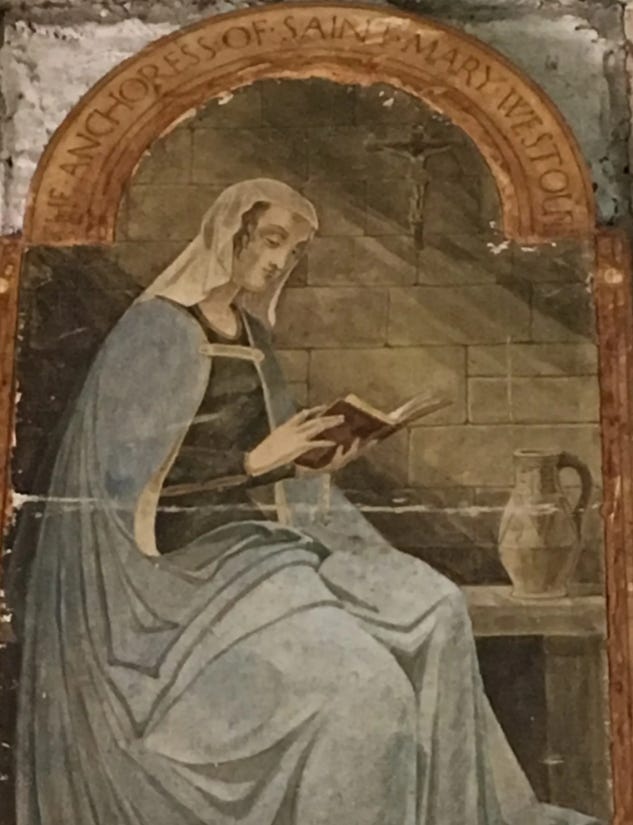
What would she have grown in this small high-walled garden with no way out?
The space would have been no more than a few square feet in size; one step and she was across to the other side.
The sun would have been a fleeting visitor requiring a high degree of skill to encourage anything to thrive.
Having said that, she had plenty of time for trial and error in this world.
As for the next? Well that would take care of itself she was assured.
Without the slightest evidence, I see her experimenting with the Eye of Christ, clary sage, used in Medieval times as a wash to improve vision.
If she was lucky perhaps after a few years, Salvia sclarea, would, reaching for the light, grow to four feet, its lilac blooms illustrating the beauty of all God’s creations.
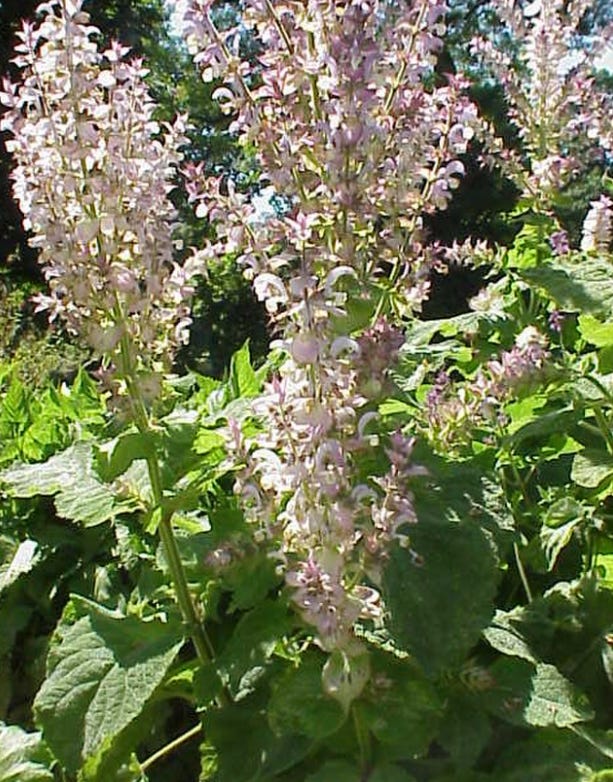
Despite the shade, maybe other herbs might be nurtured in this miniscule physic garden, possibly comfrey, tansy or feverfew, for this woman would have been asked by locals for advice on ailments.
I ponder these questions as I walk the footprint of the church, peering through windows trying to get a better view.
I hadn’t realised when I took the train for this horticultural pilgrimage that the building was only open for services and closed the rest of the time for ‘safety reasons’.
In a way it was fitting for the subject of my attention, a temporary obsession even, is a mystery. The records don’t even record her name.
I’ve come to see the cell of the Anchoress of St Anne’s Church in the town of Lewes, East Sussex.
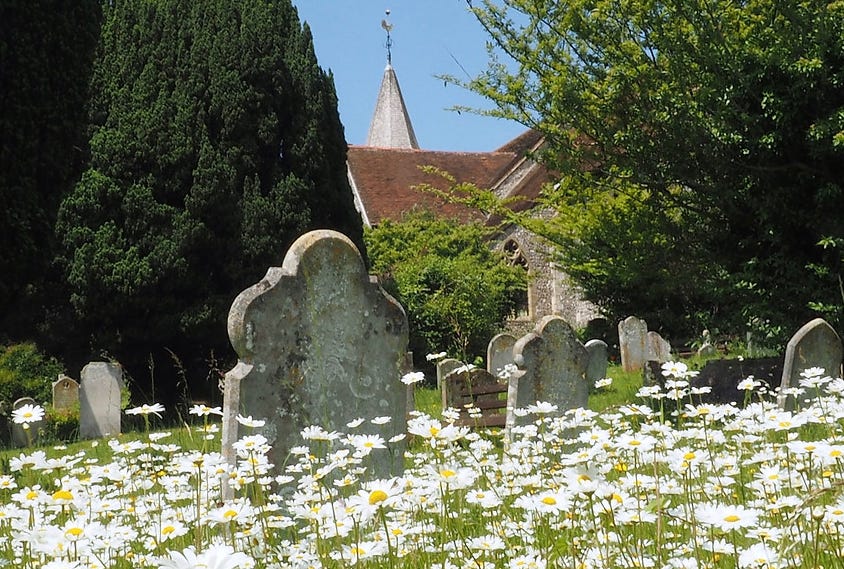
As she is not for helping me with my inquiries I sit on a low stone wall outside, the beautiful graveyard festooned with daisies, and open my notebook to consider my rudimentary research so far.
Imagination will have to do the heavy lifting I think.
The anchoress lived in the thirteenth century. This we know because Richard, Bishop of Chichester and later the patron saint of Sussex, left five shillings to ‘the female recluse of the Blessed Mary of Westhoute’, a former parish name, in his will in 1253.
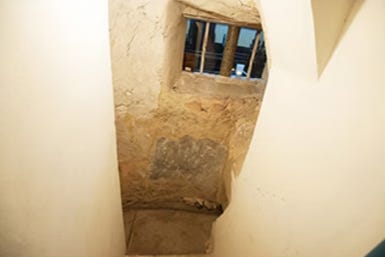
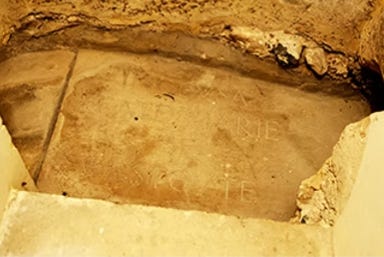
At some point on the verge of her adult life she had agreed to forgo the outside world and become walled in a cell, known as an anchorhold, in the foundations of the church.
This might have happened in a ceremony conducted by Richard himself .
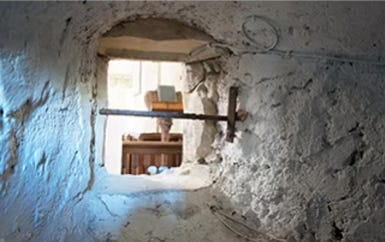
Her tiny cell had a window, called a ‘squint’, which allowed her to take part in religious services inside the church. There was no exit.
Anchorites, after the Greek meaning for ‘to withdraw’, is the collective name for people who removed themselves or, perhaps we should also say, were removed from society for intense solitary religious devotion.
There were only a few hundred existing at any one time in Medieval times, so the reaction of Sunday worshippers in Lewes to a pair of eyes gazing at them through a ground level gap in the stone wall can only be guessed at.
Our anchoress would have had access to a hatch for receiving food and it is thought very likely that the garden was attached to her cell. Most had one.
Life was constant prayer, service to God, tending her few plants, dispensing advice through the hatch, for her sacrifice would have been seen by locals as evidence of seer-like powers, even though church authorities discouraged this interference with solitude
Her reward at the end of life on earth was for her body to be buried under her cell as, guaranteed by a life in the embrace of the Holy Spirit, her soul rose to join the Heavenly Father. Her liminal space now finally left behind.
As I read this in my notebook, now sheltering under a graveyard hawthorn to escape the pounding sun, disquiet settled on me.
It was amplified by this jotted quote from the Ancrene Wisse, an anonymously written book, seen as the ‘How To’ guide for anchorites in the 12th Century.
In one section it warns against the ‘vanity’ of an anchoress simply staring at her white hands, suggesting instead they should be ‘scraping the earth up every day out of the pit they must rot in’.
One other duty for our anchoress, then, was to dig her own grave under her feet.
We are, of course, talking about a time more than 750 years ago of superstition, ignorance and mysticism, with the Medieval church holding a vice-like grip on the lives of the populace.
The gravitational pull of religion, with its promise of a better afterlife for the deserving, would have been as the king tide.
And for women, barred from any prominent and well-rewarded role in ecclesiastical hierarchy, there were few escapes from grinding poverty and often abusive marriages.
In this world of men it is perhaps no wonder that female anchoresses outnumbered male anchorites three to one.
It is not hard to see this walling up as another, extreme, form of control over the lives of women.
Was the writer of Wisse a man and would Richard himself have willingly gone into the tiny cell for the rest of his life? The answers, in order, are surely yes and no.
Later, waiting for my train home, I could not shake the image of the garden that had imprinted itself on my mind.
When freedom is denied and earthly possessions are few, how spirit lifting must a garden, no matter how small, be.
The first shoot breaking the soil, the first bud emerging from stem, the first bloom illuminating darkness represents hope, life.
As the train inched away I remembered a prisoner of our own times and his love for a garden.
‘A garden was one of the few things in prison that one could control. To plant a seed, watch it grow, to tend it and then harvest it, offered a simple but enduring satisfaction. The sense of being the custodian of this small patch of earth offered a taste of freedom.’
This was Nelson Mandela recalling, in his book Long Walk to Freedom, the pleasure gardening gave him when, after years of refusal, his jailers on Robben Island agreed to let him tend a small patch of land.
In the early 20th century many inner-city tenement slum dwellers in Britain, living in unimaginable squalor, adorned their tiny balconies with window boxes full of blooms of every colour. In a way they too lived in cells from which there was little prospect of escape.
I sometimes picture my anchoress tending her few herbs in the garden, looking to the sky for the sun that will give them life and to the Heavens that will bring her salvation.
Comments
Nothing yet. Say the first thing.
Sign in to join the conversation.