
Readers may be impatient to move on and discover how more recent societies — so familiar from classical recorded histories of ‘civilisations’ — will fit within my radical new conceptual schema. Yet longterm evolution never manifested in simply described discrete and discontinuous stages. The first society was a template for all future types of society, none of which can be satisfactorily understood without knowledge of their prior sociational logic and its simplified starting point. For that reason alone the first society deserves careful and perhaps even disproportionately detailed micro-attention relative to later types. All subsequent societies assumed various essential systemic characteristics of the first society, on whose base they experimented with new forms.
To repeat, the first society is defined by its individual differentiations, which take five different forms — sex, age, physique, personality, intelligence. Each individual at any moment in time is a unique body and mind ‘unit’ formed at the intersection of these five overlapping and potentially infinite combinations of biological traits, depending on the constitution, the context and the chronology of his or her home ‘group’.
The five differentiations at birth become manifested in three areas of action as human material labour, political labour and cognitive labour. Each of these three ‘labours’ is then implicated in a process of ‘governance’ applied in different proportions to three decision making mechanisms, which define the earliest credible ‘sociational’ modes of governance: individualisation, communalisation and coordination. (I have reduced the potential pre-sociational decision mechanisms to two: ‘dominating’ and ‘levelling’.)
All of the above should by now be clear in outline form. The topic I deal with now is as follows — When we try to assess the relative importance of the five ‘individualistic’ differentiations in terms of the magnitude of their impact on the three divisions of labour it suddenly becomes clear that the initial prehistoric priority must have been the application of a sex differentiation in the physical-material division of labour.
All three spheres of the division of labour required human action to be oriented toward finding optimal means to optimal ends. In the context of restricted time budgets the priority in most cases was attention given to divisions of material labour, especially the subcategory of food acquisition. However, it can also be discerned that these ‘material’ divisions were to some significant extent caused by innate cognitive-psychological sexual divisions, which, in turn, caused sexual political divisions. Men differed from women in empirically verifiable aspects of personality and intelligence as well as in physique. These innate cognitive sex characteristics impacted on people’s political roles whenever the group sat down once-a-day to make its decisions. In other words, the material, cognitive and political divisions of labour were interwoven.
In expositional terms it is understandably difficult for the social scientist to provide a succinct summary analysis while juggling five types of individual differentiations and three divisions of labor alongside each other. To get around the difficulty I approach the earliest sociational prehistory from three angles that correspond to three levels of social action — individual, coupled and grouped. In practical terms this means that the coupling process is effectively promoted in theoretical terms to a precursor category of relationship, preparing the ground for simultaneous sociation. Several of the core processes that characterise ‘sociation’ (i.e. society-formation) are found in embryonic form in the intimate male-female partnership, which is then scaled up to ‘society’.
In effect, we superimpose the individualistic-coupled-grouped relationships as topic headings within which to explore the individualistic differentiations which help shape the concrete divisions of labour. In the first society, three levels of human relationships (one person, two people, many people) encompass five intertwined forms of biological differentiation, plus three standard divisions of labour. This conceptual complex of levels, forms and divisions is subsequently replicated and improved upon in the three overlapping types of prehistoric society: individualistic, communalistic, coordinated.
It is worth keeping in mind that the first numbering and writing systems we know of, devised from about 3500 BC onwards in Sumer, began by naming the number 1 ‘man’ (geš), the number 2 ‘woman’ (min), and the number 3 (eš) ’many’. This great conceptual innovation occurred in the same region that preoccupies us today [see maps below].
Up next: Individualistic Material-Cognitive Sex-Labour Differentiation
My Theory & History of Society began chronologically on Substack in Sept 2025 with The Politics of Becoming Human. Research began in 2020. Extensive filings of all bibliographic academic material, draft proposals and new theoretical concepts are archived from 2022.
Reply to the email or HellerFiles@gmail.com. This publication is recorded for referencing and copyright under the ORCID publications ID https://orcid.org/0009-0006-0935-0826
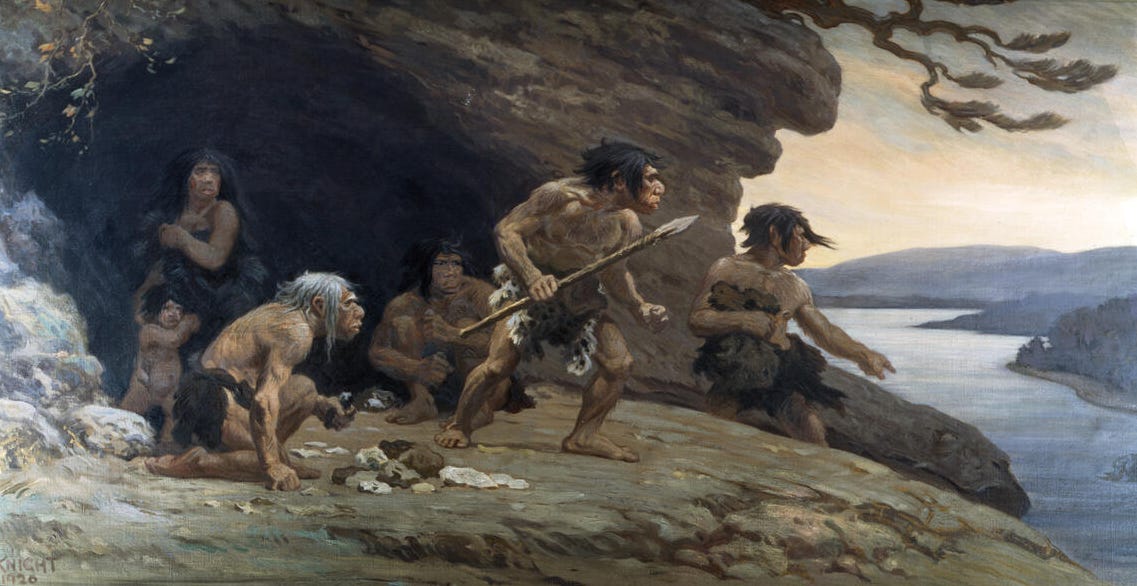
Neanderthal Flintworkers by Charles R. Knight, 1920 USA
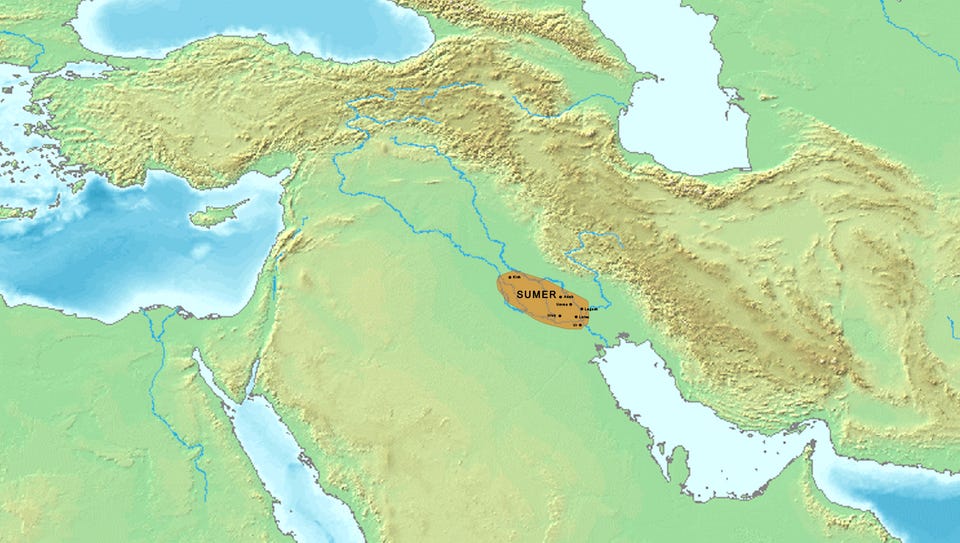
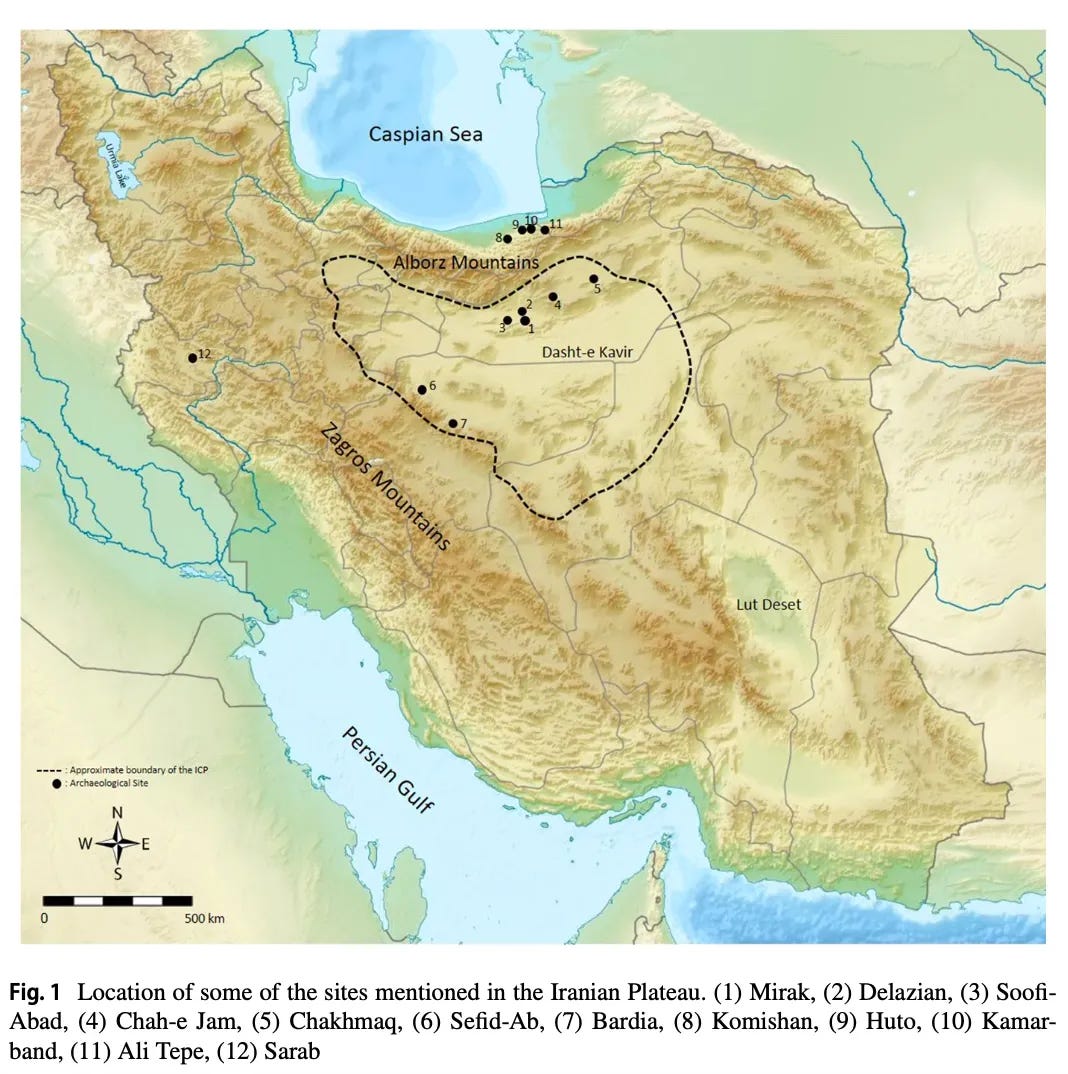
A ‘first society’ cave complex in the Zagros or Alborz mountains 20k-10k years ago
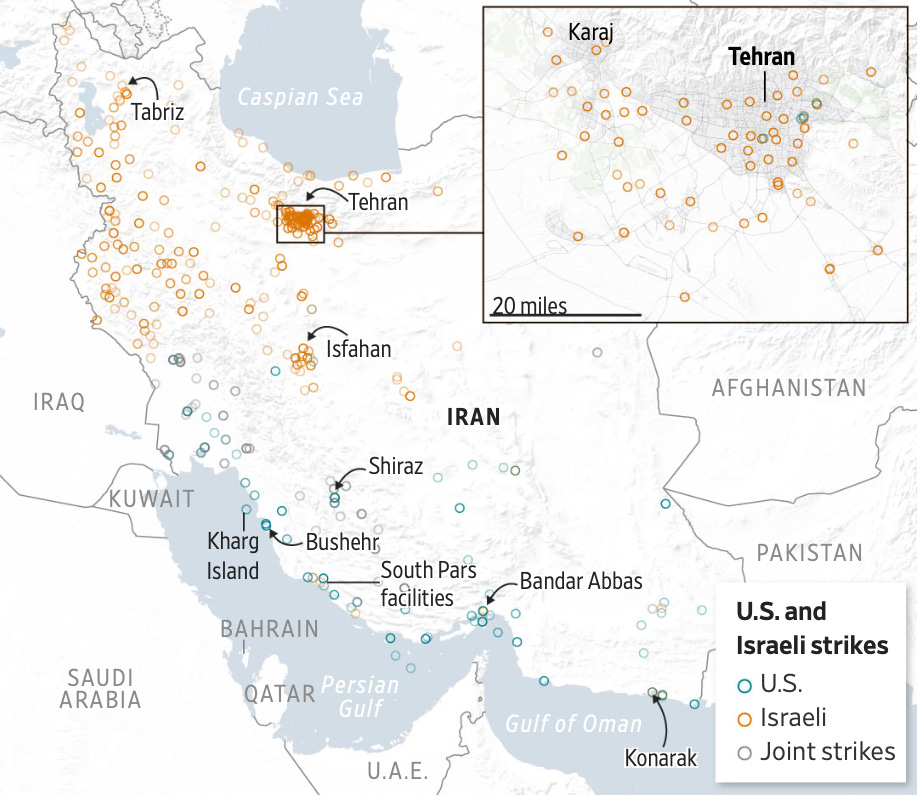
A 2026 Civilisational War as of March 18 Armed Conflict Location Data
Comments
Nothing yet. Say the first thing.
Sign in to join the conversation.