
To most Galileans and Judeans, Jesus, the son of Joseph and Mary, was entirely unremarkable.
Jesus did not walk around surrounded by a fog of incense. People who came upon him did not suddenly startle and stare as if mesmerised by the aura of his divine genius.
He was a peasant, an ordinary artisan, eking out of a living in the remote hillsides of Galilee like many people in the hundreds of hamlets that littered the countryside. Jesus could carry a pile of bricks through Sepphoris or walk through a village market with anonymity and blend seamlessly into the scenery.
A cursory look at the index of Josephus’ works shows that there were many men named Jesus (Yeshua) in the first century. Indeed, if someone had asked Josephus which of all the “Jesuses” mentioned in his work were the most interesting and most influential, Jesus of Nazareth might not even make the top five!
Jesus, son of Fabus (Phiabi) – a high priest whom Herod the Great removed from office around 23 BC.
Jesus, son of Sie – briefly served as high priest around 4–3 BC, replacing Eleazar ben Boethus.
Jesus of Nazareth – identified as "the Messiah," referenced in Antiquities 18.63–64 (the Testimonium Flavianum) and again in Antiquities 20.200 as "the brother of Jesus who was called Christ," James.
Jesus, son of Damneus – appointed high priest by King Agrippa II around AD 62–64, after Ananus had James executed.
Jesus, son of Gamala – succeeded Jesus son of Damneus as high priest around AD 64–65, and later played a role in the Jewish War.
Jesus, son of Sapphias – a leader in Tiberias in Galilee during the Jewish War (c. AD 66–67), described as head of a group of sailors and poor people, and one of the chief instigators of revolt in that city.
Jesus, son of Shaphat – leader of a band of brigands/bandits operating near Tiberias during the war (c. AD 66).
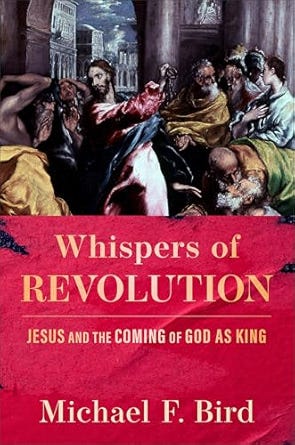
Read more below, or from Whispers of Revolution: Jesus and the Coming of God as King.
Comments
Nothing yet. Say the first thing.
Sign in to join the conversation.