
Most Americans — including President Donald Trump — have, until now, only a vague sense of where the unincorporated and unorganized territory of American Sāmoa sits on the map.
Yet a quiet bureaucratic decision to initiate deep‑sea mining processes there carries vast and dangerous implications for the wider South Pacific. This is not a bureaucratic footnote — it’s a rupture in Pacific ocean governance. And it is a particularly tragic division of the ancient Sāmoa ‘āiga potopoto or collective family.
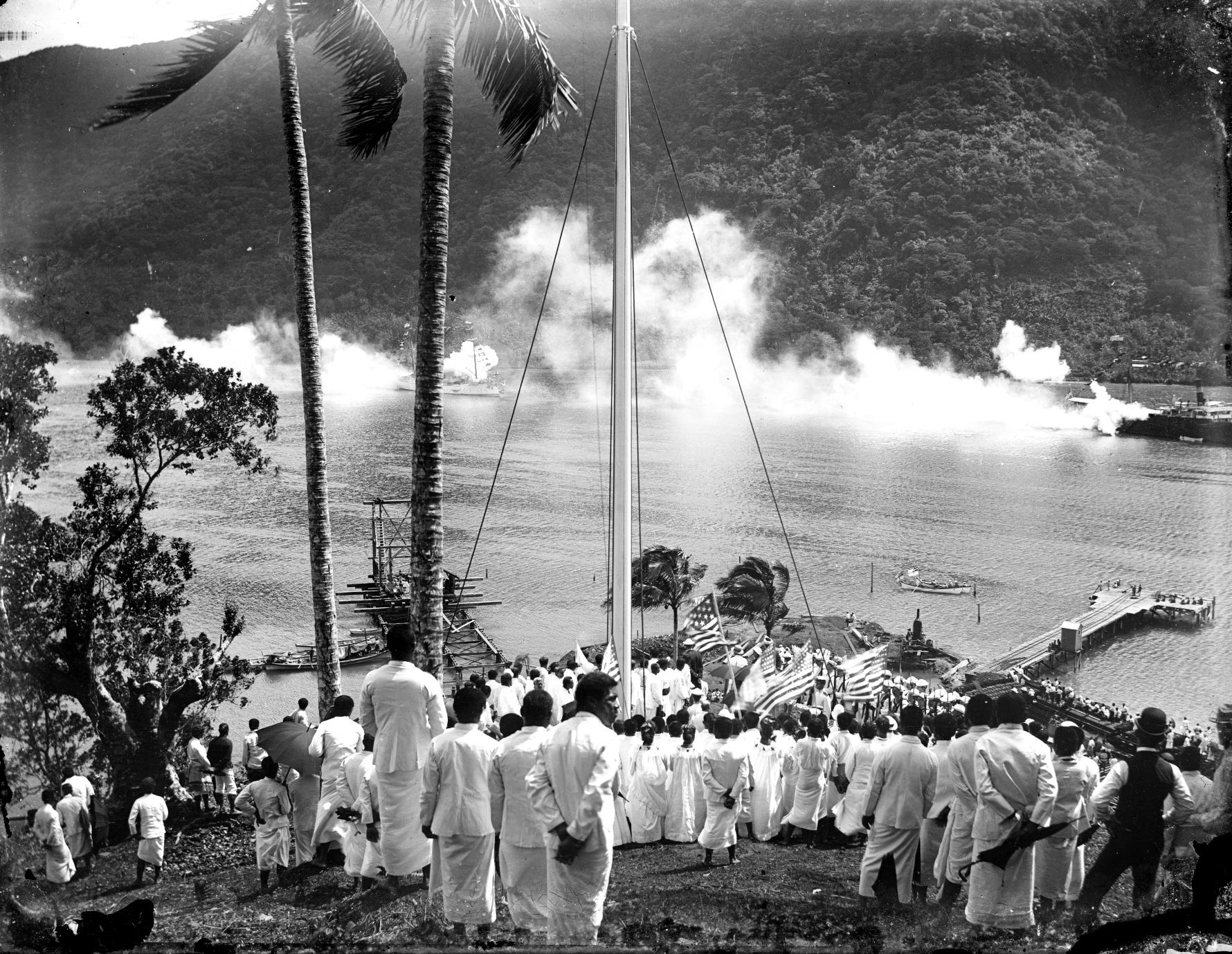
American Sāmoans, long among the most enthusiastic recruits to the U.S. military, remain U.S. nationals rather than citizens. And as Trump fires the starter’s gun on a nodules rush in the deep ocean, it’s worth recalling the words of Samuelu Sailele Ripley, whose family home in Pago Pago was seized by the U.S. Navy at the dawn of the 20th century. Ripley wrote to President Woodrow Wilson that God “never intended that the Sāmoan people should be exploited by the white race for personal gain…” Ripley worried about land, now it’s the ocean.

The Trump administration has announced plans for a lease sale covering nearly 127,500 square kilometres of American Sāmoa’s exclusive economic zone (EEZ), bordering the Cook Islands/New Zealand Realm EEZ. It marks an increasingly intensive — and potentially aggressive — American policy aimed at dominating South Pacific resources.
This is not just about minerals. It is about power, precedent, and who gets to decide the future of the Pacific Ocean.
Documents show Tokelau Losing Tuna Fortune
One “Sensitive” informal note, dated 19 December 2025, states that the Tokelau Government had advised Wellington that its participation in the PNA had been “abruptly terminated”. It continued: “This is a deeply concerning development that has significant implications for Tokelau’s fisheries management system and government revenue of about (figure redacted} per year. Fisheries is the only non-International Development Cooperation source of revenue for Tokelau.
The move comes as the Cook Islands, long insisting seabed mining could be environmentally safe, increasingly loses control to Wall Street over its own nodules ambitions. And, in a parallel decision encouraged by American Sāmoa’s non‑voting Republican Congresswoman Amata Radewagen, Trump has also opened tuna fishing around dreamy Rose Atoll — the southernmost point of the United States.
The mining decision comes after Trump’s executive order, “Unleashing America’s Offshore Critical Minerals and Resources”. The targeted minerals include polymetallic nodules, cobalt‑rich crusts, seafloor sulphides and phosphorites that contain cobalt, nickel, copper, rare earths, and other minerals essential for batteries, electronics, and defense systems.
Comments
Nothing yet. Say the first thing.
Sign in to join the conversation.