
While recovering from the semester, I’ve been revisiting a few ideas that have quietly followed me through the process of finishing my snare drum book.
The editing process itself has been the most illuminating. Aside from exposing my technical inaccuracies as both a writer and music engraver, editing has forced me to think more carefully about analogies, revision, and the strange structural overlap between writing and music-making.
The more I write, the better my percussion playing becomes. Not because writing teaches me how to play paradiddles, but because writing and music-making are learned through remarkably similar processes. Both rely on specificity, revision, style, feedback, experimentation, and structure. Both demand that we clarify our thinking. Both reward careful attention.
Determined to do ANYTHING except work on my book, I updated a post from a few years ago with more recent thoughts on these issues that have continued to tickle my mind through a book project and second book proposal.
What can writing can teach us about becoming better musicians? We start with style.
First, great performances and great writing are specific, transparent, opinionated, and stylistic. Strunk and White, whose Elements of Style is a model of clarity about writing and writing about clarity, agree. (Although, I prefer the illustrated Elements of Style). “The greatest writers…. are effective because they deal in particulars and report the details that matter.” They are “specific, definite, and concrete,” and “place themselves in the background.”
One of my favorite writers is Elmore Leonard, whose character-driven writing leaps off the page with efficiency and color. In Get Shorty, mobster Chili Palmer complains about a missing coat:
Mobster Chili Palmer, frustrated that his beloved coat has been sold, asks the concierge, “well, do you see a black leather jacket, fingertip length, like the one Pacino wore in Serpico? ‘Cause if you don’t you owe me three seventy-nine dollars.”
This is specificity! Not short: “fingertip length.” Not any cut—Al Pacino’s style. Not $400, $379. One paragraph tells us so much about the character. He's deliberate, methodical, thrifty, maybe a little crime-obsessed.
In fact, Travolta only agreed to do the film adaptation of Get Shorty if Leonard’s dialogue, which had been revised for the screen, was restored. (This was the revision: “Where's my coat? You better find it. It cost $400.” That’s as powerful as cream of wheat.)
You know what else is specific and transparent? The first phrase of Leon Fleisher’s recording of Beethoven’s Fourth Piano Concerto:
It’s Beethoven, not Fleisher. But Fleisher is pointing towards the most important ideas. The voicing, carefully regulated, that heavenly scale upward to a held breath. Strunk and White warn that “a single overstatement” can destroy the object of enthusiasm. Great performers understand this instinctively. Interpretation is not decoration layered on top of a piece. It is the careful shaping of attention.
Another set of examples both of Bach’s A Minor English Suite (BWV 807)
Leonhardt pushes and pulls with the rhythmic fabric of the music, but Bach’s counterpoint are crystal clear. It’s music of sentences: rhetorical, concerned with details, a wonderful story.
Here’s a VERY different version. Get ready, A is now 440 hz!
Bach’s counterpoint is invented in front of our eyes. Both have the imprint of Bach’s authorship, those twin virtues of clarity and accuracy.
Poetic/Conversational
Impactful/Easy
Accurate/Free
Stylistic/textual
These are the binaries that drive great performances and great writing, no?
Words and sounds both take on this nebulous concept of style. What is style?
A lot of people argue that style is the last step in the creative or recreative process, the peak of a pyramid which includes “must haves” like fundamentals at the bottom. An accent instead of a language.
Style can’t help a bad idea (I had a colleague who complained about our propensity as academics to “polish poop”) but style is not something to be added to the end of your project, “a garnish for the meat of the prose” as Strunk and White say.
Style frames a work within its historical context. Cervantes could not have written Don Quixote without understanding the literary conventions he was satirizing. The style is part of the meaning.
Before learning the first notes of a piece, performers should already have some sense of the sound world, the historical context, etc, the meta-text around the musical text.
Too often musicians begin at the atomic level, examining individual notes before understanding the larger shape they are constructing. We build the Lego bricks first and only later step back to see what we’ve assembled. “The first principle of composition,” Strunk and White argue (well, they don’t really argue so much as intone from on high), is to “foresee or determine the shape of what is to come and pursue that shape.” Beginning to learn a piece of music without an idea of where it might go is folly.
Style helps generate that representation. It tells us what kind of rhetoric the music contains, how sharply to articulate ideas, how much weight to give details, how the audience might encounter the work.
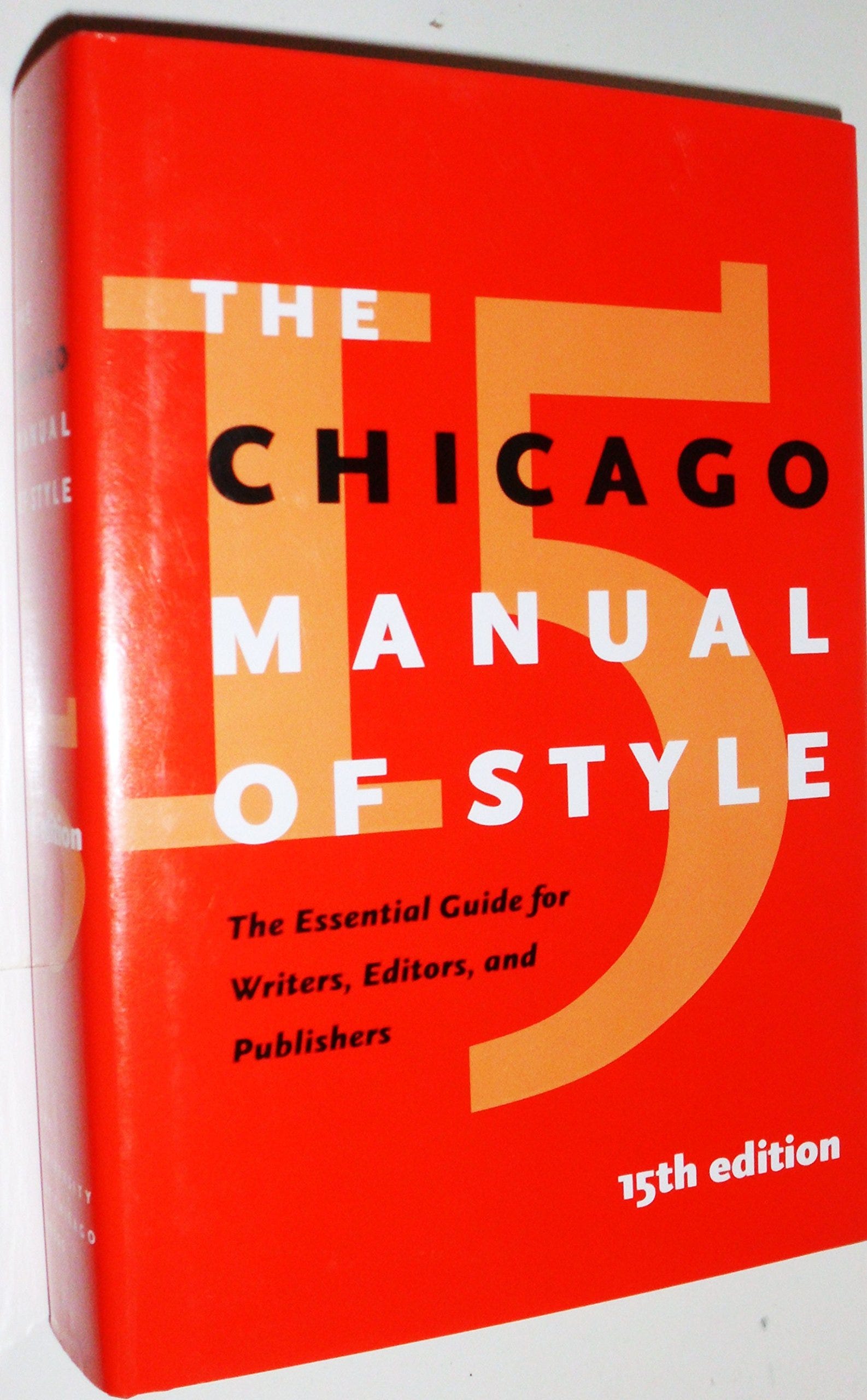
At this point, it might be clear that music-making and writing are structurally related domains, both involving planning large projects through smaller chunks, experimentation and improvisation, feedback from peers and mentors, revision, exposure to strong exemplars, long incubation periods, the gradual refinement of taste.
More crucially, both are easier to understand through analogy.
Analogies aren’t just for SAT exams! They are so powerful that astronomer Johannes Kepler used them to determine the orbital paths of the planets with great accuracy. Key to analogies is schema abstraction: what Dedre Gentner calls “extracting common systems from representations” in order to promote “the disembodying of subtle and possibly important commonalities.” Analogies help us notice “alienable differences,” becoming aware of contrasts between the two domains through finding high-similarity pairs.
Our brains are great at noticing relationships between systems (writing and practicing, perhaps). If there’s a blank spot or a change in one domain, an adroit analogist can connect another system, using structure-mapping to explain a mystery by comparing it to a pair in an analogous domain.
Analogies are my favorite teaching tool, because they help describe a new concept in terms of an idea they already know, extremely vividly.
Playing a soft snare drum roll is like going on a first date…
Practicing snare drum on a practice pad is like singing in the shower (or like the mirrors at H&M)…
Practicing multiple interpretations of a piece is like being a taxi driver rather than an ant. ⬇️
As an example, ants learn one specific way to traverse a dangerous journey. One boulder in the way, no more journey.
Taxi drivers, on the other hand, famously know many ways to make a journey, and if something changes, they adjust.
Great interpreters are taxi drivers, taking into account their audience, the physical conditions on stage, the acoustic, their collaborators, making constant adjustments as a matter of course. They pull the levers of style to help a musical work take life in an impactful and meaningful way for a specific audience, in a specific place, at a specific time. They are not reproducing a fixed object; they are navigating with a flexibility that comes from deep structural understanding rather than rigid memorization.
At their best, both writing and performance are forms of advocacy. At their best, both are tools for developing connections, both through the work being shared and, more importantly, through the space the work creates.
And, both rely on skill: clarity, structure, pacing, et al. (none of which are in this newsletter!).
That may be why writing has improved my music-making. Writing forces me to clarify what I value. It exposes weak thinking and sharpens perception. Furthermore, the same habits that improve artistic interpretation (revision, specificity, structural awareness, sensitivity to audience) also improve prose.
In fact, the more carefully we learn to shape language, the more carefully we learn to shape attention and create connections.
Procrastination over: back to the book!
Thank you for reading Learn with Mike. This post is public so feel free to share it.
Writing prose—just like studying music—can have many rules. So many rules that they have been subsumed by a style. Just like music making, it’s great to follow rules, but it’s also great NOT to. Hamlet says excess partying is “a custom more honour’d in the breach than the observance.” Ditto “common practice” harmony. The exceptions to these rules of voice-leading, so numerous that Brahms made a notebook of famously good uses of these ‘mistakes,’ often seem more interesting than the most dogmatic of passages.
No posts
Comments
Nothing yet. Say the first thing.
Sign in to join the conversation.