
Thesis: Problem-finding is as important as problem-solving.
I left us last time with a question:
At some point, the interesting question stops being “What makes a great exercise?” and becomes “What skills allow us to design one on our own?”
Great exercises are designed in the practice room by identifying problems, inventing solutions to those problems, getting feedback on whether those solutions worked, and practicing successful ideas until they are ingrained in our brains.
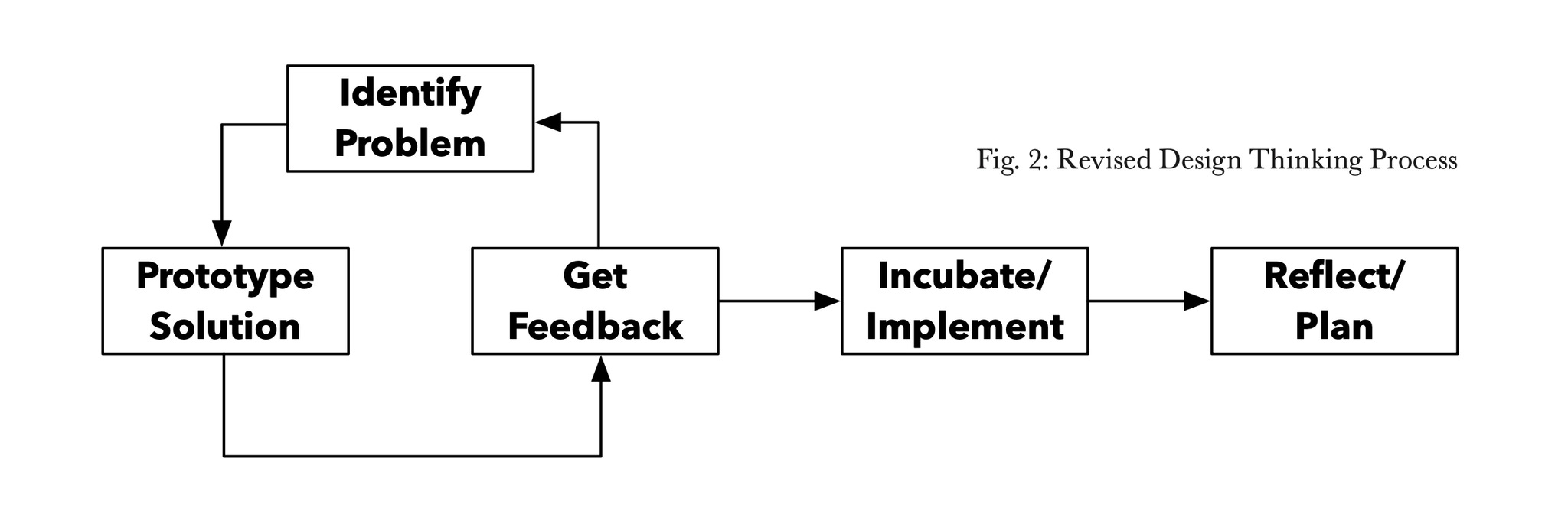
In my opinion, diagnosing problems in our playing and inventing potential solutions to them are the most difficult to learn, as they require “studio talk” with a master teacher, abundant experience, repetition in similar learning environments, and endless tinkering with one’s own musicianship. More on that later.
If our skills improve over time, then so do the exercises they produce. Here’s another question:
What happens to these mysterious, essential exercises as we improve over months, years, and decades of practice?
Some exercises are promoted to “habits” or “rituals”: they become part of our identity as they help us hone and refine our craft. Others are replaced by other exercises as we develop and molt.
To me, what’s more interesting than thinking about the thousands of studies I’ve tried over the years is pondering why we change our practice.
In many professions, expert practitioners start with their teacher’s exercises. They work! I have SO many of my teachers’ photocopied exercises, and they are essential to my musical personality.
But, as someone who’s watched enough sports documentaries and episodes of Chef’s Table, there’s a time at which training diverges from skill, where we move beyond the set of exercises, practices, and habits that supported the development of our craft, and step into our own expertise and specialty. We molt, leveraging our classical French culinary training to do something more individually meaningful. We step away from the music we learned from our teachers, develop our own repertoire, and build the skills necessary to support that unique performance practice. We move from technique to craft, from skill to expertise.
Thanks for reading! This post is public, so feel free to share it with someone who might like it.
One of the most valuable musical skills on that journey from skill to expertise is the ability to improve on our own, which often requires significant investment after fundamental study is complete. Exercise design, therefore, becomes one of the fundamental creative acts of learning, allowing us to continue developing long after we’ve mastered the basics. And a critical key to designing solutions is understanding the problem.
Q.E.D.: Problem-finding is just as important as problem-solving.
Next time, we’ll tackle an obvious follow-up question: how do we diagnose problems, when figuring out what is wrong can feel like finding a single plant in an alpine meadow?

My book Unsnared Drum Lab doesn’t cover diagnosis, other than to say that performers should get good at it. In fact, my book makes only passing mention of some essential elements of musical learning, such as noticing and attacking plateaus in playing, organizing practice and learning, musical analysis, and any work outside the practice room. And, while the book is applicable to any instrument, the only exercises in the text are for the snare drum. In fact, the glaring omission of these sectors of musical development prompted me to develop a course on how to apply the concepts from the book to these “terra incognita” of musical development. A very fun course, by the way!
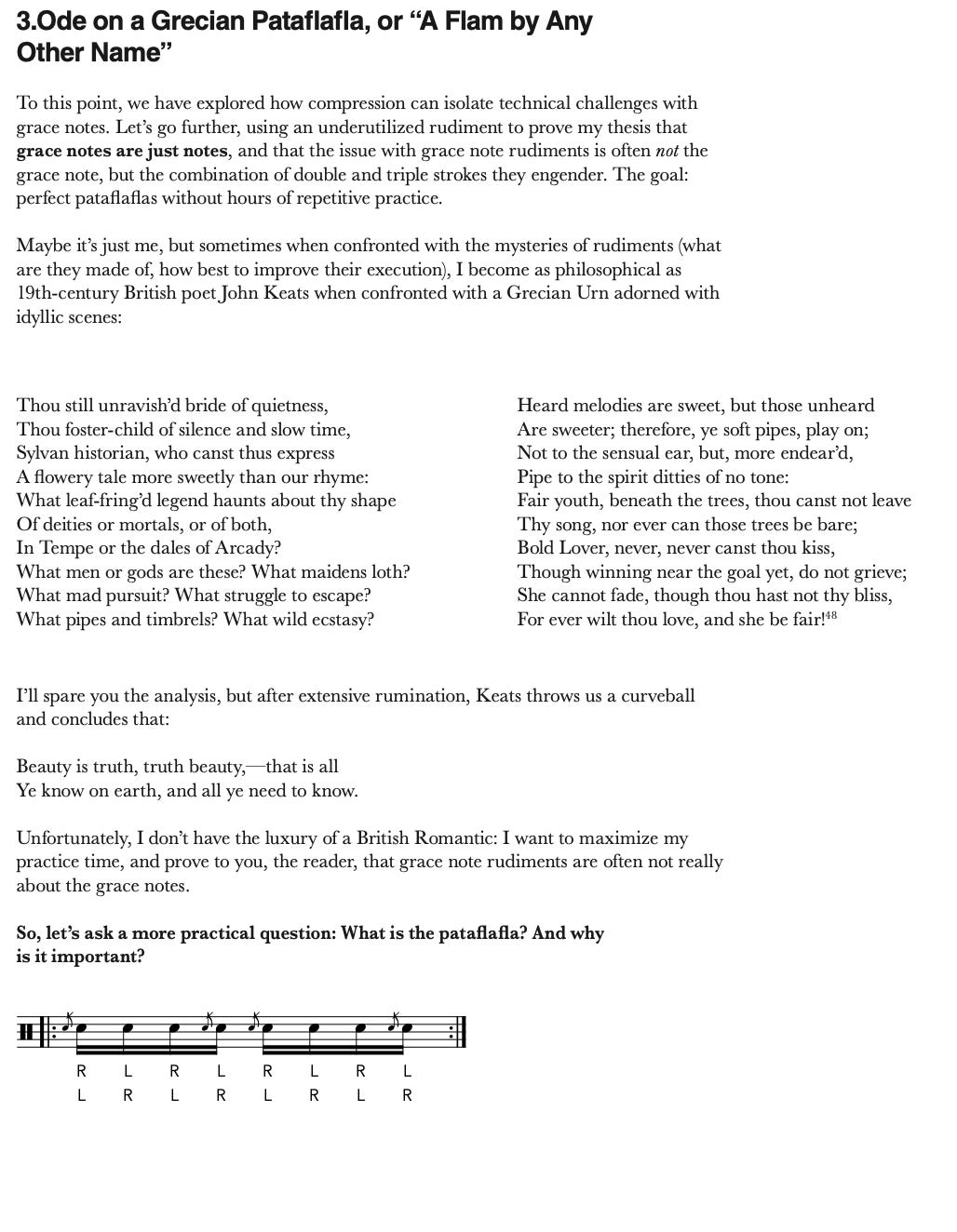
But… it does spend a lot of time on how performers can assess challenges quickly, learn to invent material to help them achieve their musical goals, leading to faster, more targeted learning, better performance under pressure, and more fun! And it does pepper the reader with exhortations to be creative, compares pataflaflas to 19th-Century British poetry, invites readers to ignore my exercises, replace them with their own, and apply those concepts to whatever instrument they’re playing.
It’s available on my website now, as well as Steve Weiss Music.
No posts
Comments
Nothing yet. Say the first thing.
Sign in to join the conversation.