
My reading list in 2026 has remained random, if slightly tilted towards recent and older so-called classics as I continue to catch up with books I’ve long thought I should get to that sometime. On that list was Miriam Toews’s A Complicated Kindness (2004), which I paired with the author’s new title, A Truce That Is Not Peace (2025). I’ve written about that reading combination here.
I also read a pair of books by Anne Applebaum, Autocracy, Inc. (2024) and Twilight of Democracy (2020), which I mentioned here.
Here’s a list of the others:
Bleak House by Charles Dickens (1853)
What We Can Know by Ian McEwan (2025)
Peace is Every Step: The Path of Mindfulness in Everyday Life by Thich Nhat Hanh (1990)
Plato: A Very Short Introduction by Julia Annas (2003)
The Final Days of Socrates by Plato (400 BC)
Go Tell It On the Mountain by James Baldwin (1953)
Even Cowgirls Get the Blues by Tom Robbins (1976)
Smash & Grab by Mark Anthony Jarman (2026)
And the Hippos Were Boiled in Their Tanks by Jack Kerouac and William S. Burroughs (1944)
The Women by Kristen Hannah (2024)
1066 and Before All That: The Battle of Hastings, Anglo-Saxon and Norman England (A Very Very Short History of England) by Ed West (2017)
The Plague by Albert Camus (1947)
The Stranger by Albert Camus (1942)
The Last Kings of Hollywood: Coppola, Lucas, Spielberg and the Battle for the Soul of American Cinema by Paul Fischer (2025)
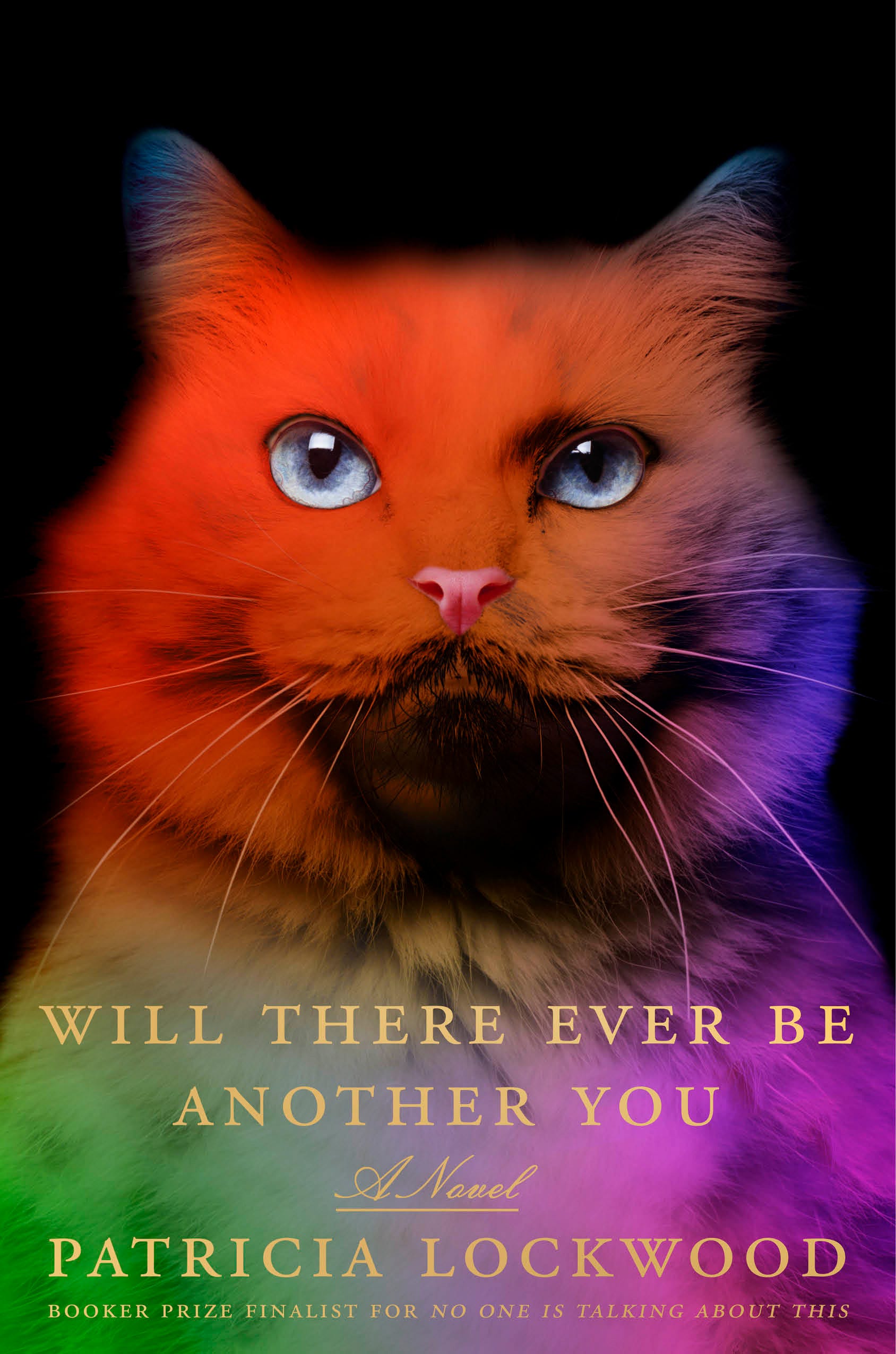
Will There Ever Be Another You by Patricia Lockwood (2025)
The Awakening by Kate Chopin (1899)
The Prime Minister by Anthony Trollope (1876)
It’s an odd list, I agree. These are odd times.
Reading Bleak House by Charles Dickens (1853), by audio, completed an assignment I’d been given in the fall of 1988, ENG 201. I started the book back then. The Penguin Paperback edition is 1017 pages. I decided the Coles Notes version, along with my lecture notes, would get me through the exam. It did. I remembered exactly two things about the book: it rotated around a densely complicated and seemingly unending legal case — and one of the characters spontaneously combusts. Yes, poof! Fire! Dead! These two things were indeed in the book, but there was also much else, many, many, many characters, multiple subplots, endless Victorian handwringing about social mores here, there, and everywhere. The central plot, though, was surprisingly simple — and rotated a girl and her fortune. Will everything turn out all right for her? I shouldn’t give it away, but of course it does. The pleasure in this volume of Dickens — volume as in book and volume as is, well, volume — is in the chattering classes, the vast array of characters, the light humour, the driving quest for turning events toward the right, ultimately, all wrapped in solid Britishness, the common sense of the common people, and all of that. Though it’s money, of course, that matters most, but Dickens wouldn’t put it that way. Too crass. I can say I’ve done it now. Won’t ever again.
What We Can Know by Ian McEwan (2025) is the first McEwan title I’ve read. In the past three decades, he has had any number of popular books which I have completely ignored. Probably I had a bias against them, thinking they were too “traditional,” but I’m less prejudiced now against any type of type type type, and I certainly found this new McEwan book to be fantastic. I read it as a comedy, which is probably not how most people would read it. Consisting of two separate but connect long sections, the novel imagines a world roughly a century in the future, post nuclear war, post environmental catastrophe, where literary studies continues and a scholar, in what’s left of England, specializes in the era 1990-2030. One of the most fascinating manuscripts from this era has never been located. It’s a long poem that was read out loud once, existed in only one copy, and was written by one of the leading poets of the era. This poet is imagined by McEwan, but he is said to have been of extremely high status. The poem was dedicated to his wife and read at her birthday party, then presented to her and all other copies/drafts destroyed. The only “readers” of the poem were those who attended the party, and their memories of it — recorded unsystematically a century before the action of the novel — are inconsistent. The poem becomes a kind of holy grail for literary scholars, such as McEwan’s protagonist, but contemporary readers will, of course, be perhaps most profoundly struck by the world of the future — so destroyed, so fragmented, so unlike our own, except so like our own in some ways. Undergraduates still have no interest in the past. Infidelities still happen. Competition among academics is still driven by jealousy and measured by who control the department’s budget. Reading the views of our own age filtered through McEwan’s imagines point of view of the future is rife with ironies, sharp and delicate. It’s all very funny, in my opinion. Then the second half of the novel is a reading of a found manuscript, memoir of sorts written by the recipient of the famous poem, the wife of the poet. No need to reveal anything more, except that things, you won’t be surprised to learn, aren’t what they seem. Deep talent is required to pull of all that McEwan pulls off here. Bravo to him.
Various personal interests pulled me to pull up Peace is Every Step: The Path of Mindfulness in Everyday Life by Thich Nhat Hanh (1990), Plato: A Very Short Introduction by Julia Annas (2003) and then The Final Days of Socrates by Plato (400 BC). I have a daughter studying Classics with a side interest in Buddhism. As an undergraduate three decades ago, I decided Plato was not for me, but I wanted a refresher. He’s still not for me, but I understand him better now. Peace is Every Step is welcoming, reflective book. I listened to it in audio format, and it was calming.
As a teenager I found a used, tattered copy of Go Tell It On the Mountain by James Baldwin (1953), but I never read it. It was one of the titles I said I would get to eventually, and that eventually was now. “Traditional” in form, the novel is pristine in prose and narrative. The novel tells the story of a Black family, its multigenerational secrets and conflicts, the multigenerational effects of slavery and the Reconstruction failures in the USA. Besides being a terrific stylist, Baldwin displays delicate understanding of human beings and the subtleties of relationships, the pressures to belong, the pressures to succeed, the pressures to remain right with the Lord. A classic for sure, this one.
Reading Tom Robbins after James Baldwin is some kind of contrast, let me tell you. I remember folks reading Even Cowgirls Get the Blues by Tom Robbins (1976) in the residence back in undergrad days. I retained some curiosity about the girl with the big thumbs. This book, however, does not hold up. Yes, there are humorous bits, a Vonnegut-lite tone, progressive positioning, but there is also a lot of mid-1970s yuck. Hard pass.
Re: Smash & Grab by Mark Anthony Jarman (2026), y’all will have to wait. I reviewed this for the Miramichi Reader. Stay tuned.
I discovered that Audible includes free titles, and one of them was And the Hippos Were Boiled in Their Tanks by Jack Kerouac and William S. Burroughs (1945; 2008). Having never heard of this one, I was curious. The book was written by Kerouac and Burroughs in alternating chapters, and it’s not difficult to figure out who did what. The book was written roughly a decade before either of these Beat writers became famous, but it shows early inclinations of their style and obsessions. It is based on real events that happened in the social circle in New York that Burroughs and Kerouac were travelling in. It also includes, notably, homosexuality and bi-sexuality, in a matter of fact way within the passages written by both authors. The novel was written to be marketed as a “hard boiled” mass paperback, though it was turned down by publishers. It is a kind of On the Road (1957) without the sweeping Romanticism of Kerouac’s breakout work. Hippos also includes a murder. On August 14, 1944, Lucien Carr stabbed David Kammerer and disposed of his body in the Hudson River. Kerouac and Burroughs were familiar with both the victim and the murderer. Hippos finds the writers addressing those events — and the context around them. It was eventually published by Grove Press in 2008, concurrent with the audio release.
The Women by Kristen Hannah (2024) is a book club book, and the book club hasn’t met yet, so I’ll just say I enjoyed it as a reading experience well enough. It is a straight-forward traditional style and form novel about a military nurse who went to Vietnam as a youthful idealist and returned a hardened veteran, only to be marginalized, ignored, and misunderstood — both by the back-home crowd and by other Vietnam vets and the military establishment. She is told repeatedly, for example, that “there were no women in Vietnam.” Obviously, not so — and the path for recognition, respect, and healing is a long one. The novel naturally splits into sections for medical combat service and the return to the home front. A new take on the Vietnam War — and America’s failure to get real about the costs of its warmongering generally.
Re: 1066 and Before All That: The Battle of Hastings, Anglo-Saxon and Norman England (A Very Very Short History of England) by Ed West (2017) … What let me to this title, I’m not exactly sure, except it popped up a suggestion on Audible, probably because I downloaded titles on John Milton, etc., so I decided to give it a go, and I’m glad I did. I definitely learned a few things, though West’s tone is light and quite frequently sarcastic. From the point of view 1,000 years past the events described, it’s easy to see where silly decisions were frequently made, leading to the collapse of Anglo-Saxon England to the Norman invaders in 1066, the last time England has been successfully invaded, so it’s quite easy to poke fun at the failures of leadership that led to that “disaster.” Yet what fascinated me was how often England was successfully invaded prior to 1066. The Danes and other Vikings tromped over England, Scotland, and Wales for centuries, so much so that England was practically a Danish colony. Who knew? Not me. West may need to revised his book, however, given BREAKING NEWS that “New research upends history of battle that doomed the last Anglo-Saxon king” (CNN, March 23, 2026). Perhaps Harold wasn’t so dumb, after all, just unlucky.
Two titles by Camus: The Plague (1947) and The Stranger (1942). Camus is so ubiquitous that one has the sense that one understands what the Algerian was all about even though one has never completed any of his books. How fun to write about oneself in the third person, haha. Um, okay. Now I have read them, and they were pretty much as expected. Folks were returning to The Plague during COVID, and I can see why. The way Camus’s plague unfolds is eerily similar to events in 2020. How did he know? What I appreciate about Camus, is the stripping away of sentiment and the presentation of events and human motivation in a direct, minimal manner. The narrator of The Stranger is the classic example. His universe is narrow, but his perspective is objectively sound. Okay, so, mostly. He sees himself and his relations with others within a narrow framework. His understanding of the motivations of others is equally narrow. Is his perspective truthful, honest? Yes. Is it complete? No. In truth, the world is broad, mysterious, not narrow and objective. Yet, like Beckett, Camus achieves profound results by sharpening focus. Uneasy classics, here, both of them.
For a palette cleanser, I turned to The Last Kings of Hollywood: Coppola, Lucas, Spielberg and the Battle for the Soul of American Cinema by Paul Fischer (2025). I saw this referenced in The New York Times and downloaded the book from Audible. You’ve seen the movies, you know the filmmakers, do you know the relationships? the mentorships? the interconnectedness of the leading dudes of the 1970s? I didn’t. For example, the book begins with a story about George Lucas winning a film school competition. He wins an internship at a major studio, except the only thing he’s interested in is hanging out with the animators, except there is no animation happening at that moment. Meanwhile, Francis Ford Coppola is making Finian’s Rainbow (1968) with Fred Astaire. Lucas couldn’t care less about the musical, but if there is no animation happening maybe he could shadow Coppola, who he’s heard of and is curious about. Coppola says, yeah, sure, and a friendship is born. Both want to make films outside the studio system, and soon they are making big plans. The extend of Coppola’s big plan making astounded me. His appetite is ravenous. His business planning horrendous. He makes tens of millions of dollars, loses tens of millions of dollars. Lucas — very surprising to me — is one of the original movers of “Apocalypse Now;” he encourages the screen writer; he wants to direct himself. Coppola scoops it away from him, casually. Lucas has a weird space muppet idea that no one understands until Star Wars (1977) explodes. By then, Lucas is building his own empire away from Coppola, who had his own box office explosion with The Godfather (1972). Little Stevie Speilberg catches the wave and explodes with Jaws (1975). Coppola tries to make Apocalypse Now (1979) as a quickie, and everything that could go wrong, plus much more, goes horribly wrong. Still, the movie gets made, released, and explodes. See also Hearts of Darkness: A Filmmaker’s Apocalypse (1991), made from documentary footage shot by Eleanor Coppola during the shooting of the original film. This parallel storytelling is essential to the story Fischer is telling, especially re: Coppola, because Francis’s domestic life is a bloody mess. Fischer tracks many parallel stories, telling the stories of not just the “big men” but also the web of relationships of wives and mistresses and various partners of all sorts, though his focus is on “the battle for the soul of American cinema.” I’m not sure this is what comes across, though. Because, yes, the studio system circa 1945-70 crumbles, and the 1970s includes the rise of the auteur filmmaker, but it also sets the stage for the sequel heavy blockbusters of the 1980s and beyond. If the soul of American cinema was found in the 1970s, it turned stone cold soon afterwards. But, still, there is a crack in everything, as Leonard Cohen told us: that’s where the light gets in. Carry on.
Oh, boy. Will There Ever Be Another You by Patricia Lockwood (2025) excited me. I’ve read a number of Lockwood prose titles (though none of her poetry), such as No One is Talking About This (2021).
The ironic thing about No One is Talking About This is that many people are talking about it. The New York Times named it one of the best 10 books of 2021. It is certainly a book that responds to its time, crafting a voice that positions internet addiction as the primary mode of consciousness.
The line between what is real and what is mediated and/or imagined is repeatedly questioned.
What does it mean to live like this? the book forces us to ask. Then, in the second half of the book, the really real intervenes, the narrator’s sister gives birth to a severely disabled child, one unable to reach its first birthday. The attraction of memes fades rapidly.
Will There Ever Be Another You picks up where No One is Talking About This left off. The novelist/poet narrator’s sister has lost a child. Soon the novelist/poet narrator is infected with an illness (presumably COVID, though not named). The novelist/poet narrator starts having cognitive malfunction, presumably caused by the illness. No one seems to know what to do about it. How to be a novelist/poet without control of language? The novelist/poet narrator’s husband has a shattering medical event, and once again the novelist/poet narrator is contemplating the fragility of life and the trouble of language to capture meaning of any stable sort. The reader sympathizes, as the disjointed nature of the narrative is sometimes hard to follow. Carry on.
The Awakening by Kate Chopin (1899) was another “catch up” book, unread during undergraduate days. Not one I was assigned and failed to read, though. By contemporary standards (see, for example, the Lockwood title above), Chopin’s tale is tame. It remains on the syllabus of Modern American Lit, though, for good reason. What’s most remarkable about it, probably, is its date of publication: 1899. The awakening in question is the awakening of an artistic ambition in the mind and soul of a southern belle, married, settled, and at the outset of the novel otherwise unremarkable. By novel’s end, however, she’s overthrown (however gently) her husband and other busybodies. Into the future she looks, in charge and accountable to no one but herself.
The Prime Minister by Anthony Trollope (1876) was a random selection. I can’t remember what recommended it to me. It is a long one, but not so long as Bleak House LOL. Once again, here is an English novel concerned with the regulation of a woman. The book begins with the question of ought she to marry the man she loves. Her father is against it. Who is the suitor? Not a gentleman. He has a foreign name: Lopez. But the father relents, the marriage is forged, the new husband turns out to be even more malignant than the father could have imagined. Why is the book called The Prime Minister? Because in a parallel story, Trollope builds a narrative of intrigue around the Liberal Prime Minister, who leads a coalition government. There is an overlapping (financial) scandal involving the PM’s wife and Lopez. Victorian mores are reflected upon from this angle and that. This is my first Trollope novel. It reminds me a bit of Julian Barnes: a mix of the intellectual, the socially conscious, and popular entertainment. Very traditional, though, this one. Okay, as far as it goes.
No posts
Comments
Nothing yet. Say the first thing.
Sign in to join the conversation.