
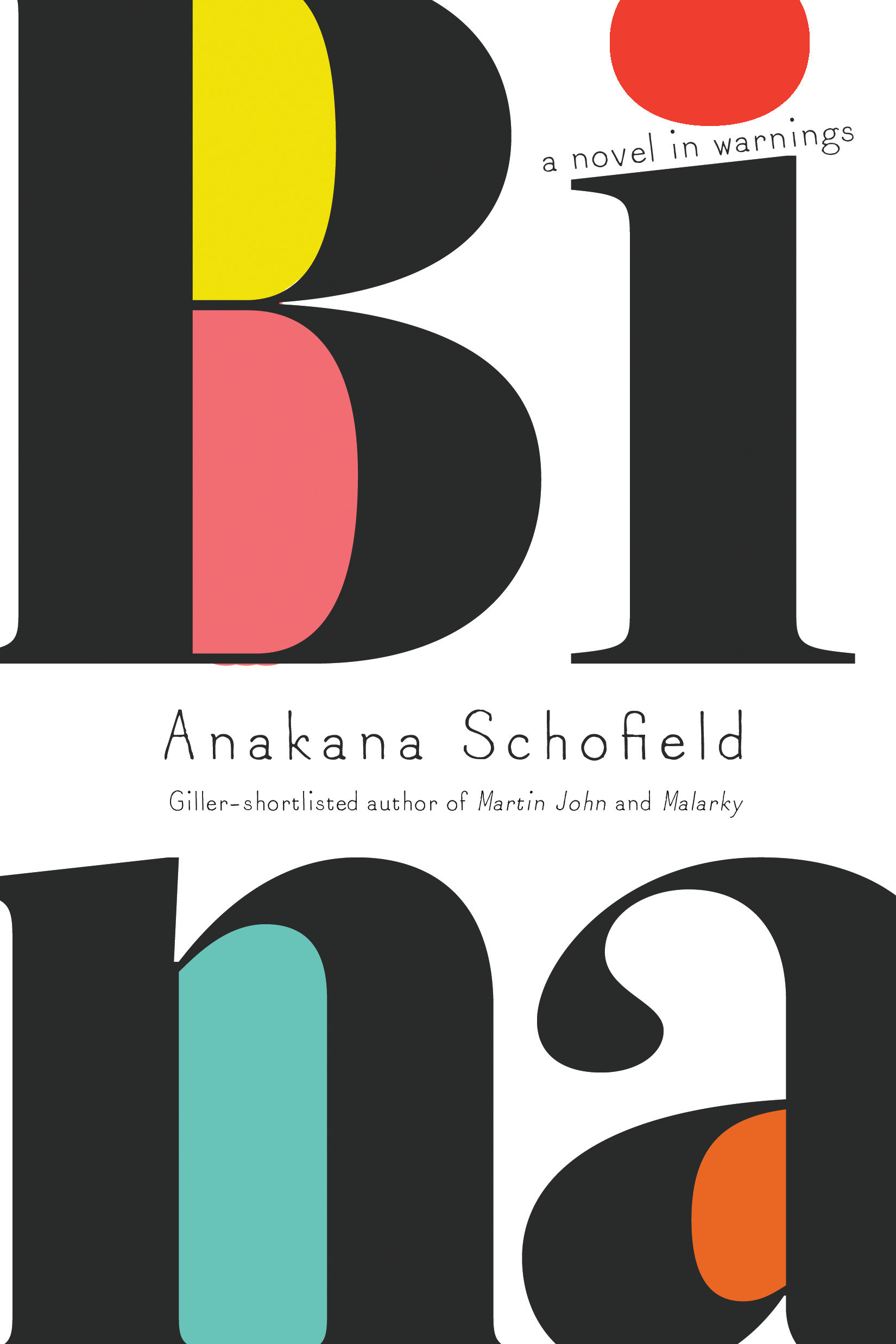
Earlier this year, it was my assigned turn to choose a book for the neighbourhood book club. I chose Anakana Schofield’s Bina: A Novel in Warnings (2019), which I bought in hardcover when it came out but had not read.
I had, however, read Schofield’s two earlier novels, Marlarky (2012) and Martin John (2015).
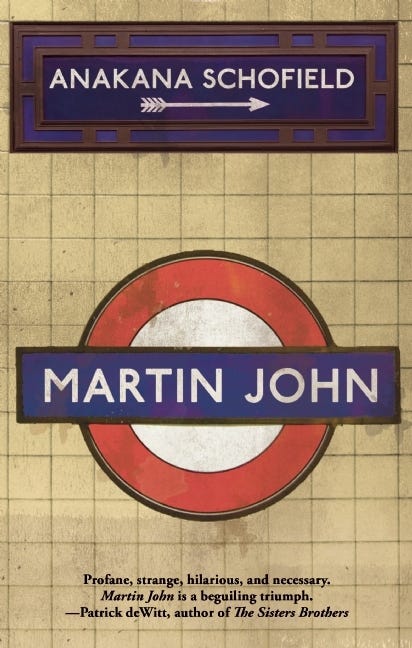
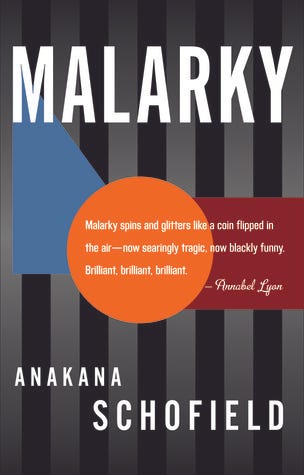
I posted a one-word review of Malarky on Goodreads: “Awesome.”
On Martin John, I had a bit more to say:
There's this passage on page 221, there is.
It goes: "You should know the things he does and doesn't appreciate, if we are going to carry on with this. If not — well, hang up now, as the operator would say."
It continues: "That's aggressive, but see this hasn't been an easy book for any of us."
No, it's not an easy book. The cover blurb includes the word "hilarious." My mother asked me if it was hilarious. No, I said. Not hilarious. Definitely not THAT.
Dark humour pervades, but it is couched in paranoia and unease over the repeated passive-voice confession: "Harm was done."
Martin John is a portrait of Martin John, purveyor of sexual abuse, and his intimate world, especially the malevolent "benevolent" force that is his mother.
Reality escapes the principals. Accountability is foreign. Unease about the disease blankets everything.
A literary achievement, for sure. Also, a pungent romp through something rotten to the core.
I gave each five stars.
I didn’t think Bina would be an easy read for the book club, but it was much more difficult than I expected. One comment: “I don’t know how this ever got published.”
Reader: she really didn’t.
Another compared it to a Jackson Pollock painting. Not something you’re meant to understand.
A third asked if the narrator was neurotic. Um, unlikely. I mean, there is something going on there, but neurosis wouldn’t be my first guess.
And the Pollock comparison isn’t off base. I just think you can understand Pollock, in a certain way, and one can understand Bina, too, both the book and the character. Coming to some understanding of Bina, the character, I argued, is the central challenge and point of the book. It’s what, in effect, the book is about. Though it’s also about many other things. And, also, probably nothing. In the sense that Beckett is about nothing, or nothingness. Which is, looked at from another angle, everything.
Reader: this is not the sort of book you should recommend to your book club. Unless, of course, it’s exactly the thing you should recommend to your book club.
I remain on the fence on that one.
The book club sawed off on the notion that some literature is “experimental.” The pleasure of the plot, in sum, is not foregrounded.
I read somewhere recently that literature (or perhaps it was just “writing”) is either politically aware or “entertainment.” This is clearly not true. Literature is either boring or good, surely. Or maybe traditional or experimental. Or perhaps popular or literary. Or maybe just a mishmash of approaches mirroring the mishmash of the people attempting to create things. Writing.
Some in the book club definitely found Bina boring, incomprehensible, worthy of abortion (killed pre-publication), while others found enough to enjoy or at least contemplate. As noted above, I found it more difficult than I expected, but I expected it to be difficult. Bina is a character that few will forget, once encountered, and I think even the readers in the book club who would rather have not encountered her will remember her for a long, long time. And this is a literary accomplishment.
The creation of a sticky memory.
Bina is an old woman in Ireland who has decided to write a collection of what she calls “warnings.” This is the book, that manuscript. She recounts how she has ended up in a sticky situation: the authorities are investigating her for assisting death. Truth is, she has been assisting death, but not the death they are investigating her for. Other weird things are happening. Her house has been surrounded by people camping out, whom she calls “crusties,” who have come to protect her, though she wants nothing to do with them. She can’t get rid of them, just like she couldn’t get rid of Eddie, the man who crashed his motorcycle into the wall by the road. She took him in, then he stayed for a very long time. When the authorities started coming around, interfering in his criminal enterprises — though they were investigating Bina — he took off for Canada. Bina is anxious that he will return, which he will do, because he is going to testify against her in court. The woman Bina is accused of killing is her best friend, Phil. It clear her and Phil had a good thing going until Phil decided her time was up. Bina is as full of life, under the circumstances, as it is possible to be. She is out to warn readers. DON’T DO WHAT I DID! But she gives her warnings in a manner that turns many readers off. LOL. There’s humour there, sure, of a dark, dark variety.
While Bina writes Bina, my contention is that she’s illiterate. She writes as if she is speaking. I was called out in the book club for saying she’s illiterate. How can she be when she’s writing? But literacy is more than writing, just as reading is more than making things make sense. Bina writes in circular patterns, repeating key thoughts, the way someone talking returns to key phrases to emphasize an oral argument. Patterns obviously repeat in writing, too, but Bina is making an argument, presenting warnings, but if she were in Grade 11 English she’d be sent to remedial. The argument is poorly structured. It often fails to progress beyond the basics. There is much more going on here than Bina can get on the page. Readers, pay attention!
Reading Bina, I thought a lot of Beckett. Some of Flann O’Brien.
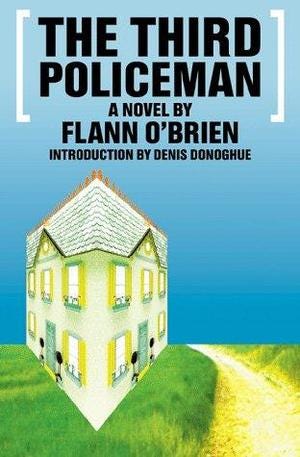
Ah, intertextuality.
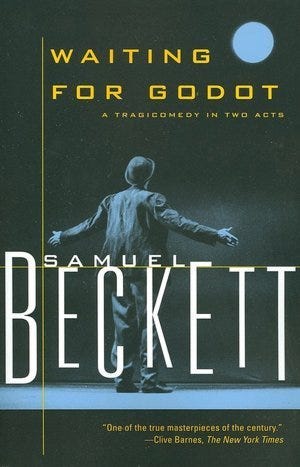
Vladimir: “Well? What do we do?”
Estragon: “Don’t let’s do anything. It’s safer”
Waiting for Godot, obv.
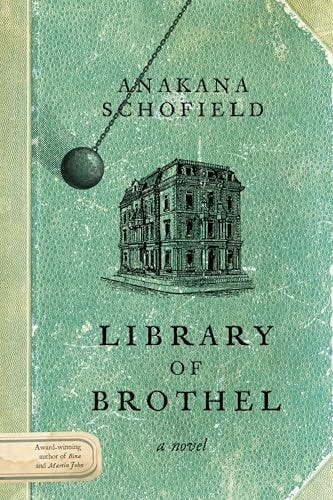
Schofield has a new novel out, Library of Brothel (2026), which continues in the experimental vein. Enter, all ye who dare!
Enter Anakana Schofield’s bedazzling a building called “Library of Brothel,” perched in a city where no one has a job, no one can find a date, and many struggle just to be housed. Rumours swirl around the crumbling structure and rapacious developers have their eyes on it. But what we find inside is a unique customers take shelter, workers love their jobs, and each room offers a new kind of intellectual stimulation. How can such a precarious place survive?
No posts
Comments
Nothing yet. Say the first thing.
Sign in to join the conversation.