
As of late, it has become almost expected for creatives—writers, painters, photographers, musicians, actors—to expose everything about themselves online in pursuit of attention. Often that includes showing exactly how they do what they do. I will not dare say this is destroying art, but I do think it’s changing how we view it.
Think of the speed-painting videos, sped up ten times, a person, or brush, moving around in fast motion where we see a blank canvas turn into a finished piece. Or a writer’s newsletter: “Here’s How I Structure Each Chapter.” Or the time-lapse of a photo session—three hours condensed into ninety seconds, every perspective, every adjustment visible. It seems like generosity. Harmless, even. However, I’d argue that it gives away, freely, what may never should be known at all.
There is power in withholding. There is an intimacy in letting people wonder, in leaving the technique just out of reach. Part of the allure of any piece of art, in any medium, is the mystery of its making. I know you want to know how it was done, I do as well. You’d give almost anything to see behind the curtain. And that wanting, that unsatisfied feeling, that edging, is something like a gift. It keeps you close to the work, imagining, even attempting it on your own. It’s intoxicating.
It’s the same logic as a sheer dress, or partial nudity, or a faceless person in a painting. Nudity, or the face, reveals everything—there’s nothing left to complete in your own mind. But sheer fabric suggests, conceals just enough, and lets your imagination do the rest. Your gaze lingers because it isn’t given everything all at once. In order for desire to thrive, it needs some resistance.
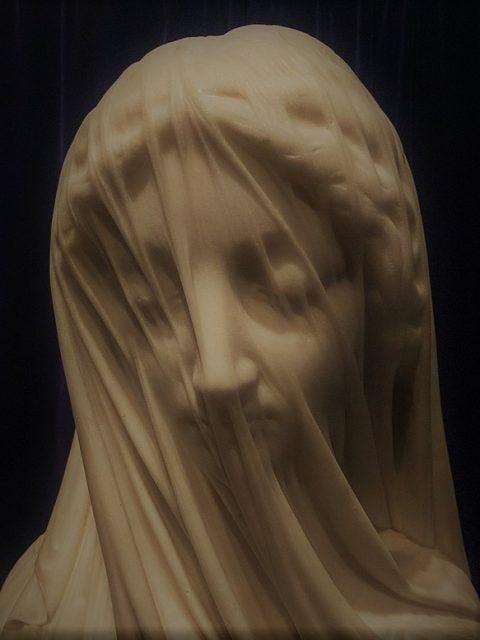
Art works the same way. The finished piece, fully explained from start to technique to finish, is nudity. The piece whose making stays half-hidden is the sheer dress. You see the shape of the thing, but not all of it, and that’s exactly what keeps you admiring.
People feel closer to an artist they’ve watched build something from nothing. Especially if you consider yourself an artist as well. Many times, an artist’s biggest supporter is an artist themself, wanting to know everything about their role model. But in knowing everything, something goes missing as well. When the how is fully explained, there’s nothing left to wonder about. You stop questioning the work because you already have an answer.
I think something in us needs the ache of not-knowing, the theory we build on our own about how a thing was made, even if it’s wrong. I think part of the allure of a painter like Caravaggio, or Rembrandt, or Van Gogh, lies more in what we don’t know than in what we do. HOW did they do it? That is the seduction. That is the power.
No posts
Comments
Nothing yet. Say the first thing.
Sign in to join the conversation.