
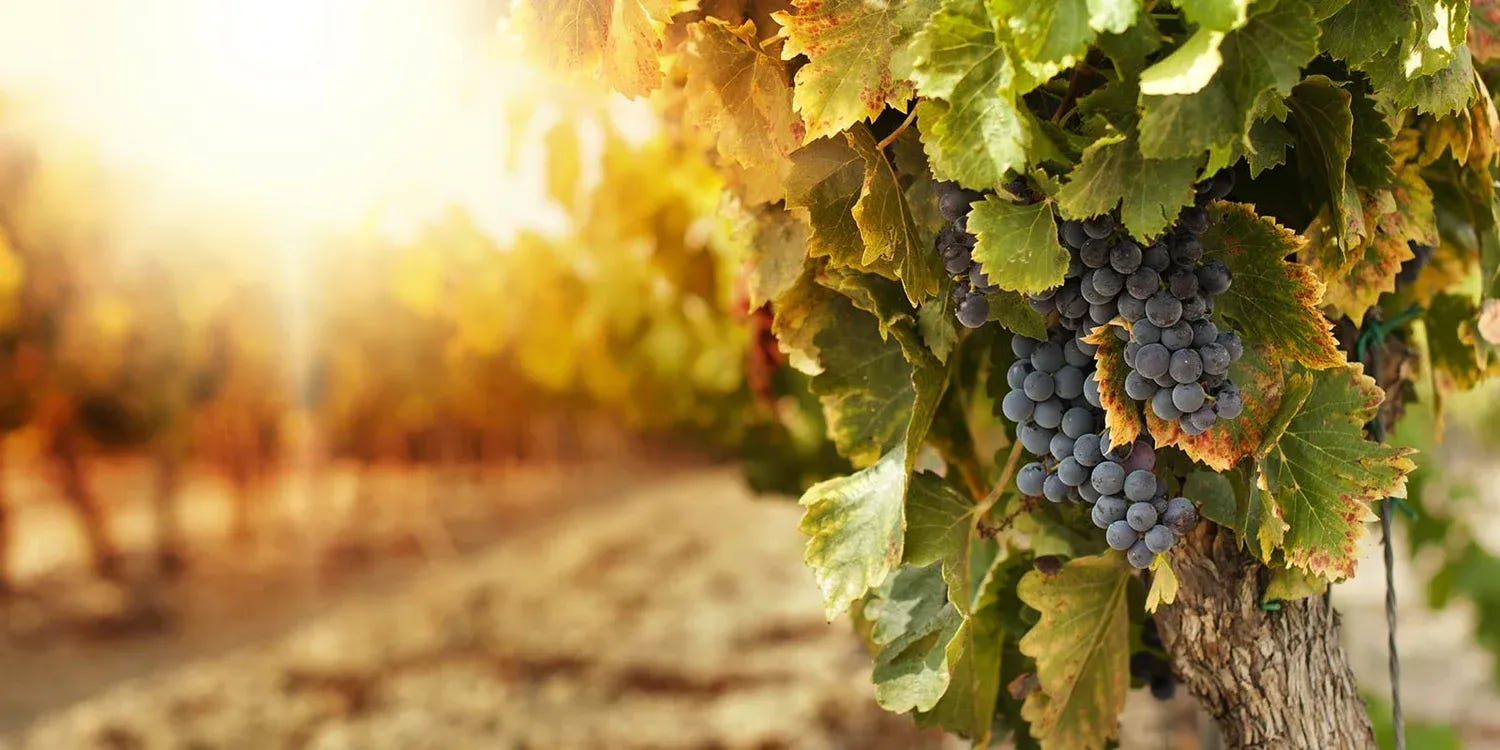
My Beloved in Christ and All Those Who Are Led to This Place,
I greet you in the name of our God and Savior Jesus Christ, who lives and reigns with the Father and the Holy Spirit as one God now and forevermore.
What a joy and honor it is to labor in the gospel of Jesus Christ. I feel that my work is greatly diminished, but I am thankful to the several who partner with me to make these weekly Bible messages possible. I send my special thanks to Atlantic Coast Communications of Greenville, North Carolina, who has been my producer for Faith for Living since 1993.
Today, I am excited to continue in the series from John chapter 15 on “Life on the Vine.“ I say “excited” because, even though the message is drawn from our archives (this message was preached at First Presbyterian Church of Chattanooga, Tennessee), I can revisit the sermon each week, move through it, and shape material for this post. So I come to the Bible messages the same way you do. I come with open arms, palms facing upward to receive the blessing from Almighty God. And we know that His word never returns void but accomplishes all that God intends in your lives and in mine.
This final message from that series is called “branching out“ as we see the glorious consequence of healthy discipleship and even the wonderful blessings that come from sometimes painful pruning by the master gardener.
As usual, I have provided an abbreviated devotional to go with the message as well as questions for personal reflection and small group discussion.
I want you to always remember that you can send me a prayer request, and I will be sure to pray for you. info@faithfor.living. This is a confidential email, and only I will see your message.
The Lord bless you and keep you through the power of His Holy Spirit at work within you.
Yours faithfully,


A Devotional from John 15:9–11
John 15:9–11 (ESV)
As the Father has loved me, so have I loved you. Abide in my love. If you keep my commandments, you will abide in my love, just as I have kept my Father’s commandments and abide in his love. These things I have spoken to you, that my joy may be in you, and that your joy may be full.
Union with Christ is the central truth of the whole doctrine of salvation. It is the organic, living connection by which the Father takes us out of the world and grafts us forever into the body of Christ, Jesus Himself being the Head. That union is what gets us through.
Jesus has just finished teaching His disciples that He is the true Vine, they are the branches, and His Father is the Gardener. Now He turns to the goal of all that careful tending: joy. Not the thin, circumstantial happiness that rises and falls with the weather of our days, nor the self-absorbed joy of a culture that looks only into the reflecting pool of its own desires. This is the deep, indwelling joy of the Son Himself—a joy that remains when the cross is near, and the world turns hostile.
How does that joy take root and flourish in us?
“As the Father has loved me, so have I loved you. Abide in my love.” The word abide means to make your home with Christ and to let Him make His home in you. It is not a connection we fashion; it is the Spirit’s sovereign work. Yet the knowledge of that union—knowing we are held in the palm of the Good Shepherd’s hand—brings blessed assurance. A plant secure in its life-source is free to grow.
The love in which we are to abide is not Hollywood romance or restless self-fulfillment. It is agape—the self-giving energy that flows within the triune God and overflows toward a fallen world. It is the love that gives itself away for the sake of another. Anything less is a counterfeit that cannot sustain a soul.
“If you keep my commandments, you will abide in my love, just as I have kept my Father’s commandments and abide in his love.” Obedience is not the ladder by which we climb into God’s favor; it is the grateful overflow of those who have already been loved. There is no conflict between grace and obedience when love comes first. The Son Himself was obedient unto death. We follow in that same willing, devoted path—imperfectly, yet sincerely—because we have tasted the love that first sought us.
“These things I have spoken to you, that my joy may be in you, and that your joy may be full.” The joy we receive is His joy—the joy of the One who came not to be served but to serve, and to give His life as a ransom for many. That joy is given so that we, in turn, might become channels of the same grace to others. We are blessed to be a blessing.
The Gardener’s goal is not merely healthy branches. It is fruit that remains—lives so full of Christ’s own joy that they can weather hardship, resist the world’s counterfeit loves, and still pour themselves out for the sake of the vineyard.
I invite you to surrender your life to the One who made you, who loves you, and who led you to these words today. Receive Him by faith and begin to live life as the Creator intended. Please pray with me:
Our Father, I am a sinner and in need of Your forgiveness. I am broken and unable to mend myself. I need You, O Lord. I repent of my sins, turn away from them, and I bow my entire being before the crucified and resurrected King of kings and Lord of Lords, even Jesus my Redeemer. Lord, receive me into Your Kingdom. In Jesus’ name I pray. Amen.
Be assured:
“Because if you confess with your mouth that Jesus is Lord and believe in your heart that God raised him from the dead, you will be saved” (Romans 10:9).
If you prayed that prayer and have transferred your trust from yourself to the Lord Jesus Christ—believing that He died for your sins and rose again from the dead—then welcome to the family of God. We are all sinners saved by grace, looking to Him every moment of every day. You are now part of a company of brothers and sisters who have been transformed by the King of Love, our Good Shepherd, Jesus Christ.
So, what comes next?
Tell someone that you have trusted in Jesus Christ for the forgiveness of sins and have received the gift of eternal life through Him.
Begin fellowship with other believers in a local church. Seek out a faithful congregation where the Word is preached, the sacraments are rightly administered, and the people of God gather for prayer and mutual care.
Worship with that body of believers. Speak to the pastor and tell him that you have received the Lord Jesus as your Savior. Talk to him about your profession of faith or your rededication to the Lord. Talk to the pastor about baptism and the Lord’s Supper. If you have never been baptized by an ordained minister of Jesus Christ, then ask the pastor to baptize you. Enter into “membership”—a covenanted relationship of mutual accountability and encouragement—with that local church. Begin serving the Lord through that local congregation. Christian service does not end there, but it rightly begins there. You will be nourished by the Word, Sacrament, and Prayer, and then sent out strengthened to tell others what the Lord has done for you.
Read the Bible. Many new believers start with the Gospel of John. Others follow a simple daily reading plan or a lectionary that includes the Old Testament, New Testament, and Psalms. Whatever approach you choose, begin reading Scripture now. The Holy Spirit who inspired the Word will use it to strengthen, instruct, and transform you, giving you new eyes to see yourself and the world through God's truth.
1. Where in your life right now do you most need the settled assurance that you are organically united to Christ and held in His hand?
2. In what ways have you been tempted to settle for a lesser love—self-focused, restless, or purely emotional—rather than the self-giving agape of the Son?
3. Is there a clear area of obedience the Spirit is gently pressing upon you? How might that obedience become an expression of gratitude rather than mere duty?
4. Jesus says His joy is given so that our joy may be full and then overflow. Who in your sphere of influence is waiting to receive the fruit of the joy Christ has already placed in you?
1. How does the distinction between circumstantial happiness and the deep joy of Christ reshape the way we talk about suffering and perseverance?
2. Share a time when the knowledge of your union with Christ carried you through a season that would otherwise have withered you.
3. What practical helps have you found for “abiding”—daily practices, rhythms of Scripture and prayer, accountability—that keep the branch connected to the Vine?
4. How can our group better encourage one another toward the kind of obedient, self-giving love that Jesus models and commands?
On this final installment in the series, “Life On the Vine,” I want to provide a brief study, an excursus of sorts, on the living metaphor that our Lord used to teach about abiding in Him. I pray this condensed teaching helps in some way.
The Vine Imagery of John 15
A Study of the True Vine and the Branches
Jesus’ declaration, “I am the true vine, and my Father is the vinedresser” (John 15:1, ESV), stands as the final of the seven great “I am” sayings in the Fourth Gospel. Spoken in the upper room on the night of His betrayal, the metaphor is not a casual agricultural illustration. It is a profound christological claim rooted in the soil of Israel’s Scriptures and fulfilled in the person of the Son.
Old Testament Roots: Israel as the Vineyard of the Lord
The image of the vine or vineyard is one of the most frequent metaphors for Israel in the Old Testament. God brought a vine out of Egypt, cleared the ground, planted it, and watched over it (Psalm 80:8–9). Isaiah’s “Song of the Vineyard” (Isaiah 5:1–7) presents the Lord as the careful owner who did everything possible for His vineyard, only to find it producing wild grapes—injustice instead of righteousness. Jeremiah records the Lord’s lament: “Yet I planted you a choice vine, wholly of pure seed. How then have you turned degenerate and become a wild vine?” (Jeremiah 2:21). Ezekiel portrays the vine wood as nearly worthless except for burning (Ezekiel 15), and Hosea describes Israel as a luxuriant vine that used its fruit for itself rather than for God (Hosea 10:1).
In each case the story is the same: privilege, care, expectation of fruit, and tragic failure. The vine of Israel became degenerate. Against this long history of unfaithfulness, Jesus speaks.
Jesus as the True Vine
When Jesus says He is the true vine (hē ampelos hē alēthinē), the adjective is decisive. He is not merely another vine alongside Israel; He is the genuine, eschatological fulfillment of all that the vine was meant to be. Where Israel failed to bear the fruit of covenant faithfulness, the Son succeeds perfectly. He is the faithful Israelite, the obedient Servant, the one in whom God’s purposes for His people are realized.
This claim also carries the weight of the divine name. The emphatic “I am” (egō eimi) echoes the self-revelation of Yahweh. Jesus is both the true Israel and the Lord of Israel.
The Father as Vinedresser
The Father is not a distant owner but the active gardener (geōrgos). He tends, lifts, prunes, and removes. Two actions are highlighted:
• Every branch in Me that does not bear fruit He takes away (or lifts up, depending on the sense of airō).
• Every branch that does bear fruit He prunes (kathairō), that it may bear more fruit (John 15:2).
Pruning is not punishment for the fruitful branch; it is the loving discipline that increases yield. The same root appears in verse 3: “Already you are clean (katharoi) because of the word that I have spoken to you.” The Father’s pruning work is already underway through the purifying word of Christ.
Branches, Abiding, and Fruitfulness
The disciples are the branches. Their life, productivity, and very existence as fruit-bearing members of the people of God depend entirely upon remaining in vital union with the Vine. The key verb is menō—to abide, remain, dwell, continue. It appears eleven times in the space of a few verses. Abiding is not a momentary decision but an ongoing, living dependence.
Apart from the Vine, the branch can do nothing (John 15:5). This is not hyperbole. All spiritual fruit—love, joy, obedience, effective prayer, witness—flows from the life of Christ circulating through the branch. The branch does not produce the life; it receives it and manifests it.
Fruitfulness is the visible mark of genuine union. The absence of fruit reveals that the apparent connection was never living. Such branches are gathered and burned (John 15:6)—a sober warning that outward association with the people of God is not the same as living union with Christ.
From Vine to Joy
The imagery reaches its climax in the purpose statement of verses 9–11. The Father’s love for the Son is the pattern of the Son’s love for His own. Abiding in that love, keeping His commandments as the Son kept the Father’s, leads to the fullness of joy—the very joy of the Son Himself. The vine imagery is not merely about productivity; it is about shared life, shared love, and shared joy between the Father, the Son, and those organically joined to Him.
Pastoral Weight
The metaphor presses several truths upon the church:
• Our identity is derivative. We are not the vine; we are branches. All life and fruit come from another.
• Union with Christ is both a settled reality and a call to continual dependence. We are in Him by grace; we must abide in Him by faith and obedience.
• The Father’s pruning is purposeful. Seasons of cutting back are not signs of His abandonment but of His careful husbandry.
• Fruit is the evidence of life, not the means of obtaining it. We do not strive to produce fruit in order to remain in the Vine; we remain in the Vine and the fruit appears.
In a culture that prizes self-sufficiency and autonomous growth, the vine and branches stand as a quiet, insistent contradiction. Life is received. Fruit is the overflow of another’s life in us. Joy is the shared gladness of the Son who abides in the Father’s love and invites us to do the same.
This is the imagery Jesus left His disciples on the night before the cross—and the imagery He still holds out to every branch that would live and bear fruit that remains.
And I tell you the truth: our Lord’s teaching on life in the vineyard of Christ is more precious to me now than when I first preached it. The “sap” inside His children is the life-giving power of the Holy Spirit. And nothing can diminish His power, His life.

Comments
Nothing yet. Say the first thing.
Sign in to join the conversation.