
Dear Solutionaries,
Since watching Plastic Detox on Netflix (which I highly recommend), I’ve intensified my efforts to cut plastics from my life—especially anything touching my body or my food.
The deeper I dig, the more I realize that petrochemicals are woven into modern life—sometimes literally.
I stopped buying polyester clothing years ago. Problem solved, I thought. Then earlier this month I visited designer Lydia Wendt in her studio in Los Angeles’ Fashion District and discovered that avoiding synthetic fabrics is not enough.
“Even cotton that is GOTS (Global Organic Textile Standard)-certified, can contain up to 30 percent of other fabrics,” Wendt told me. “Plus, most dyes and coatings are petrochemicals. People are buying an organic shirt thinking they’re doing something healthy, but it’s shiny and black and has white print on top, all of which is from petrochemicals. That’s what’s touching your skin.”
Oekotex standards, too, “don’t mean it’s 100 percent natural and non-toxic,” Wendt explained. “The certification only means that the toxicity is below the level deemed toxic for human wearing. It doesn’t mean the dyes are natural or not causing cancer.”
Wendt, founder of California Cloth Foundry, is trying to build a fashion system that behaves more like a healthy ecosystem than a conventional apparel business. Her garments are made from American-grown fibers, dyed largely with plants instead of petrochemicals, and designed to be compostable at the end of their life cycle. Her goal is not to make clothing “less bad,” but to create what she calls regenerative fashion: garments that can ultimately return nutrients to the soil rather than accumulate as waste.
“All of this discussion about overconsumption,” she said, “one solution while we’re trying to readjust our consumerism and our values around that, is to create things that can go back to the earth without any detrimental effects.”
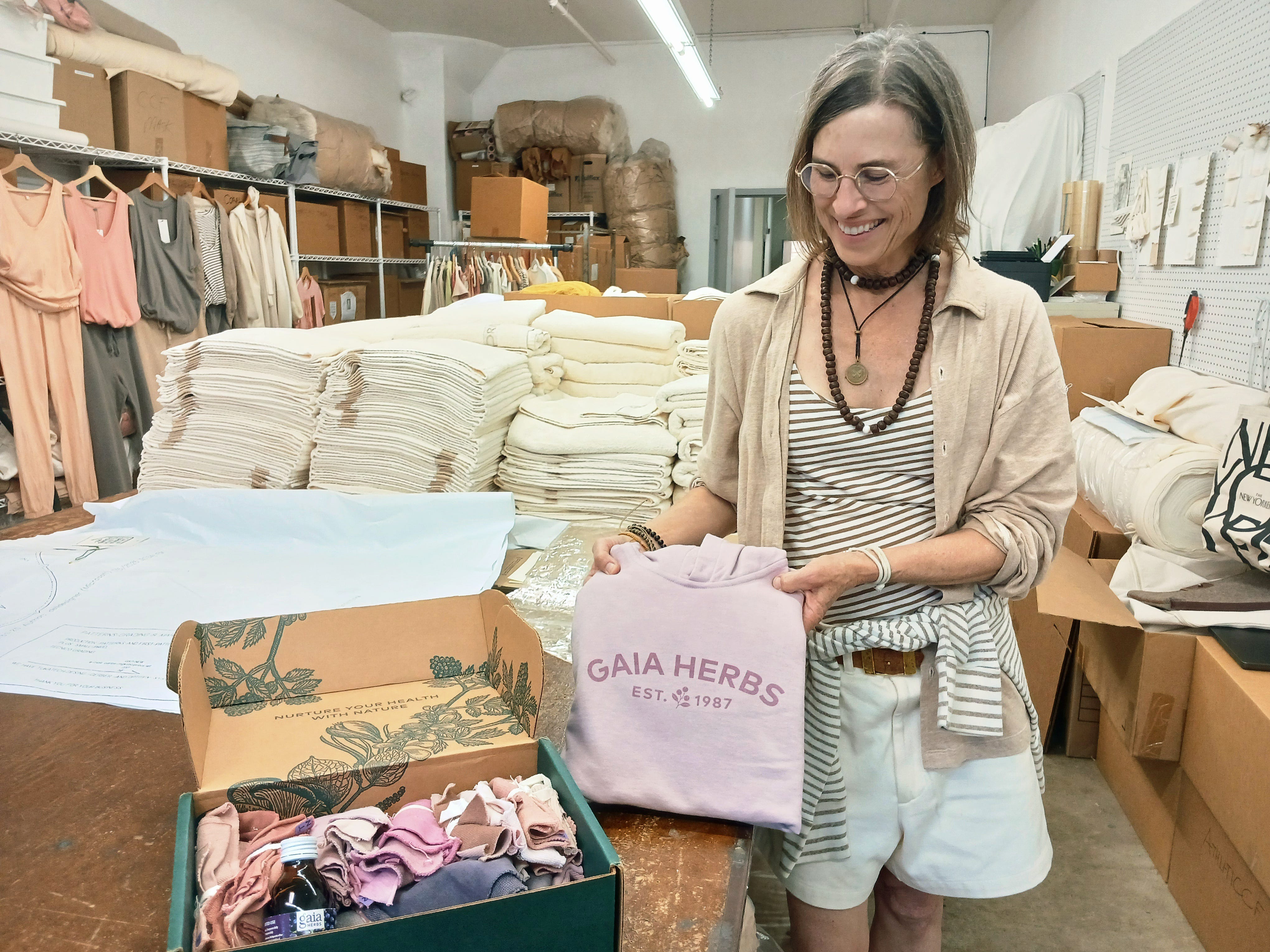
Founded in 2014, California Cloth Foundry is part of a broader reckoning with fashion’s environmental cost. The fashion industry produces more than 100 billion pieces of clothing every year, generating up to ten percent of global greenhouse-gas emissions and roughly twenty percent of global wastewater annually, with textile dyeing and treatment among the major culprits. Synthetic fibers derived from fossil fuels now dominate clothing production, contributing to microplastic pollution and mounting waste streams. The Ellen MacArthur Foundation estimates that the equivalent of one garbage truck of textiles is landfilled or incinerated every second worldwide.
Regenerative fashion, by contrast, starts with growing natural fibers with regenerative agriculture, which focuses on rebuilding soil health and biodiversity, sequestering carbon and restoring ecosystems. Instead of the usual petrochemicals and harsh chemicals like formaldehyde, Wendt uses natural enzymes and botanical pigments derived from marigold, California poppy, madder root, chestnut, valerian, elderberry, indigo, and logwood.
She argues that we should create clothes with the same consideration as the food we eat: “The skin is our largest organ and absorbs 64% of the chemicals from what you wear into your body.”
And, she believes, our immune systems pay the price. “If you’re wearing clothing that’s really close to its origin, your immune system doesn’t have to be hyper-alert all the time,” she said. “So it can live and heal itself. That’s regeneration too.”
If you’ve read Bouncing Forward, you’ve glimpsed my personal history with toxic chemicals. I grew up in a severely contaminated house. Unbeknownst to my parents, the popular wood preservative they used to renovate our house before my birth contained mercury, lead, formaldehyde, pentachlorophenol and a cocktail of other toxins that have a lifelong health impact.
I didn’t learn about the scandal until years later, when I became a reporter. That experience is one reason I write this newsletter.
Every week, I interview scientists, physicians, entrepreneurs, and researchers who spend their lives studying problems most of us rarely think about. My goal is to share what I learn—to uncover hidden risks, spotlight practical solutions, and help us all make more informed choices.
I’m now brushing my teeth with wheat straw bristles, floss with plastic-free fibers, and pay closer attention not only to what I eat, but also what I wear.
Reducing plastic isn’t only an environmental issue. It’s a health issue. It’s a systems issue. And a reminder that what we normalize doesn’t always serve us.
The good news is that alternatives exist.
Read my story about the California Cloth Foundry here:
🧵This Brand Wants You to Compost Its Clothes
(I don’t get paid to mention any products or brands, I’m simply sharing my research.)
As consumers, we may not be able to transform the fashion industry overnight. But we can ask better questions. What is this made from? What was used to dye it? What happens to it when I’m done with it?
Those questions, like seeds, have a way of growing.
For more on the hidden chemicals in our closets—and the increasingly blurry line between fashion, health, and environmental toxicity—I recommend following Alden Wicker’s EcoCult newsletter. Few reporters have done more to investigate what our clothes are actually made of and what those materials do to our bodies.
Stay curious, mindful, and keep planting solutions. 🌱
Cheerfully,
Michaela
No posts
Comments
Nothing yet. Say the first thing.
Sign in to join the conversation.