
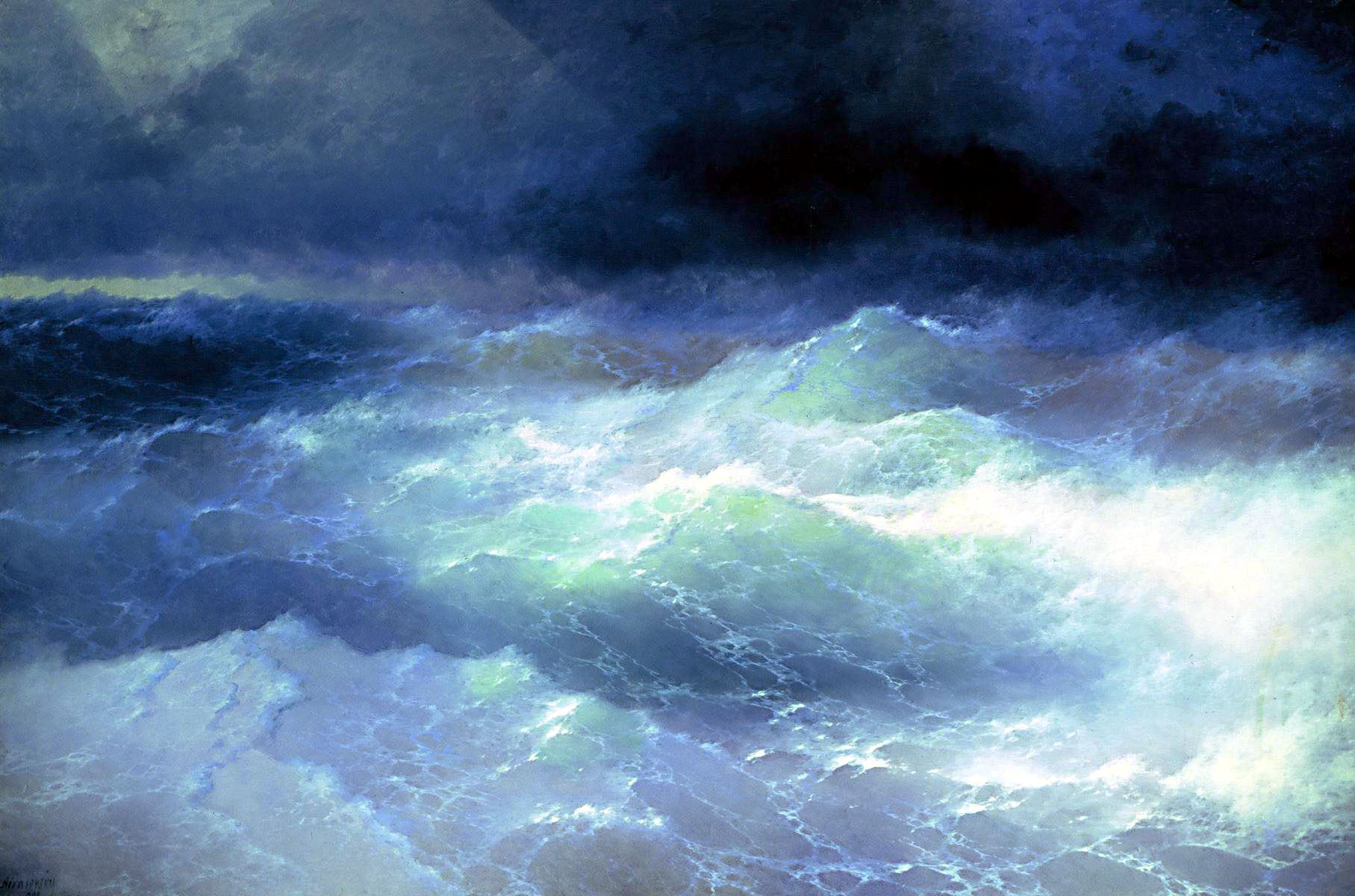
Tell me about a complicated man.
So begins Emily Wilson’s translation of The Odyssey. The first line of this poem might be the most argued over line of translation in the history of human text. The word used to describe Odysseus is ‘polytropos’. It has been translated as ‘complicated’, ‘many faced’, ‘well traveled’, ‘a man of many turns’. There are as many meanings as there are readers; your interpretation is your own.
I’ve been thinking a lot about this word, polytropos, in the weeks after seeing the new Odyssey film. The Odyssey is one of the oldest stories we have, a polytropos creature that has survived over three thousand years of translations, retellings, reformings, reshaping. The malleability of a story that began in the oral tradition is that it can survive changes to its meaning, to the characters, even to the sequence of events, the very bones of the story itself. There has never been a true Odyssey, because the story was different in every telling.
Odysseus changes in every city and around every fire, and perhaps this is why he contains so many contradictions. Polytropos. So well traveled he has passed through time and into every corner of the world.
There is no right or wrong way to adapt a man or a story like that. There are versions you like better than others, though, and I have to say this new movie wasn’t my favourite retelling. I understand the appeal of taking the framing of the Odyssey to tell a story about the modern world. But the Odyssey that lives in my head and that I’m quite attached to is less about the broad sweep of history, the collapse of civilisations and the Sea People, and more an adventure through magic and chaos at the edges of the world.
The Odyssey can be both, and it is both, because it is complicated like Odysseus is complicated, and that is why we love it.
I love the craftwork of the Odyssey as much as the story itself. It’s the bedrock of storytelling in the western world, and so much of its richness has bled through into all of our art. It’s like the Bible in that way - formative. The method of taking a concept or a scene from the Odyssey and shaping it into your own art form is to be in conversation with artists and writers and poets and musicians going back thousands of years. The enormity of this could easily overwhelm you.
To participate in the ongoing conversation of the Odyssey is to accept that you are alive here, now, and not forever, and that all you can do is add your voice to the chorus for as long as you have it. And then you pass it on.
Because I am who I am, as we walked around the shopping center after seeing the Odyssey and I thought about polytropos, and translation, and the conversation of art across time, I wondered if this oldest of traditions has bled into the artform of perfumery.
There are plenty of perfumes inspired by the Odyssey, or by things inspired by the Odyssey, but that’s too easy an answer. What about the craft of the Odyssey, a foundational work that is so universal that it becomes a common vernacular, a old framework that can be used to tell new stories?
Well. I think the entire canon of modern perfumery is exactly that. There will always be perfumes that attempt to mimic nature, to capture the scent of a woodfire or a tuberose, but when it comes to the canon there are several formative texts. We would call them genres or fragrance families now, but what they are is a spark of conversation from the beginnings of modern perfumery that created the language in which we now all speak. Chypre. Fougere. Amber.
Above all, amber.
These accords don’t exist in nature. Someone made them up. Someone was the first person to mix labdanum and benzoin and styrax and patchouli into the first amber accord. We’ll never know who that was, the same way there is no way to know who told the first story of Odysseus and the Cyclops or Odysseus and the horse.
There are works of art so true that they sublimate their creators and belong to all of humanity. So it is with The Odyssey. So it is with amber.
And an amber, like an Odyssey, can be many things. The same story, shaped through the telling, into something new - yet keeping enough of that core concept that you can make the connection in your mind, an understanding, a common tongue.
Perfume, like all art forms, is a vehicle for communication. The perfumer to the wearer; the wearer to the world around them. You use the scent to speak. You ask the smeller to listen. This is the oldest story there is. You have been hearing it and retelling it all your life.
Here, I’ll prove it to you. Three ambers, all made of the same bones and using them to tell three very different stories.
You will understand what they are saying, because you know this smell. You've known it all your life. The same way you know Odysseus. The way you know the story of a man trying to get home.
OLYMPIC AMBER
If you asked me to tell you what I think an amber is trying to communicate as an olfactive form, I would probably say intimacy. If you asked me to point you towards a perfume that could help you understand this, I would point to Olympic Amber.
Intimacy is a feeling that can be expressed through many shapes and forms. The intimacy of shared experience; the intimacy of seeing, understanding, knowing another person; the small intimacies of a morning ritual, crow’s feet, a row of dog-eared books on the bookshelf.
I think it’s easy to forget how emotionally regulating your home can be until you leave it and then return. Here is the place where all your things live. The only place in the world where everything is arranged to your liking. Your favourite coffee in the canister and your towel hanging from the rail.
Your home holds stories. The chip of paint on the doorjamb where you stumbled carrying the sofa. The ugly ornament your mother-in-law gave you that you keep on the shelf to prevent awkward questions during family visits. The broom. The shoe rack. The urn. They are all there because you put them there. They form the geography of your mornings, the weekend, the hours before bed.
Your home. All your things, covered in that thin film of dust.
Olympic Amber smells like your home. I’m sure you have some kind of scented thing in your house, a Diptyque candle or an autoreleasing wall flower or a little scented paper tree in the bathroom. But Olympic Amber smells like your home, the place you go where the world is quiet, the cream walls in the living room when the heater is going and the window is letting in the cold winter sun. The slowly yellowing pages of the book you loved and the hair from your cat that you will never quite manage to vacuum out of the carpet.
When you have been ten years at war and ten years at sea and you think of the home you are always trying to get back to and never wanted to leave - Olympic Amber smells like that.
Perfume is not a medium of temperature, and yet you can’t really explain the concept of amber without speaking of warmth. It is a warm smell and that’s all there is to it. It is a full smell, an opulent smell, good natured and red-cheeked and round-bellied.
All of the compounding notes in the amber accord are singing from this same hymn sheet of warmth and intimacy. The sticky richness of labdanum; the cinnamon-flecked bite of benzoin; the nostalgic decadence of cocoa tinged patchouli and creme anglaise vanilla. The bounty of good smells that wash over you like a peasant at the great table on a feast day - that’s the power of an amber.
The warmth of the domestic is not a flavour for everyone. There are some people who do not like amber and there are some people that have cold homes. But if you’ve ever been on a long journey and stepped back through your front door, knowing that soon you will be cooking food in your kitchen and sleeping the night in your bed, then you know the smell of Olympic Amber.
It’s the smell of the place where the rhythm of your life slowly beats along. It’s the smell of moments spent in quiet joy.
BYZANTINE AMBER
Once there was an ancient forest. In this forest the trees wept resin, and misfortunate bugs would get trapped in its sticky tears. The resin would harden and fall to the forest floor like rain spilling from a leaf, and then the forest would fall silent once again.
Time passed. A hundred years, a thousand, a million and more. More resin fell, and then the trees fell too, and eventually the very earth crumbled away and the ocean rushed in. The resin stayed, and it fossilised, and for thousands of years it would lie dormant until it washed up on the seashore.
People found the resin. It was a beautiful colour, golden-bronze and glasslike, and sometimes you could see the little insects trapped inside, ten thousand years midflight. The resin was beautiful, and it was valuable, and it was traded and sold downriver, down the Vistula and Dnieper and the Don, until it found its way to Constantinople.
In the great city the resin was shaped into jewellery and worn by priests and princesses and emperors and kings. It was strung with gold and silver and pearls. Time passed. The city changed names and changed rulers. Emperors became sultans became ministers and viziers. The resin was buried with its wearers, unless some gravedigger dug it up again.
A thousand years after that, perfumers were trying to recreate the honey-rich animalic glow of ambergris, a material as rare and hard to find as fossilised resin. The bare bones of the resulting fantasy accord - benzoin and styrax and labdanum and patchouli and vanilla - came to be known as the same name for that ancient material.
Amber. The name is a coincidence. When true amber is burned, it has a smell that is faintly reminiscent of pine. But if you ever look at pictures of fossilised amber or the Byzantine jewellery made of it, doesn’t it feel like it should smell like an amber accord? That radiant, rich, comforting smell, thick as golden syrup, warm as the crackling of a fire.
But I suppose the thing that both ambers have in common is that same beginning, that ancientness, the sap from a tree. You can make an amber without patchouli, and without vanilla, and without any natural materials at all, but you can’t make it without evoking the smell of balsam. The warm, almost chewy-sticky smell you get from benzoin and frankincense and tolu balsam has got to be one of the best smells on earth, a scent designed to make humans happy - or perhaps we evolved around it, our olfactive systems deciding to find this sappy, woody, cinnamon-dry smell the most wonderful of all wonderfuls.
There’s no perfume that can capture all that ambered history, trapped in fossil, older and longer than humanity, weighed down like pebbles at the bottom of the sea. But Byzantine Amber comes close. The sharp bite of balsam and the leather sting of birch tar like stops on a river trade fan out into the most ancient and rough and jaggedly beautiful amber that hums with so much vibrant warmth that you are fooled for a moment that it could be a living thing. A prehistoric creature, wings buzzing, flying so hard that its wings look like they aren’t moving at all - held safe forever, in a coffin of umber and gold.
NEMAT AMBER
The great thing about an amber is that it doesn’t need to be expensive to be good.
The power of a good accord, like a timeless story, is that it will adapt to any shape and any form that you decide to give it. There’s an experimental joy to this. How many materials can you strip away from an amber and still call it an amber? How many planks can you take away from the ship of Theseus and still make it float?
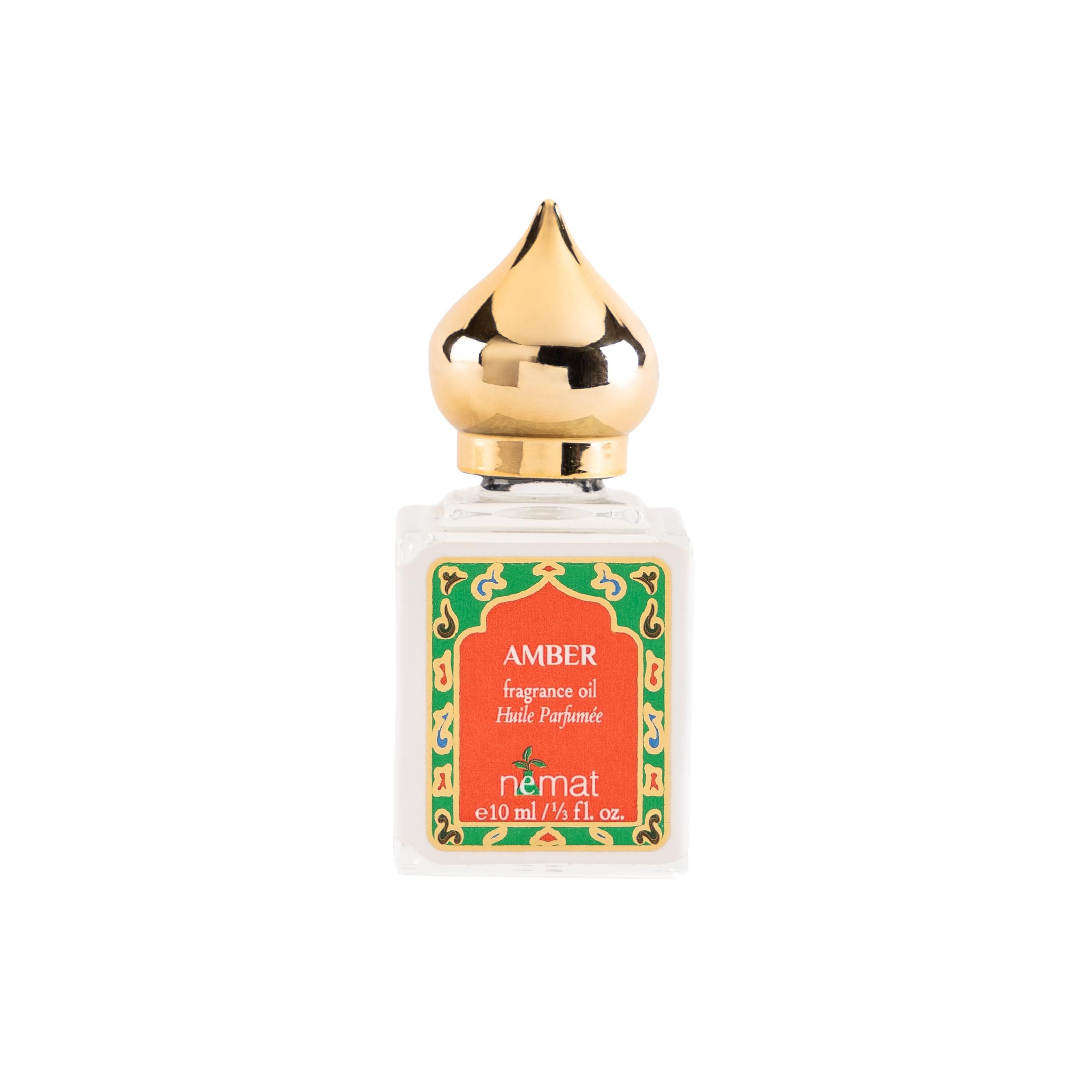
Take, for example, the strange case of Nemat’s Amber oil. This brand has a cult following of people who like to shop for perfume at Whole Foods, prefer oil to alcohol as a carrier, and seem to always be raving about perfumes that are ‘your skin but better’.
I fit in to none of these categories and freely admit that I bought my bottle because I thought the cap was cute and that it would look sweet on my perfume shelf (note: it is and it does).
I wasn’t too worried about the actual perfume in the bottle. This is because I’ve done the dance with brands like Nemat before. All of the oils in this style and price range (about $30AUD for 10ml) basically smell the same, a white musk base with random notes thrown in for momentary interest in the opening. But I chose Amber because I like amber, and I know that you can make a pretty decent replica of the classic accord for not a lot of money. I held out hope that the ship would float.
Well, it didn’t. In fact, it sunk to the bottom of the ocean as soon as I unscrewed the (very cute!) bottle top. This perfume is so unlike a classic amber that I have to do some serious mental gymnastics to figure out how to make it an amber. Its opening is a vague sort of floral sludge, like the leftover buds from a florists’ that have been beaten into pulp, and its base is the heavy white musk that you’d expect from the house style. Like cheap chardonnay at the local dive bar, Nemat Amber is exactly what you expect it to be.
I suppose there is, if you really sniff for it, a halfhearted attempt at something that’s nearly benzoin-labdanum-like in the heart of the thing. If I get some of the oil on my fingers when I unscrew the bottle, about half an hour later when I rub my nose I feel like I can smell the ghost of an amber on my fingertips. Maybe it’s there, hiding away where I can’t really smell it. Maybe the perfume’s name is making me hallucinate an amber that isn’t really there.
Or maybe it’s not up to me to say whether a perfume calling itself an amber is really an amber, just like it’s not up to me to say whether a film calling itself The Odyssey is really The Odyssey. A name is intent, and intent is meaning, and maybe that means the form doesn’t need to adhere to the tradition. Maybe the act of changing the shape of the story is the very thing that keeps it alive.
Polytropos, is what I’m trying to say. Amber is complicated. It is, as the poets would say, an accord of many turns. ▧
Comments
Nothing yet. Say the first thing.
Sign in to join the conversation.