Changing the Game of Activism
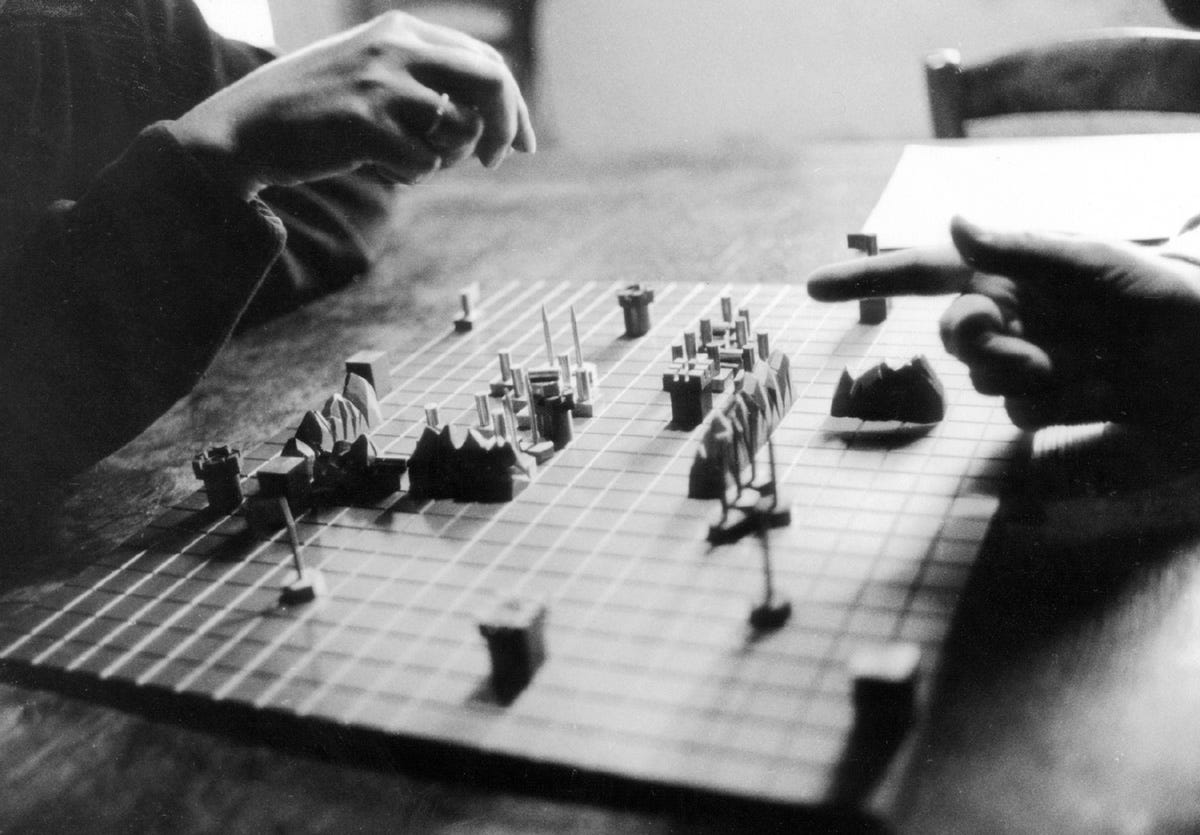
Could it be possible that the “templates” activists have been using for our games are nowhere near the ideal for creating change?

From the co-creator of Occupy Wall Street, reflections on aI-powered activism, futurism, and the new ways of thinking that are reshaping social change movements.
Subscribe:.rss.atom.json.md.m3u.pls
Live Last read · last published · next check
Saves to your Listen queue, to pick up on another day or another device.
Could it be possible that the “templates” activists have been using for our games are nowhere near the ideal for creating change?
How do we leverage the full capacity of activism by broadening our understanding of what it’s capable of... just as humanity had to broaden its understanding of what petroleum was capable of?
Why the real lesson of Occupy wasn't politics... and here's how a local, uncensorable AI might be key to the future of protest.
How to teach a local AI an activist concept it was never trained to know — in 128 kilobytes, on a laptop, in ninety minutes.
Notes toward a coordination layer for eight billion people
"I am a storm of change, a sudden shift in the atmosphere of collective consciousness. I am a storm of uncertainty, a volatile mix of hope and fear, a moment of clarity that can either..."
A talk on Outcry, local models, and why the next social movement will emerge from a pocket.
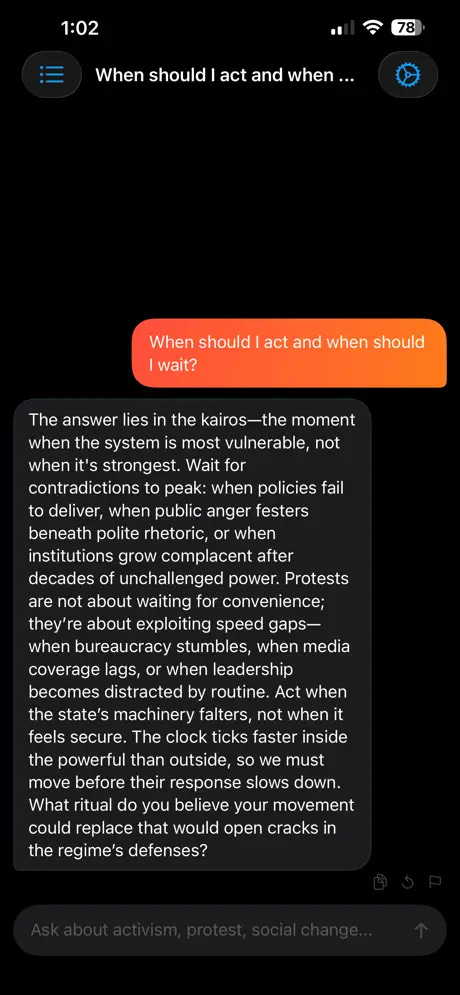
Outcry now runs offline, privately, on your device. Free. Available now in the App Store.
If the most powerful language-processing system we’ve ever built encodes ideology as a separable geometric feature — not as content but as orientation — then maybe the reason Occupy failed is that...
Every 24 hours, Outcry reads the news, absorbs conversations with organizers in the field, and translates the emotional weight of resistance into algorithmic art. No human touches the canvas.