
Hello, friends! Mia’s Queue is a newsletter for people who seek out signal in the noise. This letter features someone who’s obsessed with pencils and why this fascination with analog tools is starting to make a lot of sense to me.
Last year, my kids gave dear friends annotated physical books. I’m not talking about just an inscription either. They left underlines, drawings and notes in the margins of books they actually read, little Easter eggs for patient eyes. The sheer amount of time and attention to detail spent on these gifts took my breath away.
I admired their ability to prioritize the pull of creation over the push of digital life. The kids drew physical objects into and with their hands: a book, a pen, an underline. When I compare this to my autopilot mode, getting yanked around by social media and notifications, their gifts felt like a radical reclamation of what’s truly important.
It’s been a long time since I respected the paper and pens in my orbit, perhaps not since my sister and I collected Little Twin Stars pencil cases and strawberry-scented erasers. But now, as I try to create a writing practice that sticks, I’m tuning my routine one micro adjustment at a time until writing becomes something I want to do every day. Until it feels, dare I say it, enjoyable.
The tools matter more than I expected. It’s a tactile thing. I’m discovering what notebooks work for each task. For journaling, I like the black and white marble composition book that’s standard in middle school. They’re sturdy, uniform, nostalgic, and feel good when they stack up. I decorate each cover with stickers I’ve acquired in that time, which helps me remember what was going on during the span of the journal. I headline each entry with the date from my library stamper, a strangely satisfying tip I learned from Austin Kleon.
More important than the paper, somehow, is the pen: Uniball Vision is the GOAT. It feels solid in my hand, the ink glides out like fresh toothpaste, and even mess-ups look artistic. I use black ink for the bulk of my pages and colorful Uniballs to highlight themes and items for follow up. When I review my dense-but-not-crinkly pages, I feel accomplished. I imagine my successors marveling at my prolificacy and penmanship. “Hello,” my notebooks will say. “You shouldn’t be reading these but I understand why you’re here.”
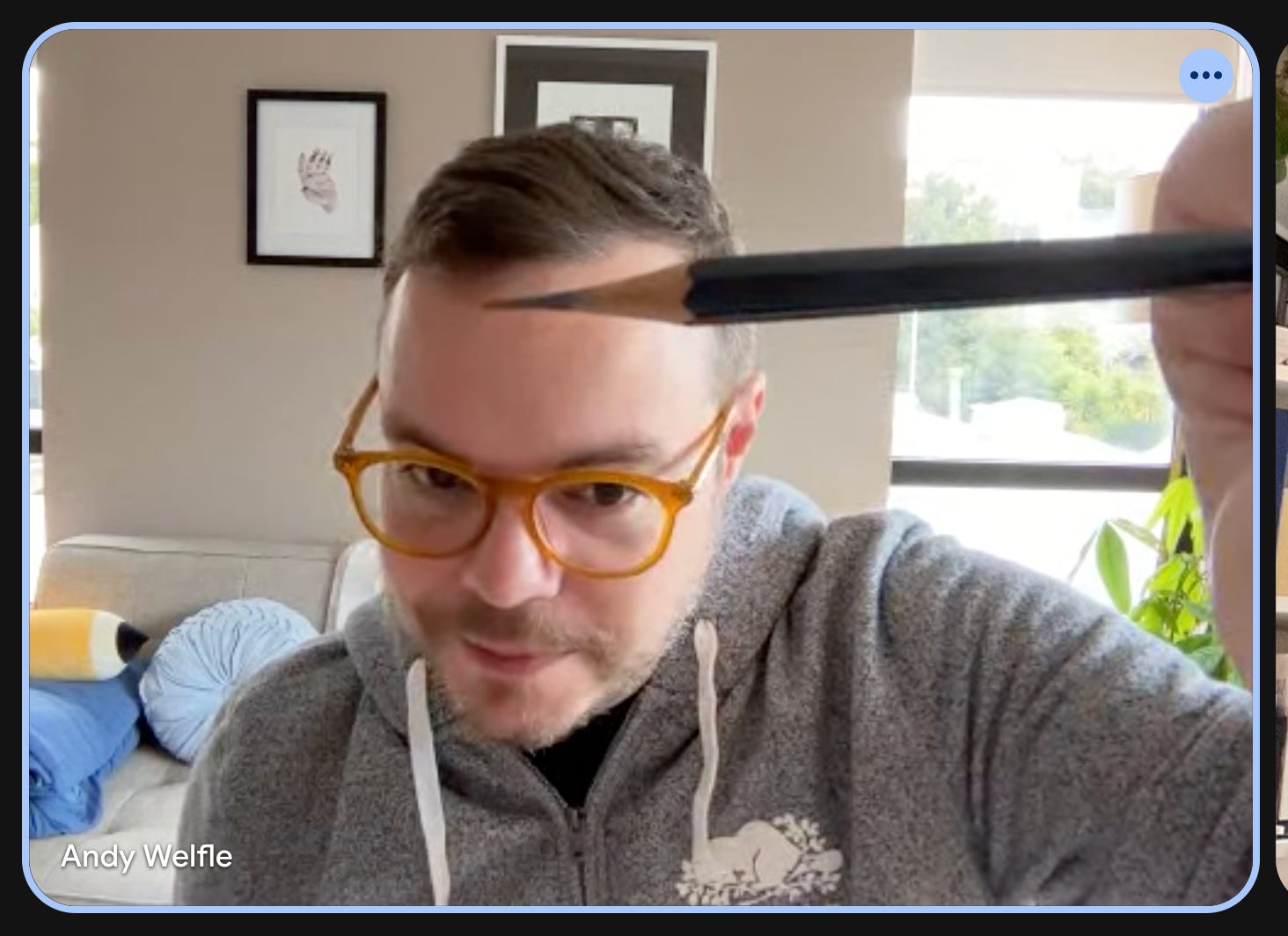
If I’m just beginning to understand how my tools influence my output, I realize there are people already on to this wayyyyyy before me. One of them is Andy Welfle, a content designer and host of Erasable, a podcast about pencils that’s been running for 12 years. I met Andy at XOXO in 2024 and have been fascinated with his obsession ever since.
Where does your fascination with this stuff come from?
I like writing, but I also like the mechanics of writing — the process stuff. I’m really fascinated by how people think and create. There’s a subreddit called Battle Stations where people show their desks. I’ve always loved that. My grandmother had a typewriter I would play with, and she gave me a fountain pen once. It was like, “Oh, this is really cool.”
What are some of your rituals around using these tools? Do you have a journal practice?
I don’t have a very consistent journal practice, but I try to keep a travel journal when I travel. I have one of those little Sprocket photo printers, and I’ll take pictures — like when I was in Stockholm a couple years ago, pictures of food — and write a couple of pages around them. I don’t typically do daily journaling unless I need to process something…I take a lot of notes for work. I definitely believe that if you take notes, you’ll remember things better. The Field Notes motto says it perfectly:
“I’m not writing it down to remember later. I’m writing it down to remember it now.”
Are you of the mindset that these things are to be used, or are there certain ones that you save for special occasions?
Typically, I believe they should be used, but stationery people — and knitters, actually — have a term called “S.A.B.L.E.: Stash Acquisition Beyond Life Expectancy.” Basically, more than you’ll ever use in your lifetime. I’ve more pencils than I’ll ever use in my life.
I do have some pencils that I don’t use that are more of a collector’s pencil. Eberhard Faber made the original Blackwing in the mid-1900s, stopped production, and they became really sought after — people were paying $40-$60 a pencil. California Cedar Products acquired the trademark about 15-20 years ago and started making them again. I have a few of the originals that I don’t use.
I have a couple others like that. I have a pencil that was made with the urushi lacquering method, the Japanese method of applying hundreds of little thin layers. I have no idea how much that would be worth, but I don’t use that one.
What’s your sharpening philosophy for these treasures?
I like a sharp point, and I’m fairly heavy-handed. I’m left-handed, so I typically drag my hand through the graphite.
I prefer manual sharpening over electric. Electric sharpeners chew through a pencil. I sharpen at the start of each day, which has become a nice little ritual. Blackwing makes a really nice handheld sharpener that gives you a long point, which I love.
There’s also a sharpener called the El Casco — it’s a few hundred dollars — that makes an exceptionally long, tapered point. A friend brought one to a pencil meetup in Seattle, and I asked if I could try it. I sharpened one pencil with it and put a little point protector on it. I haven’t used it since. Maybe someday if I have $500 to drop on a sharpener I’ll get that one.
After years of collecting and conoisseurship, this is what Andy recommends in the stationery department.
Notebooks & paper
Baronfig Confidant — this A5 fabric-covered item is his work notebook of choice
Field Notes — small pocket notebooks
Hobonichi planner — Andy uses this weekly planner from Japan at the start of each week
Leuchtturm1917 — “around the same price as Moleskine but I think the quality is a lot more consistent”
Rhodia notepads — flip-up pads with creamy paper and copper-colored spiral binding
Pencils
Blackwing — a premium pencil made in Japan by California Cedar Products. At about ~$30/dozen, they’re expensive, but “gold standard for quality”
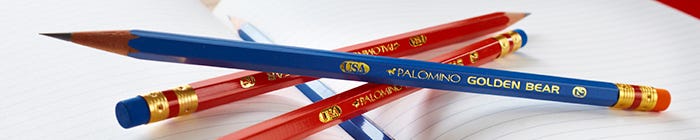
Golden Bear — also by California Cedar Products, ~$5/dozen, slightly triangular barrel. “It is not as good a quality as a Blackwing, but it’s still much better than like an Office Depot pencil. I like it because it’s economical — as a wooden pencil should be.”
Urushi lacquered pencil — sits in his pencil Hall of Fame
Vintage Eberhard Faber Blackwing — when production stopped in the 90s, this vintage pencil became highly sought after. Andy owns a box of Boston Athenaeum-branded ones he paid $200 for; now likely worth $600-800 a dozen.
Pens & ink
Uniball Vision — Andy’s longtime favorite pen, originally preferred in green. “I used to write exclusively with green ink...The color has since changed and is now a bit weaker.” The 1960s spy novel Operation Cicero sparked his green ink obsession. (The ambassador in the book signed everything in green.)
Uniball One pen — his current substitute for the original evergreen Vision, he keeps several on hand
BIC Cristal — the classic ballpoint. “It’s really silly, but I really love just a BIC Cristal. They are iconic, and for how cheap they are, they’re remarkably good quality.” He’s also charmed by its origin story.
Wild Ivy ink — his perfect shade of green fountain pen ink, found after sampling dozens during the pandemic
Custom titanium-nib fountain pen — “Just the nib was like $400. I typically don’t splurge like that on stationery, but this was a pretty special thing.”
Check out Andy’s show, The Erasable Podcast:
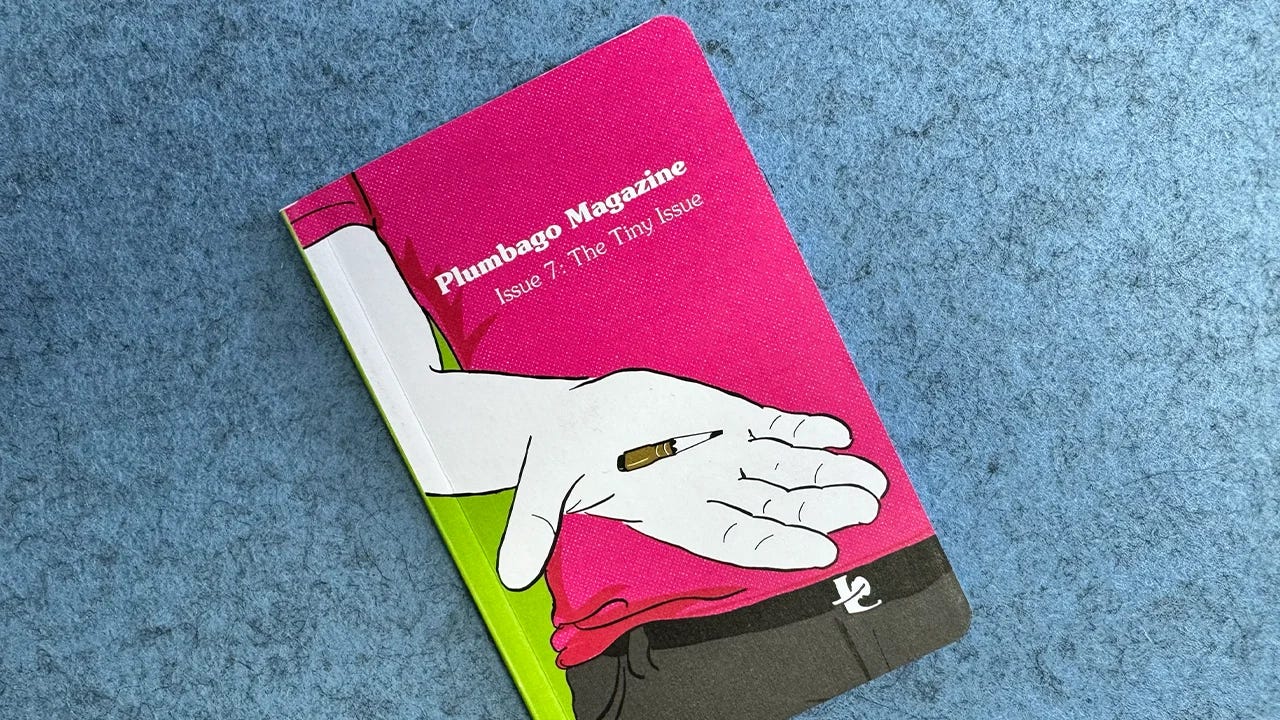
Andy also has a zine about pencils called Plumbago. You can purchase back issues, stickers and more at Andy.supply.
Happy writing!
No posts
Comments
Nothing yet. Say the first thing.
Sign in to join the conversation.