
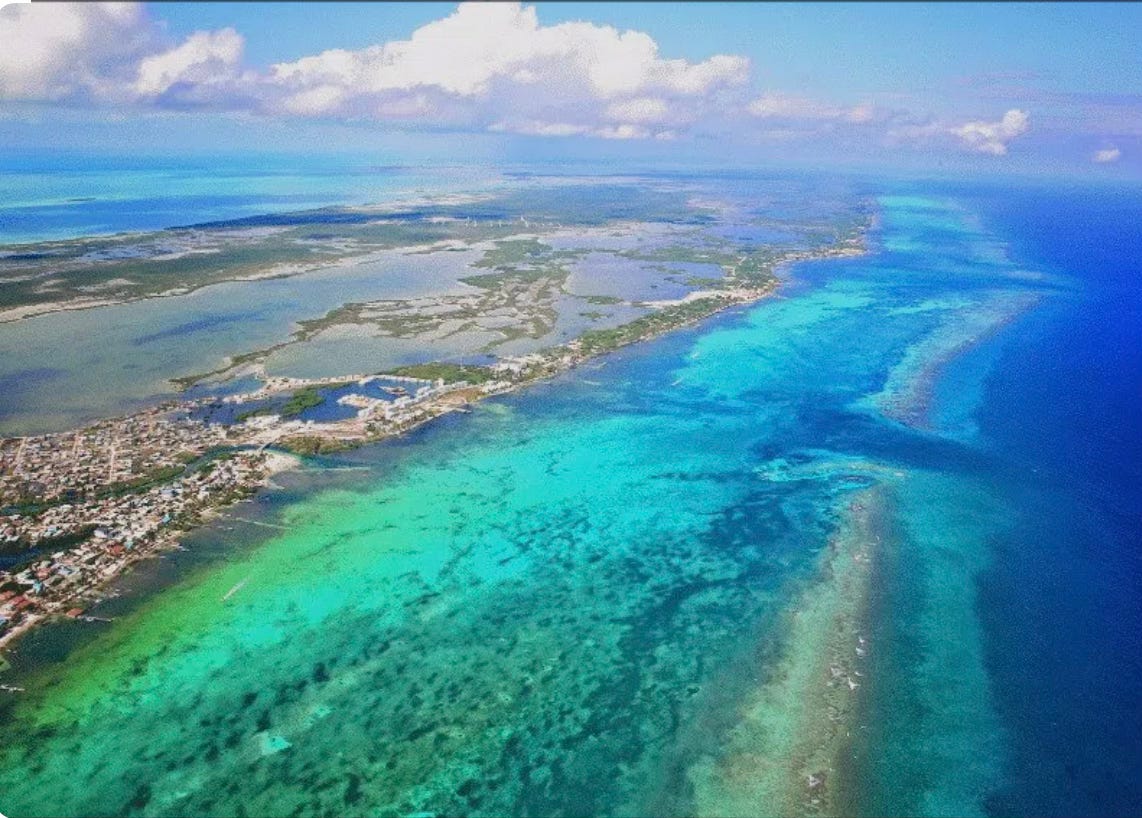
Hola Amigos! Thank you for being here. Nature’s beauty comes at a price—that price is to simply let it be. But can we humans do that? Or will greed or desire step in and change the metric? Allow me to tell you a tale of a fishing village 30 miles from a tourist mecca and how its natural treasures were there for the taking—until they weren’t. On a different note, a very sad one, there’s been a death in my family and I’ll be away at the funeral. Not sure what my mindset will be, so if I’m missing for a few days, that’s the reason. Just to let you know.
Though we hadn’t been in Puerto Morelos long, I’d already met our neighbor, editor for The Miami Herald/Cancun edition, and the mother-daughter team, Ana Mario and Ana Luisa, who owned Amar Inn, a cozy oceanfront BnB a few blocks north of town. I knew they’d founded ecological group Lu’um K’aa nab, an NGO, to save the reef—our town’s lifeline for food and jobs. Puerto Morelos was at a critical juncture having just been recognized as a yet undiscovered paradise with wide open beaches and lots of land. To developers, beachfront land is a magnet, and people like Ana Mario and Ana Luisa wanted to hold those developing it accountable.
Quintana Roo’s Secretary of the Environment was on record emphasizing his desire to preserve the beauty and integrity of the state’s land, beaches and mangroves. “No construction will be taller than a palm tree,” he declared.
Palm tree metric
Known as the Palm Tree metric, that meant all building construction must be limited to 12 meters or three stories, the height of a Caribbean coconut palm. The goal was to prioritize natural landscapes over high-rise development, a direct swipe at Cancun’s vertical skyline.
Thus, three story building plans would be drawn and submitted for development at local planning offices. In theory, a splendid idea. That winter, ground was cleared for a 100-room boutique hotel several lots south of our house and in front of our editor neighbor’s. She and another neighbor, both environmentalists, followed the development with interest, even going so far as to check with Cancun Planning authorities re scale and height. Submitted forms showed three-stories only, as the law stated. What went up however was four-story. Chic and nicely done—no qualms in the looks department—but four stories. Taller than a palm tree. Someone had played let’s make a deal.
Opening shots
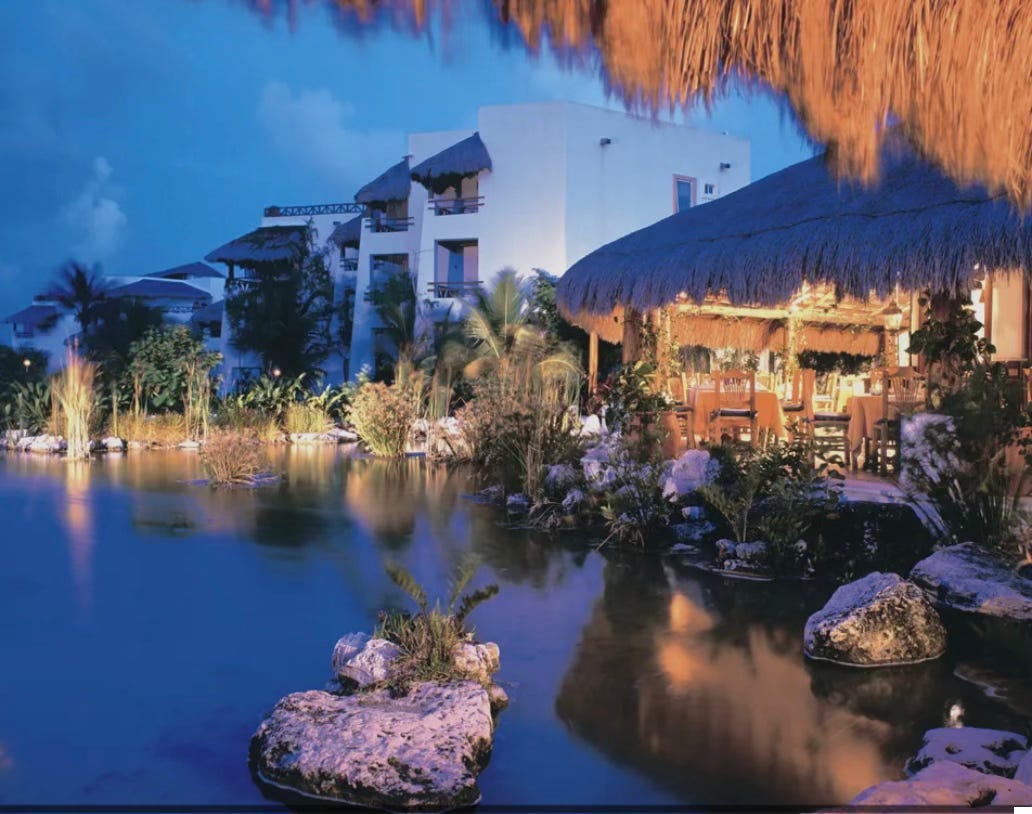
The battle was on for the development of once sleepy Puerto Morelos. At the other end of town a Spanish consortium had submitted plans for a mega hotel, Puerto Morelos’ first. That land had lain fallow because it was mangrove land. Untouchable. The editor, sniffing out a possible story, periodically checked how construction was coming along, only to discover a chainlink fence soon surrounded the project with ‘No Pasa’ signs firmly in place. In the background she could hear the far-off rumble of bulldozers. Curious, she decided to check things out after dark. Armed with flashlight, she saw a row of halogen lights had been installed far from the chainlink gates. Bulldozers aided by artificial light worked nights to keep the landfill of the mangroves far from prying eyes.
Lu’um K’aa nab had arrived at the perfect time. If the land was being destroyed, the ocean and reef would be next. The fight was on.
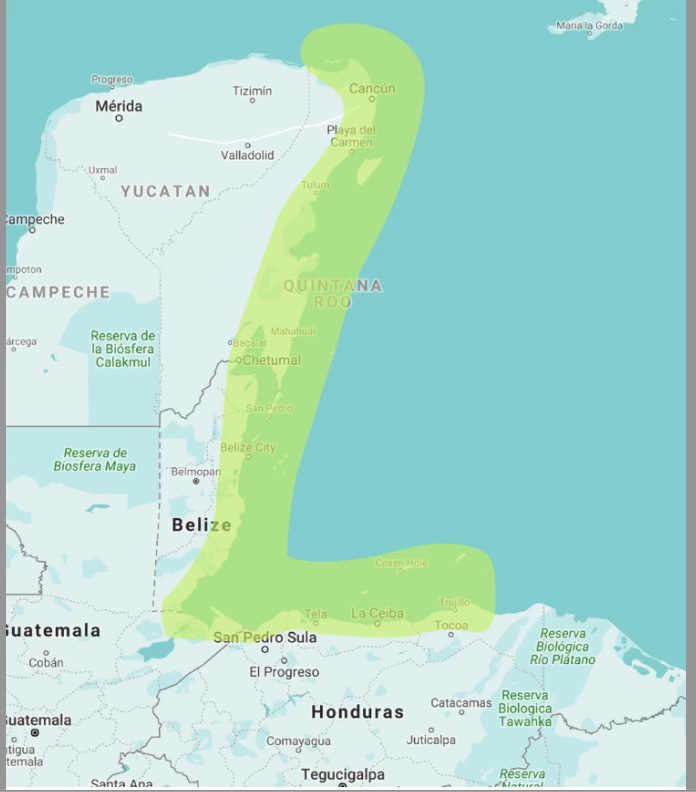
Stretching 625 miles along the coast of Mexico’s Yucatán, Belize and Guatemala to the Honduras’ Bay Islands, the Mesoamerican Reef (MAR) is the second largest barrier reef in the world. Originally known as the Palancar Reef, its veritable wonderland of white sand beaches, mangroves, wetlands, lagoons, and coral gardens are a joy to behold.
The reef sits a half mile off Puerto Morelos’ shore and can be seen as a long white line with waves cresting over the top. It’s been a boon to fishermen for generations and more recently to dive and snorkel boats that take people out to see this natural wonder both above and below the Caribbean waters.
Biodiversity reigns
Its beauty draws thousands of visitors annually especially around tourist hotspots in Cancun and Belize. Its biodiversity includes 500 fish species, 60 coral types, and 350 types of mollusks.
Endangered mammals and other species also call it home: the saltwater crocodile, green, hawksbill and loggerhead sea turtles, Nassau and goliath grouper, the largest population of manatees in the western Caribbean. It provides habitat for whale sharks, the world’s largest fish. Lobster and conch also make their home in reef waters.
Roughly two million people enjoy its benefits. Thousands of small scale fishermen depend on it, and it supports the region’s multi-billion dollar tourism industry.
Ana Mario and Lu’um K’aa nab
Though the Mesoamerican Reef and its surrounding mangroves are now under federal protection, it was not always so.
Ana Mario Almada had founded Lu’um K’aa nab to preserve the coral reef just off Puerto Morelos’ shores. Known as just Ana Mario, the environmentalist and community leader has been credited with the initiative that led to the protection of the local reef system.
Her efforts were central to the creation of the Puerto Morelos Reef National Park (Parque Nacional Arrecife de Puerto Morelos). Ana Mario played a key role in advocating for the reef to be recognized as part of the Great Mesoamerican Reef and in 1998 the reef and surrounding mangroves were placed under federal protection.
She will be remembered as a visionary whose early activism prevented large-scale development from destroying the town’s natural heritage. Though Lu’um K’aa nab is no longer active as a formal organization, it played an essential role in the creation of the national park.
Presidential decree
I’ll never forget the day I walked into Pepe’s Market and while waiting in line I saw a Mexico City newspaper with a front page photo of Ana Luisa, Ana Mario’s daughter, head to head with then president of Mexico, Ernesto Zedillo. The headline read, “Puerto Morelos Reef National Park Officially Declared a Marine Protected Area.” They did it! And went right to the top! I just about fell over. I could not imagine having the president’s ear granted to a mere citizen in the US—Congressperson or senator, yes, but president?
The local fishermen, Ana Mario and Ana Luisa realized time was of the essence. The sea was the town’s lifeline. When 1997’s El Niño caused severe stress and dying off of the reef’s corals, fishermen were in trouble. And Ana Mario knew it.
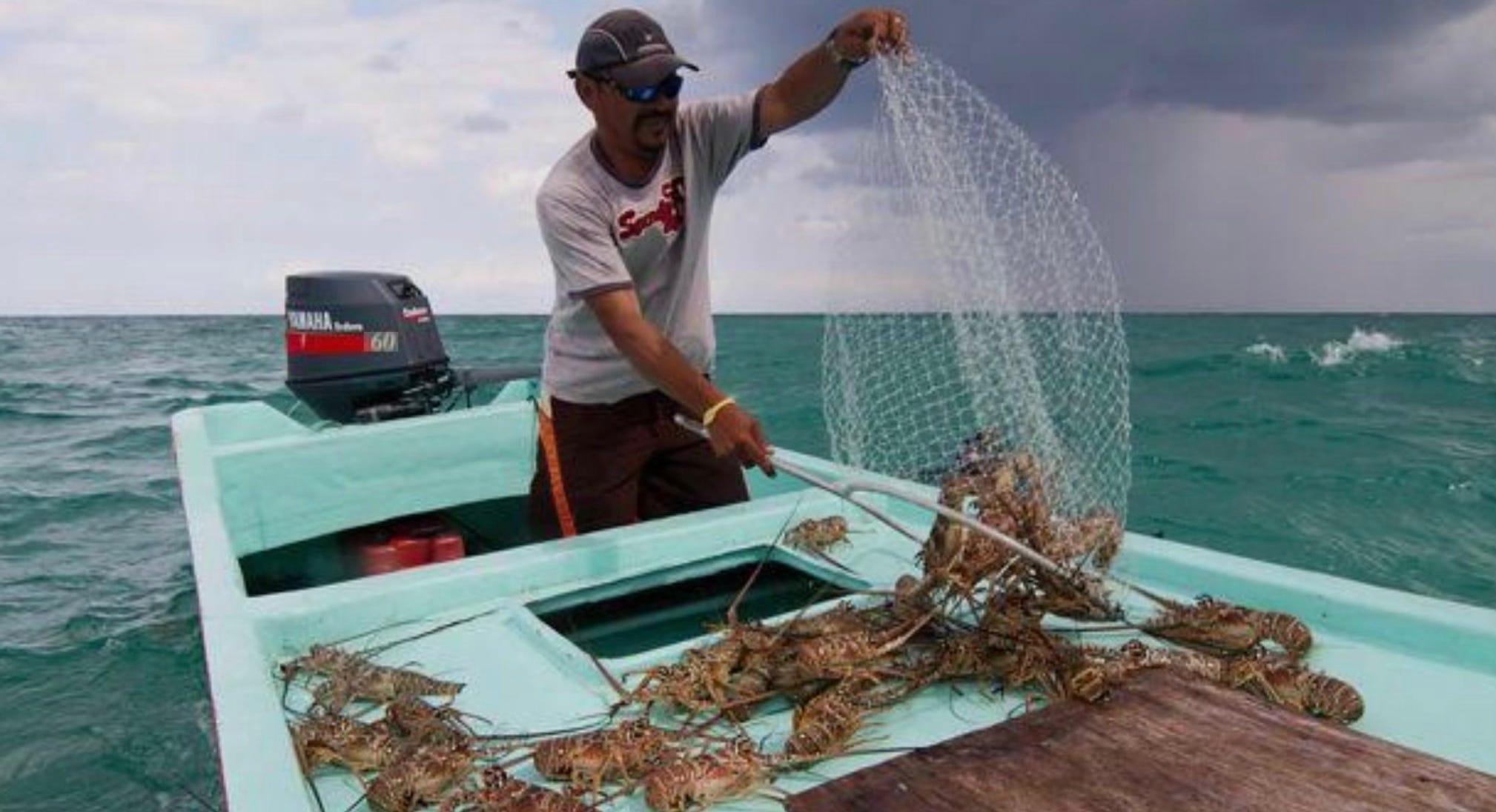
She assembled a group of like-minded women and started talking to the fishermen. They decided to establish a community-based approach that included them as stakeholders in its management. Puerto Morelos became one of the first Marine Protected Areas in Mexico. It was also designed as part of a wider effort to combat threats from tourism, overfishing and coastal development.
Part of the ecosystem
The coral reef is just one component in an ecosystem that includes mangrove forests, lagoons, and coastal wetlands. All elements are important for the preservation of the whole. Mangrove forests function as a buffer or sieve, keeping land pollution from reaching the ocean. Mangroves are also breeding spots for fish as well as feeding grounds for marine life.
Major threats are many: Climate change and hurricanes, ocean warming, water pollution from untreated sewage, fertilizer run-off, overfishing and trawling, coastal development creating habitat loss, recurring sargassum blooms since 2015, and invasive species like the red lion fish. Unfortunately, coastal development often comes at the expense of the mangroves that are vital to the reef’s health.
Artificial reef
A recent 2024 report from the Global Coral Reef Monitoring Network indicates a mix of hope and urgency: “Despite improvements, the overall health of the reef system is facing increasing threats. . . The health of the Mesoamerican Reef remains a concern, with 286 monitored sites categorized as poor, 39 percent, or critical, 23 percent, condition. However, sites in fair and good condition have improved, rising from 20 percent to 28 percent and five percent to nine percent respectively.”
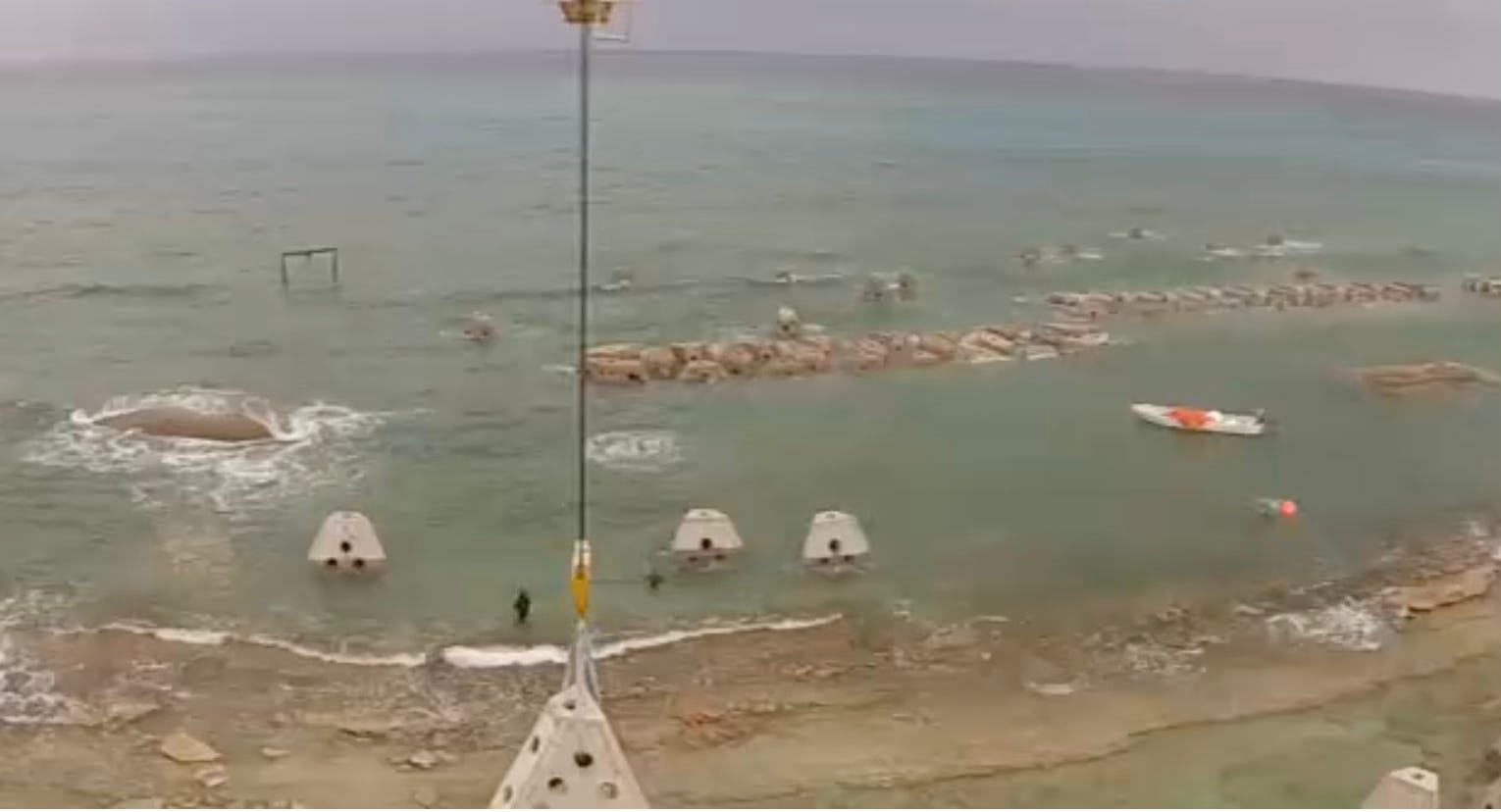
One protective measure was the construction of a 1.9 kilometer artificial reef called the Kan-Kanán project, Mayan for guardian serpent. In 2014 one thousand hollow pyramid structures of cement and micro silica were placed on the ocean floor near Punta Brava, Puerto Morelos.
Twelve years on, Kan-Kanán is working as a protective reef breakwater and thriving artificial marine habitat. Coastline erosion, however, affects the entire QRoo shoreline due to developments built decades ago on dunes and areas that lacked environmental regulation, according to the Minister of Ecology and Environment.
Reef Futures 2026
This December, the Riviera Maya will host Reef Futures 2026, a global coral restoration conference. As a stop gap on possible reef loss, artificial reefs are becoming more common. Rio Lagartos, Yucatán, has 30 concrete reef structures in place as of this year. Coral Park, near Paamul, is one year into construction. On a massive industrial scale, Eternal Reefs Expansion (Puerto Juárez/ Cancun) will initiate the building of 700 concrete structures between Cancun and Isla Mujeres, if environmental density layouts for the coastal zone between Cancun and Isla Mujeres are approved.
Reef Futures brings marine scientists in to evaluate long-term performance of coral restoration projects and artificial structures. No doubt serpent-shaped Kan-Kanán in Puerto Morelos will get fresh eyes on it, checking how it’s holding up. And once approved and blessed, the Maya gods will be proud.
If you hit the heart at the top or bottom of this email, you will make my day and make it easier for others to find Mexico Soul, or even better, share it with friends. Gracias!
Laura Schulthies, Daniel Mode. “The Mesoamerican Barrier Reef.” Island Life. March, 2026.
Suzanne Barbezat. “How to Visit Mexico’s Mesoamerican Barrier Reef.” TripSavvy. Feb 11, 2019
Admin. “Facts About the Mesoamerican Reef in Belize.” Central America Vacations. September 28, 2017.
R.E. Rodríguez-Martínez. “Community involvement in marine protected areas: The case of Puerto Morelos reef, Mexico.” Instituto de Ciencias del Mar y Limnologı /UNAM. June 2007.
Staff. “A Glimmer of Good News from the Mesoamerican Reef.” Global Coral Reef Monitoring Network. August 11, 2024.
Staff.” Kan-Kanán Artificial Reef.” Mexico News Network. November 7, 2015.
Staff. “Mesoamerican Reef.” The Nature Conservancy. 2018.
MY BACKSTORY—Puerto Morelos sits 100 miles from four major pyramid sites: Chichen Itza, Coba, Tulum and Ek Balam. Living in close proximity to this Maya wonderland made it easy to pyramid hop on our days off from Alma Libre Libros, the bookstore we founded in 1997. Owning a bookstore made it easy to order every possible book I could find on the Maya and their culture, the pyramids and the archeologists who dug at these sites and the scholars who wrote about them. I became a self-taught Mayaphile and eventually website publishers, Mexican newspapers and magazines, even guidebooks asked me to write for them about the Maya and Mexico. I’m still enthralled by the culture and history and glad there’s always new news emerging for me to report on right here on Mexico Soul.
Comments
Nothing yet. Say the first thing.
Sign in to join the conversation.