
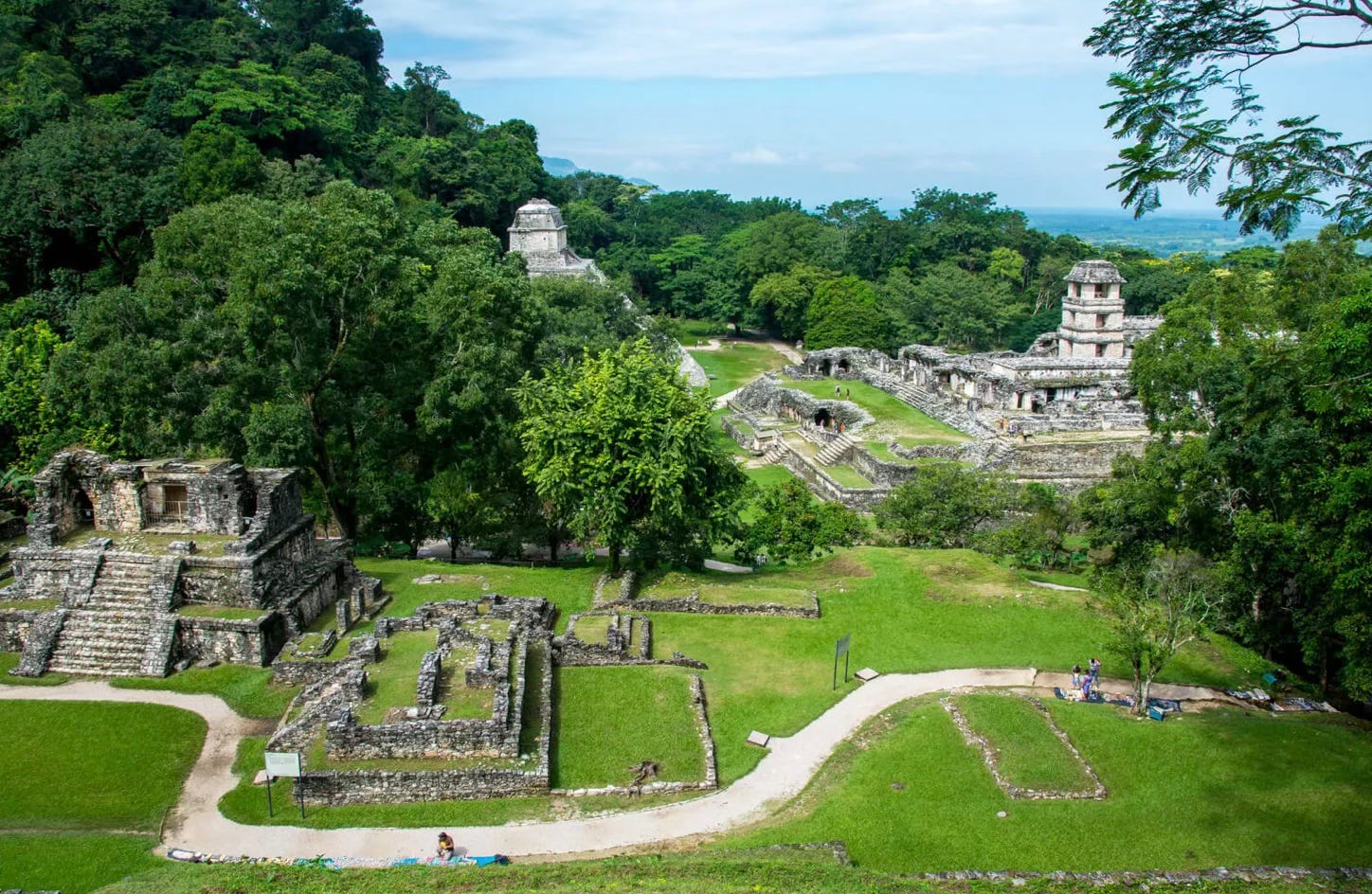
Hola Amigos! Today I want to share how the Maya code was broken. Though a long line of scholars tried to crack it, I believe three separate incidents were tantamount to bringing about the final breakthrough. Please understand, this is a very condensed version. Allow me to take that leap and tell you a story of a mysterious civilization deep in southern jungles, surrounded by stepped pyramids and ancient columns, all etched in a mysterious indecipherable script. And how it plagued archeologists no end—until it didn’t! Please read on.
In 1973, a small gathering in Palenque broke the Maya code achieving what decades of scholars could not. Maya hieroglyphics had stymied archeologists ever since re-discovering the pyramids in the 1840s by explorers John Lloyd Stephens and Frederick Catherwood.
Though many tirelessly worked at cracking the code, a trifecta of events brought about the historic breakthrough. Two can singularly be credited to determined scholar/epigraphers. The third I credit to a group who came together en masse at Palenque at historic round table talks that cracked it wide open. And as archeologist, artist and author Linda Schele wisely stated in A Forest of Kings, “No one person is, or ever can be, responsible for the sum of the discovery.
“The Round Table discovery came at the end of 150 years of inspired work by hundreds of people who built the foundation that made it possible this time at Palenque.”
First and foremost: the priors
It’s not possible to name all here, but I’ll list a few who were key in opening the portal to understand the Maya world. Though a European genius named Constantine Rafinesque cracked the Maya counting system, and librarian Ernst Förstemann, working in the library that owned the Dresden Codex, decoded their astronomy tables along with how they measured time, and UK’s Alfred Maudslay, fascinated by writings on the Maya, worked with a glass-plate camera to capture close-up glyph images that gave Maya studies its first systemic body of inscriptions—I am going to jump ahead to my First, Second and Third place winners in the race to break the code.
For now, I will merely make mention of the one person who, though a genius in his own right, single-handedly quashed an early victory in cracking the code: British archeologist, J. Eric S. Thompson. Thompson became the world expert in glyph studies with his numbering system that assigned a unique ‘T’ number (T for his surname) to every single glyph in their writing system. He also deciphered signs related to the Maya calendar and astronomy, but was adamant that no other way than his existed. He dismissed the idea of a phonetic Mayan language, stifling decades of future research by a multitude of archeologists. After his death in 1975, younger scholars began using the methods of one of those listed below, which finally unlocked the true meaning behind Maya hieroglyphs.
And the winners are . . .
1) Yuri Knorozov. It took over a hundred years for Maya hieroglyphics to make their way to the annals of scholarly interest and dissertations. Not until the 1950s did the world gain a foothold on how to proceed in deciphering the glyphs. This came about from the Soviet Union, by Russian Yuri Knorozov, linguist, epigrapher and ethnologist.
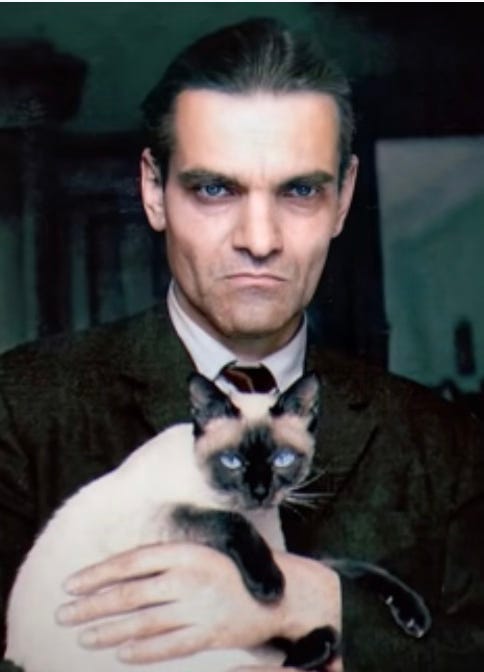
He’d figured out how to read their hieroglyphics by studying the Maya alphabet. This had been recorded by Spanish Bishop Diego de Landa, the priest responsible for the 1562 auto-da-fé that destroyed all Maya cultural works with the exception of four codices or paperback books. If ever there was a bogeyman of the Spanish conquest, it was Landa.
After Landa’s annihilation of a society, the King of Spain ordered him to write down everything he knew about the Maya and their civilization. He wrote the book Relación de las Cosas de Yucatán, in which, among other things, he reproduced their alphabet. But that alphabet, which was in fact the key to decipherment, was ignored for centuries because it did not make sense to the Western mind.
After digesting the bishop’s book, Knorozov published a paper, “Ancient Writing of Central America,” based on what he’d observed in other early scripts and decipherment systems, such as ancient Egyptian. Though the general consensus was the Mayan script did not have these features, through his studies in comparative linguistics, Knorozov came to believe Mayan script was no different.
His insight led him to treat Mayan glyphs as per Landa’s alphabet, though he considered it not an alphabet but a syllabary, meaning each individual symbol represented a spoken syllable, as in the Chinese language. In effect, the Landa “alphabet” was to become the Rosetta Stone of Mayan decipherment.
J. Eric Thompson firmly rejected Knorozov’s idea of a phonetic Mayan language, and combined with Cold War tensions of the day, Western scholars ignored Knorozov’s premise for decades.
2) Tatiana Proskouriakoff. Though Thompson and the Cold War suppressed Knorozov’s early success and ability to communicate his theories to the West, his concepts hit home with Russian born architect and epigrapher, Tatiana Proskouriakoff. Her family became exiled in the US during the 1917 Russian Revolution and she remained in the US permanently. Her schooling led her to graduate studies in architecture at University of Pennsylvania where she prepared archeological illustrations as a volunteer in the university museum. Through her work with the museum’s curator, she was invited in 1936 to join their excavation work at the Maya site, Piedras Negras, in Guatemala.
After her field trips to Piedras Negras and later to Copán, from 1936 to mid-1940s, her stunning sketches of the pyramids caught the eye of famed archeologist Sylvanus Morley. With her architectural background she surveyed the sculpted Copán plazas to paint how the city looked at its height. She’d already completed a drawing of Piedras Negras.
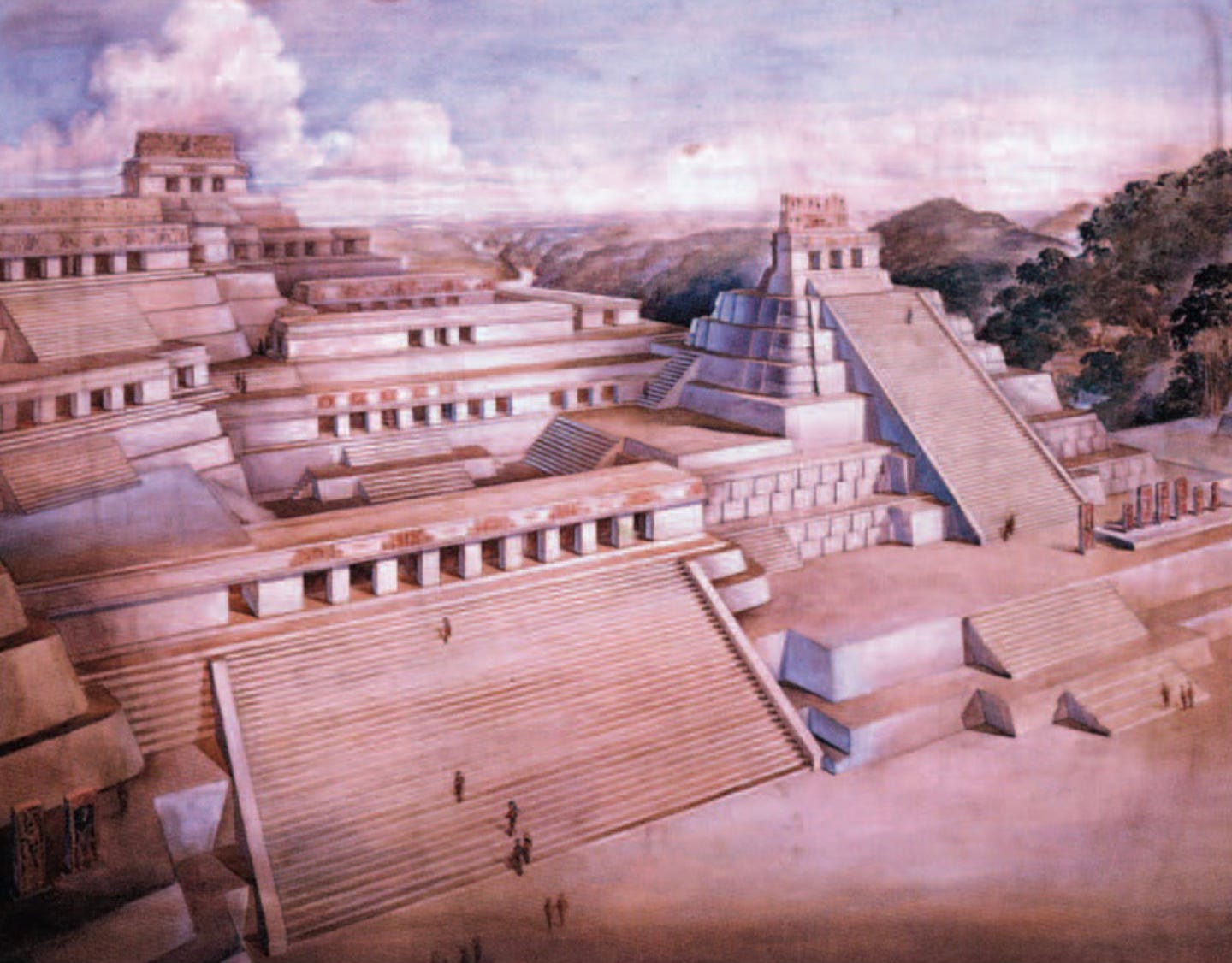
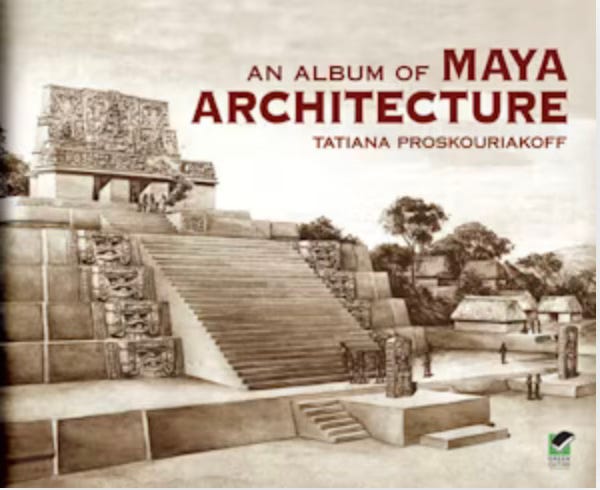
Eventually hired by Carnegie Institute with blessings from Morley, she was sent to document El Castillo at Chichen Itza, then spent five years excavating nearby Mayapán, and soon after published her landmark book, An Album of Maya Architecture. In 1958, moving on to Harvard’s Peabody Museum, she shifted her focus to the Maya writing system. In 1960 she published her historic breakthrough after 25 years of studying the physical monuments in person before deciphering their secrets.
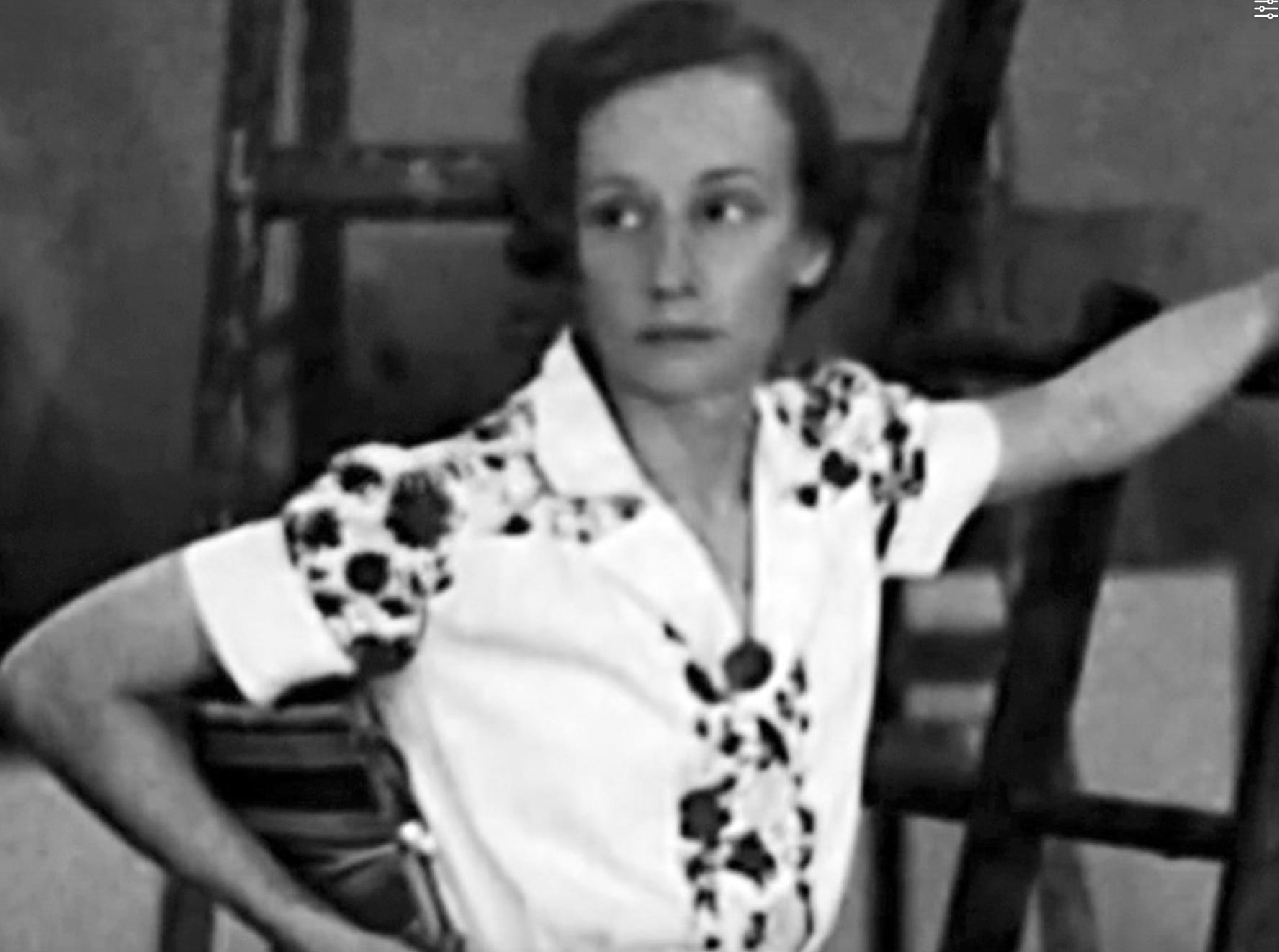
She revolutionized the study of Maya hieroglyphs by proving the glyphs recorded real human history, not only religious and astronomical cycles which Thompson had insisted upon. With her architectural training she put to use the background of pattern, art, and drafting to assist in cracking the code, proving that Mayan writing used pictures, called glyphs, that stood for sounds and words.
Her research inspired Peter Mathews, University of Calgary grad student, who used Proskouriakoff’s glyph information as a bible, transcribing her work onto index cards he and Linda Schele used at Palenque to assist in cracking the code.
The idea
3) Palenque Round Table. Enter Merle Greene Robertson, artist, explorer, anthropologist, epigrapher, teacher, and much more. The woman is nearly indefinable—so interwoven was the role she played with her Maya work and ability to organize and pull people together, including at the 1973 Round Table.
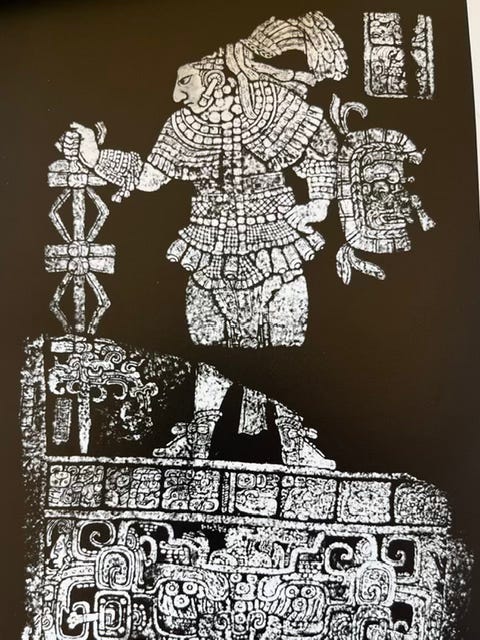
Over a 50 year period she taught students, trekked to scores of pyramid sites in Mexico and Central America, revived an ancient archeological rubbing technique for stelae and Maya monuments using Japanese ink on rice paper creating over 5000 rubbings, and assisted in breaking the Maya hieroglyphic code by co-founding the Palenque Roundtable talks in 1973 along with artist and soon-to-be archeologist Linda Schele. I wrote about Robertson here.
At Palenque, along with fellow scholars, they shaped an understanding of ancient Maya civilization. Robertson’s ability to galvanize others—the ultimate organizer and planner—made her a fulcrum at the very moment the Maya re-emerged on the world stage after a long overdue absence.
Round Table discussion
The idea of a discussion to break the Maya code came like a flash to Robertson and Schele. Schele, artist and art professor at University of S. Alabama, had traveled to Mexico with her husband in 1970. He’d received a commission for architectural work that took him to the Yucatán. I wrote about Schele’s circuitous entry into the world of the Maya here.
In 1973, things were beginning to gel in the Maya world. Through Merle’s and Linda’s conversations, an idea emerged—why not have a meeting of like minds? And Robertson had just the place: Na Chan-Bahlum, her and husband Bob’s home in Palenque.
Concerned that Maya research was limited to a few experts with special access to key resources, the Robertsons built their home where anyone could come to study the site’s art and inscriptions. And come they did.
The two sent out feelers and soon afterwards, Merle heard from famed archeologist Michael Coe who suggested to convene in December in Palenque. The idea ignited and the first Maya conference was on the books.
Through discussions, lectures, late nights and visits to the pyramids just steps away, the group was closing in on breaking the hieroglyphic code. The conference became known as Primera Mesa Redonda de Palenque.
Talks ranged from art, history, chronology, iconography, early explorers, sacrifice, inscriptions, trade and the surrounding area. Word spread, everyone came: Local guides, archeologists, scholars, artists, students. Fourteen universities from Mexico, the US and Canada attended. All attendees were asked to present a lecture. By its second year, the governor of Chiapas opened the ceremonies in Palenque’s Municipal Auditorium. The first had convened in the living room of Merle and Bob’s Palenque home.
Breakthrough
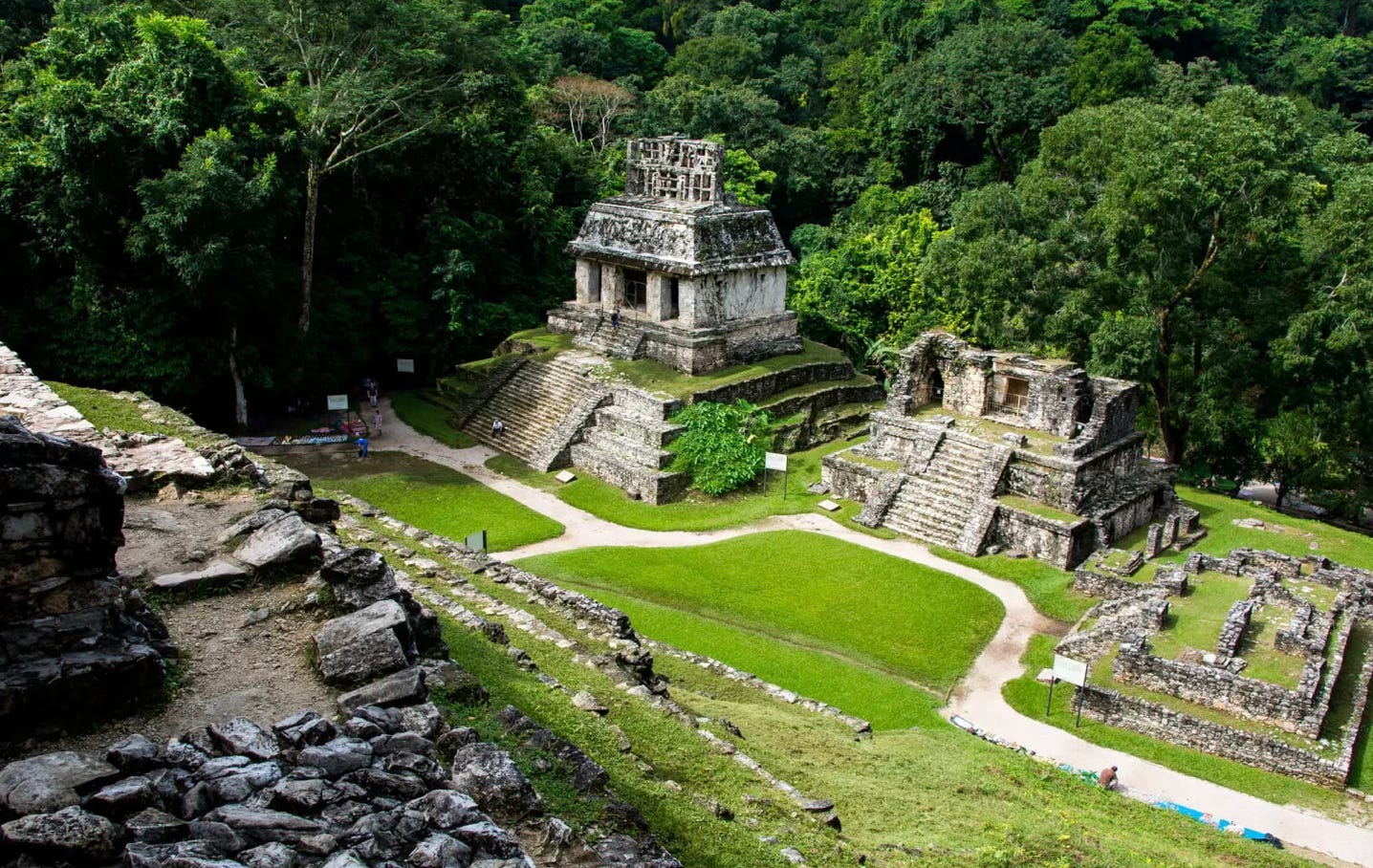
That first year’s highlight was the discovery of the names of Palenque’s rulers. In part that happened because of Schele’s inability to handle what she considered extremely scholarly Maya discussions. Her go-to for sanity was walking the short distance from Merle’s house to the Temple of the Cross. On this particular occasion, she brought along Peter Mathews, keeper of comprehensive index cards he created through his study of Proskouriakoff that included the ‘T’ numbers.
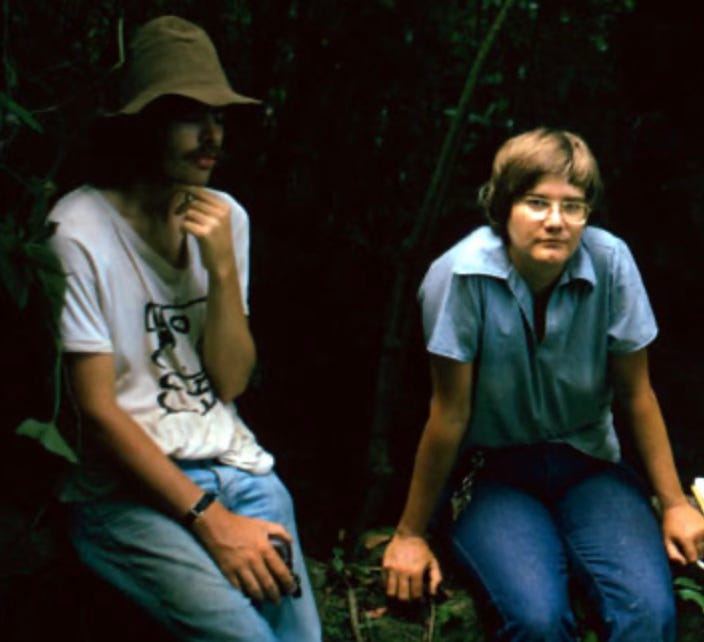
He’d arrived at the conference with hands-on structural knowledge of the site’s texts, having cataloged every single inscription at Palenque before arriving, using Thompson’s classification system.
With the use of the cards and an ‘aha,’ near out-of-body experience for Schele as she grasped Palenque’s iconography and artistic patterns—seeing all with an artist’s rather than scholar’s eye—they created the first complete timeline of the kings of Palenque. Mathews eventually won a MacArthur Genius Award for his incredible skills in reading and cataloging glyphs.
Proskouriakoff’s groundbreaking study proved that the monuments actually recorded the historical biographies of real kings, identifying specific glyphs for ‘birth’ and ‘accession to the throne.’ Schele and Mathews applied her historical approach to unlock the text at Palenque.
This milestone was made possible by bridging the structural insights of Tatiana Proskouriakoff with Mathews’ meticulously organized index cards and the duo’s field observations at the Temple of the Cross.
Artist Schele and grad student Mathews achieved a monumental breakthrough in cracking the code by reconstructing the dynastic history and life stories of six Palenque rulers in just three hours. They used the Table of the 96 Glyphs, a 54 x 23 inch carved stone panel from Palenque, with 96 detailed hieroglyphics arranged in a grid of recorded dates. Discovered in 1935, it told the story of Palenque’s royal rulers and pieced together a massive timeline of the city’s kings. Before this meeting, researchers only vaguely understood the tablet. The Dresden librarian Förstemann had interpreted the Maya number system as Base 20 math, their use of the zero, and their calendar system. The duo used that as a base.
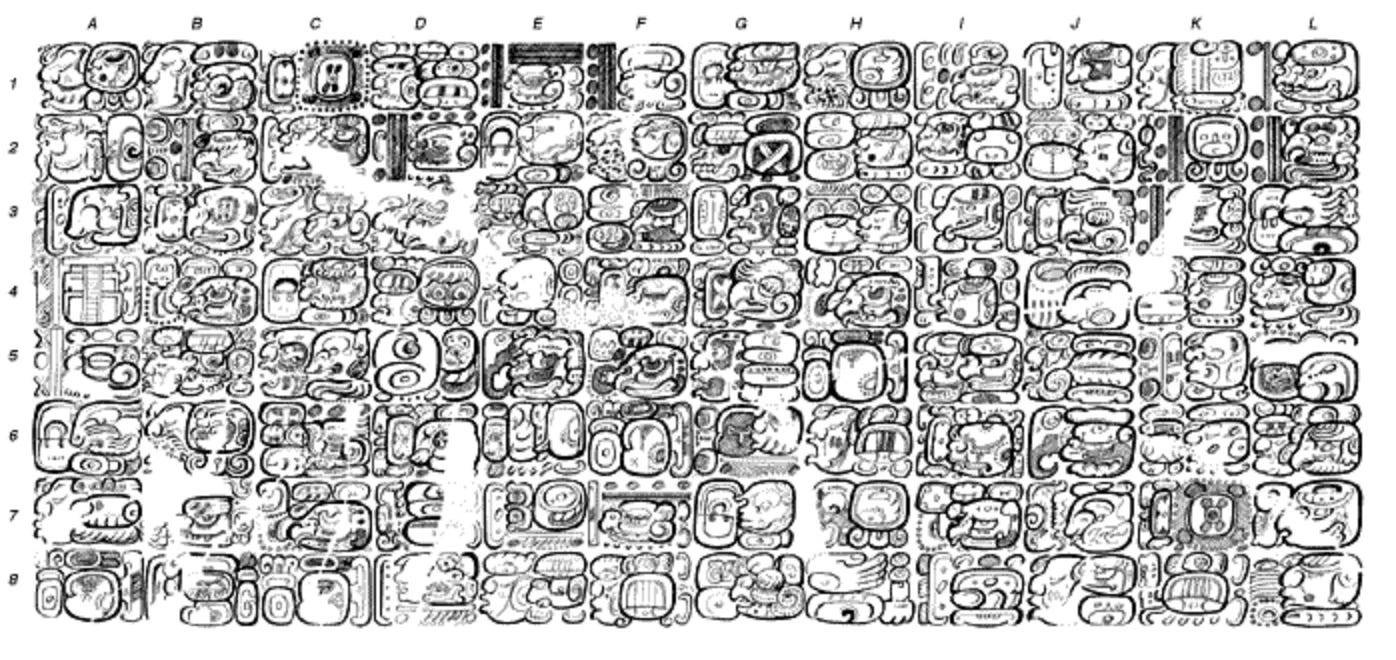
When they sat down at the stone tablet, Mathews’ cards allowed them to instantly locate repeating prefixes, suffixes, and patterns across different stone panels at the site. That anchored these timeline patterns into actual royal identities, Schele wrote in Forest of Kings.
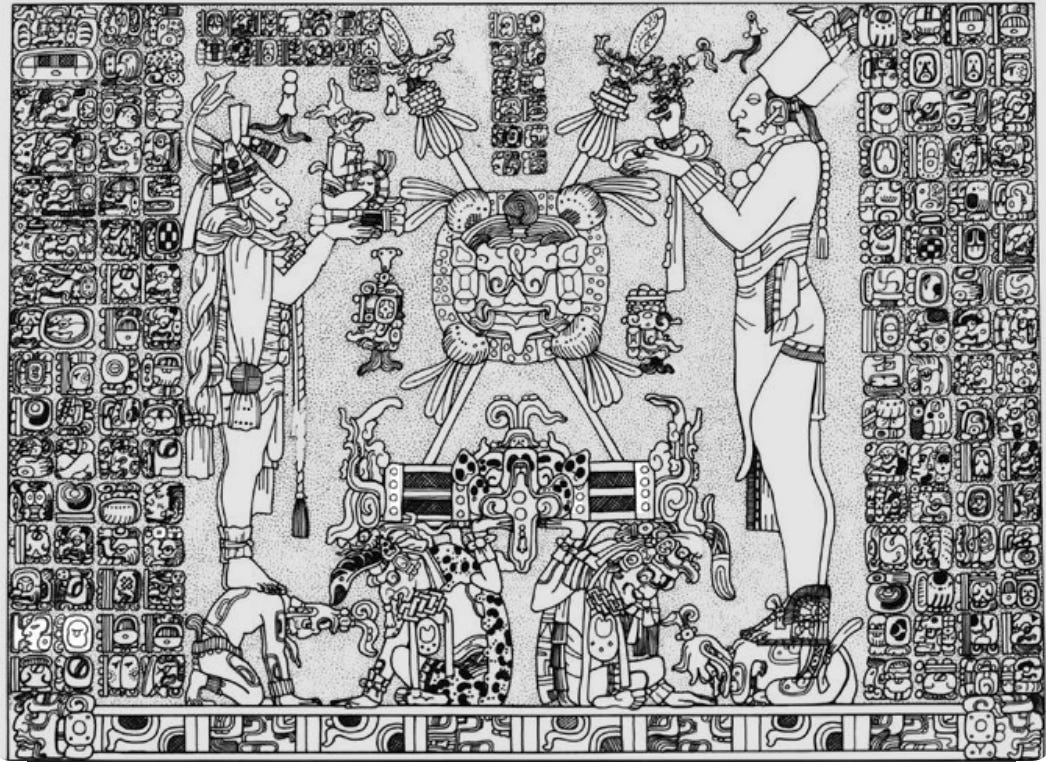
They cross-referenced their findings with the inscriptions from the Temple of the Cross Group, Schele continued. In studying the Tablet of the Cross, they saw how the texts intertwined mythological events with historical life stories of Palenque’s kings. They recognized that the accession imagery in the temples explicitly depicted the transfer of power, one of five core ingredients that historians use to determine if a civilization is ‘great.’ Peaceful transfer of power, as written by the authors of Why Nations Fail, is the single most critical factor in determining whether a great civilization survives or collapses.
Telling the others
Rushing back to tell the others of their breakthrough, they were met with shock and disbelief. The exact quote that best describes the situation came from legendary archeologist and epigrapher Michael Coe. He authored the definitive book on the subject, Breaking the Maya Code.
In describing the atmosphere of the First Palenque Round Table, Coe noted that much of the academic community—who had been taught for decades by J. Eric Thompson that the Maya were peaceful stela-worshippers—were initially unconvinced when Schele and Mathews revealed that the glyphs actually recorded a blood-stained history, warfare and detailed royal dynasties.
“They sat in shock,” wrote Coe. “For decades, the leading scholars believed Maya writing only showed religion and astronomy. The idea that it recorded actual history and kings was highly debated and challenged.”
It took esteemed linguist Floyd Lounsbury to test the code on other stones with Schele and Mathews and confirm it was correct. With master linguist Lounsbury, they successfully decoded the name of Palenque’s greatest ruler, Pacal.
The group used the rest of the Round Table to test the new system and began piecing together entire family trees and historical events. In just a few days, with the now broken code, Schele and Mathews presented the entire history of Palenque’s kings, queens and wars. This proved the Maya script was a true readable history.
Combining Proskouriakoff’s theory, Mathews’ index cards, clues from the Temple of the Cross, and the artist mind of Schele, the duo shattered the old paradigm. Maya hieroglyphics were no longer an unreadable mystery. The discovery completely changed how historians viewed the Maya. The code was broken.
The Palenque Round Tables continued for 20 years, from December 1973 until June 1993, and the group published 10 volumes of The Palenque Round Table Series.
Arthur Allen. “Old Glyphs and New Software Help Unravel the Mysteries of the Maya.” Los Angeles Times. August 16, 1992.
Staff.“An Interview with Dr. Peter Mathews.” MayaExploration.org. July 12, 2008.
David Stuart. “Breaking the Maya Code Interview.” Nightfire. April 12, 2005.
Staff. “Cracking the Maya Code. Nova. April 8, 2008.
Alex Pezzati. “The Hand of Fate in Tatiana Proskouriakoff’s Career from the Archives.” Expedition Magazine. 2001.
Kelly M. “Meet the Mayanist—Tatiana Prouskouriakoff.” Tomb Raider Horizons. May 2018.
Tatiana Proskouriakoff. An Album of Maya Architecture. University of Oklahoma Press. 1970.
Linda Schele, David Freidel. “A Forest of Kings.” William Morrow Paperbacks. January1992.
Merle Greene Robertson. Never in Fear. Pre-Columbian Art Research Institute. November 2006.
Michael D. Coe. Breaking the Code, Third Edition. Thames and Hudson. 2012.
MY BACKSTORY—Puerto Morelos sits 100 miles from four major pyramid sites: Chichen Itza, Coba, Tulum and Ek Balam. Living in close proximity to this Maya wonderland we’ve pyramid hopped everywhere and often. Over the years I’ve searched out every book on the Maya and their culture, the pyramids, the archeologists who dug at these sites, the scholars who wrote about them and talked to locals with stories to tell. I became a self-taught Mayaphile and eventually began to write about the Maya and Mexico. I’m still enthralled by the culture and history and glad there’s always new news emerging for me to report on right here on Mexico Soul.
Comments
Nothing yet. Say the first thing.
Sign in to join the conversation.