
06/28/2026: As mediators, we often work in conflicts where trust has been damaged, emotions run high, and the stakes feel enormous. The challenges in Gaza were unique in scale, but many of the underlying dynamics are familiar to anyone who studies conflict resolution.
Originally published 10/26/2025: As I am reading about the fragile truce in the Iran war today, I am reminded of the negotiations regarding Israel and Hamas last year. For full transparency, I asked AI to analyze the draft of the peace plan according to the different styles of conflict resolution. It required significant editing and rewriting, of course. The results were very interesting.
The 20-point Gaza peace plan employs a sophisticated blend of negotiation strategies. It combines competing, collaborating, and compromising styles from conflict resolution theory to address the multifaceted Israeli-Palestinian conflict.
This multi-style approach acknowledges that complex geopolitical disputes requirenuanced solutions, balancing security demands with humanitarian considerations and mutual benefit.
The plan’s structure reflects decades of negotiation scholarship, drawing from frameworks like the Thomas-Kilmann Conflict Mode Instrument. Each resolutionstyle serves a specific purpose: establishing parameters, fostering collaboration,and enabling incremental progress.
Understanding these underlying strategies reveals how the plan attempts to transform intractable positions into manageable steps toward lasting peace.
Assertive and uncooperative, pursuing one’s own concerns at others’ expense. Good for quick decisions or non-negotiable points, but can damage relationships.
Highly assertive and cooperative, seeking win-win solutions. Builds lasting agreements and stronger relationships, but requires time and trust.
Moderately assertive and cooperative, finding middle ground where each party givessomething up. Faster than collaborating, but may not fully satisfy anyone.
Neither assertive nor cooperative; postponing or withdrawing from conflict. Useful for de-escalation or minor issues, but risks problems festering.
Low assertiveness and high cooperation, yielding to others’ concerns. Preserves relationships and shows goodwill, but can lead to neglected needs.Competing Style: Non-Negotiable Demands
The peace plan primarily uses a competing style, setting firm, non-negotiable security demands. This assertive approach reflects Israel’s view that these outcomes are essential for any sustainable peace agreement.
Hamas Disarmament
The plan mandates complete demilitarization of Hamas forces. This non-negotiable demand highlights the competing style’s assertive prioritization of security concerns.
Governance Exclusion
Hamas’s permanent removal from Gaza’s political leadership is an inflexible requirement.
This reflects the competing approach’s focus on achieving specific objectives without negotiation.
Conditional Withdrawals
Israeli troop withdrawals are conditional on predetermined security guarantees.This framework uses military presence as leverage to ensure compliance with core demands before concessions.
While the competing style may seem uncompromising, its use here establishes firm boundaries crucial for Israeli security, creating a foundation for more flexible negotiation.
In contrast to assertive security demands, the plan integrates significant**collaborative elements** to foster win-win outcomes. It acknowledges thatsustainable peace requires addressing Palestinian needs, not justimposing terms.
The plan prioritizes humanitarian aid and economic redevelopment for Gaza.This collaborative approach serves mutual interests, fostering Palestinian prosperityto reduce conflict and build peaceful coexistence.
Governance by Palestinian technocrats, rather than external imposition,exemplifies collaborative problem- solving. This builds Palestinian institutional capacity and ensures competent administration acceptable to all stakeholders.
These mechanisms transform zero-sum thinking into shared problem-solving,fostering ongoing cooperation by aligning multi-party interests.
Palestinian Technocrats
Skilled Palestinian professionals lead transitional governance, ensuring legitimacy, competence, and accountability to local populations and international partners.
Board of Peace
International oversight by regional and global stakeholders to monitor, mediate, and ensure accountability, building trust through transparency.
Amnesty Provisions
Amnesty for disarmed Hamas members committed to peace, creating pathways for reintegration into a functioning society.
These mechanisms transform zero-sum thinking into shared problem-solving, fostering ongoing cooperation by aligning multi-party interests.
The plan uses strategic compromises to build incremental momentum andincentivize compliance, facilitating agreement through good faith and reciprocity.
Phased prisoner and hostage releases balance humanitarian concerns. This gradual approach allows verification and builds confidence for larger steps.
Israeli forces withdraw in phases tied to compliance milestones. This offers Israelsecurity guarantees while showing tangible progress to Palestinians.
Amnesty or safepassage forHamas members compromises between accountability demands and pragmatic peace-serving alternatives to fighting.
These mechanisms acknowledge that protracted conflict requires stagedprocesses and mutual concessions, building momentum where comprehensiveagreements have often failed.
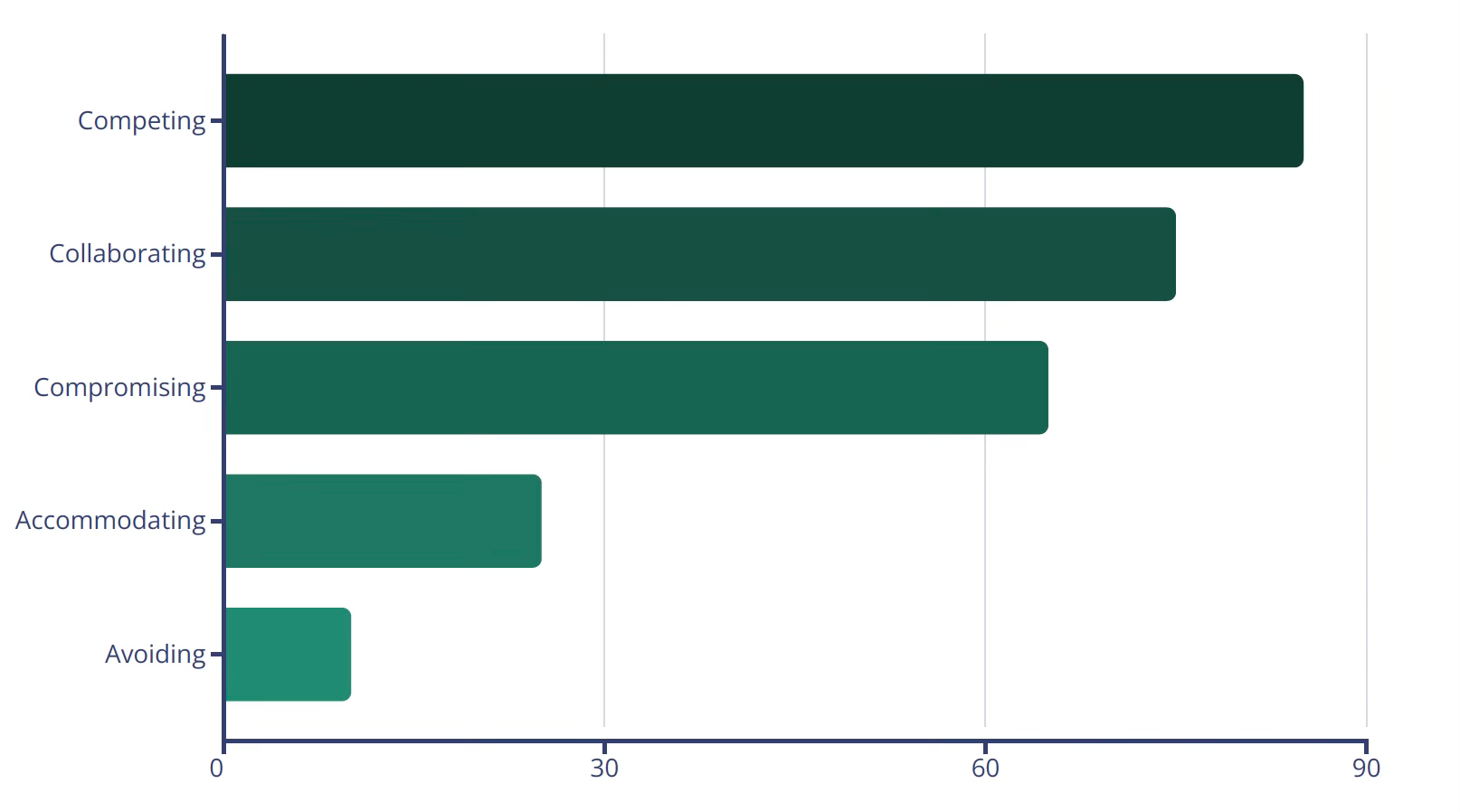
The plan minimizes **avoiding and accommodating styles**, prioritizing active engagement over delay or one-sided concessions.
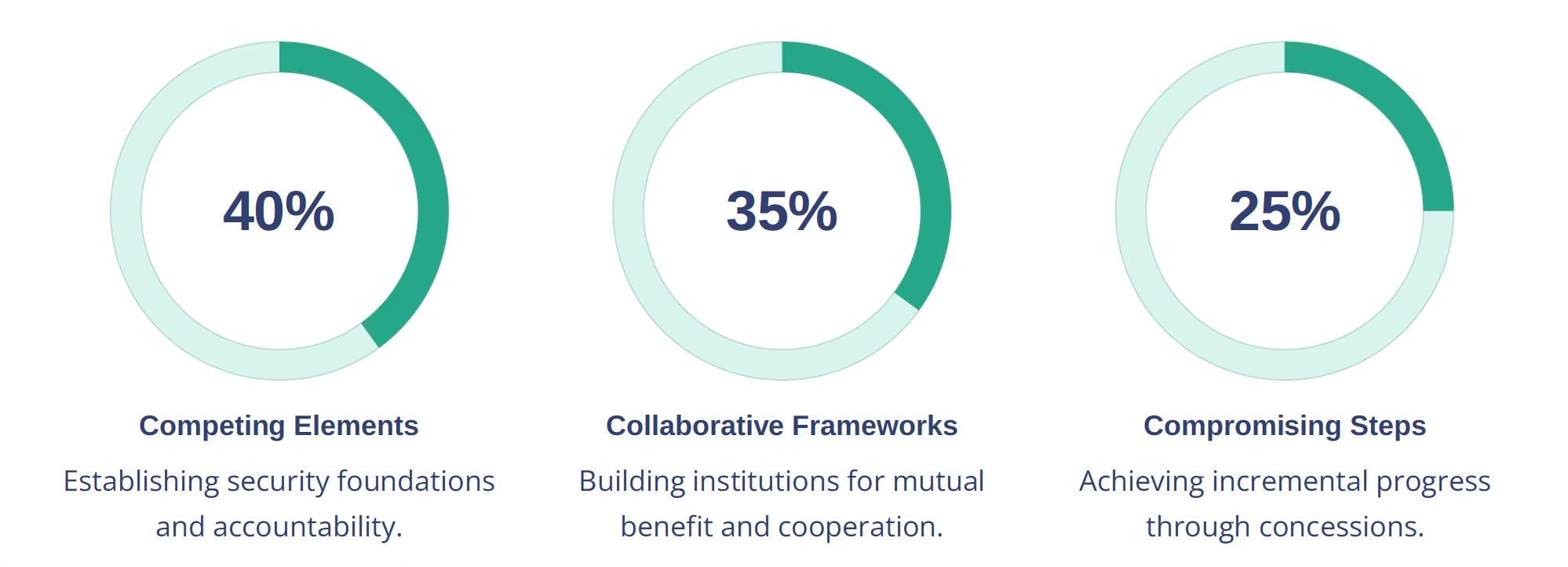
The plan’s strategic allocation of conflict resolution styles reflects sophisticated negotiation. Dominant competing, collaborating, and compromising approaches (minimizing avoiding and accommodating) create a framework that is firm on essentials, creative in problem-solving, and flexible.
This multi-style approach uses different tools for various challenges: assertiveness for vital interests, collaboration for shared solutions, and compromise for momentum. The weighting reveals the plan’s theory of change: sustainable peace emerges from clear boundaries, mutual benefit, and incremental trust-building.
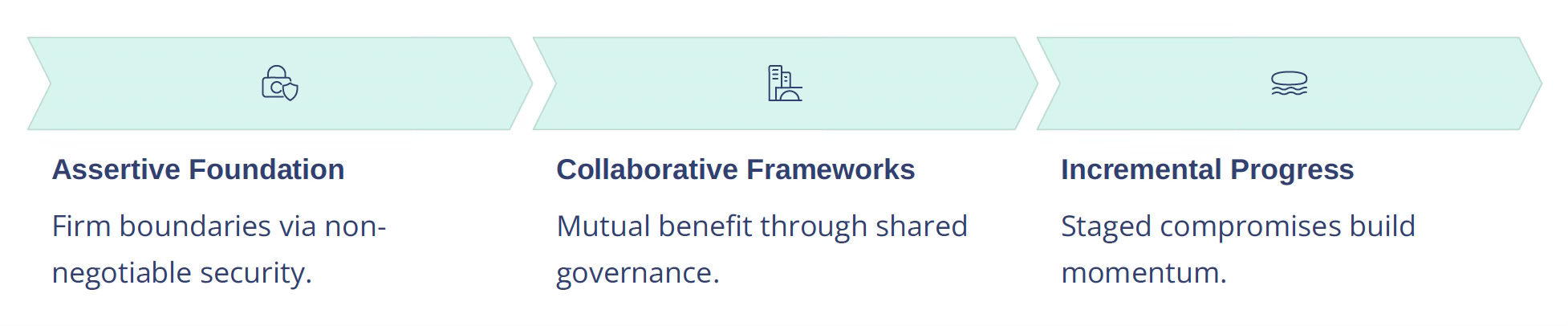
Complex geopolitical conflicts demand nuanced strategies. This plan combines assertiveness on security, collaborative institution-building, and tactical compromises to address Israeli security and Palestinian self determination.
This multi-style framework shows that sustainable agreements must protect core interests, create shared value, and provide implementation pathways. The plan’s strategic use of diverse conflict resolution styles offers lessons for global disputes.
“The plan blends assertive requirements with mutual benefit frameworks and tactical concessions to facilitate agreement amidst hostilities.”
#Mediation
#ConflictResolution
#Peacebuilding
#Negotiation
#DisputeResolution
#ConflictManagement
#TrustBuilding
#Dialogue
No posts
Comments
Nothing yet. Say the first thing.
Sign in to join the conversation.