
Fashion is often seen as a champion of the creative industry. The separation between fashion and technology is so wide, that for the longest time, it was impossible to imagine the left and right brain working hand in hand. Artistic people and engineers are considered vast apart – one free-spirited, and the other methodological. In fashion scenes, physical retails were at war with digital shopping experiences. Technology in fashion was more often seen as a threat instead of a compliment.
So why then does technology influence fashion?
Industry Revolution That Shaped The Fashion Culture
If you think of glamorous, high society, and nobility of fashion, cities like Milan, New York, Paris, and London often come to mind. These four cities are known as the “Fashion Capitals” of the world or the ‘Big 4’,. Various cities also host fashion events but are not as prominent as the four fashion capitals.
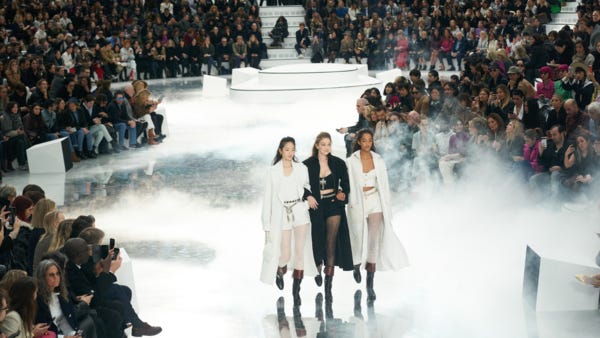
The industrial revolution played a key role in the booming of fashion capitals during the renaissance era. In the 17th century, King Louis the XIV of Paris expanded the fashion manufacturing industry by bringing in high-quality mechanical machines that marked the 1st industrial revolution. This led to an increase in job opportunities and trade.
Queen Victoria contributed a great impact to the London fashion development in the 19th century during the 2nd Industrial revolution of automation and mass production.
Italy grew from the textile trading business (silks, wools, lace) during the renaissance era and re-emerged in the 19th century bringing in the artistic touch to the fashion industry. Italy played a key role in distinguishing fashion design from tailoring (through its Haute Coutures), expanding to casual wear, developing bold designs for women (Coco Channel), creating a market for accessories (bags, shoes – Fendi, Ferragamo, Gucci), and creating the notion of branding, logo and celebrity collaborations.
In the 20th century after the world wars, New York began to rise, further popularising modern clothes and labels. It also became known for its design schools and fashion magazines. Towards the ’80s Tokyo was rising with a new generation of avant-garde designers such as Issey Miyake. With the emergence of the internet and the 3rd industry revolution, various corners of the world especially Africa, South America, Australia, and Asia has been on a notable rise in fashion developments.
Diving Into The Digital World Of Fashion..
In recent times, just before the pandemic hit, the global apparel market was valued at $1.5 trillion US dollars. The fashion industry has been thriving, but there was also a shift seen in digital sales channels and the reduction of brick and mortars due to the worldwide adoption of e-commerce and mobile internet.
With the advancements of social media, consumers’ voices are better heard and one of the biggest concerns has been the devastating impact of the fashion industry on the environment such as fast fashion and ethical industry practices
- The Impact of Covid-19 on the Fashion Industry
Covid-19 brought about both positive and negative impacts on the fashion industry. The downside was on countries that manufacture apparel and handcraft industries faced heavy revenue loss. Bloomberg reports that about 1,089 garment factories in Bangladesh have had orders cancelled worth roughly $1.5 billion due to the corona-virus outbreak.
Physical retail outlets suffered a major blow without incoming revenue due to lock-downs. The supply chain is on a global cry for help. Decline in logistics saw an increase in the cost of goods. Millions of jobs were lost from sales agents, promoters, down to the making of apparel. There was also a shift in the fashion domain to remain comfortable for stay-at-home usages such as hoodies and sweat pants compared to, for example, work-wear.
However, the positive growth was seen through a wider adaption of internet and digital technologies, as well as adopting the 4th industrial revolution which is on Internet of Things (IoT), Artificial Intelligence based on hyperconnectivity revolution. In a study by McKinsey’s The State of Fashion 2021: In search of promise in perilous times, Covid-19 accelerated industry trends in adopting digital channels while consumers continue to champion social justice.
Some of the trends seen as part of Industry Revolution 3 & 4 are :
Digital commerce
The fashion industry is the largest Business to Consumer (B2C) e-commerce market segment with an estimated size of $752.5 billion. While various businesses took a hit, luxury e-commerce marketplace such as Far Fetch showed profitability for the first time in 12 years with a revenue increase of 64%. Around the globe, digital sales are expected to rise by at least 20%.
Pre-Loved apps
The resale market was seen to be on the rise with various brands pushing forward the cause of recycling and additional income such as The RealReal, Poshmark, and Carousel. By 2029, the pre-loved industry is set to capture a market cap of $80 billion.
Digital events
The British Fashion Council was the first to step up into the digital realm by introducing a digital “cultural fashion week” platform which was later seen adapted by Shanghai and Moscow. Various other brands were also quick to pick up on the digital experience such as Hermes, Dior, as well as the Fashion Capitals, Paris, and Italy. With countries opening up, New York Fashion Week was among the first to have it back on the ground running.
AI, 3D printing, and beyond
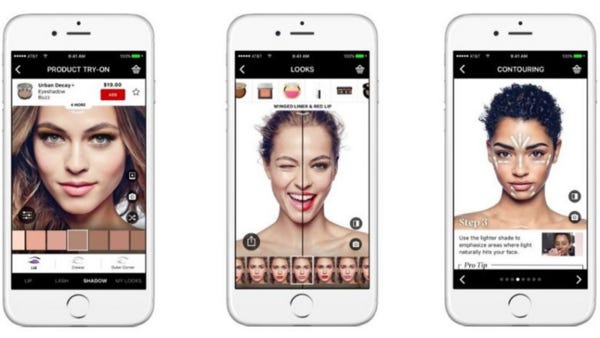
Sephora’s adaption of the omnichannel approach and integration of Artificial Intelligence; natural language processing and machine learning reduced the gap of consumer experience between in-store purchase and digital channels. Other brands that are quickly and intensively adapting to this change include Dior, Nike, and Tommy Hilfiger. 3D printing has been emerging strongly and has the potentials of significantly reducing gas emissions, fabric wastage, and water usage (whereby 2,700 litres of water is required to make 1 cotton T-shirt). This also reduces operating costs and inventories for businesses.
The Fashion Revolution - What Does The Future Holds?
“It is not the strongest of the species that survives, nor the most intelligent. It is the one most adaptable to change”. Charles Darwin.
The fashion industry is seeing a significant change through its digital technology and adaption. Consumers are contributing a louder voice towards trends. Social media has a significant role in bridging the gap between fashion brands and consumers.
Will traditional fashion empires still play a significant role in the future? Maybe, maybe not.
History has shown us time and again that industry revolutions influence the way the fashion industry operates. This now opens up wider opportunities worldwide to countries, entrepreneurs, and technology that can create the fastest and creative digital adoption of the fashion industry.
Perhaps the right question would be, who would be dominant in this new era of the industrial revolution 4? Most likely brands and industries that adopt digital transformation.
Artisan Story is a passion project by Mestrae in reaching out to a wider community who loves fashion and technology. Mestrae believes that fashion has to evolve to remain relevant to today’s modern times and needs.
No posts
Comments
Nothing yet. Say the first thing.
Sign in to join the conversation.