
In January I started keeping a diary again. I haven’t written in a journal since my teens. Those teen angst-filled books are now lost, somewhere between my move away from home and my mother furiously throwing away anything that she did not personally need. I often think about these diaries and hope that nobody found them. I hope they burned.
As an adult, my impulse to write is directly connected to my art practice. I want to record what I am thinking when I get into the studio. I wish to mark the moment in time, connect it to the events taking place around me. I wish to slow down the process of creating, get to a point of reflection about my choices, uncovering intentions I had not yet understood.
My diary and my studio notebook are one and the same thing. They cannot be separated. A glaze recipe may share the same page as a poetry line I copied from a book, measurements and drawings may be juxtaposed with a reflection about my day and a note about the US invading Venezuela.
“The wax carving tools are actually well suited to clay in ways I did not realize”.
“You think a river knows when it’s getting near the sea?”1 (Rebecca Elson).
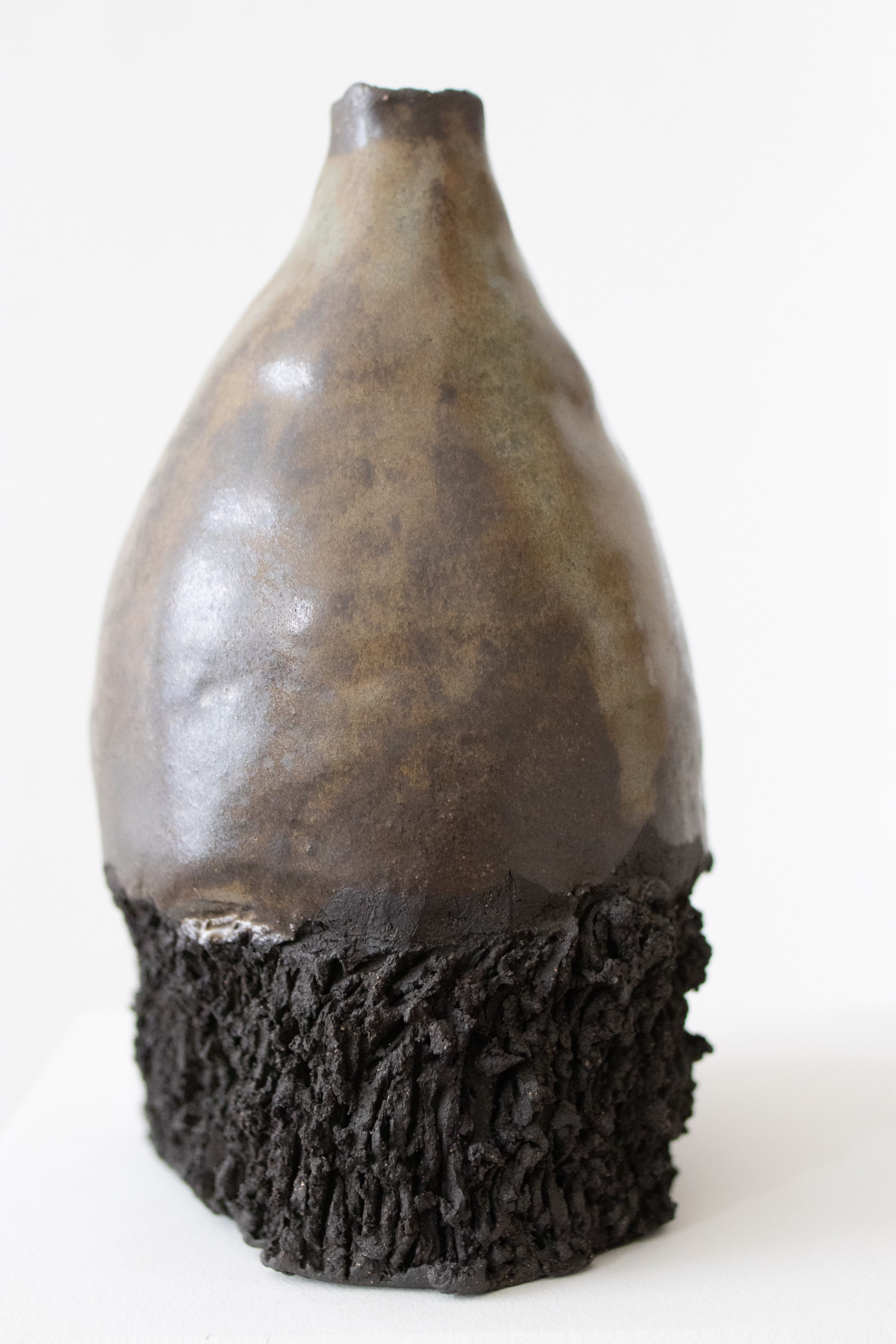
My newly found enjoyment of journaling has come at the same time as the beginning of a series of sculptures called “Unfinished”, which is still evolving and growing. You see one piece in this post. These are the thoughts I recorded on January 7th 2026 as I was making this piece:
“I sculpted a study of a small vase emerging from a block of stone. I am looking for a way of shaping, of making that is unplanned, instinctual and more honest to the shape. If it’s supposed to look like it has emerged from stone, then I do not want it be constructed and planned. I want to find the true origin of things, the way things evolve without intervention. I want my pieces to come to life on their own”.
Diaries are usually written by the author for the author. What we choose to share, on the other hand, only serves to build up an image. A persona. Are we really our true selves when we write things down for ourselves? Or is that also a performance? Diaries are spaces for self-reflection, self-actualization, for active partaking, for memory, for building worlds, for messing with reality. Virginia Woolf said that writing for oneself is “…good practice. It loosens the ligaments”.2 She, of course, meant that keeping a diary helped her improve her writing. I suppose I mean to say that writing helps me be a better artist.
On the 31st of December 1957, Susan Sontag, a serious diarist herself, wrote in her journal:
“…In the journal I do not just express myself more openly than I could do to any person; I create myself. The journal is a vehicle for my sense of selfhood. It represents me as emotionally and spiritually independent. Therefore (alas) it does not simply record my actual, daily life but rather-in many cases-offers an alternative to it. […] With a little ego-building-such as the fait accompli this journal provides—I shall win through to the confidence that I (I) have something to say, that should be said.”3
It is due to their private nature that we find published diaries to be so incredibly compelling, as if we are being allowed a glimpse into something secret and sacred. We assume diaries will deliver us truths.
It is fairly normal for artists to keep notebooks of their practice. Potters write down measurements, processes, recipes and kiln schedules. We write these things down in order to exercise control over a medium that is so often full of surprises. Notebooks, like diaries, can help us control our environment. We often look at artists’ notebooks to get a glimpse of the process, to receive a little gift of creativity.
I have stacks of old notebooks detailing my practice. It is the most consistent writing I have ever done. They resemble artifacts, like the objects found in an archeological site, waiting to be put into historical context.
In my first notebook you can see me learn to produce in series. Measurements are accompanied by detailed instructions, like recipes.
300g ball, pinch until 4cm high and 5cm in diameter. Pinch until 7cm in diameter.
Glaze application notes speak of layers, dipping time, clay bodies and combinations. That is when I was learning to understand the medium.
Then, a brief interlude interrupts the relatively mess-free space of a hand-builder’s notes, pages covered in clay dust expose the time I sat at the wheel and attempted to learn to make identical cups.
The next notebook will contain glaze recipes, betraying that I had just started learning to make glazes from scratch. If you were to put the notebooks next to each other, you would be able to trace, like a navigational route, the development of a point of view. Discernment. Ideas for collections and art direction notes for photoshoots mark the time my passion became livelihood, for a short time, something to plan, quantify and assess. Not many poems in my notebooks back then.
In 1994, Emmanuel Cooper wrote an article in Ceramic Review about Lucie Rie’s notebooks. Pages from her notebooks are shown alongside transcriptions of her glaze recipes. Lucie Rie is one of the most well-known studio potters of the last century. Her surface treatments and elegant shapes are distinctive. I have personally been inspired by her lava glazes, whose recipes we know thanks to the publication of these notebooks.
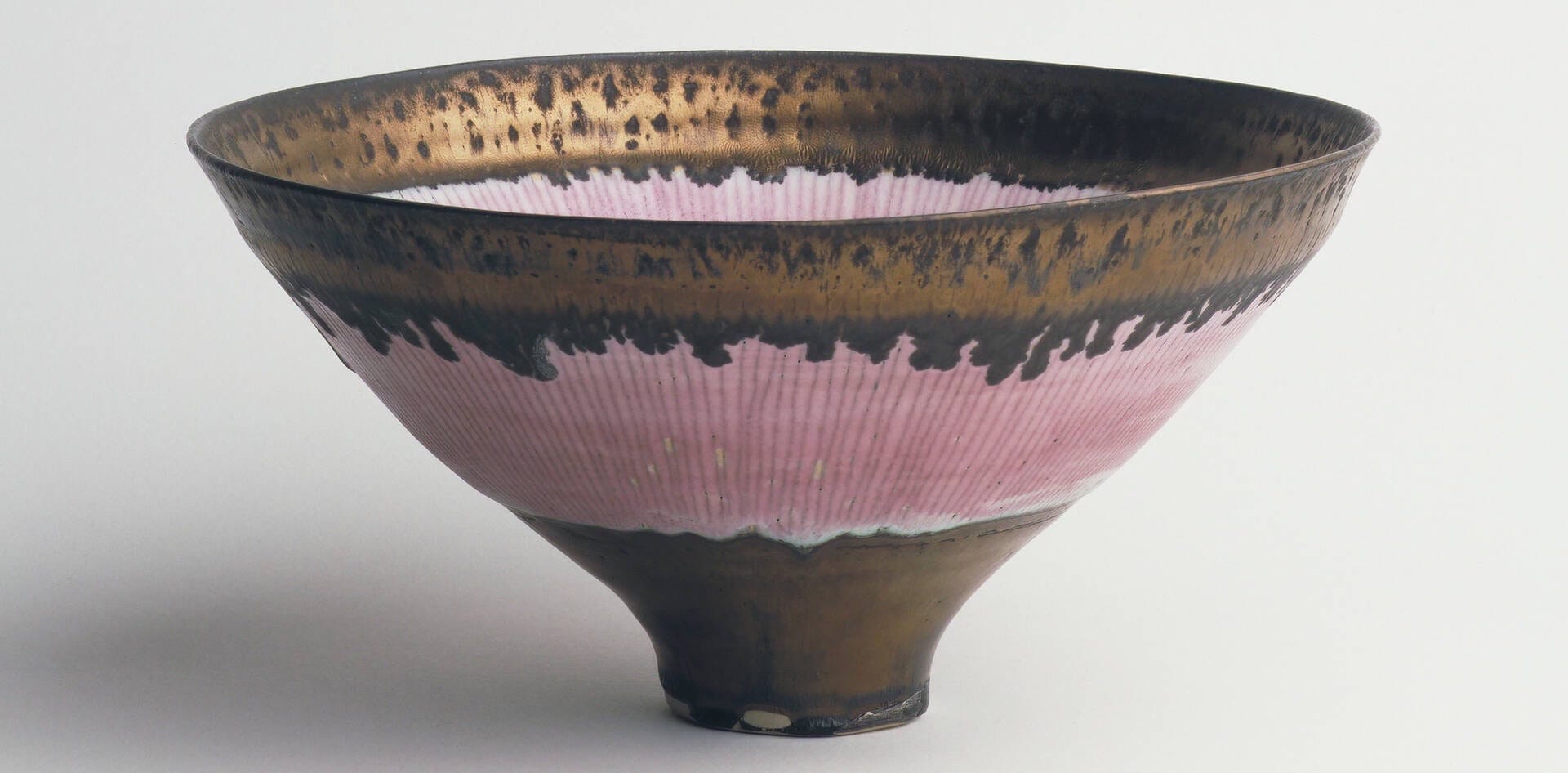
While Rie’s notebooks are devoid of personal reflections4 and, as far as I can see, are not dated, they still feel personal. She did not imagine these would be published. There is a certain comfort in her shorthand. Her rough diagrams are filled with measurements and observations. Because we know about her life, we know that the button orders were probably from the 1940s, when she was trying to make a living in London, having fled Vienna in 1938 after the Nazis’ annexation of Austria.
One imagines her writing style would have changed over time, that the events of the Second World War and escaping Austria as a Jewish refugee would have influenced the way she approached her note keeping, what she chose to focus on and the meticulousness with which she recorded her recipes. Rie was a relatively well-established artist in Vienna. She had attended the Vienna Kunstgewerbeschule and exhibited at the Paris International Exhibition of 1937.5
Making stoneware buttons in London was a way to make ends meet, even though this was by no means a small endeavor: her business was successful and employed a number of people. She had to keep notes in order to reproduce results and deliver the designs that her high-end fashion designer clients demanded. Over time she developed glazes and surface treatments for buttons which she then used in her pots and for which she is so well-known.6 What started as a necessity became a distinctive part of her craft as a potter. Her technical prowess can be traced directly from her notebooks and that development is the result of the circumstances she was in and the instability she was experiencing.
It would be a mistake to think of these writings as mere collections of recipes.
I love to think of the blurred lines between private journals and studio notebooks. The choices made of what to record and what to leave out, the scribbles fueled by the determination to squash luck, to access the part of the craft that only emerges after continuous, arduous and painstaking practice. A practice that is informed and influenced by our personal lived experiences.
Thank you for reading this far. As you know, I try to keep as much of my writing public and free and I wish I could bring you more of it and more often. By becoming a paid supporter, you will help me get closer to that goal.
Thanks for reading Notes of a ceramic artist! This post is public so feel free to share it.
Rebecca Elson, “A Responsibility to Awe”, Carcanet Classics, 2018
Virginia Woolf, “A writer’s diary”, Persephone Books Ltd, 2012, Entry from April 20th 1919, p.13
Susan Sontag, “Reborn. Journals and Notebooks. 1947-1963”,Farrar, Straus and Giroux, 2009, p.157
Notably, she did also keep an appointment diary, detailing her daily meetings with friends and collectors. An example from 1979 is visible on the website of the Crafts Study Centre. See: https://www.vads.ac.uk/digital/collection/CSC/id/2297/rec/1
Becky Knott, Lucie Rie: A Secret Life of Buttons, V&A Blog, accessed April 28th 2026, https://www.vam.ac.uk/blog/news/lucie-rie-a-secret-life-of-buttons?srsltid=AfmBOooLBIKsBjOsTK6x7n2rYupbr12bL2MveHtZTFlBaOc0otz0axRn
No posts
Comments
Nothing yet. Say the first thing.
Sign in to join the conversation.