
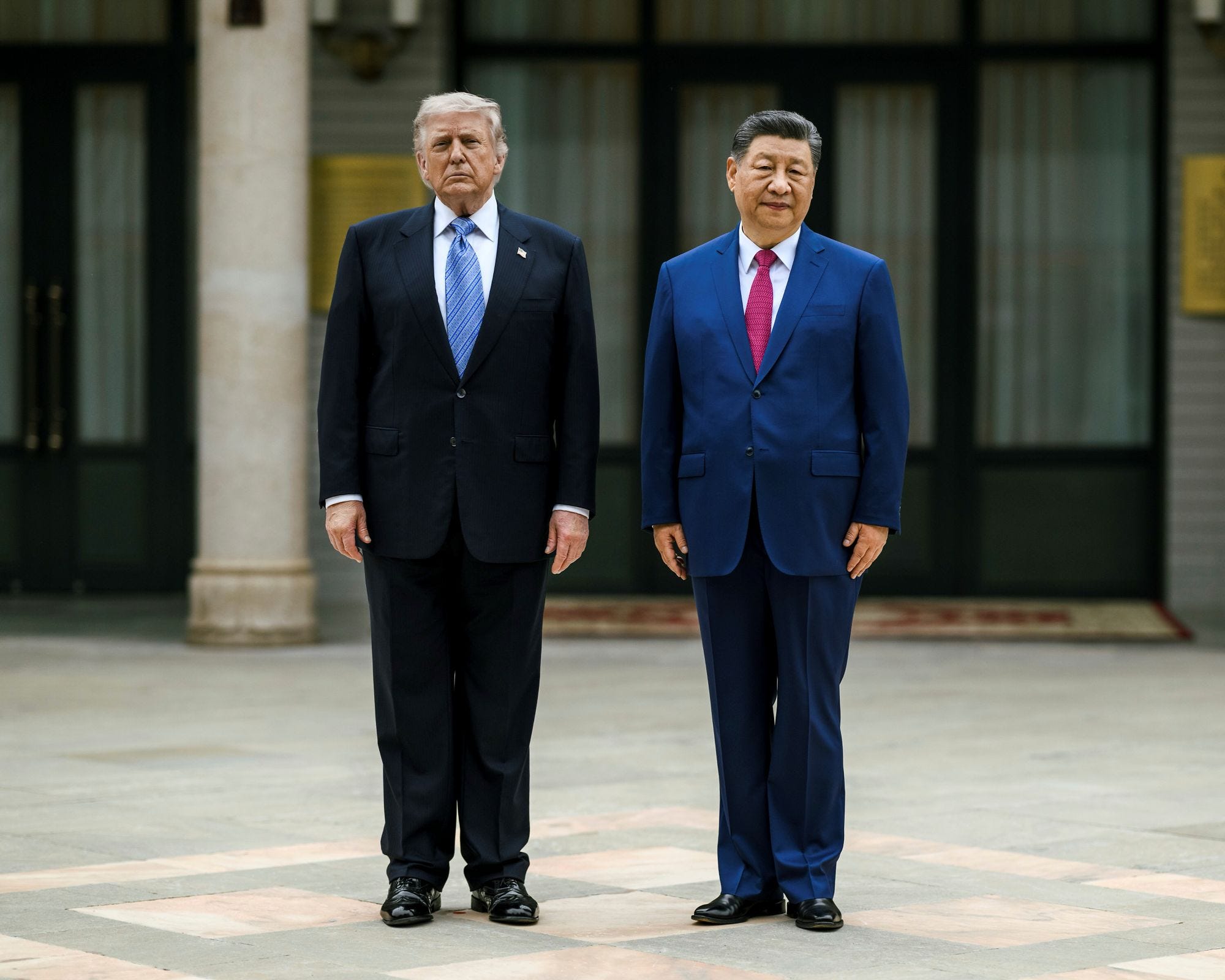
Taiwan’s security outlook deteriorated in the aftermath of the Xi-Trump summit, held on 14-15 May in Beijing, with the US announcement that a fresh USD 14 billion arms deal with the island is now “under review”. The US move also raises questions for European actors over the sustainability of their behind-the-scenes security engagement with Taiwan.
Before the two presidents met for the US-China summit, Beijing reportedly asked the US side to make an explicit statement opposing “Taiwan independence” and endorsing Taiwan unification with the People’s Republic China (PRC). However, the US made no such remarks. Instead, US Secretary of State Marco Rubio stated on 15 May that “US policy on the issue of Taiwan is unchanged as of today.” There was no mention of Taiwan in the White House’s readout of the summit released on 17 May.
Yet, US President Donald Trump himself managed to cast uncertainty in an interview immediately after the summit. Asked whether the “people of Taiwan” should “feel more or less secure”, President Trump replied “Neutral … I’m not looking to have somebody go independent. And, you know, we’re supposed to travel 9,500 miles to fight a war. I’m not looking for that. I want them to cool down. I want China to cool down”. Trump added that he would hold “in abeyance” the signing of the new USD 14 billion arms deal with Taiwan because it is “a very good negotiating chip” with China. He went on to emphasize the power asymmetry between Beijing and Taipei and repeated past tirades against Taiwan’s “theft” of the chip industry from the United States.
On 20 May, Trump raised further uncertainty, publicly stating that he would speak with Taiwan’s President Lai Ching-te about the new arms deal. A conversation between Taiwan’s leader and the US president conflicts with normal US practice for handling its ’One China’ policy. On 21 May, US Acting Secretary of the Navy Hung Cao announced that the sale would be paused because of the US needs to replenish its own munitions due to its war against Iran. Later on June 4, Rubio contradicted Cao, stating that the arms sale was not paused but “under review as it’s being processed”, due to its scale and consequent implications for the US defense industrial base and production capacity.
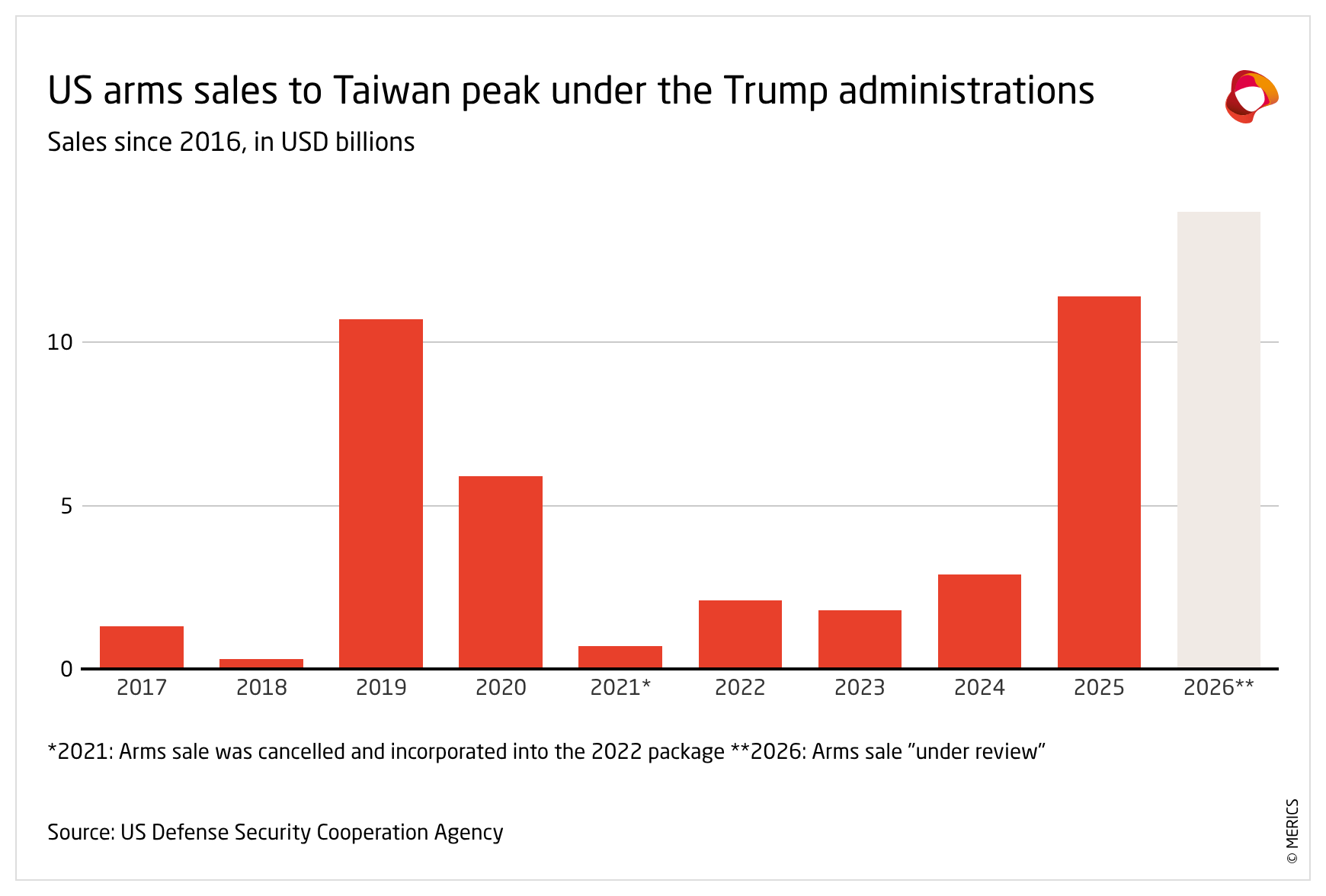
Trump’s post-summit statements reflect his mercantilist worldview, in which traditional US alliances are considered both burdens and transactional instruments. His apparent wish to use arms deals with Taiwan as a bargaining chip in the management of Sino-American relations is an immediate concern for Taiwan. Trump floated this idea shortly before starting his first presidency (2016-2020). However, his administration rapidly veered towards a more muscular China policy. Any major agreement between Beijing and Washington involving Taiwan continues to appear unrealistic. China arguably has no urge to grant major concessions to the United States, especially as it publicly professes confidence in its ability to achieve unification.
At the same time, while Trump maintains his grip on the Republican Party, there would likely be extreme internal opposition in the United States to any major “deal” involving the island. However, Taipei should be more immediately concerned with the capability of the US to deliver on its existing commitments, given the shortcomings of the American defense industrial base amid the wars in the Middle East and Ukraine.
Arguably more insidious for Taipei is Trump’s comment on the risk that “Taiwan independence” may drag the US into war with China. His words buy into Beijing’s framing of current cross-Strait relations, which seeks to depict President Lai Ching-te and his Democratic Progressive Party (DPP) as separatists conspiring for Taiwan independence – namely the cessation of the Republic of China and the establishment of a “Republic of Taiwan”.
Although in the early stages of his political career Lai unequivocally supported Taiwan independence, Beijing’s accusations are disingenuous. Chen Shui-bian’s failed flirtations with independence referenda during his first term (2000-2004) and Beijing’s own 2005 Anti-Secession Law effectively closed any available pathway for this outcome.
Recent polls show support for independence remains a minority position with the Taiwanese public – it is favored by only 26.3 percent, whereas a solid majority (59.8 per cent) prefer to maintain the status quo. Equally significant is that only a fringe minority (7.7 per cent) endorses unification with the People’s Republic of China (PRC).
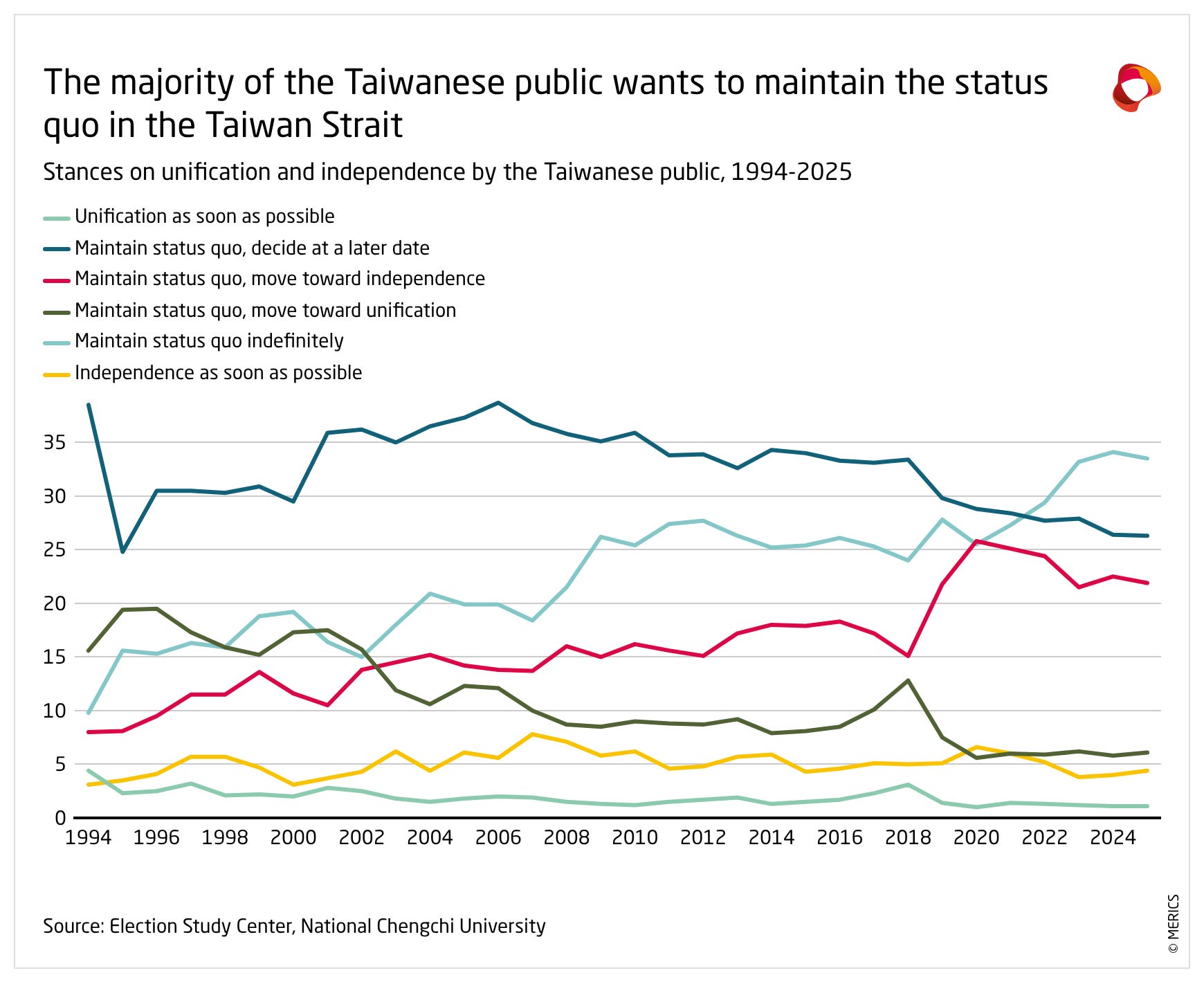
Lai and the DPP are unlikely to explicitly renounce independence because the cause has been central to the DPP’s identity formation and its historical constituencies. Instead, Lai and his predecessor Tsai Ing-wen defend the status quo by claiming Taiwan is a state “already independent” under the name “Republic of China”: this formulation seeks to protect Taipei’s autonomy vis-à-vis Beijing, while neither alienating their supporters nor providing Beijing with a rationale for a coercive takeover.
Such nuances are, unsurprisingly, lost on Trump, as his incoherent post-summit statements have shown. By warning against Taiwan independence, the US president acknowledged President Xi Jinping’s red lines, while at the same time publicly announcing a call with Lai as if he wanted to reassert his administration’s leverage vis-à-vis Beijing.
Ultimately, Trump’s statements feed into a narrative “doom loop” normalizing precariousness in discussions of Taiwan’s security. They build mistrust towards the United States among the Taiwanese public, a mood that can be used by both Beijing and the main Taiwan opposition party, the Kuomintang (KMT). They are able to portray Lai and the DPP as political actors making a losing bet on Washington. Undermining the DPP’s credibility has important consequences for Taiwan’s own military capabilities as the KMT – which controls a relative parliamentary majority – is seeking to obstruct domestic procurement for the island’s military build-up.
The issue goes beyond the DPP’s prospects of remaining in power beyond the 2028 presidential elections. The KMT argues it is the only party capable of projecting stability in cross-Strait relations by rebuilding ties with Beijing by applying the so-called “1992 Consensus”. However, it has been unable to explain how it would do so without providing concessions towards at least soft forms of unification.
The new KMT chairperson Cheng Li-wun has already emerged as a divisive figure, even within the KMT itself, for her perceived pro-Beijing stance. Taiwanese voters may eventually reward the KMT for the usual domestic reasons common in democracies, notably incumbency fatigue, but the KMT would be reckless to interpret an election victory as a mandate to overhaul the status quo.
There are no signals that Beijing intends to use military force against Taiwan in the short term as a result of Trump’s ambiguous statements. At the same time, the securitization of China’s economy, China’s growing military capabilities and diplomatic efforts to build international support in the Global South on the Taiwan issue are readying the country for such a contingency. Furthermore, the most recent round of purges within the PLA, while not affecting operational capabilities, may make Beijing more cautious in the short run.
It is not impossible that Beijing might be tempted to exploit an opening due to Trump’s risky brinkmanship and political dysfunctionality in Taiwan, trying to force a change of status quo through such coercive tactics as a blockade. Regardless, Trump’s lack of discipline in messaging inevitably destabilizes the Lai administration in its already-grueling political contest with the KMT.
In the short term, Trump’s misguided warnings towards Taiwan may contribute to further confusing European public opinion unfamiliar with the intricacies of cross-Strait relations. If Taiwan’s public were to become more skeptical about the chances of sustaining the status quo with Beijing, such confusion could easily grow.
This scenario would have two consequences for Europe. First, European public opinion could become prone to accept simplistic framings of the Taiwan issue favorable to Beijing, undermining support for the island’s autonomy. Second, these developments would challenge the behind-the-scenes security engagement that the European Union (EU) and European state actors have with the island in areas concerning societal resilience and countering hybrid threats.
This analysis is part of the June 2026 edition of the MERICS China Security and Risk Tracker. You can read the full publication here.
No posts
Comments
Nothing yet. Say the first thing.
Sign in to join the conversation.