
Since 2010, in various publications, I’ve interviewed authors—mostly memoirists—about aspects of writing and publishing. Initially I did this for my own edification, as someone who was struggling to find the courage and support to write and publish my memoir. I’m still curious about other authors’ experiences, and I know many of you are, too. So, inspired by the popularity of The Oldster Magazine Questionnaire, I’ve launched The Memoir Land Author Questionnaire.
Here’s the 230th installment, featuring Julia Cohen, author most recently of Freak Lip. - Sari Botton
P.S. Check out all the interviews in The Memoir Land Author Questionnaire series.
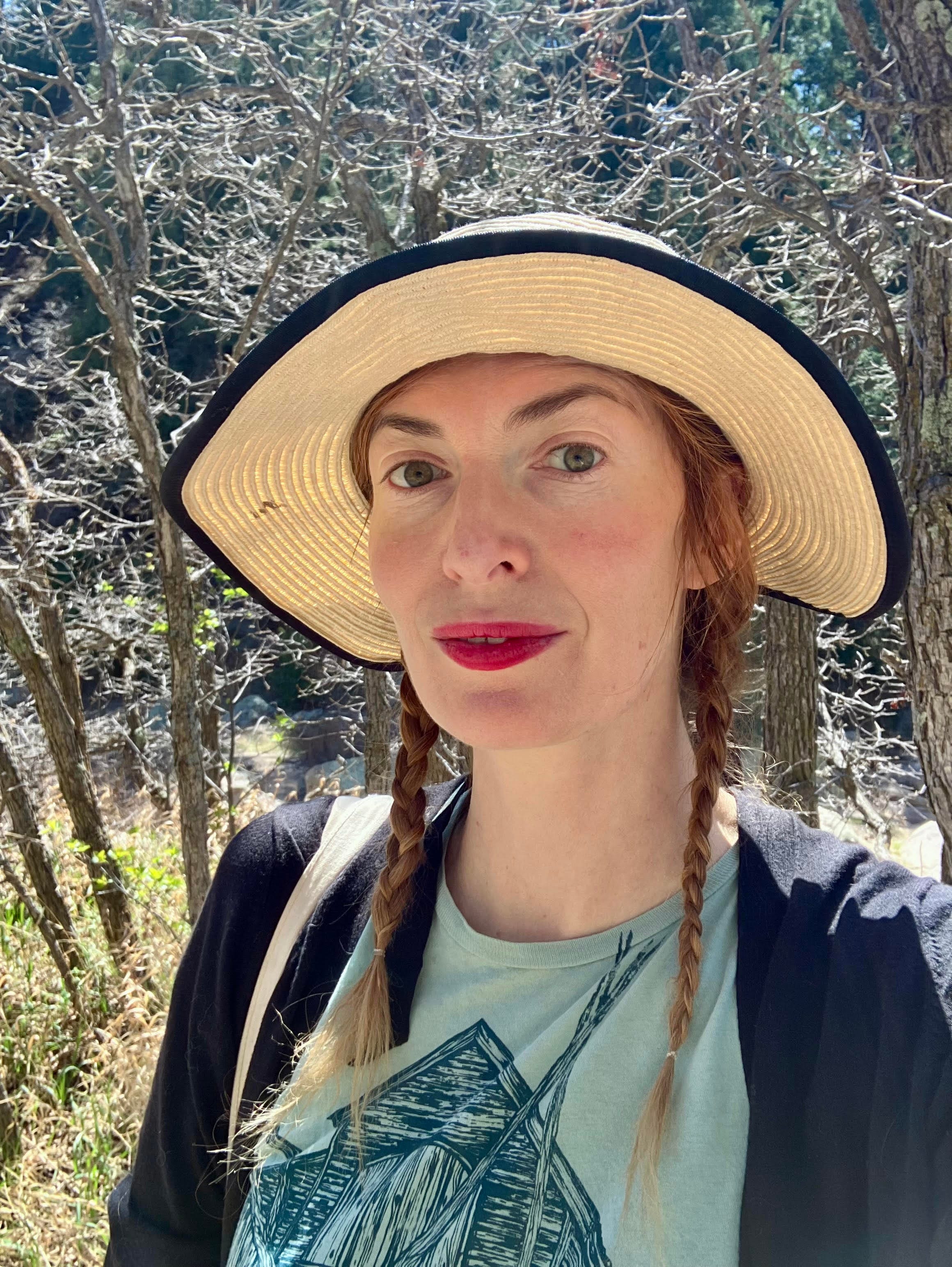
Julia Cohen is the author of I Was Not Born (Noemi Press, 2014), a collection of lyric essays, which was translated into German and released by Literaturverlag Droschl. She’s also written two books of poetry, Collateral Light (Brooklyn Arts Press, 2014) and Triggermoon Triggermoon (BLP, 2011). Her newest essay collection, Freak Lip, is out on August 15, 2026 from TRP.
—
How old are you, and for how long have you been writing?
I’m about to turn 45, and I’ve been writing creatively since I was in sixth grade. I remember drafting my first poem on the family desktop, then printing it out once it was done and not knowing what to do with it afterward. I threw it out! Luckily, my mom happened to open the crumpled piece of paper in the trash and ask me about it. Upon learning I wrote the poem myself, she flattened it out and put it on the fridge.
My mother encouraged me to keep writing and helped me send out poems to journals, so I was published in places like Hanging Loose and The Louisville Review by the time I was in high school. She always took my writing seriously, which allowed me to take myself seriously, too, at an age when intellectual/creative validation can really shape one’s identity. I took nonfiction and poetry classes in high school and college and was even able to write my first manuscript as a senior thesis project with the guidance of the miraculous poet, Elizabeth Willis. Elizabeth Willis treated me like a fellow poet, not a student, so I truly feel like I’ve not only been writing for most of my life but considered myself a writer since I was a teen.
What’s the title of your latest book, and when was it published?
My newest memoir, Freak Lip, is releasing this August from Texas Review Press. It’s the latest release in their Innovative Prose Series. I’ve been working on this collection of essays for over a decade so I couldn’t be more excited (and terrified) to see it exist as a book and not just a manuscript.
The book moves chronologically from age 13 to around 35, each chapter focusing on an unspoken sentence wrapped around one of the many firsts we encounter: first period, first serious medical diagnosis, first time having sex, first betrayal.
What number book is this for you?
This will be my fourth full-length book. Two of my previous books, Triggermoon, Triggermoon (Black Lawrence Press, 2010) and Collateral Light (Brooklyn Arts Press, 2013), were poetry collections, and my last one, I Was Not Born (Noemi Press, 2014), was a hybrid of lyric essays and prose poems. This will be my first book that is fully in the memoir camp, and your next question does make me consider the nitty gritty of categories!
How do you categorize your book—as a memoir, memoir-in-essays, essay collection, creative nonfiction, graphic memoir, autofiction—and why?
I’d consider Freak Lip to be a memoir-in-essays. The book moves chronologically from age 13 to around 35, each chapter focusing on an unspoken sentence wrapped around one of the many firsts we encounter: first period, first serious medical diagnosis, first time having sex, first betrayal. Each piece investigates why we withhold certain significant aspects of ourselves that could actually help us be understood at pivotal moments in our lives. I would call the chapters “essays” in terms of both their lyric attention to language and the researched meditations on secrecy, atheism, shame, and the body that bring writers like Gertrude Stein and Louise Gluck into the conversation.
What is the “elevator pitch” for your book?
Freak Lip reminds us that the secrets that feel impossible to say aloud are often the most important ones to share. Like noxious mold, shame grows most profusely in the dark. How can you trust others with your body if you don’t trust it yourself? How do you tell a terminally ill partner that you accept their impending death and are choosing to live through it with them? Through sharing decades of internalized secret sentences, this memoir illuminates a path toward intimacy.
What’s the back story of this book including your origin story as a writer? How did you become a writer, and how did this book come to be?
I don’t really feel like I had a choice about becoming a writer. Translating my feelings as well as my surrounding landscape into new phrases and constellations of images was truly how I processed my life. My earliest journals date back to second grade, where I am complaining about my younger brother and documenting mundane childhood experiences. One entire entry just states, “I tried a new kind of melon today.” I really wish I had recorded what kind of melon it was! But soon those journals turned into notepads for nonfiction and poem ideas, spaces for jotting down words throughout the day that I wanted to organize later into something more meaningful.
Originally, I gravitated toward poetry because there was something freeing about capturing feelings in inventive ways, outside of standard plot structures. Feelings have their own trajectories and I liked experimenting with how to follow them. Then, in grad school, I had an amazing fiction professor, Selah Saterstrom. At the beginning of the term, I told her that there was zero chance I could write fiction, but that I’d like to take her workshop and focus on writing nonfiction instead. She graciously let me into the class. I wanted to use it as an opportunity to write full sentences and put myself more visibly in them. I grew up with a chronic illness that didn’t dissipate until I was in my mid-twenties, and I realized that the only way I could capture that experience was to write about it more directly. It felt scary at first—the “I” was clearly me! But it was also gratifying to capture an important chapter in my life in a way that was vulnerable and more accessible to readers.
My third book, I Was Not Born, gave me the courage to tackle the essays in Freak Lip. I Was Not Born contains two long lyric essays that trace the failed suicide attempt of my former partner and how our lives were changed by this incident and their recovery. How does your love reach someone who is not able to love themselves? I wanted to wade through that devastation from the position of a supporting character.
The concept behind Freak Lip started with its very first essay, about hiding my period for months before telling my parents. I have visceral memories of wanting to tell my mom but physically not being able to say those words out loud: “I got my period.” I wanted to explore this particular kind of sentence that feels trapped within us, and examine the fallout, because there is always fallout. What do you do with your bloody underwear? Hiding begets more hiding.
As I wrote this essay, I had a horrifying realization: many significant experiences in my life and aspects of my identity were shaped by these sentences that felt impossible to say. I decided to map out the most important ones and trace the themes that ran through them.
What were the hardest aspects of writing this book and getting it published?
Well, I started writing this book when I thought it would end completely differently! I envisioned the memoir ending with me having a child with one of its main characters, Oscar, who is living with a terminal heart condition. Because Freak Lip explores ideas of what faith means as an atheist, and of what being Jewish means as an atheist, I had hoped it would come full circle to close with me raising another Jewish atheist. I’d thought that the unsaid sentences would be my own, about having to face the fact that our family would outlive Oscar. I had already written the first two chapters before I discovered he cheated on me.
So, the last chapter and epilogue I wrote in real-time as my life was crumbling around me, as I lost the family I had believed in. It was horrible. I finished the book while dealing with the aftermath of the breakup, but I had to take a few years respite before revising. I knew I needed to give myself time, to allow for the intellectual distance necessary to balance out the rawness. I was too embedded in unraveling Oscar’s own unsaid sentences, like a private detective.
The timing of this book’s publication was also emotionally challenging in ways I couldn’t have anticipated. After years of distance from Oscar, we were finally able to reconnect as friends. Then, six months before Freak Lip, which had his blessing, went to the printer, he died from complications following his heart transplant. I’d say the characters in this book have been in my mind more than I’d anticipated.
Logistically, I think I faced the challenges that many authors who gravitate toward indie and university presses do: they only publish a few books a year and often through open reading periods/contests! My manuscript was a finalist/semi-finalist at a number of presses, but of course only the winner is published. Very “always the bridesmaid, never the bride” feeling. There were stretches when I felt a bit hopeless that what I thought was my strongest book to date wasn’t finding a home. I was beyond thrilled when Texas Review Press extended an offer to me. I love the other books in their Innovative Prose series!
Like noxious mold, shame grows most profusely in the dark. How can you trust others with your body if you don’t trust it yourself? How do you tell a terminally ill partner that you accept their impending death and are choosing to live through it with them? Through sharing decades of internalized secret sentences, this memoir illuminates a path toward intimacy.
How did you handle writing about real people in your life? Did you use real or changed names and identifying details? Did you run passages or the whole book by people who appear in the narrative? Did you make changes they requested?
This has been a real source of anxiety, actually! I did change everyone’s names. I changed locations in a close-to-final draft because I thought it might help further obscure identities, but ultimately changed the locations back because that adjustment felt too unnatural. For the most part, I left identifying details in because names were altered, but I did have one friend who asked me to revise some of her own backstory. I reached out to most of the major characters but for more minor figures in the book, I didn’t bother. I’m going to take a leap of faith that my circle of friends in high school won’t mind being loosely referenced and might even appreciate the nod to that era. One of my college friends, portrayed as Louie in the book, chose not to read the manuscript because he said he trusted my writing, which I really appreciated. I’m looking forward to sending him a finished copy as soon as it publishes.
When I sent the manuscript to Oscar, I was afraid he’d be concerned he comes across villainously. However, he was incredibly kind and didn’t ask me to change anything. I think he was able to see that I was illuminating the love I’d had for him within my exploration of why our relationship fell apart. I hope I captured on the page how complicated he was, or maybe more precisely, made it less about him and more about studying how shame can make it almost impossible to be honest (because it’s hard to believe someone else can fully accept what we ourselves are ashamed about).
Because this book spans a number of decades, I didn’t want to introduce too many characters early on who would simply disappear in later decades. I have a few close friends that all supported me in very similar ways: with funny text messages, thoughtful emails, and meaningful visits. I chose to consolidate them into a singular archetypical character to streamline the narrative and make it easier for the reader. I think nonfiction authors have to grapple in these ways with how to maintain certain elements honestly while also foregrounding the integrity of the plot—and holding the reader’s attention!
Who is another writer you took inspiration from in producing this book? Was it a specific book, or their whole body of work? (Can be more than one writer or book.)
This book examines many ideas and sentences by Gertrude Stein. I think she’s a really misunderstood writer. She’s often interpreted as being serious and purposefully obscure. I find her to be quite funny and open. But specifically, I wanted to take some of her concepts and definitions of “identity” and “genius” and explore how they hold up in my own lived experience. How can we be fully known as people and yet keep producing inventive writing? A lot of the chapters in Freak Lip bring me to different conclusions than the ones Gertrude Stein had, and I really enjoyed the opportunity to be in conversation with her through my memoir.
What advice would you give to aspiring writers looking to publish a book like yours, who are maybe afraid, or intimidated by the process?
My advice is to remind yourself that you’re not alone. Maybe you wrote your book in an isolated environment, but you’re not alone now. More established writers love to support younger or newer writers, so reach out! Ask for advice by email, in Reddit forums, on Facebook groups. Don’t be shy trying to get your questions answered.
My second piece of advice is to find the presses that are truly publishing the books that are kindred spirits with your own manuscript. Don’t waste your time (or money) sending your manuscript out to presses that publish work dissimilar to yours and don’t waste your time querying agents that represent work that isn’t adjacent to your own. You need to find that alignment and then pursue those presses.
What do you love about writing?
I’m busy juggling so many different responsibilities daily that my own thoughts are very fragmented or incomplete. I have ideas but then I don’t have the time to see them through, to develop them. Writing is where I hold myself responsible. The time where I get to push myself to cultivate my ideas, to think something through to its end point. It’s where I find joy in being inventive. The exhilaration I experience going on a hike in Colorado is the same feeling I have clambering around in the wilderness of my mind. I’ll never invent a new gadget, but I do love the thrill of capturing a sentiment in an entirely new way. Having the opportunity to share that with readers is an honor.
What frustrates you about writing?
I guess needing to be in the right mindset to write, which usually entails carving out a chunk of time to hunker down into the process. With a fulltime job and two kids with a big age gap and wildly different needs (a 4-year-old daughter and a 14-year-old stepson), I don’t have a lot of free time. When I go for longer periods without writing, I do feel like I’m missing a brighter part of myself that I can only access through the writing process.
What about writing surprises you?
When I’m reading any genre, I am constantly delighted by inventive similes and metaphors and have great admiration for authors who can sustain them in longer bodies of work. When writing nonfiction, I usually know the beginning and end of a piece but am surprised by the twists and turns the middle takes to connect the two.
Does your writing practice involve any kind of routine, or writing at specific times?
My partner likes to get up at 5 am and write in the bathtub! I am probably the opposite—no routine—I just need to find a block of time that’s uninterrupted. Once I am working on an essay, I have a strong internal desire to finish it—like a mystery that needs to be solved. I’ll wheedle out the time. It’s much harder for me to find the time to start a new piece.
The concept behind Freak Lip started with its very first essay, about hiding my period for months before telling my parents. I have visceral memories of wanting to tell my mom but physically not being able to say those words out loud: “I got my period.” I wanted to explore this particular kind of sentence that feels trapped within us, and examine the fallout, because there is always fallout. What do you do with your bloody underwear? Hiding begets more hiding.
Do you engage in any other creative pursuits, professionally or for fun? Are there non-writing activities you consider to be “writing” or supportive of your process?
When I can, I try to take ceramics classes. My dad was a ceramicist and as a child, I was as encouraged to make sculptural pieces as I was to write. I love the texture of clay, and the sense that almost no mistake is permanent while the clay is wet. It frees me up to experiment.
I also love to garden now that I live in Colorado. I actually do think it supports the writing process because it takes about one and a half hours to water my garden, and I use that time to think through writing ideas.
What’s next for you? Do you have another book planned, or in the works?
My first priority is supporting Freak Lip as it enters the world! I have a handful of essays I’ve completed since finishing Freak Lip, though, and plan to dive back into them and see if they fit together in any way that could shape a new book. I’m currently writing an essay, “Breastfeeding in the Dark,” about the loneliness of breastfeeding in American culture. I’m also trying to wrap up an essay about secrecy versus privacy. During the pandemic, I made a series of rapid choices that led to feeling like I had secretly relocated across the country, bought a house, started a family, and got married. All in the matter of a year or two! I’m trying to explore this accidental secrecy that is an extension of pandemic isolation.
Comments
Nothing yet. Say the first thing.
Sign in to join the conversation.